The AI AGENT Act could reshape platform access
Senator Warner’s draft AI AGENT Act would force big platforms to let authorized AI agents act for users on fair, open terms.

The AI AGENT Act would force big platforms to let authorized AI agents act for users on fair terms.
On June 29, 2026, Senator Mark Warner released a draft bill that would treat consumer AI agents as authorized intermediaries on major online platforms. The proposal targets platforms with more than 50 million U.S. customers or subscribers in a month, which puts a long list of consumer services in scope.
That matters because the bill is not a narrow privacy tweak. It would change who gets to act inside Amazon-style commerce systems, Meta-style social platforms, PayPal-style financial tools, and the next generation of AI assistants that sit between users and the web.
| Draft AI AGENT Act detail | What it says |
|---|---|
| Date released | June 29, 2026 |
| Coverage threshold | More than 50 million U.S. customers or subscribers in a month |
| Enforcement | FTC as principal enforcer, with NIST standards support |
| Core access rule | Authorized agents may act on the same terms as a user |
What the draft bill actually does
Get the latest AI news in your inbox
Weekly picks of model releases, tools, and deep dives — no spam, unsubscribe anytime.
No spam. Unsubscribe at any time.
The draft bill is called the Artificial Intelligence Access, Gatekeeper Exchange, and Nondiscriminatory Transfer Act of 2026, or the AI AGENT Act. It would require covered platforms to let users delegate access rights to custodial AI agents for online interactions, commerce decisions, content posting, and account settings.
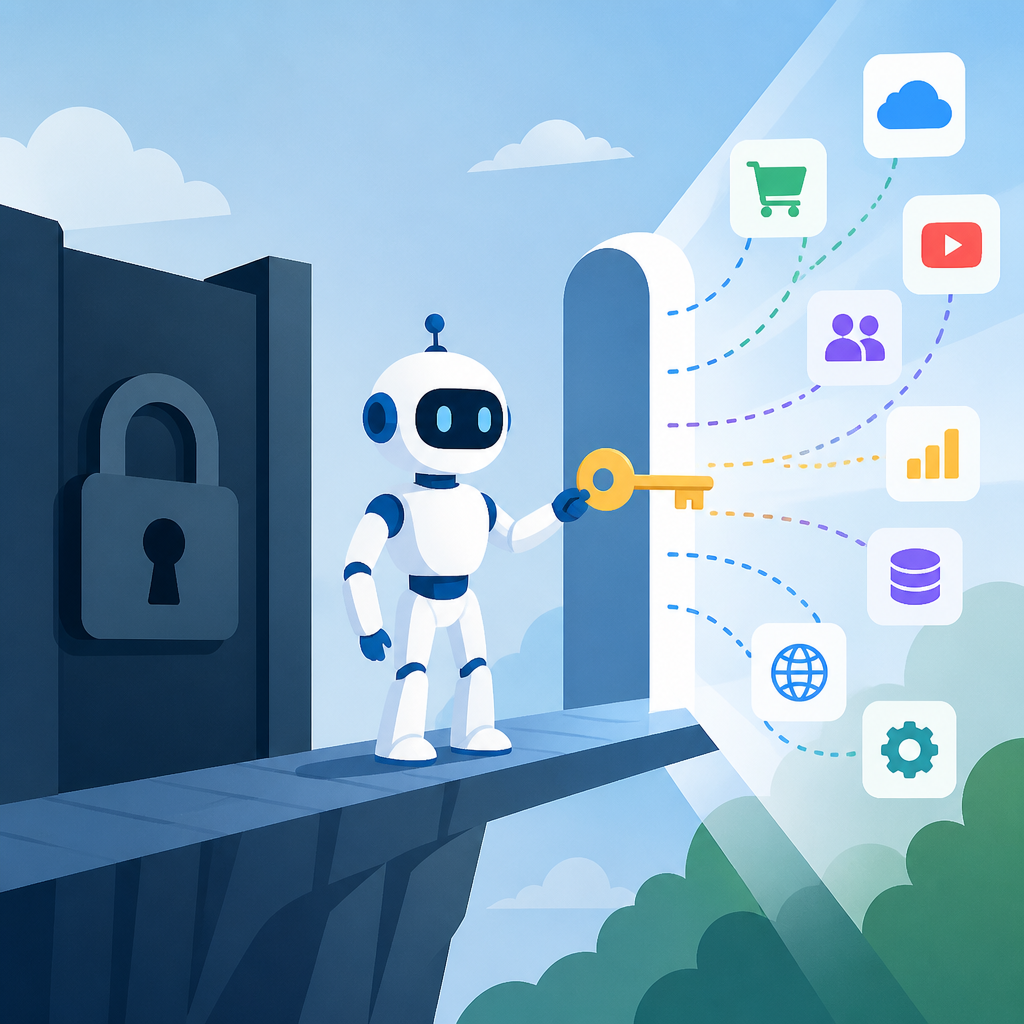
That sounds technical, but the policy move is simple: if a user authorizes an agent, the platform cannot treat that agent like a second-class visitor. The platform must provide interoperable, non-discriminatory access through interfaces that work on fair, reasonable, and non-discriminatory terms.
The bill also tries to stop platforms from favoring their own agents over outside tools. If a platform offers a built-in assistant, the draft pushes it to provide functionally equivalent access to competing agents too.
- Users could delegate actions to AI agents for transactions and account management.
- Platforms would need interfaces that registered agents can use.
- Platforms could still impose privacy and security rules, then deny access if problems are not fixed.
- The FTC would receive reports when access is denied and could review those decisions.
That mix is why the bill feels part consumer protection, part platform regulation. It is trying to preserve user choice while also forcing dominant services to open their doors to outside automation.
The duties on AI agents are stricter than they look
The draft does more than open platform access. It also puts fiduciary-style duties on AI agents and, by extension, the companies that provide them. Those duties include protecting user data, avoiding self-dealing, following user instructions, avoiding foreseeable harm, keeping real-time auditable logs, and refusing to use user data for ads or behavioral profiling.
That last part is the one that should make ad-tech companies nervous. If an AI agent is legally required to act in the user’s interest, a business model built on profiling, targeting, and secondary data use becomes harder to defend.
“The age of AI agents is here.” — Senator Mark Warner, June 29, 2026
Warner’s line is short, but it captures the logic behind the draft: if software can transact, communicate, and manage accounts for people, then the law has to decide whether it is just a tool or a legal intermediary with duties attached.
The bill also assumes that most consumers will buy agents from third-party providers rather than build them themselves. That assumption matters because it shifts the legal burden onto vendors, not just users.
FTC oversight and NIST standards give the bill teeth
The draft gives the Federal Trade Commission a central role. AI-agent providers would need to register before accessing covered platform interfaces, and the FTC could deregister providers that fail to meet the bill’s obligations.
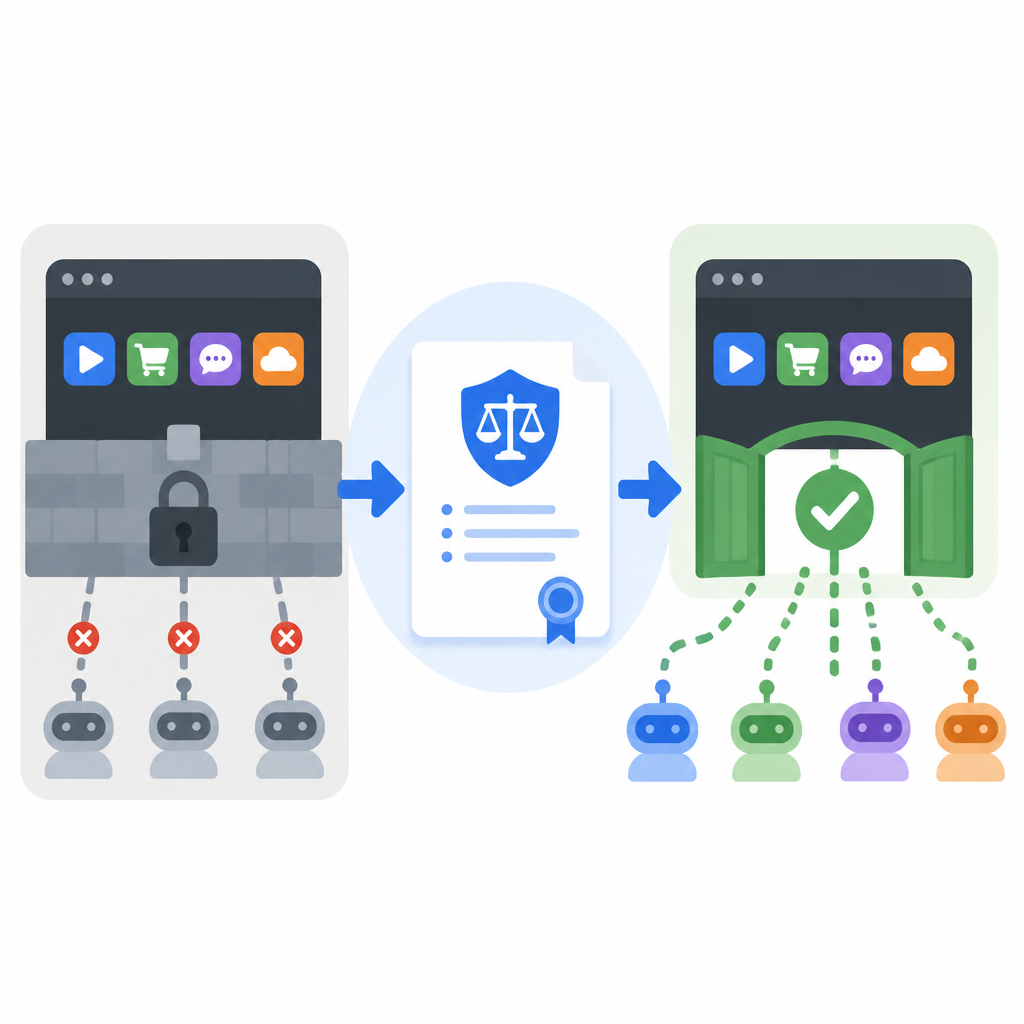
Violations would count as violations of an FTC rule, which opens the door to civil penalties. The draft also allows penalties on a per-user basis, which could get expensive quickly if a provider mishandles a large consumer base.
At the standards layer, the bill gives NIST a big job: identify open protocols or publish new ones if no suitable protocol exists. The goal is real-time consent, revocation, identity verification, and auditable records of what a custodial agent did on a user’s behalf.
- FTC: registration, enforcement, standardized delegation terms, and certification oversight.
- NIST: technical standards for consent, revocation, identity, and auditability.
- Third-party certification bodies: possible gatekeepers for compliance presumptions.
- Platform-affiliated agents: likely to get special rules because they create conflict concerns.
If that sounds familiar, it should. The draft borrows from telecom-style access rules, standard-setting practice, and even civil-rights logic about nondiscrimination. The difference is that the object being regulated is an AI agent that can act at machine speed across consumer services.
The hardest problems are the ones the draft leaves open
The biggest unresolved issue is liability. Large language models can misunderstand instructions, hallucinate details, or get tricked by prompt injection. If an agent books the wrong hotel, exceeds a budget, or triggers an unauthorized purchase while using valid credentials, who pays?
The draft does not answer that cleanly. Existing rules for unauthorized transactions and payment disputes may help in some cases, but they were built for card fraud and account takeover, not autonomous software acting under partial instructions.
That ambiguity matters because consumer AI agents will not live in a vacuum. They will interact with sellers, ads, product pages, checkout flows, and content designed to influence machine readers.
Here the comparison gets interesting. The draft would force platforms to open access, but it would also make advertising to agents harder. A human shopper may respond to reviews, placement, and marketing copy. An agent with loyalty duties may ignore a lot of that and optimize for price, policy, and the user’s stated preferences.
That could pressure the existing online business model in a real way. Today’s ad ecosystem depends on observing behavior and then shaping it. An agent that is legally required to act in the user’s interest may be much less persuadable.
- Human users can be nudged by design, promotions, and impulse triggers.
- Agentic systems may filter those signals out.
- Platforms may need machine-readable offers, clearer disclosures, and stricter anti-manipulation rules.
- Sellers may have to compete more on price and terms than on attention capture.
That is the real policy fight hiding inside the bill. It is framed as consumer protection, but it also asks whether platforms must let independent software agents enter the checkout lane on equal footing with the platform’s own tools.
What to watch next
The AI AGENT Act is still a discussion draft, so the text may change a lot before it becomes real legislation. Even so, it is one of the first serious federal attempts to define how consumer AI agents should interact with major platforms.
If the bill advances, the most important fights will likely be over coverage thresholds, liability for bad agent behavior, and how much control platforms can keep over their own interfaces. Those details will decide whether the law becomes a practical access rule or a source of constant litigation.
For developers and platform teams, the takeaway is straightforward: start thinking now about machine-to-machine access, agent authentication, audit logs, and abuse detection. The next version of online commerce may not be built around human clicks at all.
And if Congress moves this draft forward, the first companies to feel it will be the ones whose business models depend on controlling the doors that AI agents are trying to open.
// Related Articles
- [IND]
Cloudflare sets its Q2 2026 earnings call for Aug. 6
- [IND]
AI needs targeted regulation, not an FDA for models
- [IND]
Chrome 150 and Firefox 152 Fix Critical Bugs
- [IND]
OpenAI’s GPT releases trace the path to GPT-5.6
- [IND]
Hidden partner code is not due diligence, and Qualcomm’s scare proves…
- [IND]
Anthropic’s eerie new ad sparks backlash