Boy George AI vs Taylor Swift rerecordings
Boy George’s AI rerecording plan is a test of whether legacy artists can reclaim hits.

Boy George’s AI rerecording plan tests whether legacy artists can reclaim hit songs they do not own.
Boy George’s AI-assisted Artists Included project is being compared with Taylor Swift’s rerecording strategy, but the two paths solve different problems for different kinds of artists.
At a glance
Get the latest AI news in your inbox
Weekly picks of model releases, tools, and deep dives — no spam, unsubscribe anytime.
No spam. Unsubscribe at any time.
| Dimension | Boy George / Artists Included | Taylor Swift-style rerecording |
|---|---|---|
| Core method | New vocal performance processed with AI trained on archival material | Fully new studio rerecording without AI voice recreation |
| Ownership goal | Create an artist-owned alternative that can compete for sync licensing | Create a new master the artist controls outright |
| Legal clarity | Unsettled, especially around authorship and AI use | Much clearer, because the recording is plainly human-made |
| Speed to market | Potentially faster once the model is trained and approved | Slower, since the artist must rebuild the song from scratch |
| Best fit | Legacy acts whose voice and catalog identity are key assets | Artists with enough demand to justify recreating multiple albums |
| Risk profile | Higher technical, reputational, and licensing risk | Lower risk, but more labor and less mimicry of the original era |
Boy George and AI-assisted reclamation
Boy George’s pitch is not to replace the original Karma Chameleon, but to build a competing version that he can actually control. That matters because the value in a hit song often lives in licensing, not just streams, and the article makes clear that the master owners, not George, collected the money from a recent use of the song.
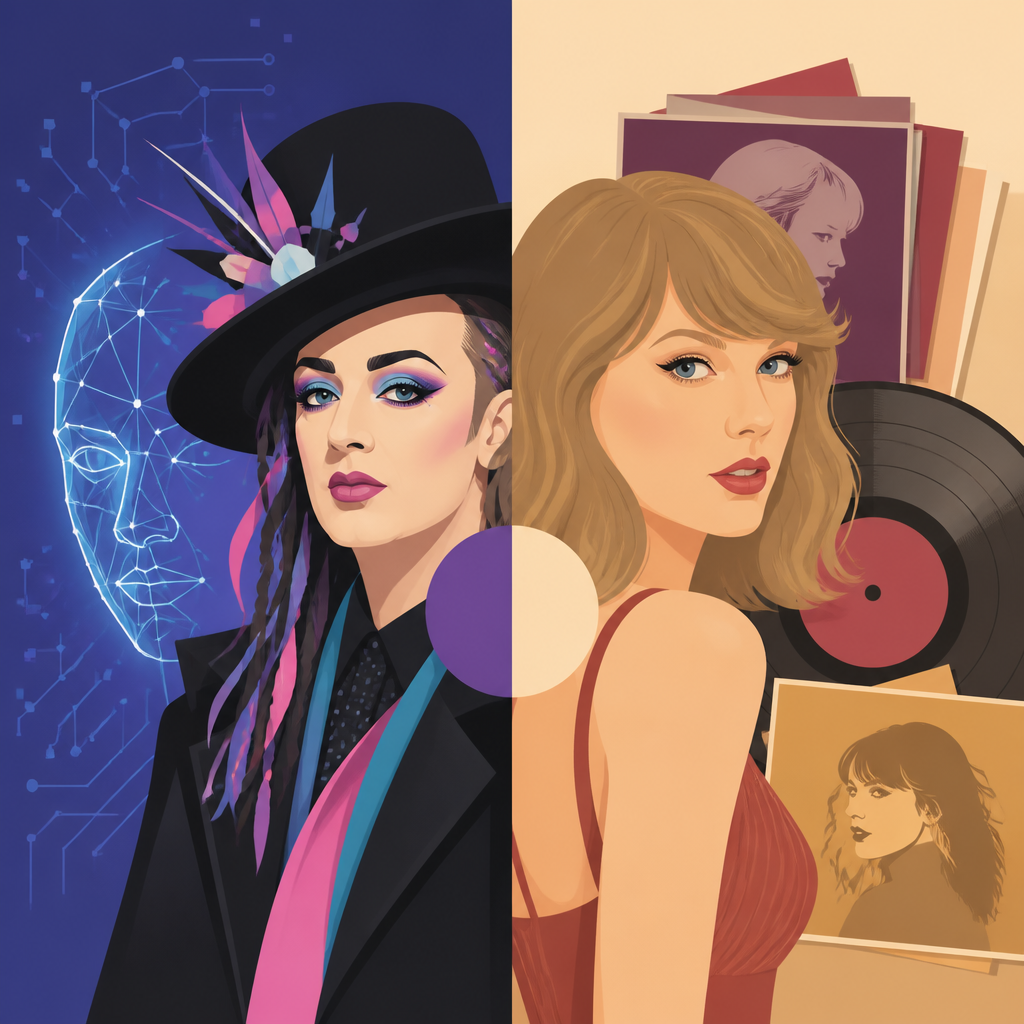
The upside is obvious for artists who feel locked out of the economics of their own signature work. The downside is that the project sits in a gray zone: it is more than a simple rerecording, but not quite a fully synthetic performance, so the legal and ethical questions are harder to predict than with a traditional remake.
Taylor Swift-style rerecordings
Taylor Swift’s model is simpler to understand because the new recordings are straightforward human performances. That gives her clean ownership and a clear story to tell fans, labels, and licensors: this is the version she made, and she owns it. The trade-off is that the process takes more time and usually depends on a large, already proven audience.
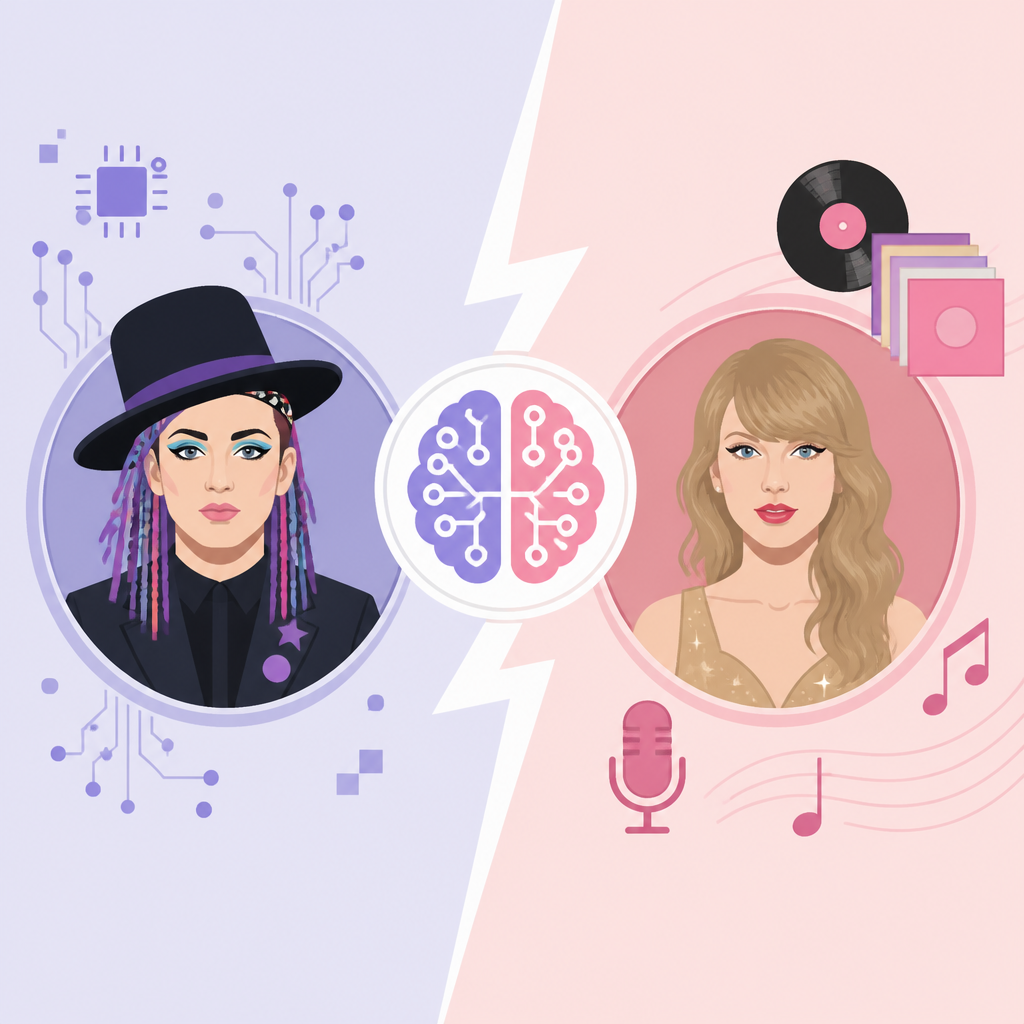
For artists with the right scale, the Swift approach is the safest route because it avoids the most contentious AI debates. But it does not try to recreate the exact vocal texture of the original era, which means it can feel like a reinterpretation rather than a near-copy of the classic master.
When to pick what
If you are a legacy artist trying to regain leverage over a single famous recording, Boy George’s AI-assisted model is the more aggressive option. It is designed for situations where the original master is still controlled by someone else and the artist wants a new asset that sounds close enough to matter in licensing.
If you are an artist with enough fan demand to support a full campaign and you want the cleanest ownership story, the Swift-style rerecording path is the better fit. It is slower and less technologically flashy, but it is easier to defend and easier to explain.
If you are a label, publisher, or rights buyer, the Swift model is the one that creates fewer headaches. It produces a new master with clear authorship, while the AI-assisted approach is still likely to trigger more legal review before anyone signs a sync deal.
The default pick is Swift-style rerecording, and the answer changes only when an artist wants a closer facsimile of the original hit and is willing to accept the legal uncertainty that comes with AI.
// Related Articles
- [IND]
Clip Converter’s 2026 rivals are faster and safer
- [IND]
OpenAI’s Sora shutdown proves hype can’t outrun unit economics
- [IND]
Anthropic’s model shutdown shows safety can bite back
- [IND]
Four music datasets are shaping AI music training
- [IND]
Deezer is right to expose AI music in playlists
- [IND]
Claude Partner Program turns Anthropic into a channel