Crypto legality by country: where it’s legal, banned, or unclear
Cryptocurrency legality varies widely by country, from legal and taxed to banned, restricted, or still undefined.
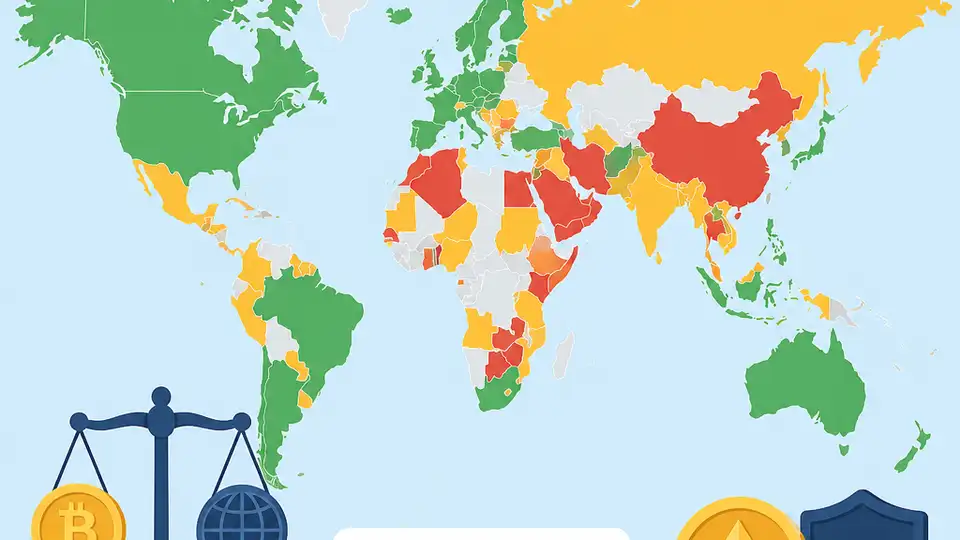
Cryptocurrency legality varies widely by country, from legal and taxed to banned, restricted, or still undefined.
One country can treat crypto as property, another as payment money, and a third as a prohibited financial instrument. The Wikipedia list shows that the split is not theoretical: Nigeria has a banking ban, the Central African Republic briefly made Bitcoin legal tender in 2022, and the European Union treats Bitcoin exchange as VAT-exempt under a 2015 court ruling.
| Jurisdiction | Status | Notable detail |
|---|---|---|
| European Union | Legal | Bitcoin exchange exempt from VAT under a 2015 CJEU ruling |
| Nigeria | Banking ban | Central Bank circular in 2017, reaffirmed in 2021 |
| Central African Republic | Legal tender, then reversed | Bitcoin adopted in April 2022, repeal agreed in April 2023 |
| Canada | Legal with compliance rules | Virtual currency dealers register with FINTRAC |
| Morocco | Illegal | Exchange office warned of penalties and fines in November 2017 |
Why crypto law changes so much by country
Get the latest AI news in your inbox
Weekly picks of model releases, tools, and deep dives — no spam, unsubscribe anytime.
No spam. Unsubscribe at any time.
The article is useful because it captures a basic truth about crypto regulation: governments are not arguing about the same thing. Some focus on tax treatment, some on money laundering, some on consumer protection, and some on whether a token can count as legal tender at all.
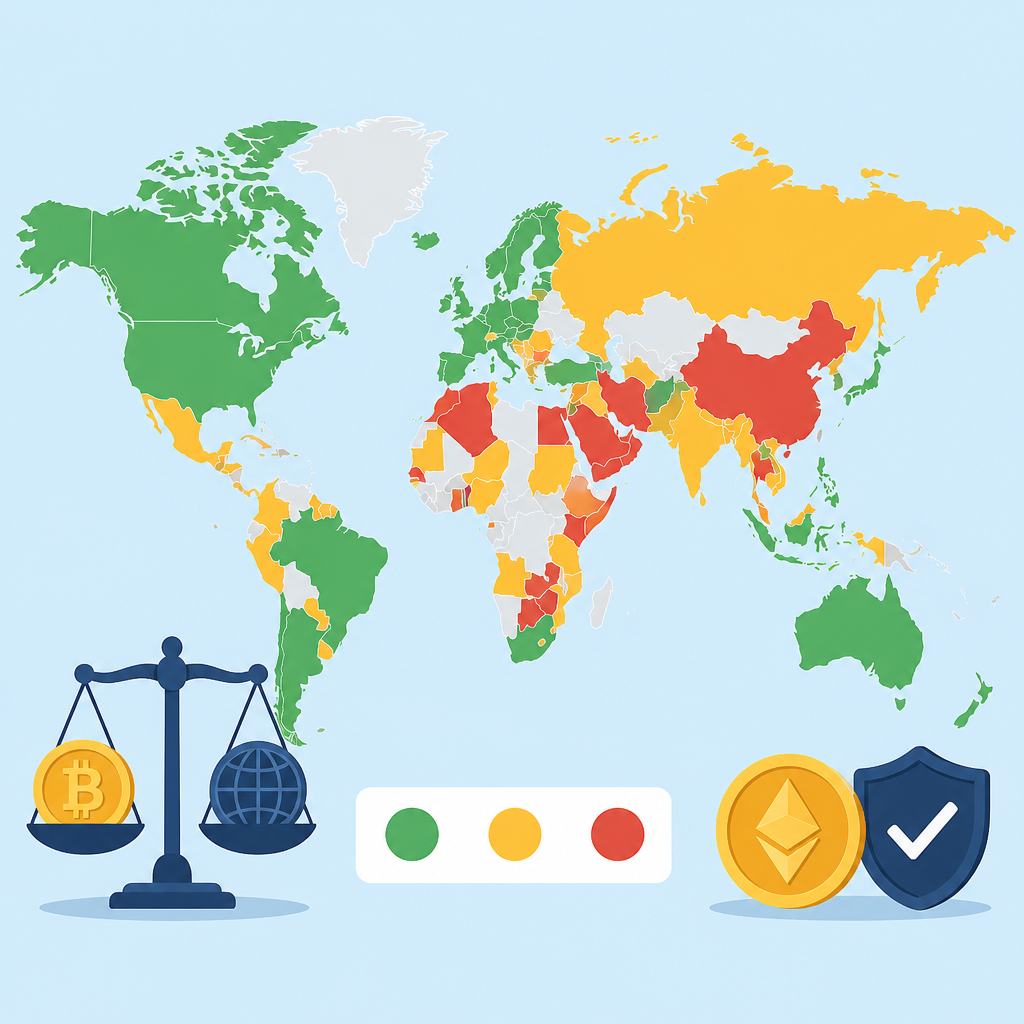
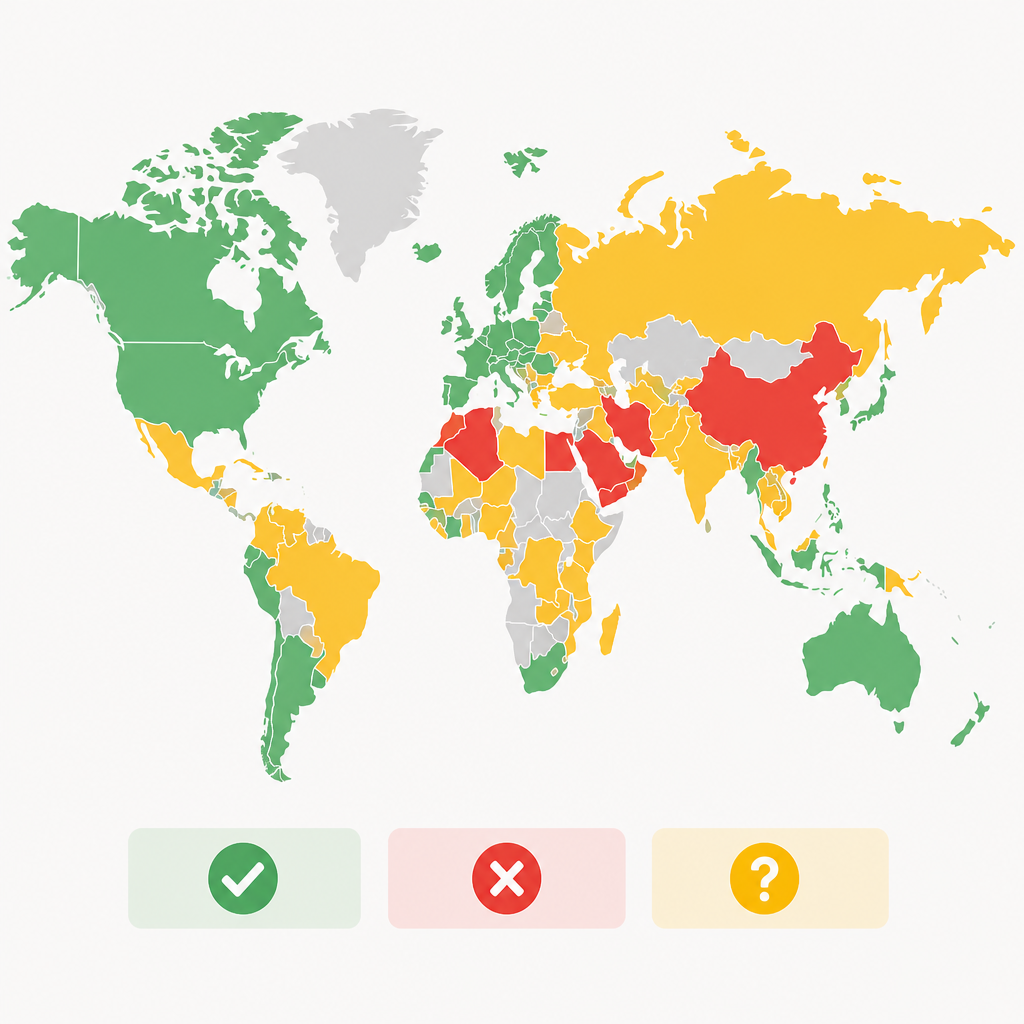
That leads to very different legal outcomes. In the European Union, the question is mostly about tax and payment rules. In Algeria and Morocco, the answer is prohibition. In Tanzania, the central bank discourages use without issuing a full ban. In South Africa, Bitcoin has no dedicated legal framework, yet it is still treated as an intangible asset by the tax authority.
- Legal does not mean unregulated.
- Banned does not always mean technically impossible to use.
- Tax authorities often move faster than lawmakers.
- Banking rules can matter more than criminal law for everyday users.
That mix is why crypto users, exchanges, and payment companies need to read local rules carefully instead of assuming that one country’s policy applies elsewhere. A token can be legal to hold, illegal to advertise, taxable as property, and blocked by banks all at once.
Europe’s approach is more about tax than prohibition
The European Union has not passed one single crypto law that settles every question, but it has built a clearer framework than many regions. The key legal point came in October 2015, when the Court of Justice of the European Union ruled that exchanging traditional currency for Bitcoin is exempt from VAT.
That decision matters because it treats Bitcoin as a means of payment rather than a commodity for that specific tax question. The European Central Bank also classifies Bitcoin as a convertible decentralized virtual currency, while the European Banking Authority warned banks in 2014 not to deal in virtual currencies until a proper regime existed.
“The exchange of traditional currencies for units of the ‘bitcoin’ virtual currency is exempt from VAT.”
Court of Justice of the European Union, October 2015
Europe has also moved toward tighter controls. In 2016, the European Parliament backed a task force to monitor virtual currencies for anti-money-laundering and counter-terrorism purposes by 542 votes to 51, with 11 abstentions. More recently, the EU adopted new regulation in 2024, and there are plans to restrict privacy-focused cryptocurrencies in 2027.
For builders, that means the EU is less about a simple yes-or-no answer and more about compliance design. If your product touches custody, exchange, or payments, tax and reporting rules matter as much as the token itself.
Banking bans can be more disruptive than criminal bans
Nigeria is a good example of how a banking ban changes market behavior even when crypto itself is not erased from the internet. The Central Bank of Nigeria issued a circular on 17 January 2017 telling banks to stop transactions involving Bitcoin and other virtual currencies. On 5 February 2021, it repeated that dealing in cryptocurrency or facilitating payment for it remained prohibited.
That is a very different policy from a blanket criminal ban. Users can still trade peer to peer, but the financial plumbing becomes harder to access. Exchanges lose easy on-ramps, merchants lose payment options, and ordinary users end up relying on informal channels that are harder to monitor.
- Nigeria: bank transactions involving crypto banned in 2017 and reaffirmed in 2021.
- Namibia: exchanges are not allowed, and crypto cannot be accepted for goods and services.
- Algeria: purchase, sale, use, and holding of virtual currency is prohibited.
- Egypt: individuals, banks, and financial institutions are prohibited from dealing in cryptocurrencies.
Morocco shows another angle. Its exchange office said virtual-currency transactions violate exchange regulations and can trigger penalties and fines. Later, Bank Al-Maghrib governor Abdellatif Jouahri called Bitcoin a “financial asset” rather than a currency and asked for consumer protection rules. That is a reminder that even in restrictive markets, the legal language can still shift toward classification and oversight instead of a permanent ban.
What this means for users, exchanges, and policy teams
If you work in crypto, the practical lesson is simple: the legal question is usually local, and the local answer can change fast. Canada requires virtual-currency businesses to register with FINTRAC and follow anti-money-laundering rules. Mauritius treats cryptocurrencies as regulated digital assets. South Africa has tax guidance but no dedicated legal framework. The Central African Republic went from legal tender adoption to repeal talks in just one year.
That makes jurisdiction checks part of product design, not legal cleanup after launch. Wallet apps, exchanges, payment processors, and even analytics tools need country-specific policy logic, because a feature that is fine in one market can trigger banking or licensing problems in another.
For readers tracking regulation, the best takeaway is to watch the banking system, tax agency guidance, and court decisions, not just headline bans. Those are usually the places where crypto legality changes first. If you want a broader view of how policy shapes adoption, see our coverage of crypto regulation and exchange compliance.
The next big split will probably come from how countries treat stablecoins and privacy coins. The real question is not whether crypto is legal somewhere, but which parts of the stack a government is willing to tolerate: holding, trading, spending, or moving money through banks.
// Related Articles
- [CHAIN]
4 ways U.S. bitcoin perpetuals could reshape crypto
- [CHAIN]
NEAR Protocol price hits $2.63 as volume jumps
- [CHAIN]
Gemini AI Sees Solana at $160 by June 2026
- [CHAIN]
5 Web3 Applications for Enterprise Teams in 2026
- [CHAIN]
Why Web3 Development Company Rankings Are Wrong in 2026
- [CHAIN]
Betsson’s Web3 frontend role turns iGaming into Web3