Docker’s 2019 reset and $35M recapitalization
Docker restructured in 2019, sold its enterprise business to Mirantis, and raised $35 million to keep its core developer tools moving.

Docker restructured in 2019, sold its enterprise business to Mirantis, and raised $35 million.
Docker, Inc. is one of those companies that changed how developers think about shipping software, then had to shrink and refocus when the market moved on. In November 2019, the company sold its enterprise business to Mirantis and announced a $35 million recapitalization round to keep its core products alive.
The numbers tell the story better than the branding ever could. Docker had already raised nine figures across earlier rounds, reached unicorn status in 2015, and then spent the next few years trimming the company back to the parts that still mattered most to developers.
| Event | Amount | Year |
|---|---|---|
| Seed round | $800,000 | 2011 |
| Series A | $10 million | 2011 |
| Series D | $95 million | 2015 |
| Recapitalization | $35 million | 2019 |
| Series C | $105 million | 2022 |
From dotCloud to Docker
Get the latest AI news in your inbox
Weekly picks of model releases, tools, and deep dives — no spam, unsubscribe anytime.
No spam. Unsubscribe at any time.
Docker began life in Paris in 2008 as dotCloud, founded by Kamel Founadi, Solomon Hykes, and Sebastien Pahl. The company incorporated in the United States in 2010, then took a hard turn toward containers after Hykes and team realized the packaging model had far wider appeal than the original platform-as-a-service idea.
By 2013, the company had a new CEO, Benjamin Golub, and a new name. The rename from dotCloud to Docker happened on October 29, 2013, and it marked the point where the company stopped being just another cloud startup and became tied to a developer workflow that was spreading fast across teams of every size.
Docker’s core pitch was simple: package code and dependencies into containers, then run them consistently across machines. That idea became the basis for Docker Desktop, Docker Hub, and the open source tooling around Moby.
- Founded in 2008 as dotCloud
- Incorporated in the U.S. in 2010
- Renamed Docker in October 2013
- Built around container-based software delivery
The funding boom and the valuation spike
Docker raised money quickly once the container story caught fire. In February 2011 it secured $800,000 in seed capital, then raised $10 million in March 2011. A few years later the checks got much larger: $15 million in January 2014, $40 million in September 2014, and $95 million in April 2015.
That 2015 round pushed Docker past the $1 billion valuation mark, which made it a unicorn in the blunt startup sense of the word. This was also the period when Docker became a default topic in DevOps conversations, with Microsoft, Amazon Web Services, and Red Hat all moving to support container workflows in different ways.
“Docker is a tool that can package an application and its dependencies in a virtual container that can run on any Linux server.” — Solomon Hykes, Docker founder, in a 2013 LinuxCon talk
That quote still captures why Docker mattered. It was never just a company story. It was a packaging story, and packaging is one of the few boring technical problems that can reshape an entire stack when it gets solved well.
- $800,000 seed round in February 2011
- $10 million Series A in March 2011
- $95 million Series D in April 2015
- Valuation crossed $1 billion in 2015
Why 2019 changed the company
By 2019, Docker had a problem many high-growth infrastructure companies eventually face: the business that made the name famous was not the business that paid the bills cleanly. In May 2019, Rob Bearden became CEO. In November, Docker sold its enterprise business to Mirantis and raised $35 million in a recapitalization round.
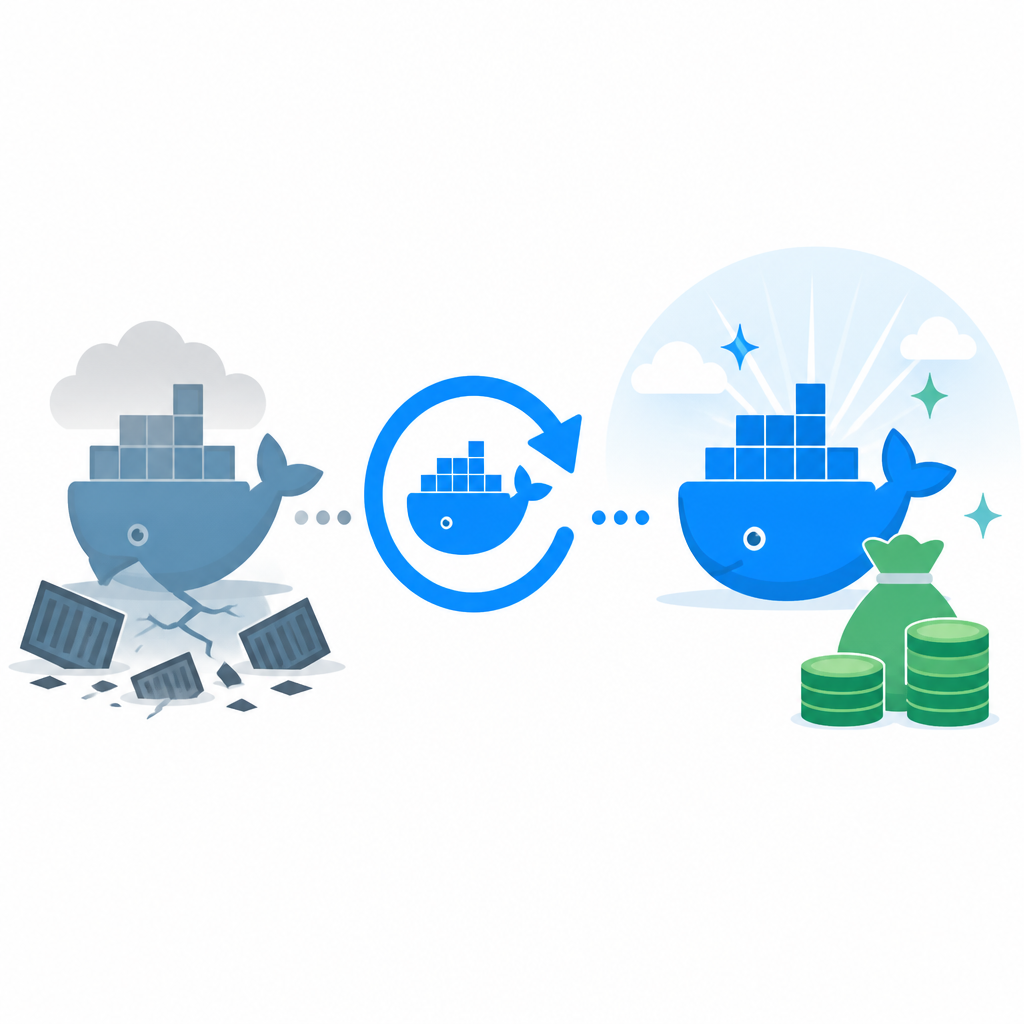
That deal mattered because it split Docker into two identities. One side was enterprise software and support, which moved to Mirantis. The other side was the developer-facing product line, including Docker Desktop and Docker Hub, which stayed under the Docker name. Scott Johnston became CEO after the transaction.
For developers, the practical effect was less dramatic than the corporate headlines suggested. Docker still shipped the tools people used every day, but the company behind them was now smaller, more focused, and under pressure to prove that the core product could stand on its own.
- Rob Bearden became CEO in May 2019
- Mirantis bought Docker’s enterprise business in November 2019
- Docker raised $35 million in the same month
- Scott Johnston became CEO after the restructuring
What Docker still owns today
Docker today is a mix of open source roots and commercial software. The company contributes to containerd and runC, while the main open source pieces include Docker Engine and BuildKit under the Moby umbrella. The commercial side centers on Docker Hub, Docker Desktop, and subscription products for teams and larger companies.
The acquisition list shows how the company kept filling gaps around its core workflow. It bought Orchard in 2014, SocketPlane in 2015, Unikernel Systems in 2016, then later picked up InfoSiftr, Nestybox, Tilt, Atomist, Mutagen, AtomicJar, and MCP Defender. That is a clear pattern: Docker kept buying tools that made container development, testing, security, and local workflows less painful.
The 2021 licensing changes for Docker Desktop also mattered. They signaled that Docker wanted more direct control over monetization, especially for larger organizations that had been using the product as a default utility without paying much attention to the business behind it.
- Contributes to containerd and runC
- Owns Docker Hub and Docker Desktop
- Bought Tilt in 2022 and AtomicJar in 2023
- Updated Docker Desktop licensing in 2021
Why the recapitalization still matters
Docker’s 2019 recapitalization was more than a rescue story. It was a reset that forced the company to match its structure to its actual product-market fit. The enterprise business moved out, the developer tools stayed in, and the company got a fresh round of capital to keep building around the products people still used.
That matters because Docker remains one of the few infrastructure brands that almost every developer recognizes, even if they now use Kubernetes, containerd, or other tooling underneath. The company’s challenge is no longer awareness. It is proving that its products are worth paying for in a world where container basics have become table stakes.
If Docker can keep owning the developer workflow while avoiding the old enterprise bloat, it will stay relevant. If not, the brand may remain famous while the center of gravity moves elsewhere. The next test is simple: can Docker keep turning a default utility into a business that developers still choose on purpose?
// Related Articles
- [IND]
OpenAI should pay more for bio jailbreaks, not less
- [IND]
Cloudflare sets its Q2 2026 earnings call for Aug. 6
- [IND]
AI needs targeted regulation, not an FDA for models
- [IND]
Chrome 150 and Firefox 152 Fix Critical Bugs
- [IND]
OpenAI’s GPT releases trace the path to GPT-5.6
- [IND]
Hidden partner code is not due diligence, and Qualcomm’s scare proves…