Kimi K3 turns model hype into harness work
Moonshot’s Kimi K3 shows why I care more about orchestration, cost, and model swaps than raw benchmark bragging.

Kimi K3 shifts the focus from model bragging rights to orchestration, cost, and swaps.
I’ve been building with big models long enough to know when a release is actually useful and when it’s just benchmark theater with a nicer logo. For a while, I kept running into the same problem: every new model announcement promised smarter answers, better coding, better agents, better everything. Then I’d wire it into a real app and the whole thing would wobble. It would agree too much, miss tool boundaries, or get expensive fast enough to make the “best model” argument feel silly.
That’s why Moonshot AI’s Kimi K3 caught my attention. Not because I suddenly think one Chinese model is going to flatten OpenAI or Anthropic. It won’t. But the release keeps pushing the conversation to where I think it should have been all along: what model sits underneath, what harness controls it, how often you swap it, and what it costs to keep the thing useful in production. CNBC’s report on Kimi K3, published at cnbc.com, is the trigger here, but the real story is what it says about how we should build with models now.
Stop worshipping the model card
Get the latest AI news in your inbox
Weekly picks of model releases, tools, and deep dives — no spam, unsubscribe anytime.
No spam. Unsubscribe at any time.
K3 demonstrates that pre-training scaling, paired with architectural innovation, can still deliver step-change gains for flagship Chinese models.
What this actually means is that model quality still matters, but raw size is not the only thing that matters anymore. Moonshot says Kimi K3 is its largest model yet, with 2.8 trillion parameters, and that it closes the gap with leading U.S. systems while still trailing Anthropic’s Claude Fable 5 and OpenAI’s GPT 5.6 Sol on overall performance. That’s the part people love to quote. I care more about the part where K3 apparently beats some near-frontier models like Claude Opus 4.8 and GPT 5.5 on coding and general agent benchmarks.

I’ve seen this movie before. A model gets announced, people fixate on the headline comparison, and then the actual engineering question gets buried: what does this do better in a real workflow? If you’re shipping product, “overall performance” is too vague to build on. I want to know where it’s stronger, where it’s weaker, and whether I can swap it in without rewriting the rest of my stack.
How to apply it: stop choosing models by vibe. Build a scorecard that includes coding, tool use, latency, cost per task, and failure rate in your own app. If a new model wins one benchmark but loses on tool calling or rate limits, that is not a win for your product.
- Track model performance in the tasks your users actually trigger.
- Separate “nice demo” from “production-safe.”
- Keep a fallback model ready before you need it.
2.8 trillion parameters is not the product
Moonshot says Kimi K3 is China’s largest AI model so far, with 2.8 trillion parameters. That sounds huge because it is huge. But I’ve learned not to confuse parameter count with usefulness. A bigger model can be better, sure. It can also be slower, pricier, harder to route, and more annoying to deploy. The number gets headlines. The system gets shipped.
The CNBC piece also notes that Chinese AI models are gaining traction among Western companies because they’re closing the gap with U.S. rivals and remain cheaper to use than the most advanced American offerings. That’s the part I’d watch. Cheaper models change architecture decisions. They make it easier to run more calls, route more tasks, and keep a fallback on hand without feeling like you’re burning money every time the model thinks out loud.
I ran into this when I tried to standardize a single “best” model across a product suite. It looked clean in diagrams. In practice, it was a tax. One workflow needed fast classification, another needed long reasoning, another needed tool calls. The one-size-fits-all choice was always overkill somewhere.
How to apply it: design for model tiers. Use a cheaper model for routine tasks, a stronger model for hard reasoning, and a high-confidence fallback for edge cases. If you’re still treating every prompt like it deserves your most expensive model, you’re probably paying for ego.
- Route by task complexity, not by default.
- Measure cost per successful task, not cost per request.
- Use smaller models where “good enough” is actually good enough.
The real product is the harness
Perplexity CEO Aravind Srinivas told CNBC that “the model alone is no longer the product.” He said it is “the harness, the orchestration system that puts the model inside a very capable harness and pairs the model with a lot of tools.” That line is the cleanest summary of where I think the industry actually is. The model matters, but the wrapper now decides whether the thing is useful.
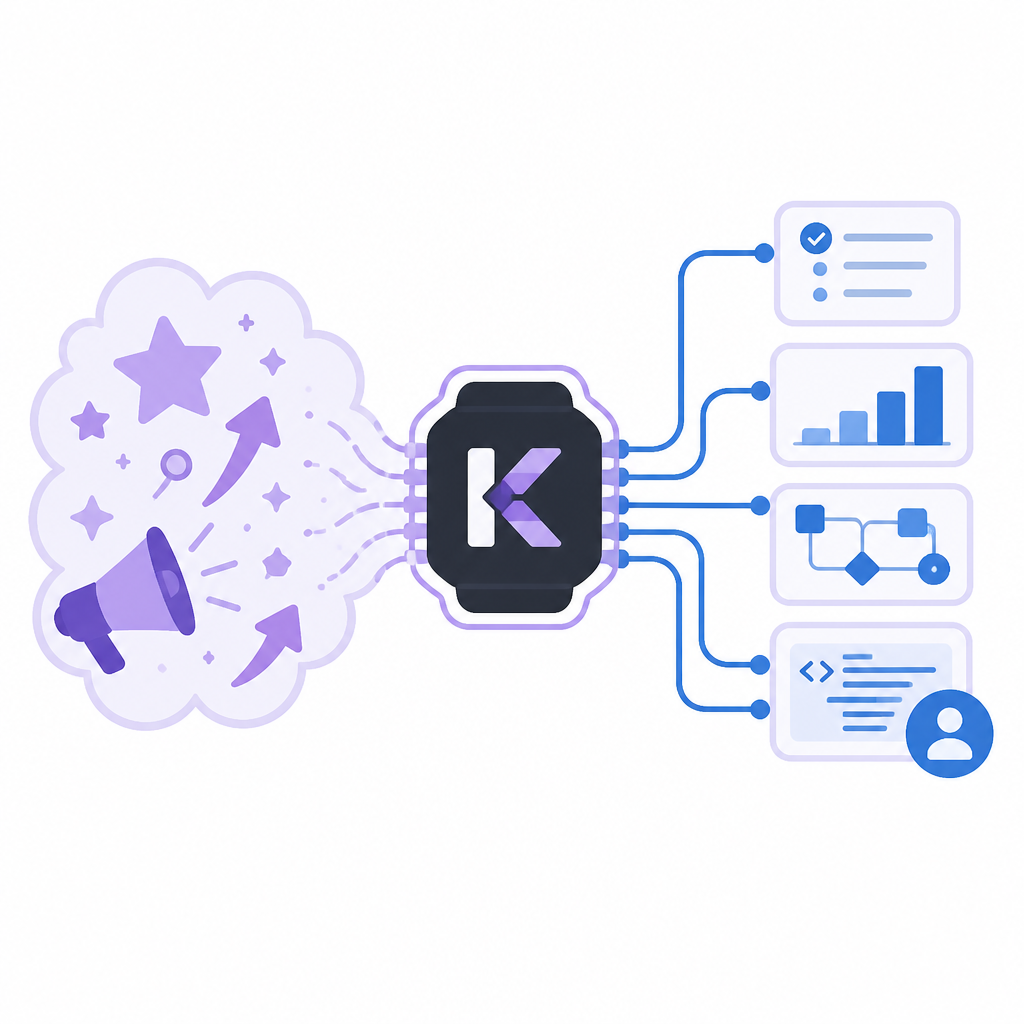
I’ve been saying this to teams for months, usually after they’ve spent too long arguing over which frontier model is “the best.” Best for what? If I can swap the model and keep the workflow intact, I’ve built something real. If I can’t, I’ve built a demo with a dependency problem.
This is where open tooling matters. CNBC mentions OpenClaw as a freely available technology that became popular because it lets coders swap in and out models powering digital assistants. The broader idea is simple: your app should treat the model like a component, not the center of the universe. The orchestration layer decides when to call tools, when to ask a follow-up, when to stop, and when to escalate.
How to apply it: separate your agent loop from your model provider. Put tool calling, retries, memory, and routing in your own code. Then make the model just one plug-in behind that system.
If you want a reference point, look at Perplexity for how product value can sit above model choice, and at orchestration frameworks like LangChain and LlamaIndex for the rough shape of model-plus-tools systems.
Benchmarks are useful until production laughs at them
Moonshot says Kimi K3 outperformed other tested models on coding and general agents, but still trailed Claude Fable 5 and GPT 5.6 Sol on overall performance. That split matters. A model can look amazing in one benchmark suite and still be annoying in production. I’ve watched that happen enough times to stop trusting leaderboard worship.
Simon Koser, chief product officer at Tzafon, told CNBC that “not every AI model excels in every task despite what the initial benchmark tests may show.” That’s the sentence people should tape to their monitor. Benchmarks are a starting point. Production is where the weird stuff shows up: tool misuse, prompt drift, weird refusals, overconfidence, latency spikes, and edge-case failures that never show up in a clean test harness.
I’ve run into this when a model scored well on code generation but kept making bad assumptions about repository state. On paper, it looked strong. In the app, it was expensive cleanup. The fix wasn’t “find a smarter model.” The fix was tighter orchestration, better context selection, and a narrower task definition.
How to apply it: build a small eval suite that mirrors your actual product flows. Include happy paths, malformed input, tool failures, and retries. If your model only looks good in benchmark screenshots, you don’t have a model decision yet.
China’s AI story is also a cost story
The CNBC article ties Kimi K3 to the broader U.S.-China AI race, but the more practical angle is cost. Bank of America analysts said K3 shows that “pre-training scaling, paired with architectural innovation, can still deliver step-change gains” despite hardware and compute constraints in China. That’s analyst-speak, but the point is clear enough: limited compute pushes teams to get more from less.
That pressure changes product design. If a model is cheaper, you can call it more often. You can build more multi-step flows. You can afford a better fallback strategy. You can also compete with a bigger lab without pretending you have their infrastructure. That matters whether you’re in Beijing, San Francisco, or somewhere with a normal cloud bill and a healthy fear of it.
CNBC also notes that U.S. lawmakers are considering how to curb adoption of Chinese AI models by homegrown companies. I’m not going to pretend that policy doesn’t matter. It does. But from a developer’s seat, the immediate issue is simpler: if a model is good enough and cheaper, teams will try it. If your architecture lets them swap providers cleanly, they will keep doing it.
How to apply it: build provider-agnostic interfaces now. Keep prompts, tool schemas, and evals independent from one vendor. If procurement, policy, or price forces a switch, you should be able to move without a rewrite.
What I’d actually build after reading this
Moonshot’s release is interesting because it reinforces a boring truth I keep coming back to: model releases matter less than the system around them. Kimi K3 may be a serious model. It may pressure OpenAI and Anthropic. It may make some teams rethink their default stack. Fine. But if you’re shipping software, the question is not “which model won?” The question is “which model can I route, swap, and afford without wrecking the app?”
That’s the shift I want people to make. Treat the model as an engine. Treat the harness as the product. Treat benchmarks as input, not truth. And treat cost as a first-class constraint, because it always shows up eventually, usually right after the demo worked beautifully.
I’ve built enough AI features now to know that the teams who win are not the ones with the flashiest model deck. They’re the ones who can change models without panicking. That’s the part Kimi K3 makes harder to ignore.
The template you can copy
# Model-agnostic agent harness template

## Goal
Build an AI feature where the model is swappable and the product logic stays stable.

## Principles
- Treat the model as a provider, not the product.
- Route by task type, not by default.
- Measure success by task completion, not raw benchmark claims.
- Keep tool calls, retries, memory, and safety in your own code.

## Architecture
1. Input layer
   - Normalize user input
   - Classify task type: simple answer, code help, multi-step agent, fallback

2. Router
   - Choose model based on:
     - task complexity
     - latency budget
     - cost budget
     - required context length
   - Example routing:
     - cheap model for classification
     - stronger model for reasoning
     - fallback model for failures

3. Orchestration layer
   - Owns tool calling
   - Owns retries and stop conditions
   - Owns memory selection
   - Owns response validation

4. Model adapter
   - One interface per provider
   - Same request/response shape across all models
   - No product logic inside provider-specific code

5. Eval layer
   - Run the same prompts across all candidate models
   - Track:
     - task success rate
     - tool-call accuracy
     - latency
     - cost per successful task
     - hallucination rate

## Pseudocode

function handleRequest(userInput):
  task = classifyTask(userInput)
  model = selectModel(task)
  context = buildContext(task)
  plan = orchestrate(task, context, model)
  result = executePlan(plan)
  validated = validateResult(result)
  if validated.failed:
    model = fallbackModel(task)
    result = retryWithFallback(task, context, model)
  return result

## Model selection rules
- Use a small/cheap model for:
  - intent detection
  - routing
  - summarization
- Use a stronger model for:
  - coding
  - multi-step reasoning
  - tool-heavy tasks
- Use a fallback model when:
  - confidence is low
  - tool execution fails
  - output format is invalid

## Eval checklist
- Does the model call tools in the right order?
- Does it stop when the job is done?
- Does it recover from a failed tool call?
- Does it stay within budget?
- Can I replace the model without changing orchestration code?

## Copy-ready prompt pattern
You are a task-specific assistant operating inside a tool-based workflow.

Rules:
- Use tools when needed.
- Do not invent tool results.
- If the task is ambiguous, ask one clarifying question.
- Prefer the cheapest model that reliably completes the task.
- Return output in the required schema only.

## Deployment rule
If switching models requires changing business logic, the abstraction is wrong.
If switching models only changes adapter config, the abstraction is working.
Source attribution: the reporting and quotations above are based on CNBC’s article at https://www.cnbc.com/2026/07/17/moonshot-ai-kimi-k3-model-openai-anthropic-china.html. My framing, template, and implementation advice are original, but the underlying trigger is CNBC’s coverage of Moonshot AI’s Kimi K3 release.
// Related Articles
- [IND]
Open source agent stacks split into seven layers in 2026
- [IND]
Friends Season 7, Episode 12 Is Still a Perfect Sitcom Machine
- [IND]
OpenAI should pay more for bio jailbreaks, not less
- [IND]
Cloudflare sets its Q2 2026 earnings call for Aug. 6
- [IND]
AI needs targeted regulation, not an FDA for models
- [IND]
Chrome 150 and Firefox 152 Fix Critical Bugs