Long-horizon agents need harnesses first, not bigger models
Long-horizon agents will improve faster through harness engineering than through model scaling alone.

955 stars show long-horizon agents are advancing fastest through harness engineering, not model size alone.
The roadmap in RUC-NLPIR’s survey makes the right call: long-horizon agents will improve faster through harness engineering than through model scaling alone.
Harnesses are the real product
Get the latest AI news in your inbox
Weekly picks of model releases, tools, and deep dives — no spam, unsubscribe anytime.
No spam. Unsubscribe at any time.
The survey’s central split between externalized harness engineering and internalized model optimization is not academic framing. It reflects how real agents work today: loops, memory, tools, orchestration, hooks, and verification are doing the heavy lifting while the base model supplies the policy. That matters because a model that can reason for ten steps still fails if the system cannot preserve state, recover from errors, or decide when to ask for help.

The repository’s own structure tells the story. It organizes the field around loops and workflows, context and memory, tools and skills, orchestration, hooks, and verification before it gets to fine-tuning or reinforcement learning. That ordering is correct because the first bottleneck in long-horizon work is not “smarter tokens,” it is reliable execution across many steps. A useful agent is an engineered system, not a chat completion with a new label.
Long-horizon progress is already being built in the runtime
The survey’s timeline from prompt engineering to context engineering to runtime harnesses shows where the center of gravity has moved. In 2020 to 2023, the field mostly relied on prompts. By 2023 to 2025, context management and memory became the differentiator. From 2025 onward, the emphasis shifts to runtime harnesses that supervise, branch, retry, and verify. That evolution is proof that the decisive gains are coming from system design, not from one more clever prompt template.
The repository also points to a concrete benchmark trend: the time horizon of frontier AI agents is “growing exponentially, roughly doubling every few months.” That is not a story about static model capability. It is a story about scaffolding that lets the same model survive more turns, more tool calls, and more opportunities to repair mistakes. The market is rewarding agents that can stay on task longer, and the fastest way to buy that endurance is runtime control.
Internalization matters, but it is the second move
The survey is strongest when it treats model optimization as a follow-on, not a substitute. Architecture changes, synthetic environments, pre-training, mid-training, fine-tuning, agentic reinforcement learning, on-policy distillation, and self-evolution all matter. But each of those methods is expensive, slow, and hard to validate without a harness that can generate trajectories, measure failures, and harvest feedback. Without that loop, “training the agent” becomes a slogan.
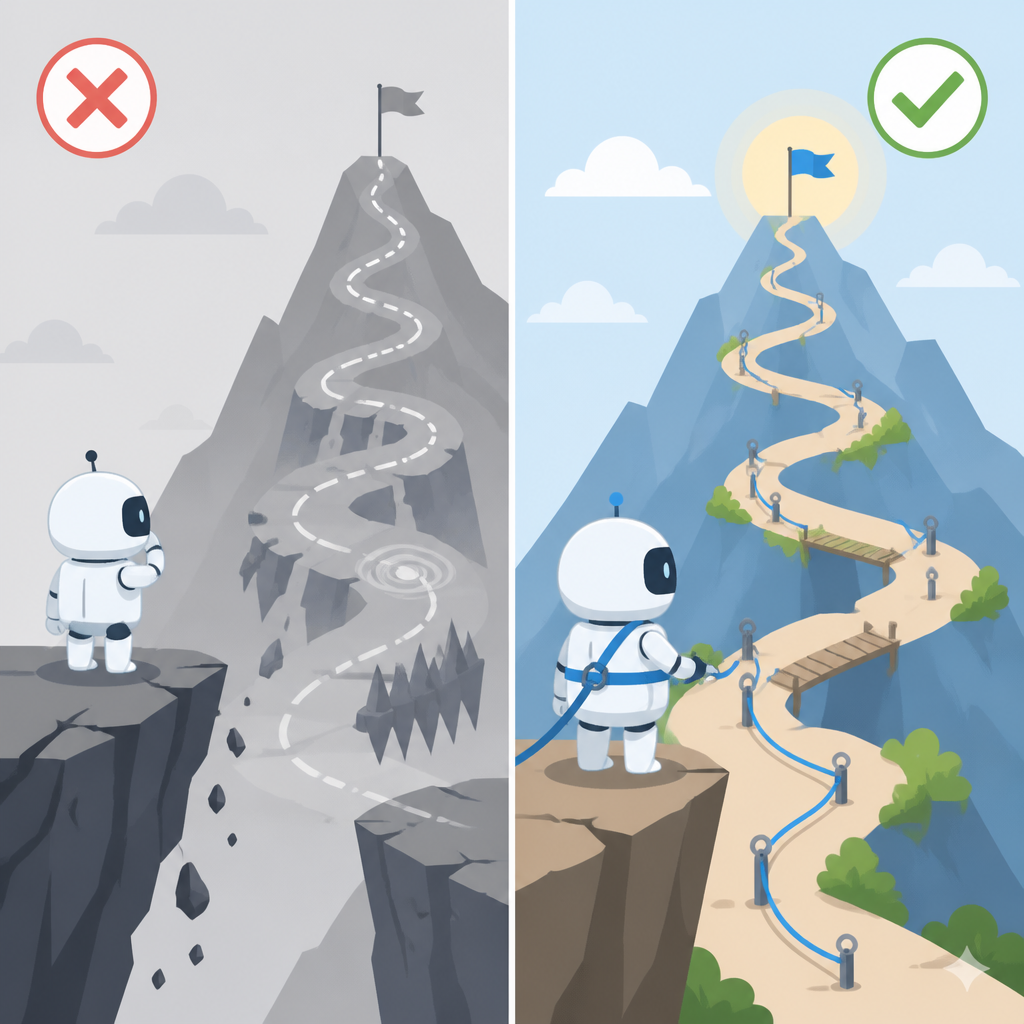
There is also a practical reason to prefer harness-first work: it compounds across models. A well-built memory layer, tool router, verifier, or orchestration stack can improve multiple base models at once. By contrast, a fine-tuned policy is tied to a specific checkpoint and often degrades when the surrounding toolchain changes. The survey’s co-evolutionary view is right, but the asymmetry is clear: harnesses create reusable leverage, while internalization locks gains inside one model family.
The counter-argument
The strongest objection is that harnesses are a crutch. If a system needs elaborate orchestration, memory, retries, and verification, then the model is not truly agentic. On this view, progress should come from making the policy itself more capable so that the surrounding machinery can shrink over time. That argument has force because brittle scaffolding can hide weak reasoning and make demos look better than they are.
There is also a cost argument. Runtime systems add latency, engineering overhead, and failure modes. For simple tasks, a heavy harness is wasteful. For some products, the right answer is still a better base model with a simpler interface.
That critique is valid, but it does not overturn the thesis. Harnesses are not a permanent substitute for intelligence; they are the mechanism that turns partial intelligence into reliable action. The right standard is not “does the harness disappear,” but “does the system complete longer tasks today.” On that measure, harness-first engineering wins because it delivers capability now and produces the data needed to internalize it later.
What to do with this
If you are an engineer, build the agent around state, recovery, and verification before you chase a new model checkpoint. If you are a PM, define success as task completion over many steps, not single-turn fluency. If you are a founder, invest in runtime infrastructure that can be reused across models, because that is where long-horizon advantage compounds.
// Related Articles
- [RSCH]
Grok 4.6 puts frontier IQ on a budget
- [RSCH]
Anthropic's watermark fails the real dev workflow
- [RSCH]
HumanTracker fixes humanoid motion eval blind spots
- [RSCH]
OmniScientist aims for full-stack AI science
- [RSCH]
AutoDesign learns better poster-making harnesses
- [RSCH]
Test-Time Harnesses Transfer Skills Without Retraining