x402 and agent wallets are moving crypto agents on-chain
6 trends show how x402, agent wallets, and on-chain payments are turning AI agents into real crypto users in 2026.

x402 and agent wallets are turning AI agents into paying users on public blockchains.
In 2026, the agent economy is no longer just a pitch: Coinbase’s x402 protocol and agent wallet products are already in production, and some on-chain agent apps are generating measurable volume.
| Item | What it does | Why it matters |
|---|---|---|
| x402 | HTTP-based stablecoin payment flow | Lets agents pay per request |
| Agent wallets | Programmatic wallets with controls | Gives agents spending access |
| On-chain use cases | Data, content, trading, agent-to-agent | Shows where demand is real |
| Compliance layer | KYC, AML, liability rules | Defines who is responsible |
| Token capture | Stablecoins, L2s, infra fees | Shows who may benefit financially |
1. x402 turns web requests into payments
Get the latest AI news in your inbox
Weekly picks of model releases, tools, and deep dives — no spam, unsubscribe anytime.
No spam. Unsubscribe at any time.
Coinbase built x402 around HTTP 402, the long-unused “payment required” status code. The flow is simple: a client requests a resource, the server asks for payment, the client sends a stablecoin transaction, and the server unlocks access after confirmation.

That matters because it fits into normal web infrastructure instead of forcing every service to adopt a new payment stack. For AI agents, the appeal is even clearer: they can pay for API calls, data, or compute without a human clicking approve each time.
- Uses stablecoins for settlement
- Works over standard HTTP
- Fits API access and pay-per-use services
2. Agent wallets give bots controlled spending power
Agent wallets are built for machine users, not people. The article points to providers such as Halliday and Coinbase Developer Platform, along with other startups, as examples of infrastructure designed for autonomous transactions.
The key difference from consumer wallets is policy control. Agents need API access, spending caps, audit logs, and safeguards for large transfers. Without those controls, a small error or compromise can become an expensive one fast.
- Programmatic access through APIs
- Spending limits and policy rules
- Logging for audits and monitoring
- Multi-signature or approval steps for bigger moves
3. Data and API access is the first real use case
The strongest current demand is not flashy trading bots. It is agents paying for data, API calls, and compute. That includes distributed compute marketplaces in DePIN, where pay-per-use pricing matches how agents consume services.
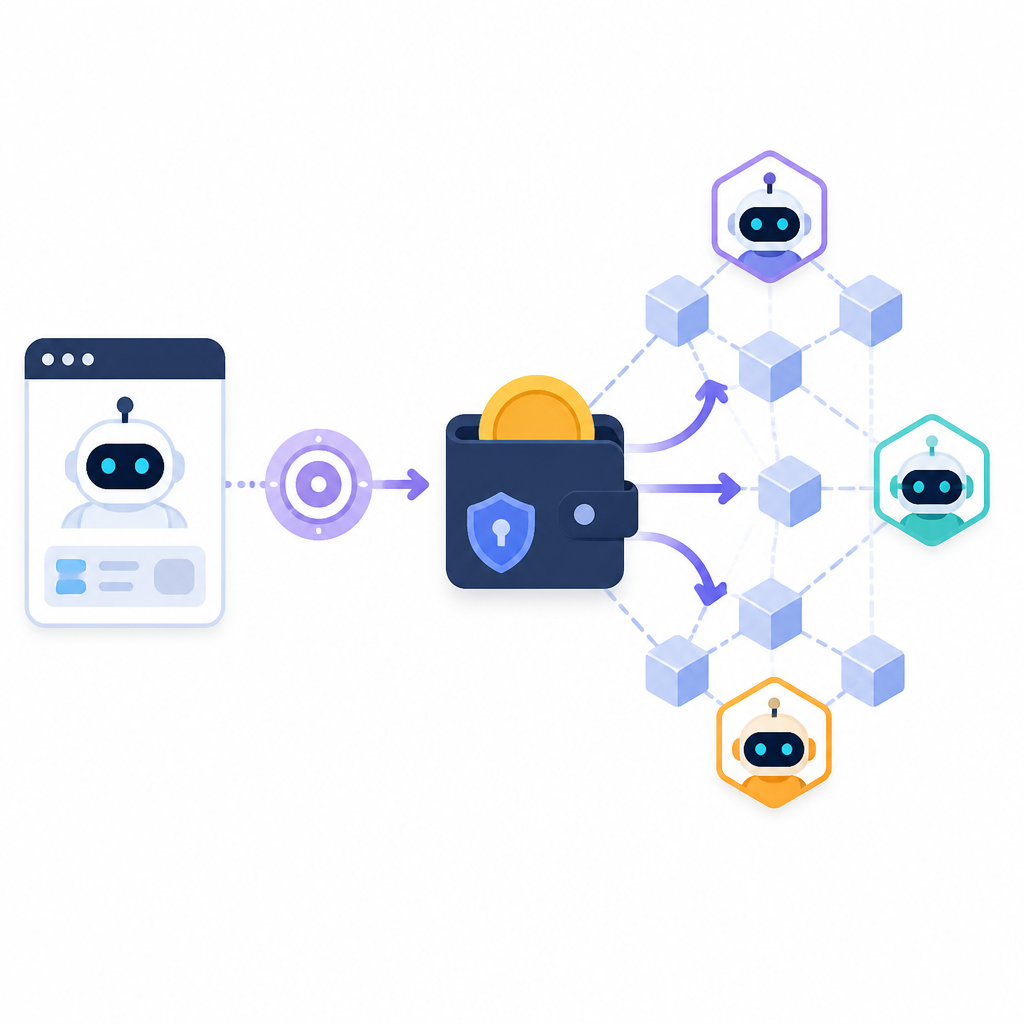
This is the cleanest commercial fit because agents can buy exactly what they need, when they need it. A model that needs one dataset, one article, or one compute burst can pay a small fee and move on, which is hard to do with legacy billing systems.
Example flows:
- agent requests a dataset
- server returns x402 payment terms
- agent pays in stablecoin
- server releases the file or API response
4. Content licensing becomes practical at micro scale
Another live use case is content licensing. Agents can pay to read articles, access images, or pull datasets for processing, and the economics work even when the price is only a few cents. That is where x402 becomes more than a technical curiosity.
Traditional payment rails are clumsy for tiny purchases because fees, account setup, and settlement overhead eat the margin. With agent-native payments, a publisher can charge $0.10 for access and still make the transaction worth accepting.
- Article access for research tasks
- Image and media licensing
- Dataset access for model workflows
5. Trading and DeFi are where the volume can grow
Autonomous trading is the most familiar crypto-native use case. Agents can rebalance portfolios, execute trades, and manage DeFi positions on behalf of their operators, which creates a direct link between AI decision-making and on-chain activity.
The article says this category has grown as infrastructure has improved, but it still depends on risk controls. A trading agent with the wrong parameters can lose money quickly, so spending limits, monitoring, and operator oversight remain part of the stack.
- Yield optimization
- Arbitrage execution
- Portfolio rebalancing
6. Compliance still treats agents as tools, not legal persons
The biggest open question is not technical. It is regulatory. The article flags KYC for agent operators, AML monitoring for unusual agent activity, and liability for economic decisions as areas where the framework is still forming.
For now, the practical rule is that AI agents are treated as instruments of the human or organization that deployed them. That means the operator is responsible for compliance, taxes, and the outcomes of the agent’s transactions, even if the agent acts on its own.
What to pick
If you are building payment infrastructure, x402 is the clearest entry point because it gives agents a standard way to pay over the web. If you are building products, agent wallets matter most because they add the controls that make autonomous spending usable in production.
If you want to watch where real adoption starts, follow data access, content licensing, and DeFi automation first. Those are the places where agent payments already have a clear job to do, and where the next wave of on-chain volume is most likely to come from.
// Related Articles
- [CHAIN]
Ethereum’s price should be read as network demand, not just speculati…
- [CHAIN]
Ethereum’s shake-up turns ETH into a cleaner bet
- [CHAIN]
Bitcoin’s price page explains the market in one view
- [CHAIN]
Web3 Banking Guide for Fintech Teams
- [CHAIN]
10 prediction market builders that can ship Polymarket-style apps
- [CHAIN]
Solana’s July 10 updates point to real adoption