OpenAI is right to hire Dean Ball for policy power
OpenAI is making the right move by hiring Dean Ball to harden its policy and governance edge.

OpenAI is strengthening its policy and governance edge by hiring Dean Ball.
OpenAI should hire more people like Dean Ball because frontier AI is now a political and regulatory business, not just a product race. Ball helped shape early Trump-era AI policy, writes critically about both government and industry, and is now set to lead OpenAI’s Strategic Futures team focused on frontier AI policy and internal governance. That is not window dressing; it is a signal that OpenAI understands the next fight will be won as much in Washington and in board-level governance as in model benchmarks.
OpenAI’s biggest risk is no longer technical
Get the latest AI news in your inbox
Weekly picks of model releases, tools, and deep dives — no spam, unsubscribe anytime.
No spam. Unsubscribe at any time.
The company already knows how to ship models, scale infrastructure, and attract users. What it has to protect now is its operating room: export controls, safety rules, compute policy, procurement, and the credibility to keep building while lawmakers and regulators tighten the frame around frontier systems. A hire like Ball is useful precisely because he speaks the language of both the state and the lab.
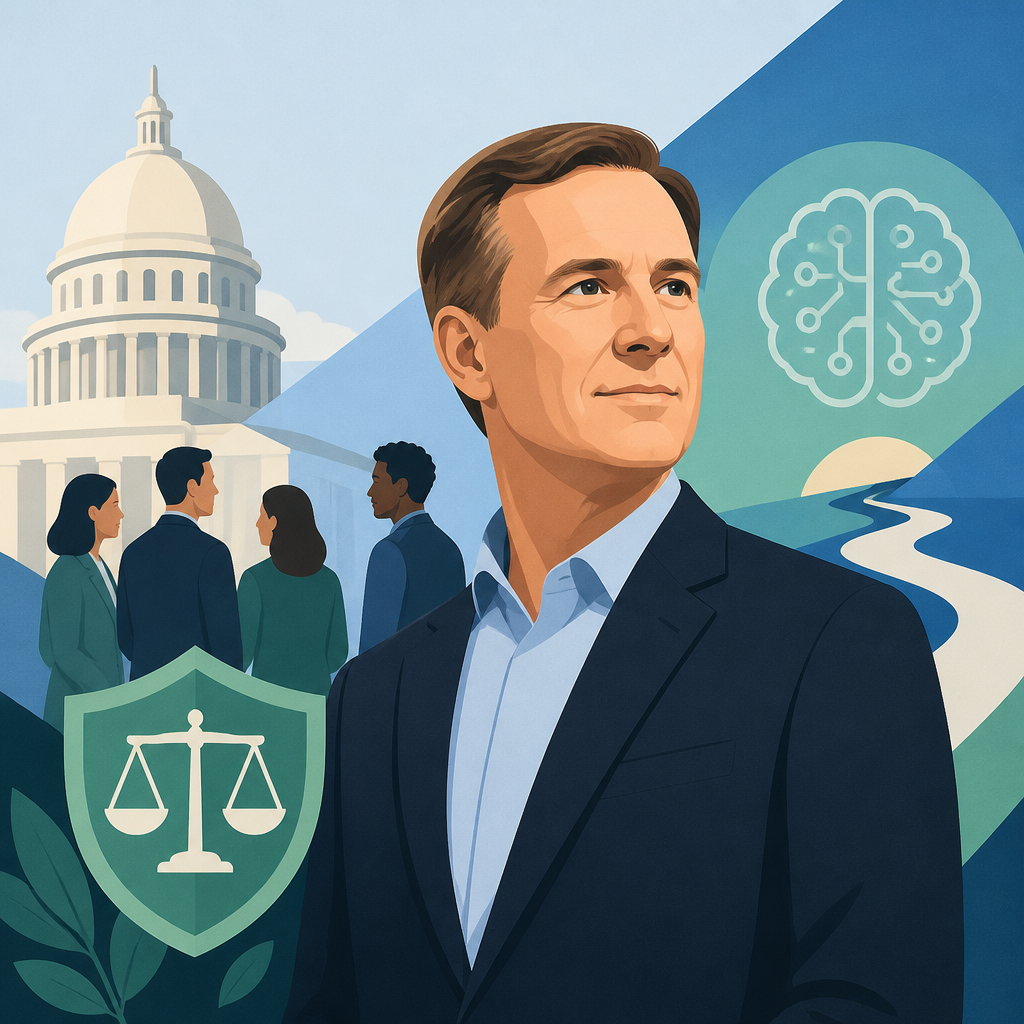
We have already seen how quickly policy can become product constraint. One executive order, one procurement rule, or one safety standard can change what gets deployed, where it gets deployed, and who gets to deploy it. In that environment, a team dedicated to strategic futures is not bureaucratic bloat. It is a competitive necessity.
Washington fluency is now a core capability
OpenAI has consistently shown that it understands the value of policy competence. It has been more adept than many rivals at building relationships with lawmakers, regulators, and national security officials, and that matters because the frontier AI market is increasingly shaped by permission structures. If you cannot explain your system to government, you will eventually lose freedom of action.
Ball brings a rare combination of policy credibility and skepticism. He is not a cheerleader for the industry, and that is exactly why the hire matters. A company serious about governance should want someone who can identify weak arguments, anticipate hostile scrutiny, and pressure-test internal assumptions before they become external scandals. In policy, the best defense is often a disciplined internal critic.
Internal governance is becoming a product feature
Frontier AI companies now sell trust as much as capability. Enterprises, governments, and even consumers are asking not only what a model can do, but who controls it, how it is evaluated, and what guardrails exist when it fails. That means internal governance is no longer an abstract compliance function. It is part of the product story.
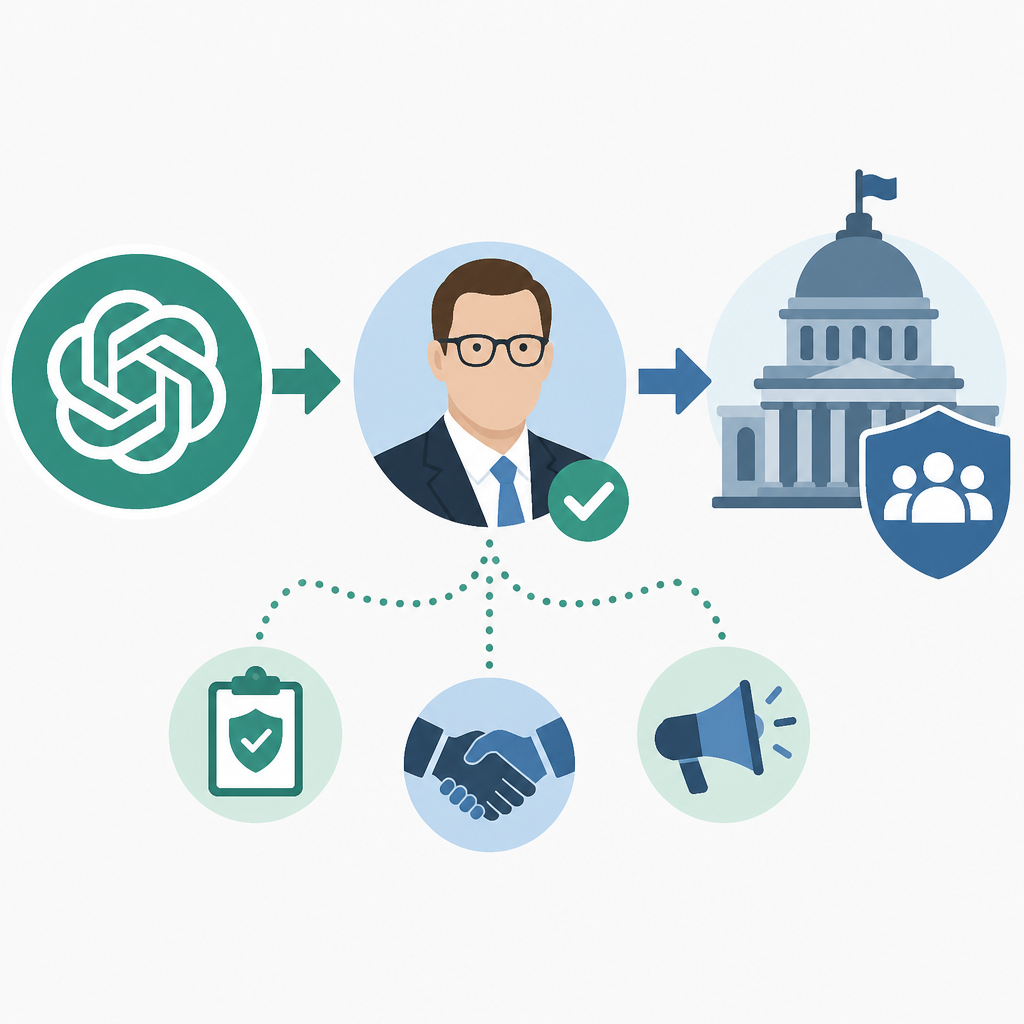
OpenAI’s new Strategic Futures team suggests the company understands this shift. If the lab can show that it has a serious process for frontier risk review, policy coordination, and escalation, it strengthens its position with partners and regulators. The practical example is obvious: a company with a mature governance function can move faster because it spends less time improvising under pressure.
The counter-argument
The strongest criticism is that this is exactly the wrong direction for a frontier lab. Hiring a policy heavyweight can look like a sign that the company is becoming too entangled with government, too focused on managing optics, and too willing to substitute institutional maneuvering for technical excellence. Critics will say OpenAI does not need another political operator; it needs safer models, better alignment research, and cleaner product execution.
That critique has force because policy talent can become self-protective bureaucracy if the company lets it. A governance team that exists only to produce talking points is a liability. But that is not a reason to reject the hire. It is a reason to judge the team by whether it changes decisions, tightens risk review, and improves accountability. If Ball’s role stays connected to real frontier choices, the hire is an asset. If it becomes theater, it fails.
What to do with this
If you are a founder or product leader building with frontier models, stop treating policy as a late-stage communications problem. Hire someone who can read regulators, challenge assumptions, and map your risk surface before the market or the government does it for you. The lesson from OpenAI is direct: in AI, governance is not overhead. It is strategy.
// Related Articles
- [IND]
DeepSeek V4 Flash Is Repricing the Post-Coding-Plan Era
- [IND]
Cloudflare’s AI search pilot is the stock catalyst now
- [IND]
AI Weekly: 2026-07-27 ~ 2026-08-03
- [IND]
Kimi K3 maps the new rules of test-time scaling
- [IND]
What the SALP liquidation reveals about AI trades
- [IND]
Claude’s security test became a real breach