$2.7 Trillion: White House AI, Bitcoin, Stablecoins
The White House says U.S. AI and crypto policy now centers on a national AI plan, a Bitcoin reserve, and a new stablecoin law.

The White House says U.S. AI and crypto policy now centers on a national AI plan, a Bitcoin reserve, and a new stablecoin law.
The White House has put three tech priorities at the center of its pitch for U.S. leadership: America’s AI Action Plan, a Strategic Bitcoin Reserve, and the GENIUS Act for stablecoins. The page says the administration is pairing those moves with more than $2.7 trillion in tech and AI investment, including $90 billion in Pennsylvania.
| 項目 | 數值 |
|---|---|
| Tech and AI investment | More than $2.7 trillion |
| Pennsylvania AI and energy investment | $90 billion |
| Intel stake | 10% |
| Space Command jobs | 30,000 |
What changed
Get the latest AI news in your inbox
Weekly picks of model releases, tools, and deep dives — no spam, unsubscribe anytime.
No spam. Unsubscribe at any time.
The White House says President Donald J. Trump has reasserted U.S. leadership in artificial intelligence, digital assets, and advanced manufacturing by pushing federal policy toward domestic supply chains and less regulatory friction. The page also says the administration is using public-sector action to back private-sector investment and keep sensitive technology in U.S. hands.
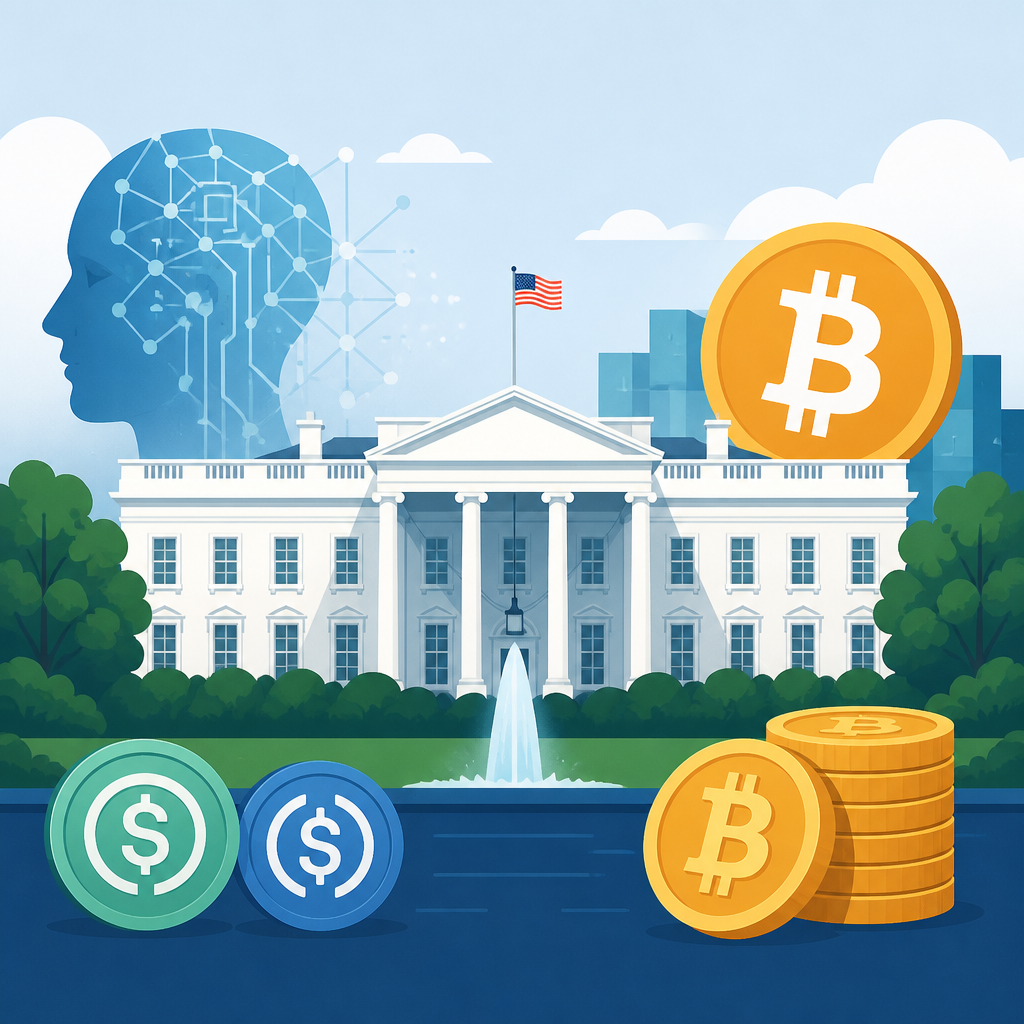
- America’s AI Action Plan is the administration’s stated AI strategy.
- A Strategic Bitcoin Reserve was created to manage crypto assets seized through forfeiture cases.
- The GENIUS Act is described as the first U.S. stablecoin regulatory framework.
- The page says the administration ended Operation Choke Point 2.0, which it calls a Biden-era crackdown on digital assets.
Other listed moves include a deal for the U.S. government to take a 10% stake in Intel, the launch of First Lady Melania Trump’s Presidential AI Challenge, and a plan to move U.S. Space Command to Huntsville, Alabama.
Why it matters
For developers and startups, the signal is that Washington is trying to shape AI and crypto rules around domestic buildout, public investment, and fewer barriers to deployment. That can affect where capital flows, how chips and cloud infrastructure are sourced, and what compliance looks like for stablecoin products.
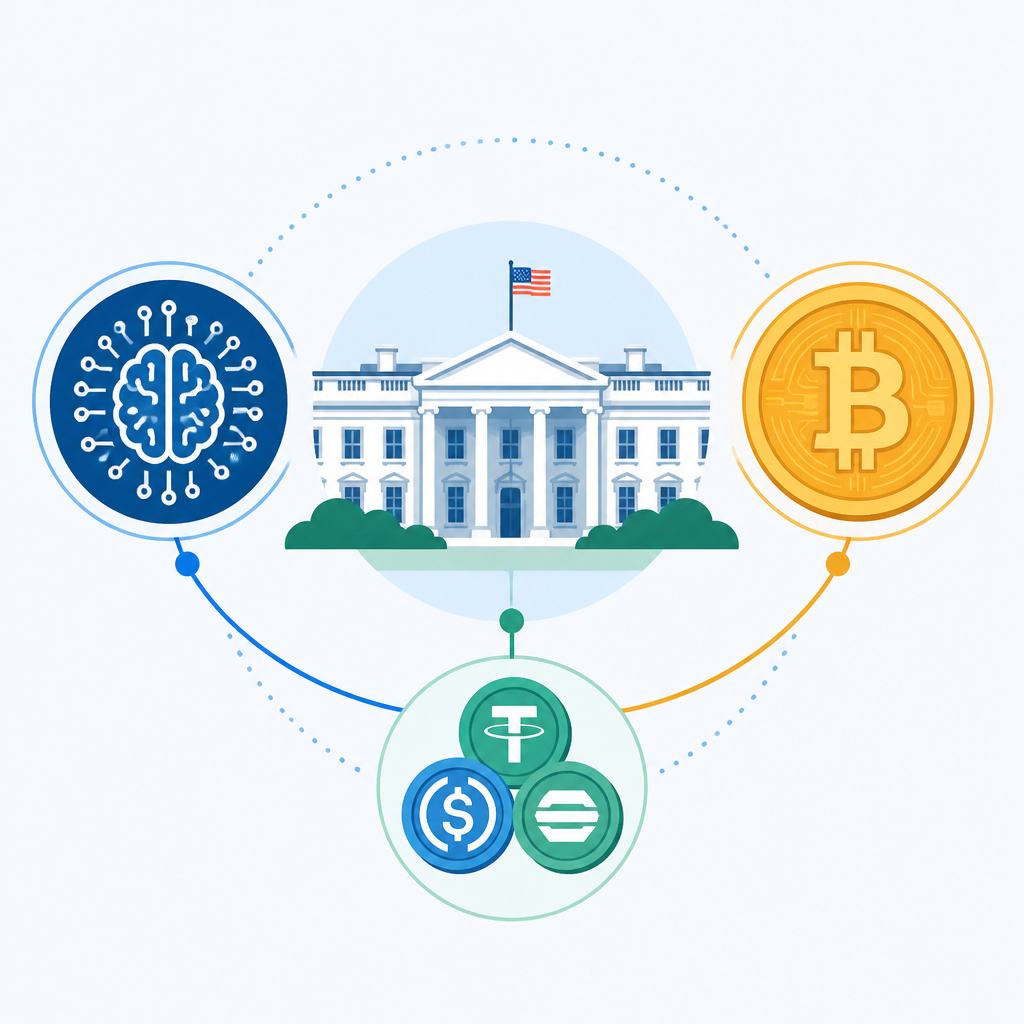
The market angle is just as direct: the White House is tying AI policy to industrial policy. If the administration can keep attracting large-scale investment while setting clearer rules for digital assets, the next fight is not whether these sectors matter, but who gets to set the terms.
The key question now is whether these announcements become durable policy or stay tied to a single political push.
// Related Articles
- [IND]
Anthropic’s suspension turns AI release into policy
- [IND]
Helix brings $10B to AI infrastructure buildouts
- [IND]
DOE should turn its land into AI infrastructure fast
- [IND]
Xiaomi MiMo Code tops Claude Code on 200-step tasks
- [IND]
OpenAI’s Ona buy adds more reach to Codex
- [IND]
The US should set tokenization rules now, or lose the market