6 crypto AI agents let you compare utility fast
I break down a presale-style crypto AI agents roundup into a practical checklist for judging utility, adoption, and risk fast.
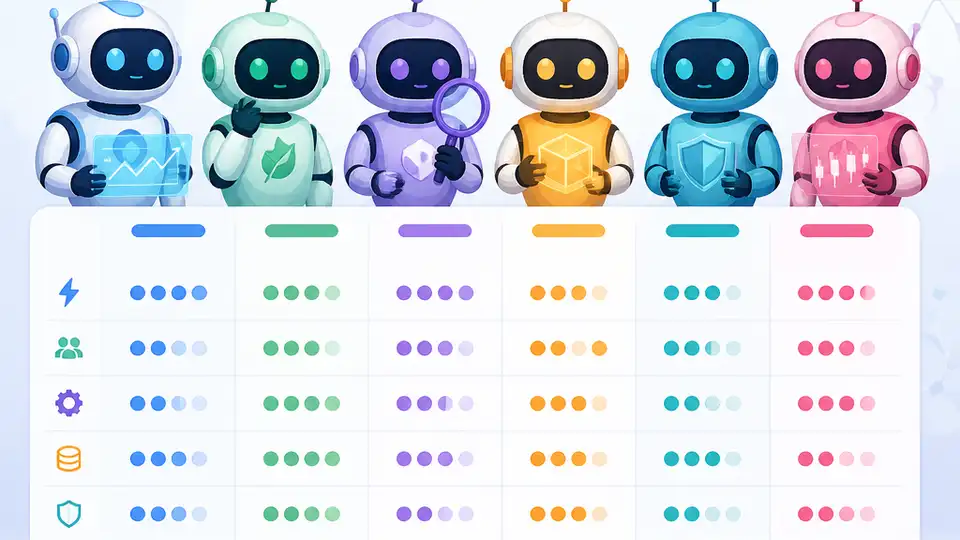
A practical checklist for judging crypto AI agents by utility, adoption, and risk.
I've been staring at crypto AI agent writeups for a while now, and honestly, most of them blur together after the second paragraph. Same breathless tone, same vague promise, same “smart money is watching” framing. The part that kept bugging me was how little of it helped me answer the only question I actually care about: if I’m evaluating one of these projects, what do I check first, and what do I ignore?
This OpenPR piece, “Smart Money is Holding These Top 6 Crypto AI Agents For Exponential Portfolio Growth”, is the trigger here. It’s short, promotional, and light on hard specifics, which is exactly why I wanted to decompose it instead of pretending it’s a research note. The article claims the project combines automated discovery tools with community-focused participation features, and it ties that to the broader “top AI agent presale crypto” conversation. That’s enough to build a real checklist from, but not enough to just nod along and buy the pitch.
Stop reading “smart money” as if it means anything by itself
Get the latest AI news in your inbox
Weekly picks of model releases, tools, and deep dives — no spam, unsubscribe anytime.
No spam. Unsubscribe at any time.
The project combines automated discovery tools with community-focused participation features.
What this actually means is the article is trying to sell two things at once: automation and participation. That’s a familiar combo in crypto. One side sounds technical, the other side sounds social, and together they create the impression that a project has both product and community momentum.
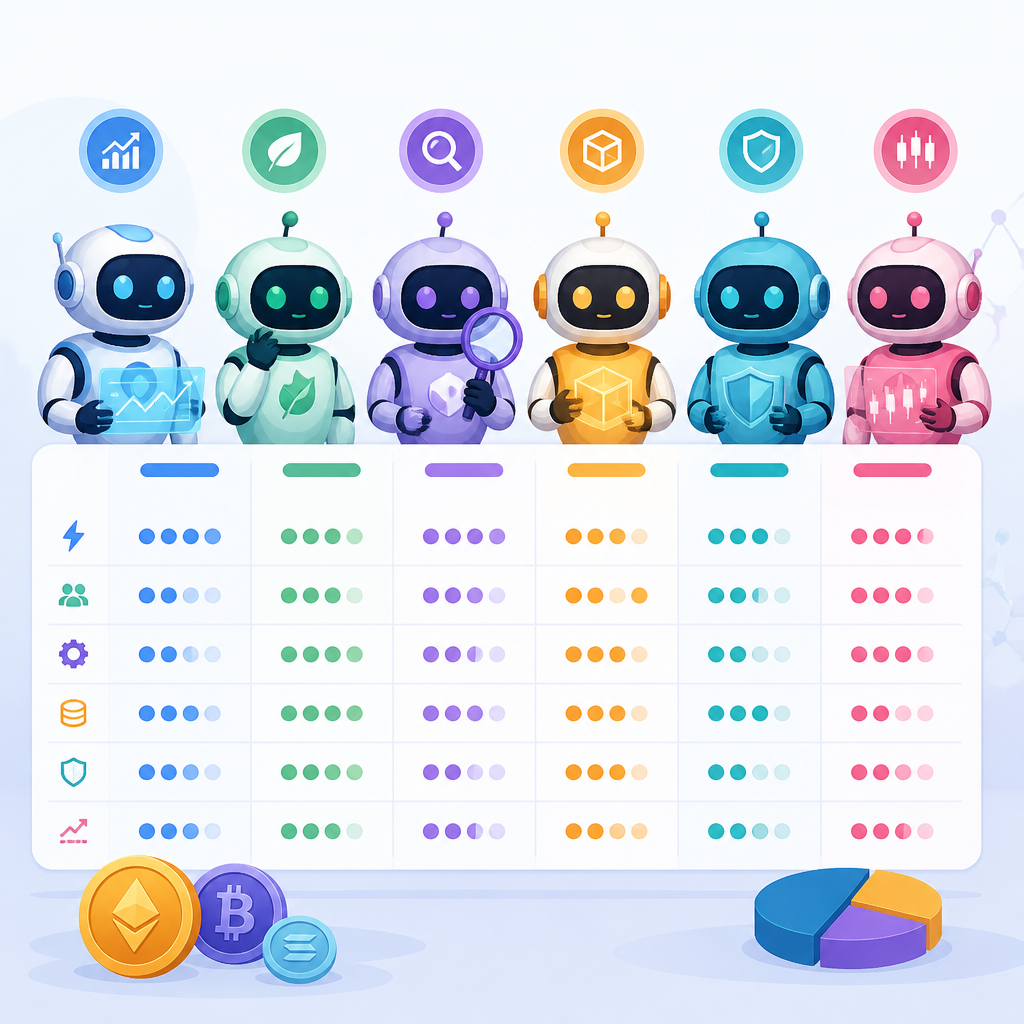
I’ve run into this pattern a lot. A project says it has AI, but when I look closer, “AI” is doing one of three jobs: a discovery layer, a recommendation layer, or a marketing layer. If the copy doesn’t tell me which one it is, I assume the weakest version until proven otherwise. That saves me from getting hypnotized by the buzzwords.
“Smart money” is even slipperier. It’s a label, not evidence. If someone wants me to believe capital is flowing into a project, I want to see actual signals: public allocations, exchange listings, onchain activity, community growth, product usage, or named backers. If none of that is in the source, I treat the phrase as decoration.
How to apply it: when you read any AI agent presale pitch, separate the claims into two buckets. First, what does the software actually do? Second, what makes people stick around after the token hype fades? If the article only answers the second bucket with vibes, I move on.
- Write down the claimed function in one sentence.
- Write down the claimed adoption mechanism in one sentence.
- Mark anything that is just a confidence phrase, like “smart money,” “top,” or “exponential.”
The annoying part is that this takes less than two minutes, and it instantly exposes whether the project has a real product story or just a polished pitch.
“Automated discovery” is not the same thing as useful automation
The project combines automated discovery tools...
What this actually means is the article wants the reader to believe the project helps people find opportunities faster. That could be useful. Or it could mean the project scrapes data, ranks tokens, or surfaces trends without giving you any edge at all.
I’ve been burned by this exact category. A tool can discover a thousand things and still not help me decide on one. Discovery sounds productive because it creates motion. But motion is not decision-making. If a project says it helps users discover opportunities, I want to know what inputs it uses, what outputs it gives, and whether those outputs are better than what I’d get from basic dashboards or a decent screener.
If the project is really about discovery, the practical questions are simple. Does it show new assets earlier than competitors? Does it filter noise better than a generic list? Does it explain why something matters, or does it just dump names into a feed? If I can’t answer that, then “automation” is just a prettier word for sorting.
How to apply it: test the discovery claim against a boring baseline. Compare it to CoinGecko, CoinMarketCap, DexScreener, or a simple social trend tracker. If the project cannot beat a free baseline on clarity or speed, I don’t care how futuristic the interface looks.
Useful questions to ask:
- What data sources does it use?
- How often does it update?
- What does it do that a normal watchlist cannot?
- Can I verify the output independently?
If the answer to most of those is “not really,” then the automation is mostly theater.
Community features only matter if they change behavior
...with community-focused participation features.
What this actually means is the project is trying to build retention through participation. That could be quests, voting, referrals, staking, badges, or some mix of all four. In crypto, this is often where projects either become sticky or become annoying.
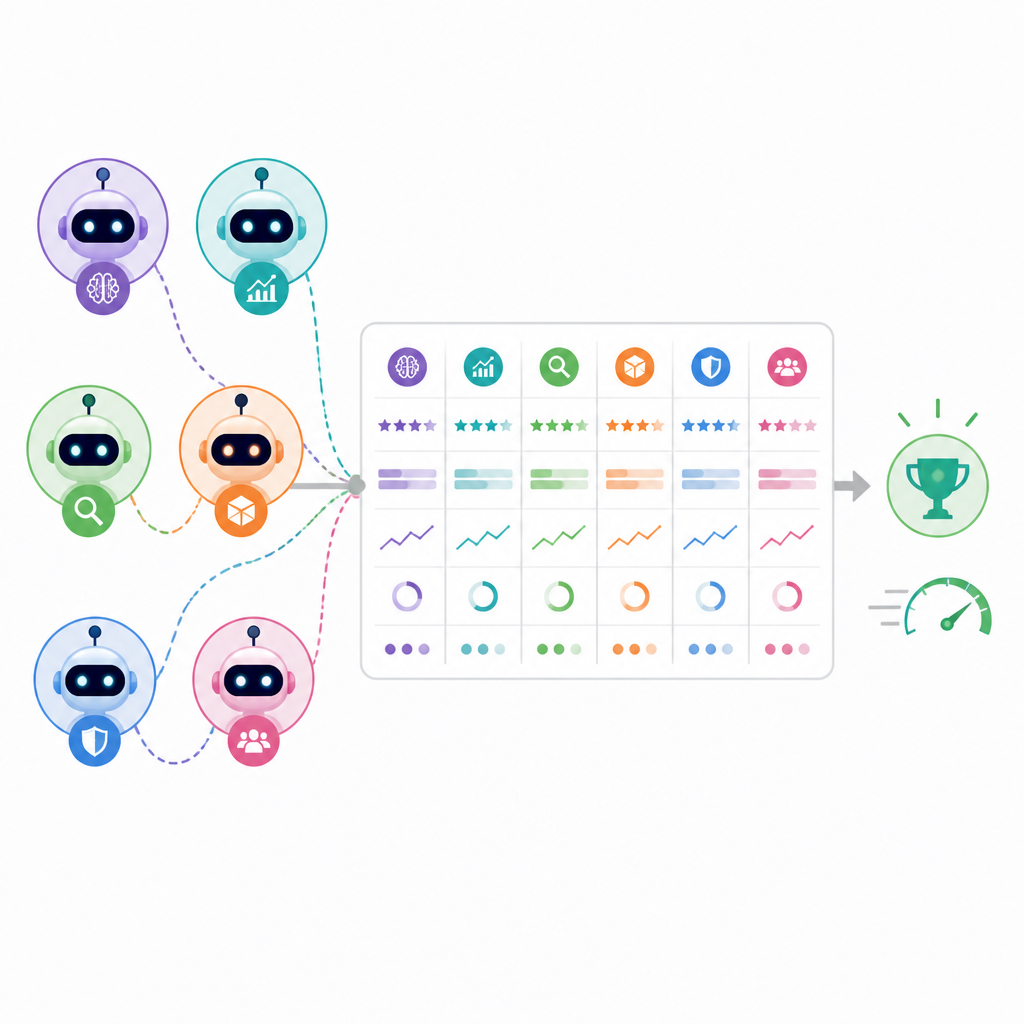
I’m not ضد community mechanics. I just don’t like when they’re used as a substitute for product value. A good participation layer should make the product more useful, not just more noisy. If users are participating because they want access, governance, or better outputs, that’s one thing. If they’re participating because the project needs constant activity to look alive, that’s another.
I ran into this when reviewing a few tokenized communities last year. The engagement numbers looked healthy on the surface, but the actual product usage was thin. People were farming points, not using the tool. That’s the tell. When community mechanics become the main reason people show up, the product usually gets weaker, not stronger.
How to apply it: ask whether the community feature changes the product result. Does voting affect discovery quality? Does participation improve access to better signals? Does staking unlock something real? If the answer is no, then the feature is mostly retention theater.
- Real participation: improves data, access, or decision quality.
- Fake participation: boosts activity metrics without changing outcomes.
That distinction matters more than the marketing copy wants to admit.
Presale hype is a bad substitute for product proof
Traders following the top AI agent presale crypto category increasingly compare ecosystem utility with broader market adoption.
What this actually means is the article is positioning the project inside a crowded presale narrative. That’s useful context, but it also means the project is fighting for attention in a market where attention is cheap and proof is expensive.
Presales are where copy gets loudest and evidence gets thinnest. That’s not me being cynical; that’s just the structure of the thing. You’re often looking at a promise, a roadmap, and a token design before you’re looking at real usage. So the only sane move is to make the burden of proof higher, not lower.
I’ve learned to treat presale language like a draft, not a verdict. The project may eventually ship something solid. But until then, the right question is not “could this be big?” It’s “what is already working, and what is still just a pitch deck?” If the answer is mostly future tense, I get cautious fast.
How to apply it: split the evaluation into three layers.
- Product layer: what exists today?
- Distribution layer: who is using it today?
- Token layer: what does the token actually control today?
If all three answers depend on a future launch, future community growth, or future exchange access, then you’re not evaluating a product. You’re evaluating a story.
That story may still work as a trade. Just don’t confuse it with a product decision.
“Next big altcoin” is a category, not an analysis
Interest in the next big altcoin also continues expanding as AI becomes a larger part of blockchain development.
What this actually means is the article is linking AI trend momentum to token upside. That connection is common, and sometimes it’s fair. But it’s also where lazy analysis hides. “AI is growing” does not automatically mean “this token is good.” It doesn’t even mean “this token is relevant.”
I’ve seen too many projects attach themselves to a macro theme and call that strategy. AI, DePIN, RWA, memecoins, whatever the flavor of the month is, the mechanism is the same: borrow a hot narrative, hope it carries the token price, and keep the details fuzzy. The market will sometimes reward that. I’m not pretending otherwise. But as an evaluator, I still need to know whether the token has a reason to exist beyond trend attachment.
How to apply it: ask what happens if the AI narrative cools off for six months. Does the project still have a reason to be used? Does the token still have a reason to be held? If the answer is no, then the project is not an AI product. It’s a narrative wrapper.
That sounds harsh, but it’s the cleanest filter I know. A real project can survive a narrative dip because people use it. A narrative wrapper needs constant market attention just to breathe.
Utility beats “top 6” lists every time
The article headline says “Top 6 Crypto AI Agents,” but the body doesn’t give me a ranking method, a scoring model, or even a clear comparison framework. That’s the part that always annoys me. Lists are easy. Evaluation is hard.
What I want from a list like this is a repeatable rubric. If the project is supposed to combine discovery tools and participation features, then I should be able to compare it against the same criteria every time. Otherwise “top” just means “the writer liked these names enough to put them in a headline.”
So here’s the rubric I use when I’m looking at AI-agent-style crypto projects:
- Does it solve a specific user problem?
- Can I verify the product exists today?
- Does the community feature improve the product, or just inflate activity?
- Is there a reason to hold the token besides speculation?
- Can I explain the project to another developer without using hype words?
If I can’t do that last one, I usually don’t understand it well enough yet. That’s a good rule for a lot of crypto, actually.
How to apply it: turn any “top projects” article into a scoring sheet. Give each project a score from 1 to 5 for product clarity, proof of usage, token utility, and community quality. Ignore the headline ranking. Build your own.
The template you can copy
## Crypto AI agent evaluation template

Use this checklist before buying into any AI-agent-style crypto project.

### 1) Product clarity
- What does the project actually do?
- What user problem does it solve?
- Can I describe it in one sentence without hype words?

### 2) Proof it exists
- Is there a live product, demo, or public repo?
- Can I verify the claim independently?
- Is the output better than a free baseline tool?

### 3) Discovery quality
- What data sources does it use?
- How often does it update?
- Does it surface useful signals or just more noise?

### 4) Community mechanics
- Do participation features change outcomes?
- Is the community improving the product, or just generating activity?
- Are users farming points, or actually using the tool?

### 5) Token utility
- What does the token do today?
- What changes if I remove the token from the system?
- Is there a reason to hold it beyond speculation?

### 6) Narrative risk
- What happens if the AI narrative cools off?
- Does the project still have users?
- Does it still have a product reason to exist?

### Quick scorecard
- Product clarity: /5
- Proof it exists: /5
- Discovery quality: /5
- Community mechanics: /5
- Token utility: /5
- Narrative risk: /5

### Decision rule
- 22–30: worth deeper research
- 15–21: maybe, but only with strong proof
- Below 15: pass
I’d use that template on every presale-style AI project before I even think about token mechanics. It forces the conversation back to evidence, which is where it should have been in the first place.
That’s the real value here: not the headline, not the phrase “smart money,” not the “next big altcoin” framing. It’s the habit of stripping the marketing down to a few testable questions. Once you do that, these articles get a lot less persuasive, which is a good thing.
Source attribution: I based this breakdown on the OpenPR article at https://www.openpr.com/news/4539015/smart-money-is-holding-these-top-6-crypto-ai-agents. The checklist, framing, and template are my own synthesis from that source, not claims made by the original post.
// Related Articles
- [CHAIN]
Bitcoin’s price page explains the market in one view
- [CHAIN]
Web3 Banking Guide for Fintech Teams
- [CHAIN]
10 prediction market builders that can ship Polymarket-style apps
- [CHAIN]
Solana’s July 10 updates point to real adoption
- [CHAIN]
BYDFi Brings Crypto Trading Pitch to Lima
- [CHAIN]
Crypto exchanges should show up in LATAM, not just advertise there