Abra turns tokenization into a crypto banking play
Bill Barhydt’s Abra is betting tokenized yield, lending, and onchain wealth management will matter more than bitcoin price.

Abra is turning tokenization, yield, and lending into a crypto banking template.
I've been around enough crypto products to know when a team is still telling the old story. Bitcoin goes up, bitcoin goes down, and everyone pretends that’s the whole business. But that framing gets stale fast. It also makes product design lazy. I’ve seen too many platforms bolt on “earn” tabs and call it strategy, like slapping a fresh coat of paint on a broken checkout flow. That’s why Bill Barhydt’s pitch at Abra caught my eye. He’s not talking about another trading app with a custody wrapper. He’s arguing that the main event is moving assets onchain, making them liquid, and using them as collateral. That’s a much more useful mental model if you actually build financial products. It’s also a lot harder, which is probably why it matters.
The piece that triggered this for me was CoinDesk’s interview with Abra CEO Bill Barhydt. I’m not quoting view counts or bookmarks because the source didn’t provide them. What it did provide is a pretty clear thesis: Abra wants to be a tokenization and wealth-management platform, and Barhydt thinks tokenization will matter more than people obsessing over bitcoin’s price. That’s the angle I’m breaking down here, because it’s the part builders can actually use.
Barhydt isn’t selling “crypto,” he’s selling a bank in app form
Get the latest AI news in your inbox
Weekly picks of model releases, tools, and deep dives — no spam, unsubscribe anytime.
No spam. Unsubscribe at any time.
“Crypto should function like a bank.”
That line is the whole starting point. Not “crypto should be a better casino.” Not “crypto should be a better charting app.” A bank. That means trade, earn, borrow, pay, hold, and move between those modes without making the user feel like they’re juggling six different products.

What this actually means is that Abra is positioning itself less like an exchange and more like a financial operating system for digital assets. The CoinDesk article says Abra already lets clients trade, earn, borrow, and make payments from one platform. It also says the company is building out tokenization and wealth management under Abra Financial Holdings, with advisory and institutional clients using digital asset strategies, yield products, staking, and collateralized lending.
I’ve built enough fintech flows to know why this matters. If a user has to leave one screen to borrow, another to earn, and another to move collateral, you lose them. Not because they’re dumb. Because the product is asking them to think like an internal ledger. Nobody wants that. They want one mental model: I have assets, I can put them to work, and I can get them back when I need them.
How to apply it: if you’re designing a crypto or fintech product, stop organizing around your internal departments. Organize around user intent. The first question is not “what feature do we have?” It’s “what can the user do with their asset right now?” Then wire the product around those actions.
- Hold
- Earn
- Borrow
- Transfer
- Use as collateral
That list is boring on purpose. Boring is good. Boring means the product is understandable, and understandable financial software gets used.
Tokenization only matters when it turns dead assets into working capital
“Everything is becoming tokenized and liquid via DeFi.”
This is the part of the interview where Barhydt stops talking like a crypto marketer and starts talking like someone who understands balance sheets. Tokenization by itself is not the point. A token on a chain that nobody can use is just a prettier database entry. The real move is making assets liquid, transferable, and usable as collateral.
That’s the actual business case. If you can represent an asset onchain and then use it in lending markets, you’ve converted something static into something productive. That is a much stronger story than “number go up.” It also maps better to how institutions think. They care about collateral efficiency, settlement speed, and asset mobility. They do not wake up thinking, “I hope my treasury gets more blockchain-native today.”
I ran into this exact misunderstanding when I watched teams pitch tokenized assets like they were collectibles. Cool demo, terrible economics. The pitch would be all about provenance and onchain transparency, but the moment I asked how the asset would be financed, the room got weirdly quiet. That’s the gap Barhydt is trying to fill. Tokenization is only interesting when it changes what the asset can do.
How to apply it: when you evaluate a tokenization idea, ask three questions.
- Does this asset become easier to move?
- Does it become easier to pledge as collateral?
- Does it create new yield or financing options?
If the answer is no to all three, you probably have a demo, not a product.
Yield is the wedge, not the headline
The company plans to launch BTCAF, a yield-bearing bitcoin product, following growing demand for its USDAF tokenized dollar offering.
Here’s where the strategy gets more practical. Abra is not just waving around the word tokenization. It’s building products people can buy because they want yield. USDAF is the current example in the article, and BTCAF is the next one, a bitcoin-based yield product for advisory clients and, outside the U.S., retail investors.
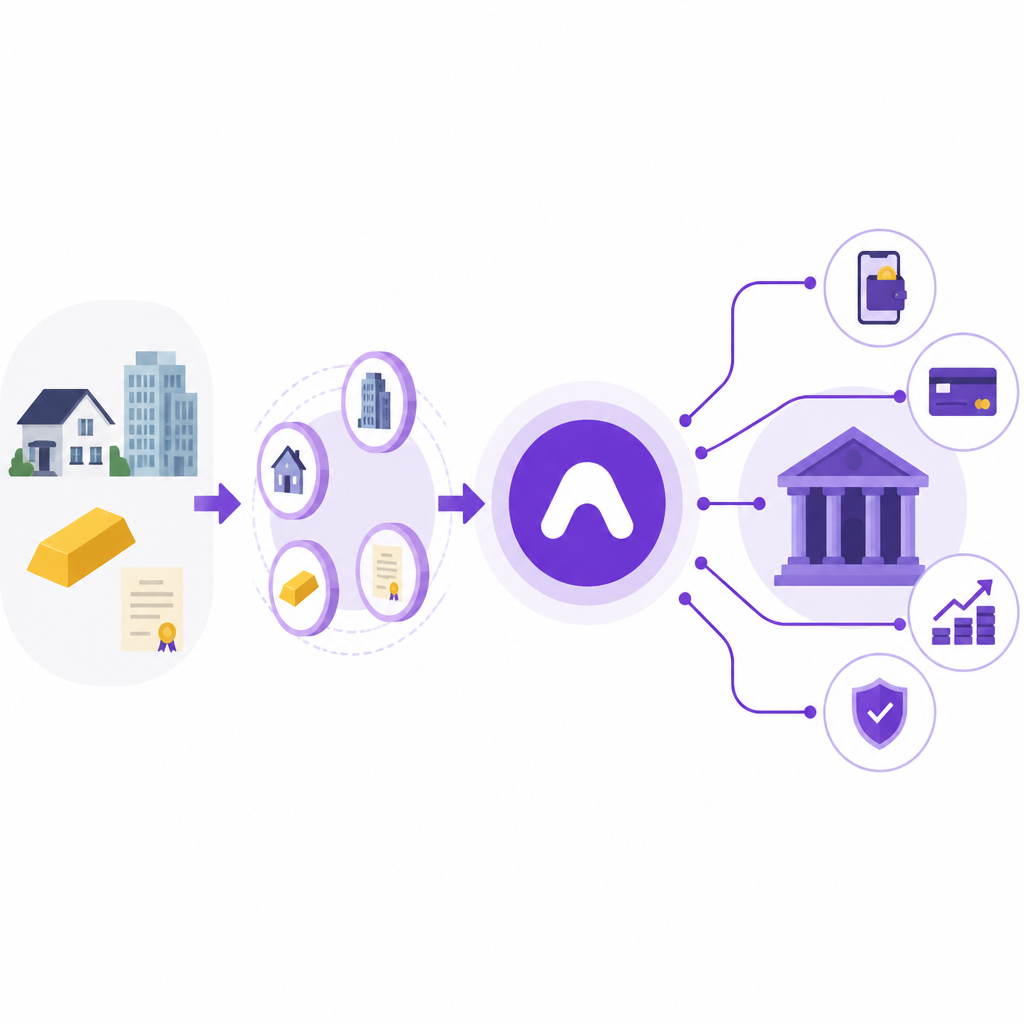
What this actually means is that yield is the user-facing reason to care about the plumbing. Most people do not get excited about “tokenized dollars” as a concept. They care that their idle capital can do something. Yield is the hook, tokenization is the mechanism, and lending is the engine underneath it.
This is where a lot of crypto products still screw up. They sell infrastructure language to end users. That never lands. Users want a simple answer to a simple question: what does this do for me? If the answer is “it earns,” they’ll listen. If the answer is “it uses a tokenized wrapper with composable settlement properties,” they’ll close the tab.
I’ve seen teams overcomplicate this because they’re too close to the protocol layer. They want the market to admire the architecture. The market does not care. It cares about return, risk, access, and liquidity. Abra seems to understand that. The product story is not “look at our token.” It’s “look at what your token can now do.”
How to apply it: if you’re building a yield product, write the user promise in plain English before you write the smart-contract spec. Then make sure the product page answers these basics:
- What asset is earning?
- Where does the yield come from?
- What are the lockup or liquidity terms?
- Who can use it?
If you can’t answer those cleanly, you’re not ready to ship, no matter how elegant the backend looks.
Lending is where crypto stops pretending and starts acting like finance
Abra already allows clients to borrow against bitcoin, ether and solana holdings.
Lending is the most honest part of this whole story. It’s where the rhetoric gets tested. Anyone can say assets are valuable. Lending asks whether anyone will actually lend against them, at what terms, and with what risk controls.
Barhydt says Abra is investing heavily in expanding lending capabilities, and that fits the broader thesis. If tokenized assets can be used as collateral, then lending becomes the bridge between crypto-native balance sheets and traditional financial behavior. Borrow against the thing you own. Put the capital to work. Keep moving.
I like this part because it forces crypto to grow up. Lending is not cute. It requires underwriting, collateral management, liquidation logic, and a real understanding of who takes the downside when things get ugly. That’s exactly why it matters. If your platform can do lending well, you’re not just wrapping a token. You’re operating a financial stack.
I’ve seen a lot of “DeFi-powered” products collapse into hand-wavy explanations the moment someone asks about liquidation thresholds. That’s the tell. Good lending products are boring in the best possible way. Users should understand what happens when collateral moves, what triggers margin calls, and how fast the system reacts.
How to apply it: treat lending like a risk product first and a growth product second. Build the user experience around clarity.
- Show collateral ratios plainly
- Explain liquidation triggers in one sentence
- Make repayment terms obvious
- Separate promotional yield language from risk disclosures
If you hide the mechanics, you’re basically asking users to trust vibes. That’s not a business model.
Wall Street doesn’t need another bitcoin sermon
In his view, the ability to tokenize assets and make them liquid, transferable and usable as collateral through decentralized finance is a far more consequential development than debates over exchange-traded funds or short-term market cycles.
This is the sharpest strategic point in the piece. Barhydt is saying the center of gravity is shifting. Not away from bitcoin entirely, but away from bitcoin price obsession as the main narrative. If you’re talking to institutional investors, “what’s bitcoin doing this week?” is a weak conversation starter. “How can we turn assets into productive collateral?” is a much better one.
What this actually means is that tokenization gives crypto a way to speak the language of finance without sounding like cosplay. Institutions already understand collateral, liquidity, and distribution. If crypto can map itself onto those concepts, it gets a real seat at the table instead of another speculative side bet.
This is also why the article matters to builders who are tired of cyclical crypto hype. If your product only works when the market is green, that’s not a product. That’s a mood. Tokenization and lending are more durable storylines because they tie directly to financial utility.
I’ve had plenty of conversations where the room wanted to talk about ETF flows, price targets, or some random chart pattern. Those conversations are fine for traders. They are not a strategy for product teams. If you’re building for institutions, your pitch has to survive a boring compliance meeting. Tokenization does that better than most crypto narratives because it sounds like finance, not fandom.
How to apply it: build your messaging around utility, not ideology. Replace “decentralized future” language with outcomes that risk teams can evaluate.
- Faster settlement
- Better collateral efficiency
- Broader distribution
- Programmable asset movement
That’s the language that gets meetings scheduled. Not slogans.
The public listing is part of the message, not just the financing
The deal, announced in March, values Abra at $750 million and will see the combined company renamed Abra Financial Inc., with plans to list on Nasdaq under the ticker ABRX, subject to regulatory approvals.
Abra’s Nasdaq plan matters because it signals what kind of company Barhydt wants to be seen as. A public listing is not just a capital event. It’s a credibility event. It tells institutions, counterparties, and customers that the company wants to be evaluated like a financial business, not a crypto startup living off narrative gravity.
That said, public markets are not a magic stamp of maturity. They just make the discipline visible. If Abra wants to sell tokenization as the future of wealth management, then it has to prove the economics, the controls, and the product-market fit under a brighter light. Honestly, good. Crypto could use more of that pressure.
What this actually means is that the company is trying to align its structure with its thesis. If the thesis is “onchain wealth management,” then the corporate wrapper should look and behave like a wealth platform. Public listing, advisory clients, institutional distribution, tokenized products, lending. It all fits the same story if they can execute.
How to apply it: if you’re building a financial product, don’t treat corporate structure as an afterthought. Your entity setup, regulatory posture, and distribution model all shape the product you can ship. The wrong wrapper can kill the right idea before users even see it.
And yes, that part is annoying. But finance is annoying. Pretending otherwise is how people end up with beautiful prototypes and no business.
The template you can copy
# Onchain wealth management playbook

## Positioning
We are not building a generic crypto app.
We are building a platform where users can:
- hold assets
- earn yield
- borrow against collateral
- move assets across accounts
- access tokenized products

## Core thesis
Tokenization matters only when it makes assets:
- liquid
- transferable
- usable as collateral
- productive through lending or yield

## Product structure
1. Asset custody
2. Tokenized product issuance
3. Yield generation
4. Collateralized lending
5. Distribution to advisory, institutional, and retail users where allowed

## User promise
Turn idle assets into working capital without making the user manage five different products.

## Messaging
Use finance language, not crypto jargon.

### Good
- improve collateral efficiency
- unlock liquidity
- simplify access to yield
- support asset-backed borrowing

### Bad
- revolutionary ecosystem
- next-gen token rails
- seamless Web3 experience
- cutting-edge financial paradigm

## Build checklist
- [ ] Define the asset type
- [ ] Define the yield source
- [ ] Define the collateral rules
- [ ] Define liquidation triggers
- [ ] Define who can access the product
- [ ] Define how the token moves
- [ ] Define how the product is distributed
- [ ] Define the regulatory wrapper

## One-sentence pitch
We turn tokenized assets into usable collateral and yield-bearing financial products.

## Landing page copy
Headline: Turn digital assets into productive capital.
Subhead: Earn, borrow, and move tokenized assets through one financial platform.
CTA: See available products

## Risk disclosure block
All yield products involve risk. Collateral values can fall. Borrowers may be liquidated. Access depends on jurisdiction and investor status.

## Internal review questions
- Would a lender understand this in 30 seconds?
- Would a compliance team know what we do?
- Would a user know how they make money?
- Would a risk team know where the downside sits?

## Launch rule
If the product story depends on bitcoin price going up, it is not a durable product story.
That’s the framework I’d actually hand to a team. It’s not fancy, and that’s the point. It forces the business to answer the questions that matter before the marketing team starts writing nonsense.
The original source for this breakdown is CoinDesk’s article at https://www.coindesk.com/business/2026/06/07/abra-s-bill-barhydt-says-wall-street-s-next-crypto-bet-is-tokenization. My commentary, framing, and template are original; the quoted statements and product details come from that report and should be read there in full.
// Related Articles
- [CHAIN]
Bitcoin’s price page explains the market in one view
- [CHAIN]
Web3 Banking Guide for Fintech Teams
- [CHAIN]
10 prediction market builders that can ship Polymarket-style apps
- [CHAIN]
Solana’s July 10 updates point to real adoption
- [CHAIN]
BYDFi Brings Crypto Trading Pitch to Lima
- [CHAIN]
Crypto exchanges should show up in LATAM, not just advertise there