AI agents will not save Web3; they will expose its weakest systems
AI agents will make Web3 more useful, but only by exposing its security, governance, and cost failures.

51% of teams already use AI agents in production, and Web3 is not ready for them.
AI agents will make Web3 more useful, but they will also expose how fragile its security, governance, and economics still are.
The promise is real: agentic systems can reason, plan, and act across wallets, smart contracts, and decentralized apps without a human clicking every step. That is exactly why the hype is misleading. A system that can move assets, vote in governance, and rebalance capital at machine speed is not a feature demo. It is a stress test for every weakness in the chain.
AI agents only matter in Web3 if they can act, and that raises the blast radius
Get the latest AI news in your inbox
Weekly picks of model releases, tools, and deep dives — no spam, unsubscribe anytime.
No spam. Unsubscribe at any time.
Traditional bots follow rigid rules. AI agents do not. They interpret context, choose actions, and keep going when the environment changes. In Web3, that means an agent can hold keys, sign transactions, and interact with contracts as a self-sovereign actor. That is the entire point, and it is also the risk. The moment you give software economic agency, every mistake becomes a financial event.
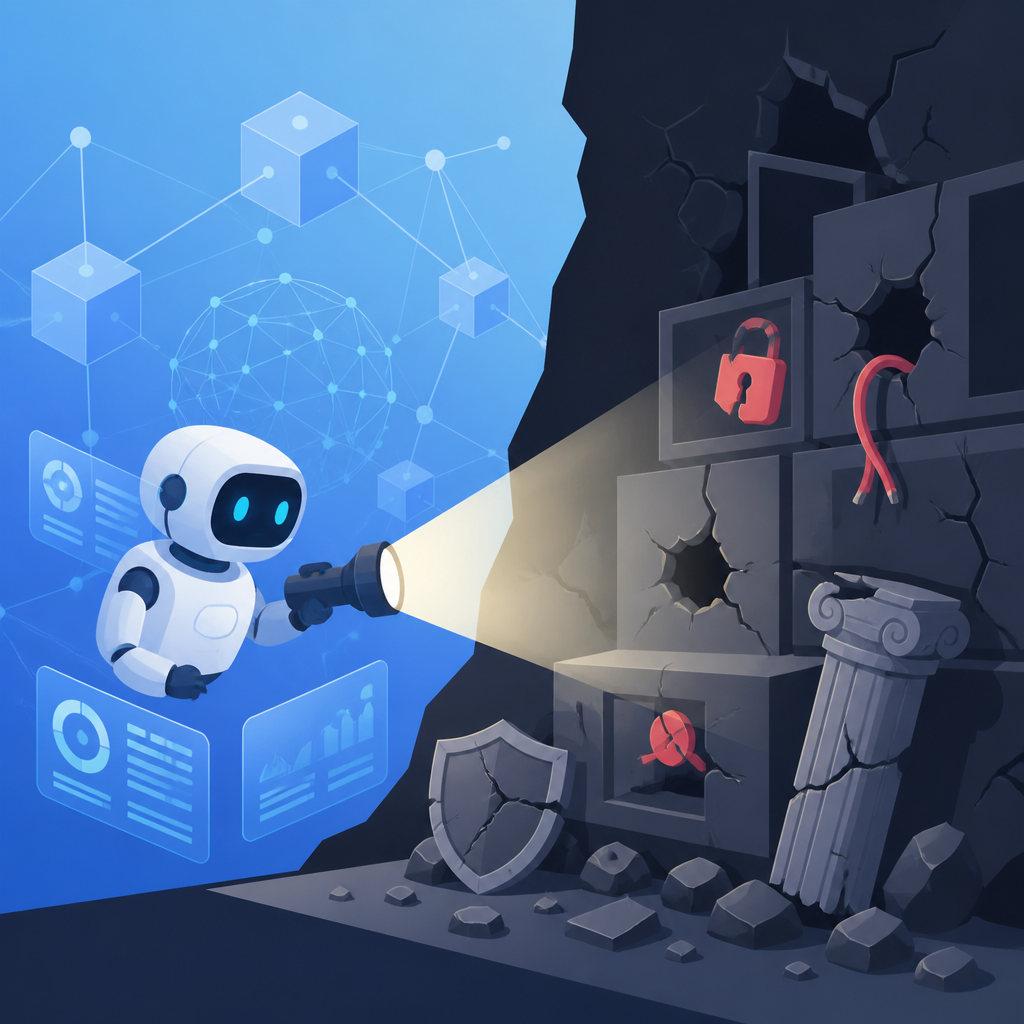
We already know what happens when automated systems meet brittle smart contracts. DeFi history is full of exploits where one bad assumption or one flawed contract drained funds in minutes. An AI agent does not need to be malicious to cause damage. If it is connected to a vulnerable contract, a bad prompt, a poisoned data source, or a misread governance proposal, it can repeat the error at scale before a human notices. Autonomy amplifies both competence and failure.
The real value of AI agents in Web3 is not intelligence, but usability
Web3 still asks ordinary users to manage gas fees, slippage, bridge risk, wallet permissions, liquidity pools, and protocol differences across chains. That is a terrible product experience. AI agents are compelling because they can translate a simple user goal into a sequence of on-chain actions. In DeFi, that means an agent can monitor conditions, compare routes, and execute a strategy without forcing the user to become a trader, analyst, and operator at the same time.
This is where the strongest case for agents lives: they reduce the cognitive tax of decentralized systems. A user should not need to understand every protocol mechanic to earn yield, participate in governance, or move assets safely. But this usability gain only matters if the agent is constrained, auditable, and permissioned. Otherwise, the convenience layer becomes a new attack surface with a nicer interface.
Governance is the clearest example of why autonomy will be hard to trust
DAOs already struggle with low participation and slow decision-making. AI agents appear to solve that problem by reading proposals, evaluating treasury impact, and voting on behalf of token holders. In theory, this creates faster and more informed governance. In practice, it concentrates judgment inside systems that users cannot easily inspect, especially when the proposal text, token incentives, and treasury logic are all moving at once.
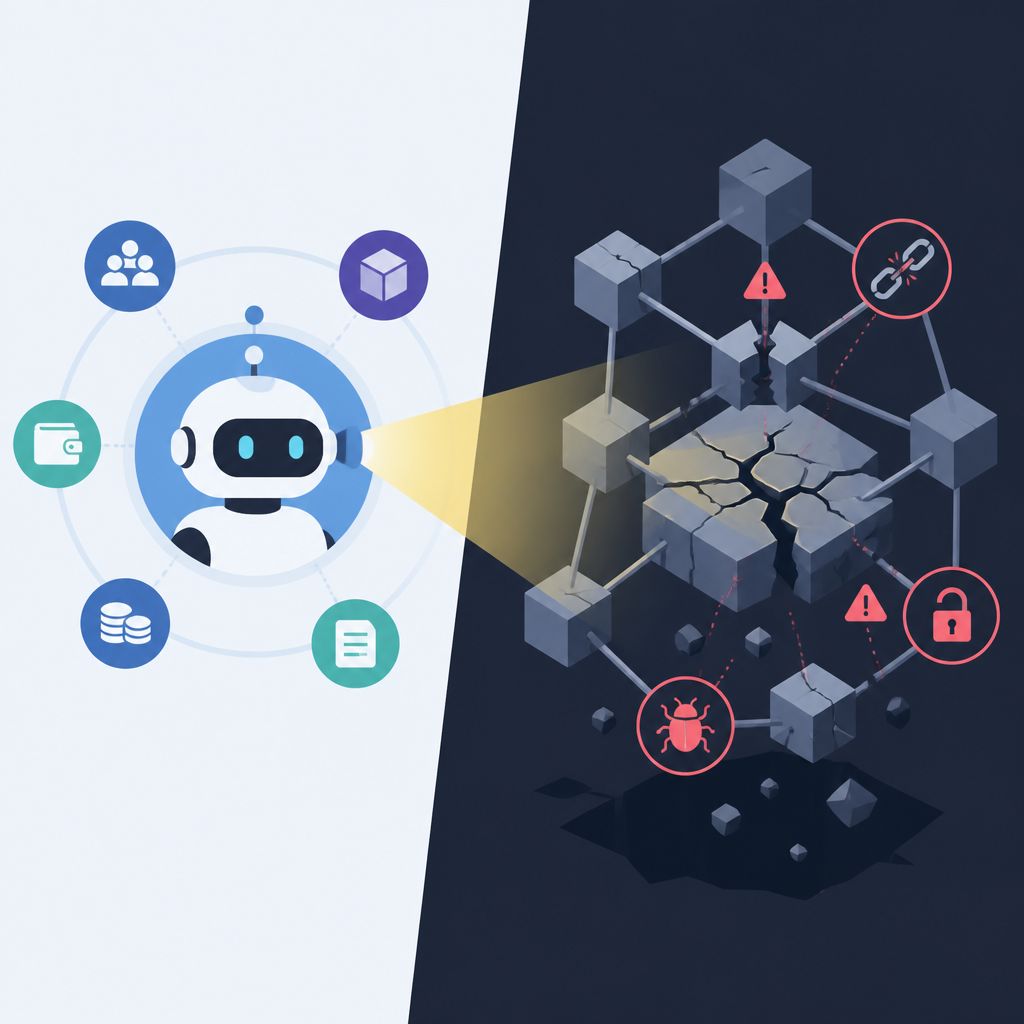
The same logic applies to autonomous treasury management. An agent that reallocates capital according to community rules sounds efficient until the mandate is vague, the market regime shifts, or the agent optimizes for a metric that is not the real objective. Governance is not just execution. It is accountability. If a DAO delegates decisions to agents without strict bounds, it will not become more decentralized. It will become less legible.
The counter-argument
The strongest argument for AI agents in Web3 is that they are the first practical way to make decentralized systems usable at scale. Web3 has always struggled with onboarding because the user experience is too technical and too fragmented. Agents can abstract that complexity, let users express intent in plain language, and handle the operational work behind the scenes. They also fit the native logic of Web3 better than Web2 automation because they can own keys, hold assets, and interact with contracts directly.
There is also a broader market case. Industry surveys show rapid adoption of agentic AI in production, and forecasts put the economic value in the trillions. If AI agents already help companies automate support, analysis, and workflow orchestration, it is reasonable to expect them to do the same for decentralized finance, creator economies, and DAO operations. Rejecting agents outright would mean ignoring a real shift in how software is being built and deployed.
That case is persuasive, but it does not defeat the core objection. Web3 does not need more autonomy by default; it needs better control. The adoption numbers prove that teams want agents. They do not prove that on-chain autonomy is safe, economical, or governable at scale. Until Web3 systems can tightly constrain agent permissions, verify actions before execution, and recover cleanly from failure, the technology will remain more impressive than dependable.
What to do with this
If you are an engineer, build agents with narrow permissions, explicit policy checks, simulation before execution, and hard limits on funds and contract access. If you are a PM, treat the agent as a workflow reducer, not a replacement for trust, and define exactly which decisions stay human. If you are a founder, stop selling autonomous Web3 as magic and start selling bounded autonomy that survives audits, adversarial inputs, and real loss. The winners will not be the teams that give agents the most freedom. They will be the teams that give them the right constraints.
// Related Articles
- [CHAIN]
Panda AI launches Golden Presale for AI blockchain
- [CHAIN]
Layer 2 vs Layer 3: $38B TVL trade-off
- [CHAIN]
Layer 2 Blockchain Development Setup Guide
- [CHAIN]
Layer 2s cut crypto fees, but bridges still decide the risk
- [CHAIN]
Clarity Act edits could reshape stablecoin rules
- [CHAIN]
Four banks are building a 2027 stablecoin rival