AI infrastructure spending is still the trade to own through 2027
AI infrastructure spending remains the durable investment theme through 2027, and the market should treat it that way.

2027 is still the horizon for AI infrastructure spending, and the bull case remains intact.
Franklin Templeton’s Katrina Dudley is right: the market should keep treating AI infrastructure as a durable investment theme through 2027 and beyond.
The money is already committed
Get the latest AI news in your inbox
Weekly picks of model releases, tools, and deep dives — no spam, unsubscribe anytime.
No spam. Unsubscribe at any time.
The strongest evidence is not rhetoric from vendors, it is capex. Hyperscalers are still pouring billions into data centers, chips, power, and networking because the demand curve for model training and inference keeps rising. Once a cloud operator commits to a multi-year buildout, that spending does not vanish because a few skeptics call the trade crowded.
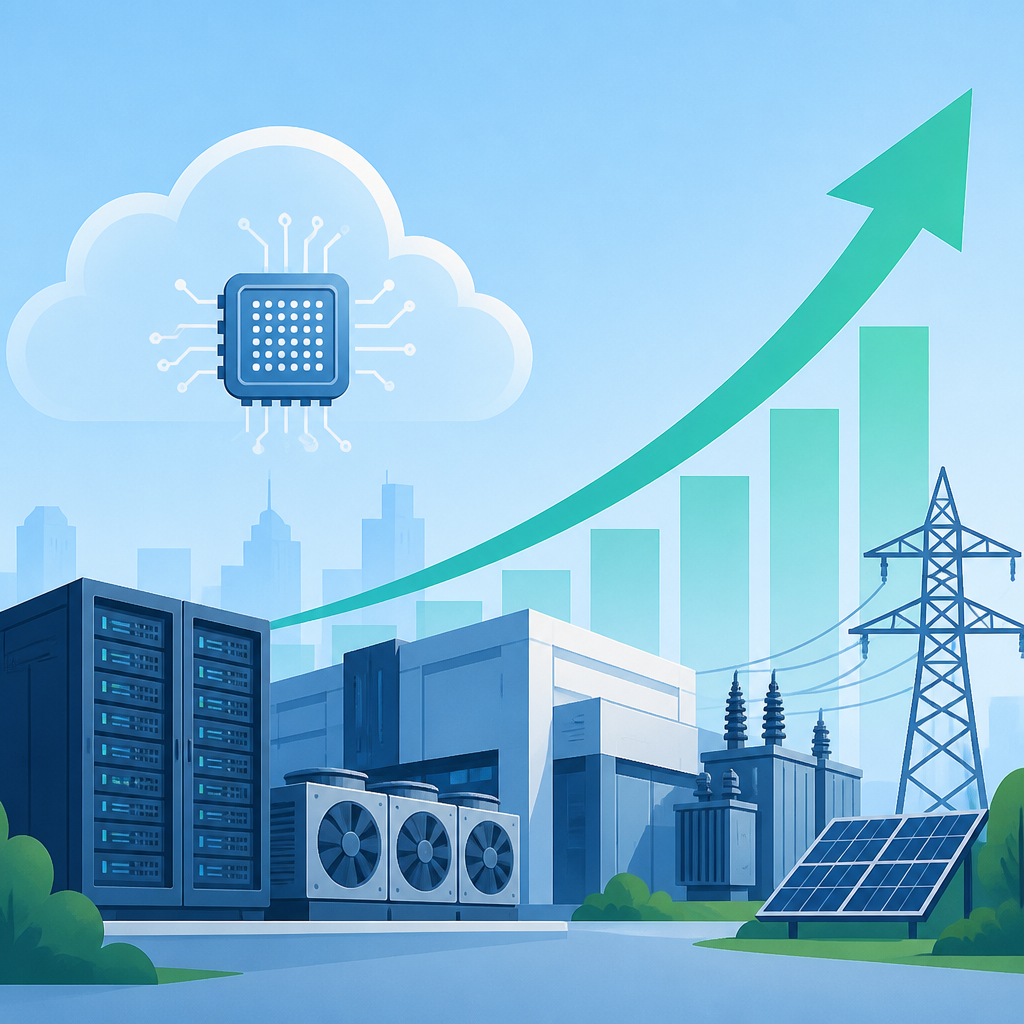
This matters because infrastructure is not a sentiment trade, it is a capacity trade. When a company like Microsoft, Amazon, Google, or Meta expands cluster builds, it pulls through semiconductors, storage, cooling, and grid equipment. That creates a long tail of demand that survives quarterly volatility and headline noise. Investors who confuse temporary stock rotation with a broken capex cycle are reading the wrong signal.
The bottleneck is still physical, not conceptual
AI adoption is no longer limited by whether the software works. The constraint is whether the physical stack can support it at scale: enough GPUs, enough transformers, enough power delivery, enough land, enough cooling, and enough interconnect. That is why the infrastructure theme has staying power. Every new model generation raises the cost of compute, not lowers it.
A simple example is the power grid. Utilities and equipment makers are seeing demand tied to data center load growth that was not part of their planning a few years ago. That is not a temporary pop from hype. It is a structural reallocation of capital toward the systems that make AI usable. The companies that sell picks and shovels for this buildout get paid whether the next model is from OpenAI, Anthropic, or a hyperscaler’s in-house team.
The market keeps underestimating the second wave
The first wave of AI spending was about training. The second wave is about inference, and it is larger, stickier, and more distributed. Once AI moves into search, coding, customer support, and enterprise workflows, the compute bill becomes recurring operating expense. That creates a long-duration revenue stream for infrastructure providers that is much harder to unwind than a one-time software launch.
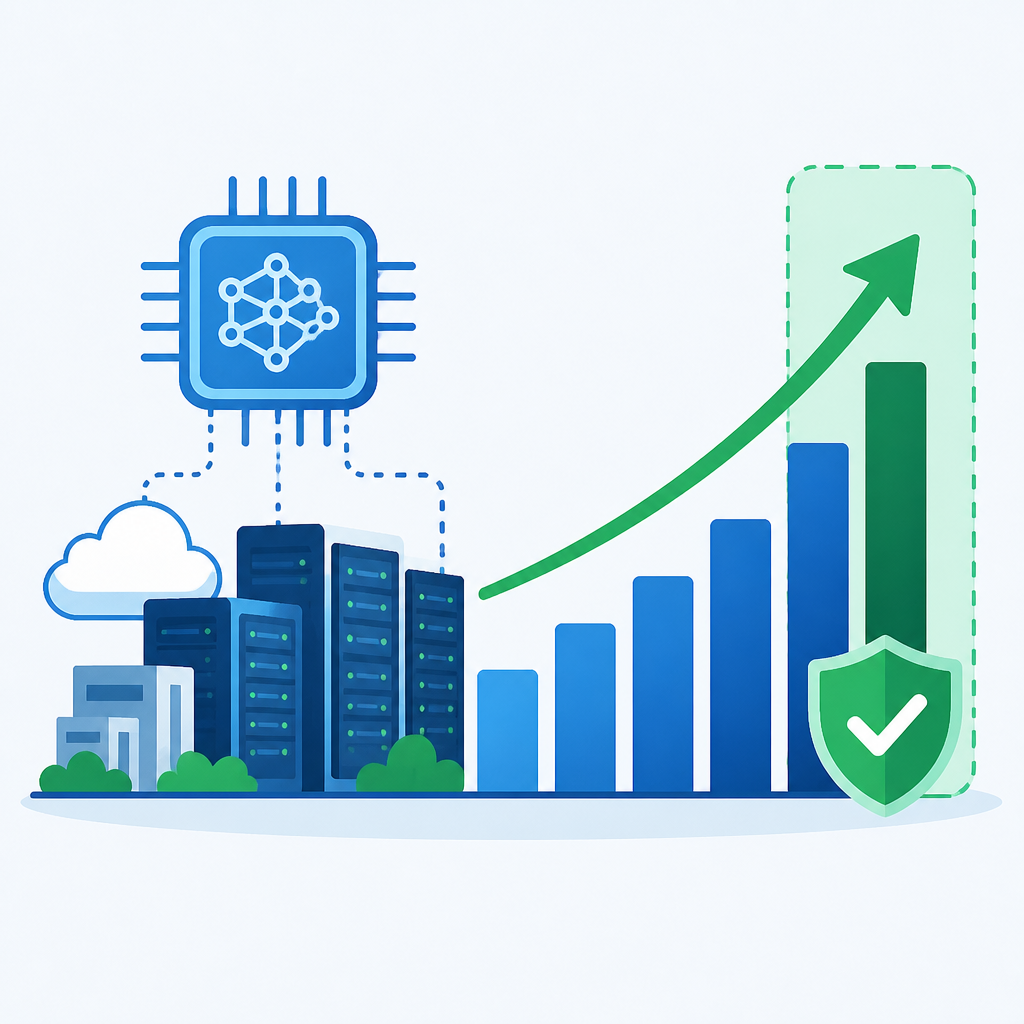
We have already seen this pattern in adjacent technology cycles. Cloud spending did not collapse after the first migration wave ended; it expanded as workloads multiplied. AI infrastructure follows the same logic, only with heavier power and silicon requirements. If anything, the buildout becomes more durable because every incremental use case adds load rather than replacing it.
The counter-argument
The bearish case is straightforward: AI infrastructure is crowded, valuations are rich, and spending can overshoot demand. Skeptics point to the risk of overbuild in data centers, a glut in certain chip categories, and the possibility that enterprise adoption lags the pace of capital deployment. They are not wrong to warn that enthusiasm can outrun near-term monetization.
They also argue that a few dominant buyers can change course quickly. If hyperscalers slow purchases, suppliers feel the pain immediately. That is true, and it is the real risk in the theme. Infrastructure is cyclical, and no cycle moves in a straight line.
But the bearish case misses the scale of the transition. The buildout is not being driven by speculative startups alone; it is being funded by the largest balance sheets in tech and by utilities, chipmakers, and enterprise buyers that need capacity to stay competitive. That broad base makes the theme durable even if individual names get volatile. The right conclusion is not to deny the risk of drawdowns, but to accept that the multi-year direction of travel remains up.
What to do with this
Engineers, PMs, and founders should plan around the fact that AI infrastructure is still the constraint layer. Build products that reduce compute waste, improve throughput, lower power usage, or make deployment easier across heterogeneous hardware. For investors and operators alike, the message is simple: the AI boom is no longer just about model quality, it is about who owns the scarce infrastructure that makes the models run.
// Related Articles
- [IND]
Claude Code’s backdoor scare points to 4 real risks
- [IND]
AMD’s AI stack turns silicon into platform choice
- [IND]
AI’s next bottleneck is data-center cooling
- [IND]
Six-layer stablecoin stack turns chaos into a map
- [IND]
OpenAI's gov partnerships turn access into policy
- [IND]
Kubernetes sets rules for AI-assisted maintainership