AI regulation maps the rules you need
A practical breakdown of how AI regulation works, plus a copy-ready policy template you can adapt for teams and products.

Old AI policy was vague; this breaks regulation into rules you can actually use.
I've been watching AI policy turn from side chatter into something that hits product, legal, and engineering all at once. And honestly, the annoying part isn't that regulation exists. It's that most teams still treat it like a one-line checkbox: write a policy, slap on a trust statement, move on. That worked when AI was a demo feature or a research toy. It falls apart the second your model starts touching hiring, lending, health, moderation, or anything else a regulator can point at without blinking.
What finally made this click for me was reading the Wikipedia page on regulation of artificial intelligence. It's not a polished framework from a vendor, which is exactly why it helps. It shows the mess: hard law, soft law, national rules, international guidance, and a pile of overlapping terms like trustworthy AI, responsible AI, and ethical AI that people keep using like they mean the same thing. They often don't.
So I dug through the page and pulled out the parts that matter when you're actually building. Not the abstract debate. The practical shape of the problem. If you're shipping AI, this is the stuff that decides whether your team is writing policy theater or something that can survive contact with legal review.
AI regulation is not one rulebook, it's a pile of overlapping pressures
Get the latest AI news in your inbox
Weekly picks of model releases, tools, and deep dives — no spam, unsubscribe anytime.
No spam. Unsubscribe at any time.
“The regulatory and policy landscape for AI is an emerging issue in jurisdictions worldwide.”
What this actually means is that there is no single AI law you can read once and be done. There's local law, sector law, international guidance, voluntary standards, and internal policy all pushing on the same system from different angles. If you only think in terms of one compliance checklist, you're already behind.
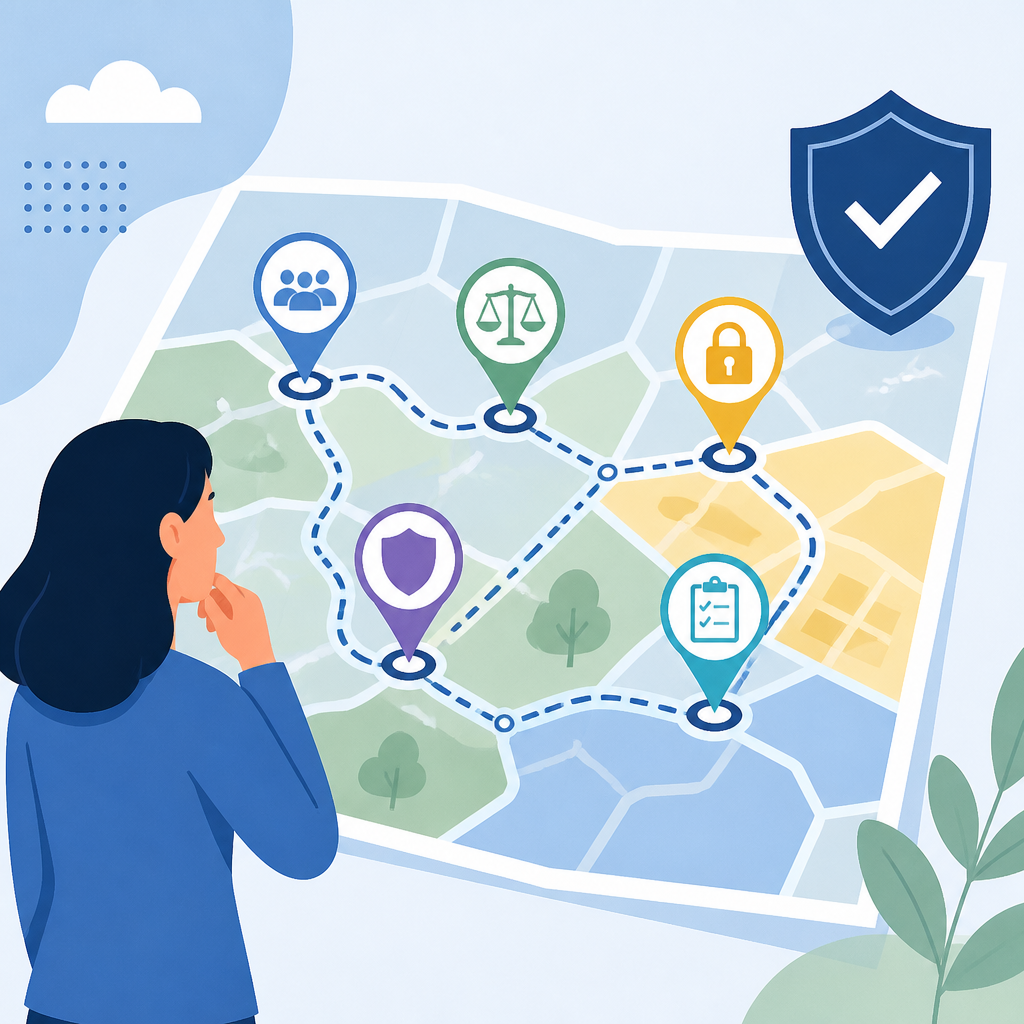
I ran into this when I tried to explain AI governance to an engineering team that wanted one answer: “Are we compliant or not?” That question is understandable, but it's too clean. The reality is more like: compliant with what, in which country, for which use case, and under which risk category? Those distinctions matter.
The Wikipedia page points out that regulation is happening across jurisdictions worldwide, including bodies without direct enforcement power like the OECD and the IEEE. That’s a clue. The ecosystem is not just laws. It’s also standards, principles, and frameworks that shape what “good behavior” looks like before a law even lands.
How to apply it: stop asking for a universal AI policy. Build a policy stack instead.
- One layer for product risk classification.
- One layer for jurisdiction-specific obligations.
- One layer for internal review and approvals.
- One layer for logging, audits, and incident response.
If that sounds bureaucratic, yeah, it is. But so is getting blindsided by a rule you assumed didn’t apply to you.
Soft law is the thing people ignore right before it becomes hard law
“Since 2016, numerous AI ethics guidelines have been published in order to maintain social control over the technology.”
What this actually means is that governments and institutions often start with principles before they start with enforcement. These are the guidelines, codes, and frameworks that don't always bite on their own, but they shape expectations. Then, once enough of them exist, they become the reference point for actual regulation.
The page mentions the Partnership on AI, the IEEE Global Initiative on Ethics of Autonomous and Intelligent Systems, and the OECD AI Principles. These aren't laws in the same sense as a statute, but they matter because they define the vocabulary everyone else uses. If your org can't speak that vocabulary, your policy will sound like it was written by someone who only half-read the memo.
I’ve seen teams dismiss soft law as “PR stuff.” That usually ends badly. Soft law is where procurement questionnaires, enterprise sales reviews, and internal risk teams get their language. It's also where regulators often start when they ask whether you behaved responsibly before the incident.
How to apply it: treat soft law as your early warning system.
- Map the principles you already claim publicly.
- Compare them to the frameworks your customers expect.
- Translate each principle into a concrete control.
- Document who owns each control and how it gets tested.
For example, “transparency” should not sit in a slide deck. It should mean model cards, user disclosures, logging, and a process for explaining automated decisions.
Hard law is slower, but it decides who gets to ship
“The European Union adopted in 2024 a common legal framework for AI with the AI Act.”
What this actually means is that AI regulation is moving from policy talk into enforceable obligations. The EU AI Act is the cleanest sign of that shift on the page. It’s not the only rule that matters, but it’s the one many teams will use as a reference point because it gives structure to risk-based governance.
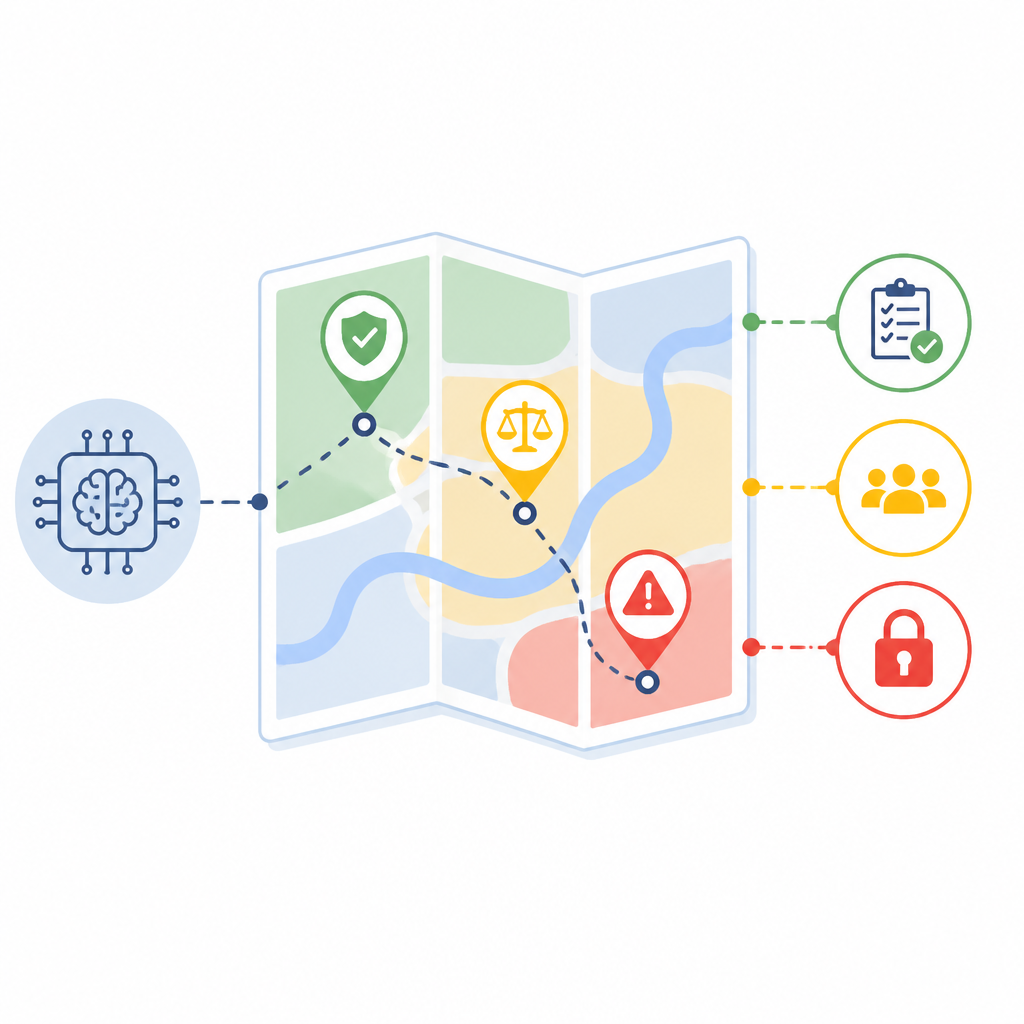
The page also says the U.S. federal agencies introduced 59 AI-related regulations in 2024, and nearly 700 AI-related bills were introduced across 45 states. That tells me the U.S. isn't waiting for one neat federal answer. It's a pile of agency actions and state-level pressure. If your product touches the U.S., you don't get to ignore that just because there isn't one giant AI statute stamped on the front.
This is where product teams get burned. They build for launch, not for classification. But regulation cares about use case. A model used for a toy chatbot is not treated the same as one used for employment screening or medical triage. That distinction is the whole game.
How to apply it: build a use-case inventory, not a model inventory.
- List every AI feature exposed to users.
- Record the decision it influences.
- Note the geography where it ships.
- Mark whether it can affect rights, access, or safety.
If you only track model names and versions, you're missing the part that regulators care about. They care about impact.
The real problem is accountability, not just accuracy
“AI governance... encompass[es] the questions of who is accountable for AI systems, what elements are governed, when governance occurs within the development lifecycle, and how it is implemented through frameworks, tools, or models.”
What this actually means is that governance is not a philosophy seminar. It's an ownership map. Somebody has to be answerable when a model behaves badly, and that answer can't be “the vendor” or “the model team” in the abstract. Someone inside the org needs to own the risk.
The Wikipedia page also says organizations deploying AI have a central role in creating and implementing trustworthy AI, adhering to principles, and taking accountability for mitigating risks. That line matters because it kills the lazy excuse that upstream model providers carry all the responsibility. They don't. If you deploy it, you own the downstream consequence.
I like this framing because it matches what I've seen in real teams. The model might come from an API, but the workflow, prompting, thresholds, human review, and user-facing claims are yours. If the system makes a decision your users rely on, you are in the chain whether you like it or not.
How to apply it: define ownership in writing, not in Slack threads.
- Assign a business owner for each AI feature.
- Assign a technical owner for each model or workflow.
- Assign a legal or risk reviewer for high-impact use cases.
- Define escalation paths for incidents, complaints, and overrides.
Then make the ownership visible in your release process. If a feature can be blocked by legal, that needs to be part of the launch checklist, not a surprise in week six.
Most teams underestimate how fast the policy vocabulary shifts
“Trustworthy AI”, “responsible AI”, and “ethical AI” have shifted in meaning over time and are often used interchangeably.
What this actually means is that the words you use in policy docs can age out faster than the product itself. A term that sounded precise two years ago may already be fuzzy now. That’s a problem because teams love to paste these phrases into docs without defining them.
The page cites Charlotte Stix on this point, and I think she's right to flag it. If your policy says “ethical AI” but doesn't define the control behind it, you've written branding, not governance. Same with “human-centered AI” or “trustworthy AI.” Nice words. Useless if they don't map to action.
I’ve had to clean up documents where every paragraph used a different synonym for the same thing. That usually means nobody wanted to write the uncomfortable sentence: “Here is the rule, here is who enforces it, and here is what happens when it fails.”
How to apply it: replace abstract labels with operational definitions.
- Instead of “transparent,” say what must be disclosed.
- Instead of “fair,” say what bias test or review is required.
- Instead of “safe,” say what threshold blocks release.
- Instead of “accountable,” name the approver and owner.
If a term can't survive that translation, cut it.
The pacing problem is why your policy needs to move faster than your model
“AI technology is rapidly evolving leading to a ‘pacing problem’ where traditional laws and regulations often cannot keep up.”
What this actually means is that you cannot wait for perfect regulatory clarity before building controls. By the time the law settles, your system will have changed twice. So the job is to build a policy that can adapt without getting rewritten from scratch every quarter.
This is the part I wish more teams understood. The point isn't to predict every future rule. The point is to make your process flexible enough that you can absorb new rules without breaking release velocity. That means lightweight risk reviews, versioned documentation, and a change process that can react when a jurisdiction updates its stance.
The page also notes that hard law has challenges because AI applications are diverse and existing agencies have limited jurisdictional scope. That's not an excuse to do nothing. It's a reason to design governance like software: modular, testable, and easy to update.
How to apply it: create a living policy instead of a static one.
- Review high-risk use cases on a fixed cadence.
- Version your policy like code.
- Track regulatory changes by region and sector.
- Keep a short list of controls that can be tightened quickly.
When the policy changes, the team should know exactly what changed and why. If not, nobody will follow it.
International coordination matters because AI doesn't respect borders
“In 2023, the United Kingdom started a series of international summits on AI.”
What this actually means is that AI regulation is not just a national story. The page mentions the AI Safety Summit, the AI Seoul Summit, the AI Action Summit in Paris, and the AI Impact Summit in New Delhi. Different governments are trying to align on common concerns even when they disagree on the details.
That matters for teams shipping globally. A feature may launch in one market, get reviewed in another, and be subject to user expectations shaped by a third. If you think regulation is only about where your company is incorporated, you're going to miss the real exposure.
I’ve seen this in enterprise deals too. A customer in one region will ask for documentation that was never required in your home market. Then another customer asks for a different standard. Before long, your “one policy” has three versions and a lot of hand-waving.
How to apply it: build region-aware controls.
- Track where each feature is available.
- Store jurisdiction-specific disclosures.
- Maintain a matrix of regional obligations.
- Assign someone to watch cross-border policy changes.
If you sell globally, your compliance story needs to be global too. Otherwise, it's just local optimism with a logo on it.
The template you can copy
# AI Governance Policy Template

## 1) Scope
This policy applies to all AI systems, models, prompts, datasets, and automated decision workflows used by the company.

## 2) Definitions
- AI system: any software that generates predictions, content, recommendations, classifications, or decisions using statistical or machine-learning methods.
- High-impact use case: any AI feature that affects employment, credit, housing, healthcare, education, legal status, safety, access to services, or materially important decisions.
- Human review: a trained person who can inspect, override, or block AI output before it is acted on.

## 3) Ownership
For each AI feature, the team must name:
- Business owner
- Technical owner
- Risk/legal reviewer for high-impact use cases
- Incident responder

## 4) Use-case inventory
Before launch, record:
- Feature name
- Purpose
- Model/provider
- Data sources
- User-facing outputs
- Jurisdictions where it ships
- Whether it is high-impact
- Required disclosures

## 5) Risk classification
Classify each feature as:
- Low risk
- Medium risk
- High risk

A feature is high risk if it can influence rights, access, safety, or materially important decisions.

## 6) Required controls
### Low risk
- Basic documentation
- Logging enabled
- User disclosure if AI output is visible

### Medium risk
- Documented testing
- Human review for sensitive outputs
- Bias and quality checks
- Rollback plan

### High risk
- Formal approval before release
- Written legal/risk review
- Human override path
- Audit log retention
- Incident response procedure
- Periodic re-review after launch

## 7) Disclosure rules
If users interact with AI or rely on AI-generated outputs, the product must disclose:
- That AI is being used
- What the AI is used for
- Any material limitations
- Whether a human can review or override the output

## 8) Testing and validation
Before release and after material changes:
- Test for accuracy on representative cases
- Test for bias and disparate outcomes where relevant
- Test for prompt injection or misuse if the system is user-facing
- Record results and remediation steps

## 9) Change management
Any material change to model, prompt, data source, threshold, or user workflow requires:
- Versioning
- Re-review of risk classification
- Updated documentation
- Approval for high-risk systems

## 10) Incident response
If an AI system causes or may cause harm:
- Pause or disable the feature if needed
- Notify the owner and reviewer
- Preserve logs and prompts
- Investigate root cause
- Record corrective actions
- Decide whether customer notice is required

## 11) Review cadence
- Low risk: annual review
- Medium risk: semiannual review
- High risk: quarterly review and after any material incident

## 12) Exceptions
Any exception must be:
- Written
- Time-limited
- Approved by the business owner and risk/legal reviewer
- Reviewed again before expiry

## 13) Attestation
By launching or operating this AI feature, the owners confirm that the required controls are in place and the documentation is current.

Owner: ____________________
Date: _____________________
Feature: __________________
Risk level: ________________
This is not fancy, and that's the point. It gives your team a way to move from “we should probably do something about AI policy” to an actual operating doc that names owners, defines risk, and forces review before release.
If I were rolling this into a real company, I'd start with the inventory and ownership sections first. Those two alone fix half the confusion. Then I'd add disclosure rules and incident response, because those are the parts people forget until they're already in trouble.
One last thing: don't let this sit in a legal folder no one opens. Put it where product and engineering already work, and make it part of launch gates. Policy that nobody sees is just decorative text.
Source attribution: I broke this down from the Wikipedia article Regulation of artificial intelligence, which itself summarizes public sources and current policy debates. My template and framing are original, but the underlying concepts and cited institutions come from that page and the linked references.
// Related Articles
- [IND]
Sriram Krishnan’s path from product to policy
- [IND]
2026-2027 Common App Prompts, Explained
- [IND]
Agentic AI drew four regulators in one week
- [IND]
AMD’s Anthropic deal shows the AI compute race
- [IND]
OpenAI Status Shows a Busy July for ChatGPT and Codex
- [IND]
Anthropic’s funding hits $132B in 18 rounds