Sriram Krishnan’s path from product to policy
Sriram Krishnan moved from Microsoft and a16z into the White House, where he shaped U.S. AI policy in 2025.

Sriram Krishnan moved from Big Tech and venture capital into White House AI policy.
Sriram Krishnan’s career has crossed Microsoft, Meta, Twitter, Andreessen Horowitz, and the White House. In 2025, he became Senior White House Policy Advisor on Artificial Intelligence, then stepped down effective June 30, 2026.
| Milestone | Detail | Year |
|---|---|---|
| Born | Chennai, India | 1984 |
| Moved to the U.S. | Joined Microsoft | 2007 |
| a16z role | General Partner | 2021-2024 |
| White House role | Senior AI policy adviser | 2025-2026 |
| White House exit | Resigned from role | June 30, 2026 |
From Chennai to the center of U.S. AI policy
Get the latest AI news in your inbox
Weekly picks of model releases, tools, and deep dives — no spam, unsubscribe anytime.
No spam. Unsubscribe at any time.
Krishnan was born in Chennai, India, in January 1984 and earned a B.Tech in information technology from SRM University. He moved to the United States in 2007 to join Microsoft and became a naturalized U.S. citizen in 2016.
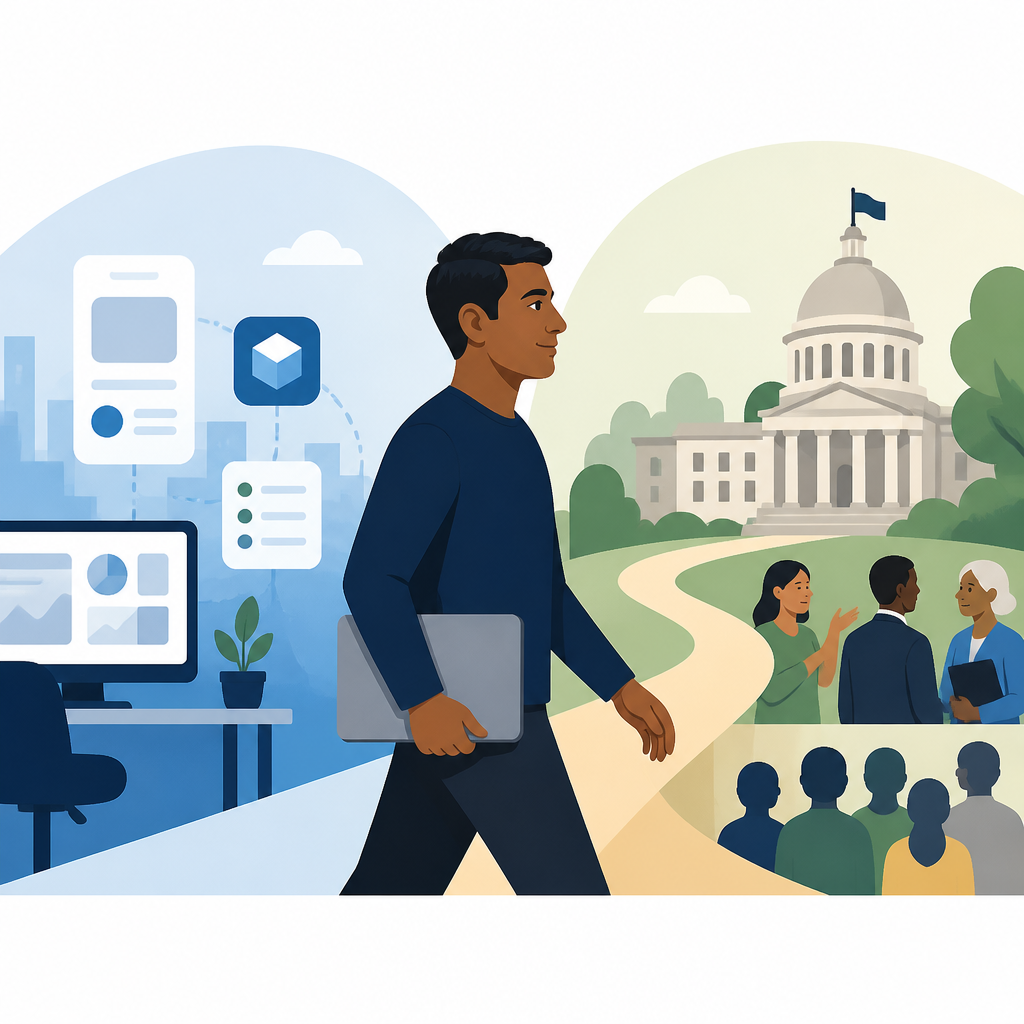
That path matters because his policy views did not come from a think tank or a legal background. They came from shipping products, watching platform growth, and later funding startups that tried to build the next wave of consumer and enterprise software.
His early life also helps explain why he speaks so often about international competition in AI. For Krishnan, the issue is not abstract. It is about where talent moves, where products are built, and which countries set the rules.
- Born: January 1984
- Birthplace: Chennai, Tamil Nadu, India
- Education: SRM University, B.Tech
- U.S. citizenship: 2016
Big Tech taught him how platforms scale
Krishnan began at Microsoft as a program manager, working on Microsoft Popfly, then joining the Azure team before public launch. He also worked on Visual Studio, which put him close to developer tooling and the rhythms of enterprise software.
He later moved to Meta, where he built the Facebook Audience Network, a product aimed at competing with Google’s ad technology. At Twitter, now X, he led product and core user experience. Wikipedia cites a 20% annual user growth rate during that period, along with a redesigned home page and events experience.
That mix of roles gave him a rare view of both sides of the software business: the internals of product building and the economics of distribution. It also explains why he talks about AI in terms of deployment, adoption, and market share rather than only model quality.
“The winner will be judged by market share.” — Sriram Krishnan, speaking at the Axios AI+ Summit in 2025
a16z turned him into a policy-minded investor
In February 2021, Krishnan became a general partner at Andreessen Horowitz. The firm expected him to focus on consumer and social markets, but he also wrote and spoke about “deep tech,” AI, and how new systems shape society.
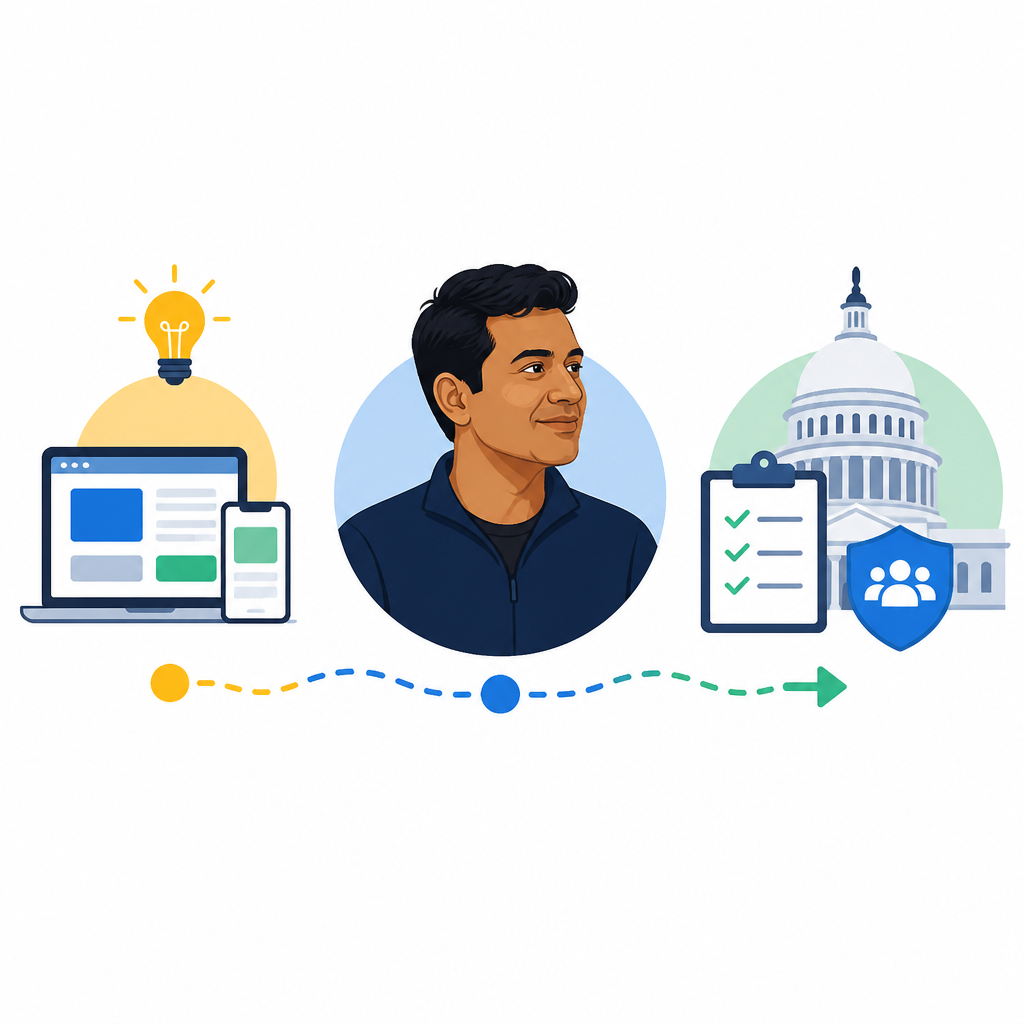
By 2023, he was leading a16z’s London office, the firm’s first office outside the United States. He announced that he would leave at the end of 2024, which made his jump into government look less like a sudden pivot and more like the next step in a long move toward policy.
His venture years matter because they exposed him to founders who were trying to ship products under tight timelines while dealing with regulation, capital, and global competition. That is a very different mindset from a career bureaucrat, and it shows up in the way he talks about AI policy today.
- a16z tenure: 2021 to 2024
- London office: first non-U.S. a16z office
- Focus areas: consumer, enterprise, Web3
- Exit announced: end of 2024
White House work made AI policy his main job
On December 22, 2024, Donald Trump announced that Krishnan would become Senior White House Policy Advisor on Artificial Intelligence in the incoming administration. Reuters later reported that he would accompany Vice President JD Vance to the Paris AI Summit in February 2025, one of the first visible signs that the job included diplomacy, not just domestic policy.
Krishnan’s remit went beyond speeches and photo ops. He joined a U.S. technology policy delegation to the Middle East in May 2025, where he worked on what he called “AI diplomacy” and pushed for wider adoption of American AI technologies. He also helped write the American AI Action Plan released in July 2025, alongside David Sacks and Michael Kratsios.
The policy line was clear: reduce barriers, speed adoption, and keep U.S. companies competitive against China. In Krishnan’s own framing, the contest was an “existential race with China,” and he argued that private companies should remain the main engines of model development.
- Appointment announced: December 22, 2024
- Paris AI Summit: February 2025
- Middle East tech delegation: May 2025
- AI Action Plan: July 2025
The public face of a very specific AI strategy
Krishnan became a visible defender of a lighter-touch approach to AI regulation. In December 2025, President Trump said, “without him, things on AI would not function well,” and credited him as a leading figure behind the administration’s AI executive order. That is a striking level of political endorsement for someone whose background is mostly product and venture capital.
The policy package he helped shape was tied to large-scale industrial ambitions, including a multiyear $500 billion initiative called Stargate. It also pushed the idea that American AI should spread globally, which makes the strategy part technology policy and part industrial diplomacy.
Krishnan stepped down from the White House role effective June 30, 2026. After his resignation, he said the administration would not create “an FDA for AI,” which sums up the philosophy he brought to the job: move quickly, avoid heavy rules, and let adoption lead.
If you want to understand where U.S. AI policy may go next, watch the balance between federal speed and state-level regulation. Krishnan’s career suggests a simple bet: the people who built the products want a bigger say in how the rules get written.
For more on how AI policy is colliding with product strategy, see our coverage of AI policy and product strategy.
// Related Articles
- [IND]
2026-2027 Common App Prompts, Explained
- [IND]
Agentic AI drew four regulators in one week
- [IND]
AI regulation maps the rules you need
- [IND]
AMD’s Anthropic deal shows the AI compute race
- [IND]
OpenAI Status Shows a Busy July for ChatGPT and Codex
- [IND]
Anthropic’s funding hits $132B in 18 rounds