Anthropic is hiring a custom chip design team
Anthropic is building a chip design team to co-design custom silicon for Claude and reduce its reliance on outside hardware.

Anthropic is building a team to design custom chips for Claude.
Anthropic is moving into chip design, and that is a bigger signal than a single hiring round. The company confirmed to TechCrunch that it is hiring for a custom silicon team to co-design hardware and models so Claude can run faster and more efficiently.
The move lands at a time when demand for Claude is rising and AI companies are competing for every extra unit of compute they can get. Anthropic already has access to infrastructure from AWS, Google Cloud, Nvidia, and AMD, but the company now wants more control over the hardware stack.
| Fact | Detail |
|---|---|
| Company | Anthropic |
| New team | Custom silicon team |
| Primary goal | Co-design hardware and models |
| Public confirmation | August 5, 2026 |
Anthropic wants more than rented compute
Get the latest AI news in your inbox
Weekly picks of model releases, tools, and deep dives — no spam, unsubscribe anytime.
No spam. Unsubscribe at any time.
The logic is straightforward: if you depend on other companies for every accelerator, you inherit their pricing, their supply limits, and their product priorities. Designing chips in-house gives Anthropic a shot at tuning hardware around the workloads Claude actually uses, rather than adapting Claude to whatever the market has in stock.

That matters because inference costs add up fast once a model becomes a mainstream product. Even small gains in memory bandwidth, power use, or latency can change the economics of serving millions of requests a day. For a company like Anthropic, those savings can shape how aggressively it can ship new features and expand usage.
- Anthropic confirmed it is hiring for a custom silicon team.
- The company wants to co-design hardware and models.
- Its current hardware access includes AWS, Google, Nvidia, and AMD.
- The goal is to make Claude run faster and more efficiently.
This fits a wider AI hardware race
Anthropic is not alone here. OpenAI recently unveiled its Broadcom-built Broadcom chip project, Jalapeño, which is aimed at inference workloads. Google DeepMind has long leaned on Alphabet’s TPU chips, and Meta has been developing its own MTIA accelerators.
That pattern says a lot about where AI is headed. The biggest model builders no longer want to treat compute as a generic utility. They want hardware that reflects their own serving patterns, model sizes, and cost targets.
“We are building custom silicon to support our future AI systems,” said Dario Amodei, Anthropic’s co-founder and CEO, in a 2024 blog post about the company’s infrastructure plans.
Anthropic’s chip push also follows a report from The Information that the company had been scouting Samsung as a possible partner for chip manufacturing. That is the part to watch: many AI labs can sketch a custom chip idea, but turning that idea into silicon usually requires a partner with deep fabrication experience.
The job listing tells us what Anthropic needs
According to the article, Anthropic is looking for engineers with chip design experience for its custom silicon team. That suggests the company is still at the staffing stage, not at the point where it has publicly shown a finished design or taped out a chip.
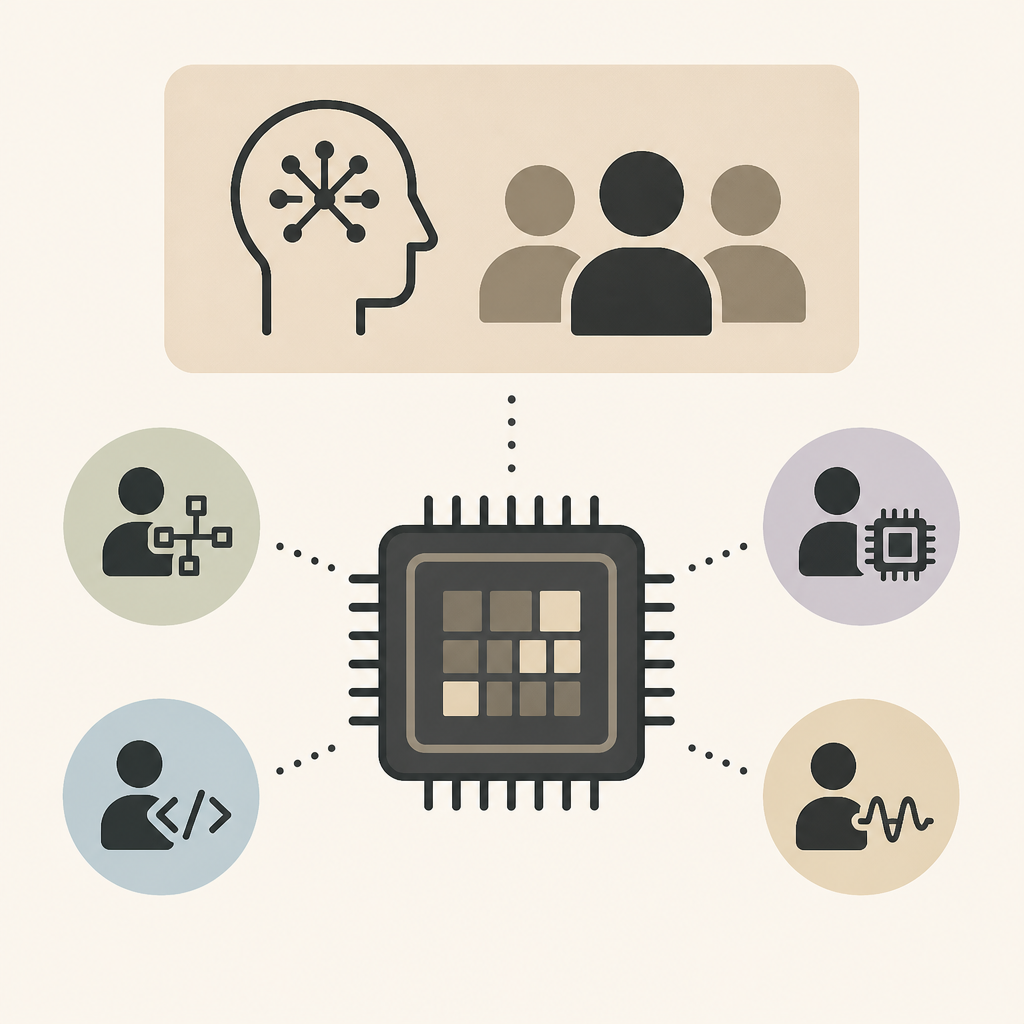
In practical terms, this means the next phase is likely to be slow and expensive. Chip programs need architecture work, verification, software support, and manufacturing coordination. Even for a well-funded AI company, that is a long road from job post to actual hardware in production.
- Anthropic’s news page has focused heavily on model updates and product releases, not hardware until now.
- Nvidia data center GPUs remain the default choice for most AI training and serving.
- Google’s TPU line shows how custom silicon can lock hardware to model workloads.
- AMD Instinct chips give AI firms another path when GPU supply is tight.
What this means for Claude users
If Anthropic pulls this off, Claude could get cheaper to serve, faster to respond, and easier to scale during traffic spikes. That would matter for enterprise customers, developers building with Claude, and Anthropic itself, which has to keep margins under control while model usage grows.
The bigger question is whether Anthropic wants to become a chip company in the long run or simply wants enough custom hardware to reduce dependence on outside suppliers. My bet is the second option. The company likely wants targeted control over inference economics before it commits to the far harder task of building a full internal silicon pipeline.
For now, the signal is clear: Anthropic thinks model quality alone is no longer enough. The next round of competition will also be about who can shape the hardware underneath the model, and the companies that get that part right will have a real cost advantage when demand keeps climbing.
// Related Articles
- [IND]
WebAssembly’s JVM shift is making Java more portable
- [IND]
Model Y L US launch packs 6 buyer details
- [IND]
2027 Tesla Model Y L Exterior Photos and Specs
- [IND]
CUDA’s moat is being tested by AI coding agents
- [IND]
Rust’s 2026 updates reshape combat and base play
- [IND]
80% of Q1 2026 VC Went to AI, But Blockchain Is Next