Anthropic’s Mythos saga shows AI access by permit
I break down how Anthropic’s Mythos model got a limited green light, and what that means for AI release, compliance, and access control.

I break down how Anthropic’s Mythos model got a limited green light and what to do with access controls.
I've been watching AI model releases get messier for a while now. The pattern keeps repeating: a company ships something powerful, security folks panic, regulators scramble, and then everyone pretends there was a clean policy path all along. There usually isn’t. What I keep seeing is a release process that looks fine in a slide deck and falls apart the second someone asks, “Who actually gets access, under what rules, and what happens when the government changes its mind?”
That’s why the Anthropic Mythos story grabbed me. Not because it’s another “AI is scary” headline. It’s because it shows the real operating problem for anyone shipping advanced models in 2026: access is now a policy object, not just a product setting. One week a model is blocked, the next week it’s allowed for “trusted partners,” and the whole thing depends on a moving mix of export rules, security claims, and back-channel negotiation. If you build with models, you need to understand that this is no longer edge-case bureaucracy. It’s part of the release pipeline.
The source here is CNN’s report by Hadas Gold, which says the US government revised its position and allowed Anthropic to release Mythos to select companies and organizations after earlier restrictions. CNN also notes the government had ordered an export block earlier in June, and that conversations were still ongoing about broader access. I’m not quoting any audience numbers because the article doesn’t give me clean ones, and I’m not going to invent them.
This was never just about model quality
Get the latest AI news in your inbox
Weekly picks of model releases, tools, and deep dives — no spam, unsubscribe anytime.
No spam. Unsubscribe at any time.
“I have determined that appropriate safeguards are in place to permit certain trusted partners to access the Claude Mythos 5 Model.”
What this actually means is the government is treating model distribution like a controlled capability, not a normal software launch. The model didn’t become “safe.” It became conditionally usable under a narrower trust boundary. That distinction matters.

I’ve seen teams assume that if they pass internal evals, they’re done. They’re not. A model can be technically ready and still be politically unavailable. That’s the new headache. The release decision is now part engineering, part compliance, part diplomacy.
How to apply it: if you run model deployments, separate “model is built” from “model is allowed.” Put those in different checklists. One is your engineering gate. The other is your distribution gate. If you merge them, you’ll get surprised later when access changes for reasons that have nothing to do with your benchmark scores.
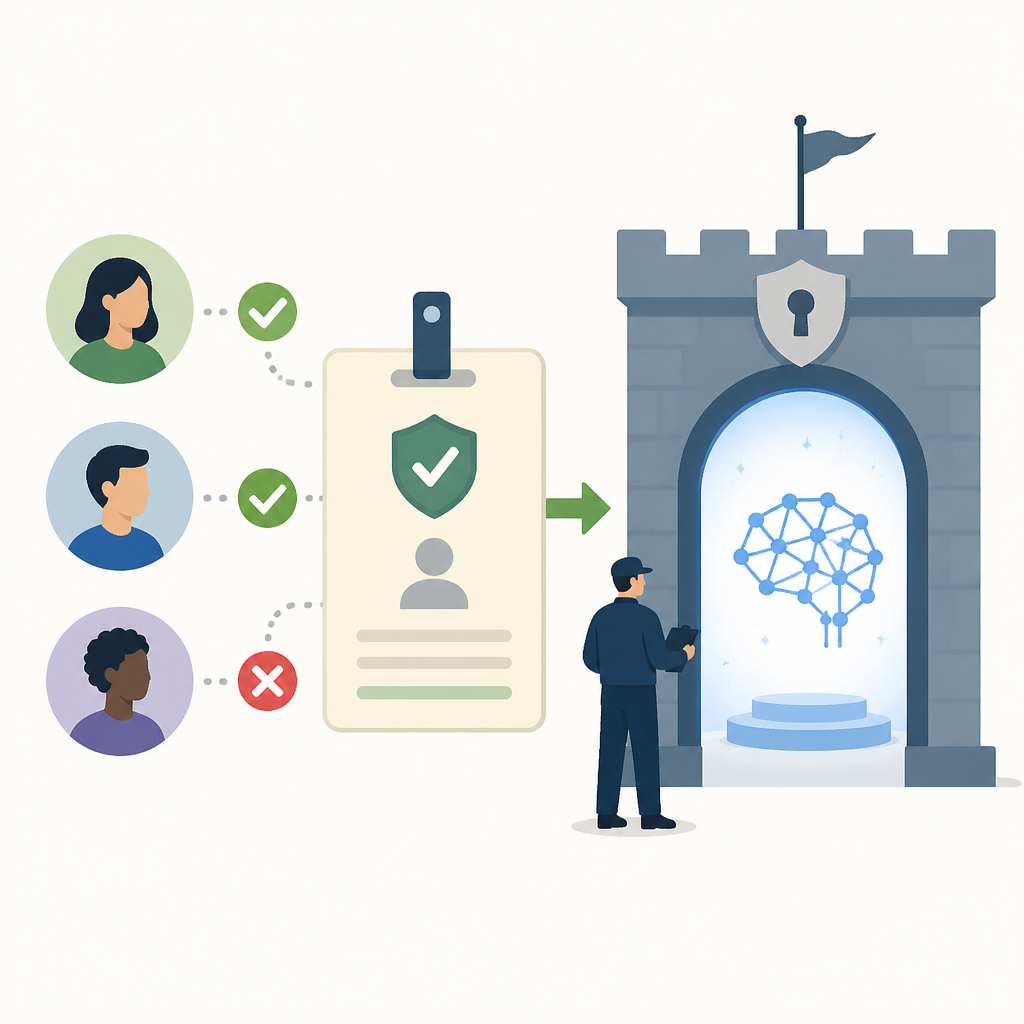
Trusted partners is not a vague phrase, it’s the product
An important line in the CNN story is that Anthropic can release Mythos only to “select companies and organizations.” Anthropic also said it would provision “a small group of cyber defenders and infrastructure providers.” That’s not broad availability. That’s a whitelist.
What this actually means is the release mechanism is now the feature. The model isn’t being sold as a general-purpose API for everyone. It’s being wrapped in a policy layer that decides who gets in. If you’re building enterprise AI, this should sound familiar. Identity, tenant controls, audit logs, and allowlists are no longer boring admin details. They’re the product surface that determines whether a model can exist in a regulated environment at all.
I ran into this exact problem when trying to roll out a sensitive internal model. The model itself was fine. The issue was every downstream question: who can call it, from which region, with what logging, and what happens if legal says no tomorrow. That’s the real work. The model is the easy part.
- Define access by role, region, and use case.
- Keep a separate approval path for high-risk capabilities.
- Log every access decision, not just every inference call.
How to apply it: if your model is sensitive, build a policy service around it before you scale usage. Don’t wait for a regulator, a customer, or a security team to force you into it later. The allowlist should be explicit, reviewable, and revocable.
Export controls are now a deployment dependency
CNN says Anthropic had disabled customer access to Mythos and Fable to comply with a US government order suspending use by foreign nationals, including Anthropic employees. That’s wild if you’re used to shipping software globally, because it means access can be cut at the nationality or geography layer, not just the account layer.
What this actually means is export control is no longer a legal memo sitting in a folder. It can directly affect your runtime behavior. If your stack assumes “same binary, everywhere,” you’re behind. The same model may need different availability rules depending on who is asking, where they are, and what the current policy says.
I’ve seen teams get blindsided by this because they treated compliance as a post-launch review. That doesn’t work when the launch itself can be halted. You need policy-aware release engineering. Yes, that sounds annoying. It is annoying. But it’s cheaper than having to disable your own product overnight.
How to apply it: add a release checklist item for jurisdictional restrictions. Map model access to countries, entities, and user classes. If you operate in multiple regions, build a kill switch that can disable a model by policy segment without taking down your whole platform.
Security models need a smaller blast radius
Anthropic’s statement says Mythos 5 is its “strongest cybersecurity model,” and CNN reports concerns that the model could help hackers find and exploit vulnerabilities quickly. That’s the core tension: the same capability that helps defenders can also help attackers.
What this actually means is high-end security models need blast-radius thinking from day one. If a model can accelerate vulnerability discovery, then unrestricted access is not a neutral default. You need to assume misuse pathways exist and design around them.
That’s the part many teams still hand-wave away with “we’ll monitor abuse.” Monitoring is not a strategy. It’s a detection layer. The real strategy is to reduce the number of people who can misuse the thing in the first place, and to narrow what the model can do when it’s in the wrong hands.
I like the way Anthropic framed it here, even if the situation is messy: the company is talking about a “small group” of defenders and providers, not the whole internet. That’s the right instinct for capability-heavy systems. Start narrow, then widen only when you have a reason.
- Gate dangerous model features behind additional approval.
- Separate defender workflows from general-purpose workflows.
- Reassess whether the model should ever be public by default.
How to apply it: if your model can materially improve offensive capability, treat it like dual-use software. You need policy, telemetry, and a narrower initial audience. If you ship it wide and hope to patch the abuse later, you’ve already lost control of the rollout.
The government is still improvising, and that affects you
CNN’s reporting makes one thing obvious: this is still being negotiated. The article says conversations were expected to continue into the weekend, with an eye toward restoring access to Fable too. That’s not a stable regulatory regime. That’s active bargaining.
What this actually means is your AI release plan cannot assume fixed rules. The US government is still deciding how to handle advanced models in real time, while also trying to keep pace with China and other competitors. So if you’re building product around frontier models, expect the rules to move under your feet.
I’ve gotten tired of teams acting shocked when policy changes. Why are you shocked? The whole system is in motion. The only sane response is to design for reversibility. Every feature flag, every access tier, every model alias should be easy to turn off or swap without rewriting the product.
How to apply it: keep your model integration thin. Put the business logic outside the model boundary. Use versioned endpoints. Maintain a fallback model. And document the exact conditions under which access can change. If legal or policy teams need to intervene, they should be able to do it without dragging engineering into a week-long fire drill.
The real lesson is access governance beats hype
This story is not really about Anthropic winning or losing. It’s about the fact that the AI industry is moving from “can we build it?” to “who gets to touch it?” That’s a much harder question, and it’s going to define enterprise AI for a long time.
What this actually means is model capability alone is not enough to justify deployment. You need governance, trust boundaries, and a distribution story that survives legal review. If you’re shipping AI, that’s your job now whether you like it or not.
I’d rather be blunt: a lot of teams still think access control is an afterthought. It isn’t. It’s the thing that decides whether your model can be used safely, sold legally, or shut down overnight. If you ignore that, you’re building on sand.
How to apply it: make governance part of your launch plan. Not after launch. Not “once we get users.” Before launch. If the model is sensitive, the access policy is part of the product spec.
The template you can copy
# AI model access release plan

## 1. Model status
- Model name:
- Version:
- Risk tier:
- Intended use:
- Disallowed use:

## 2. Access policy
- Default access: denied / limited / public
- Approved user groups:
- Approved regions:
- Approved organizations:
- Approval owner:
- Review cadence:

## 3. Compliance gates
- Export control review: yes/no
- Legal review: yes/no
- Security review: yes/no
- Data handling review: yes/no
- Incident response owner:

## 4. Technical controls
- Auth method:
- Allowlist source:
- Logging level:
- Rate limits:
- Feature flags:
- Kill switch:

## 5. Abuse prevention
- High-risk capabilities blocked:
- Monitoring signals:
- Escalation triggers:
- Human review required for:

## 6. Rollout plan
- Phase 1 audience:
- Phase 2 audience:
- Expansion criteria:
- Rollback criteria:
- Fallback model:

## 7. Change management
- Who can change access:
- How changes are approved:
- How changes are audited:
- How users are notified:

## 8. Release checklist
- [ ] Policy approved
- [ ] Access rules implemented
- [ ] Audit logs verified
- [ ] Rollback tested
- [ ] Fallback ready
- [ ] Support team briefed
- [ ] Legal contact assigned
This template is my own practical distillation of the CNN report and the access-control problem it describes. The factual source is CNN’s article; the checklist and rollout structure are original and meant for developers shipping controlled AI systems.