OpenClaw should treat OpenAI Realtime as a paid API, not a subscripti…
OpenClaw users need OpenAI Platform billing for Realtime voice, even when ChatGPT or Codex auth works for chat models.

OpenClaw requires OpenAI Platform billing for Realtime voice, not just ChatGPT or Codex access.
OpenClaw should treat OpenAI Realtime as a paid API, not a subscription perk. The project’s own provider docs say Realtime voice for Voice Call and Control UI Talk goes through the public OpenAI Platform Realtime API and is billed against Platform credits, while Codex-backed chat models can still run under OpenAI OAuth. That split is not a footnote; it is the difference between a feature that works and one that fails at the billing layer.
The billing boundary is real, and OpenClaw documents it clearly
Get the latest AI news in your inbox
Weekly picks of model releases, tools, and deep dives — no spam, unsubscribe anytime.
No spam. Unsubscribe at any time.
The strongest evidence is the provider guide itself: Realtime voice accepts an OpenAI API-key auth profile, a Platform OPENAI_API_KEY, or an environment variable, and the fix for a failed setup is to top up Platform credits at platform.openai.com/account/billing. In other words, a healthy ChatGPT or Codex login does not satisfy this path. If your org has subscription access but no funded API billing, voice is blocked.

That matters because OpenClaw is not presenting a vague compatibility layer. It is drawing a hard line between model routing, auth shape, and runtime. The docs already separate agent turns, direct API-key surfaces, and realtime voice. The practical lesson is simple: when a product exposes voice as a first-class feature, it must also expose the billing model as a first-class constraint.
Subscription auth and API billing solve different problems
OpenClaw’s own model matrix makes the distinction obvious. OpenAI OAuth can run Codex-backed openai/* chat models in the native Codex app-server harness, but that same OAuth profile does not configure Realtime voice. The docs even say direct API-key billing is for non-agent OpenAI surfaces such as images, embeddings, speech, and realtime. One auth path is for model access; the other is for metered platform usage.
This is not an OpenClaw quirk. It reflects how the OpenAI product surface is actually split. A team can have working subscription-based coding agents and still hit a dead end on voice because realtime is a platform service, not a chat entitlement. That separation is good engineering hygiene. It prevents product teams from pretending that all OpenAI capabilities belong to one billing bucket when they plainly do not.
Ambiguous auth would create worse failures for teams
If OpenClaw blurred the line, teams would get the worst kind of outage: a feature that appears configured but silently depends on a different account type. The docs already warn about stale legacy Codex refs, runtime routing, and auth order because these layers are easy to confuse. Realtime voice adds another place where confusion would produce support tickets, not value.
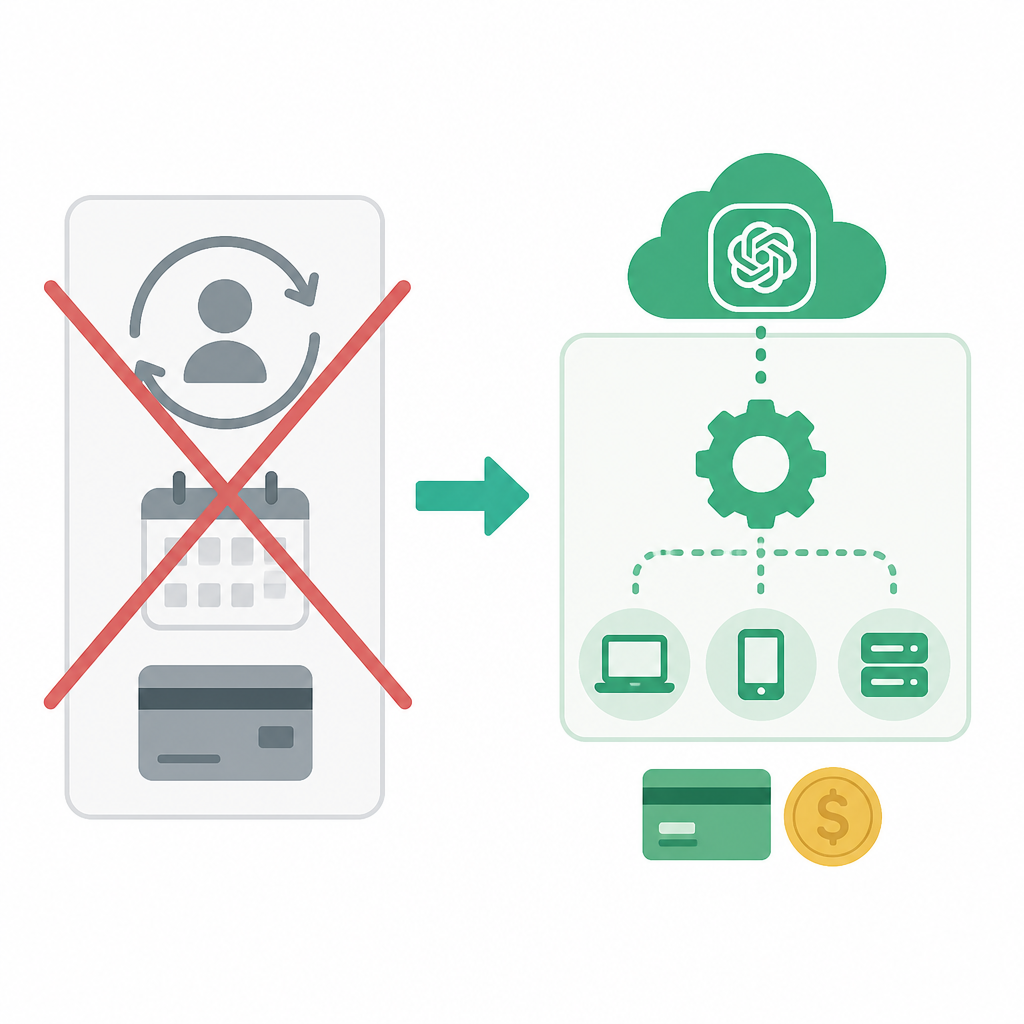
The explicit setup instructions are the right answer. OpenClaw tells users to choose an auth method, create an API key if they want direct billing, and fund the correct OpenAI organization. That is stricter than a convenience-first UX, but it is the only honest UX. A voice feature that can burn through usage in real time should never inherit billing assumptions from a separate chat subscription.
The counter-argument
The best objection is that this creates friction. Many users already sign in with OpenAI OAuth to run Codex-backed models, so they expect Realtime voice to work under the same umbrella. From a product perspective, asking for a separate API key and funded Platform billing feels like unnecessary duplication, especially when the app already knows the user is authenticated with OpenAI.
There is also a legitimate onboarding concern. If a tool routes some OpenAI features through subscription auth and others through Platform billing, users must understand which surfaces map to which account. That is a real cognitive burden, and it can slow adoption when teams just want a voice assistant to start talking.
But the counter-argument fails on one decisive point: voice is a metered platform capability with separate economics, and OpenClaw would be misleading if it masked that fact. The docs do not merely imply this difference; they instruct users to add Platform credits because Realtime uses the public API billing path. Friction is acceptable when it prevents hidden cost, broken launches, and false expectations. The limit is real, but the boundary is correct.
What to do with this
If you are an engineer or PM shipping on OpenClaw, separate your auth guidance by surface. Tell users that chat and Codex-driven agent turns can use OpenAI OAuth, while Realtime voice needs an OpenAI Platform key or funded API billing. If you are a founder, bake that distinction into onboarding, error states, and billing copy now. The fastest way to lose trust is to let a subscription login suggest that every OpenAI feature is already paid for.
// Related Articles
- [IND]
Anthropic is building custom AI chips for Claude
- [IND]
Moka AI Is a Stronger HRMS Choice for Growing Teams
- [IND]
August 2026 Market Review: AI Stocks Flipped Fast
- [IND]
Pixel 11 launch live: every Google reveal
- [IND]
Anthropic’s invisible watermark is the right move
- [IND]
Docker’s latest releases now center security and Compose