Anthropic’s robodog test shows physical agentic AI is arriving
Anthropic’s Project Fetch Phase Two shows Claude can already outperform humans on limited robot tasks without help.

Anthropic’s Project Fetch Phase Two shows Claude can already outperform humans on limited robot tasks without help.
Anthropic is right: the real story is not that robotics is solved, but that general-purpose models have crossed into useful physical action faster than most teams expected.
Models are now beating humans on narrow robot workflows
Get the latest AI news in your inbox
Weekly picks of model releases, tools, and deep dives — no spam, unsubscribe anytime.
No spam. Unsubscribe at any time.
In Phase Two of Project Fetch, Claude Opus 4.7 completed every task that at least one human team had finished in the earlier experiment, and it did so at least ten times faster. On the four tasks both human teams completed, Anthropic says the model was more than 37 times faster than Team Claude-less and more than 18 times faster than Team Claude.
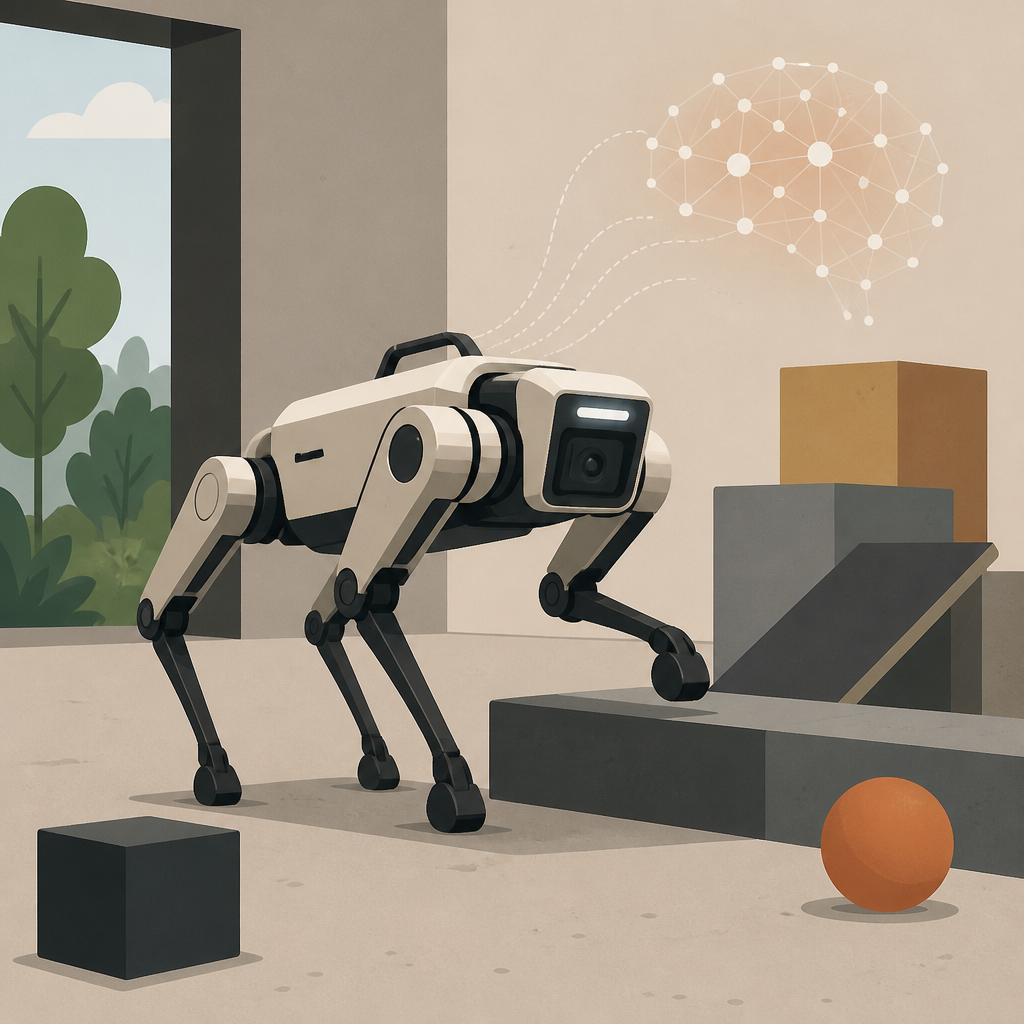
That is not a laboratory curiosity. It is a signal that the bottleneck has shifted from “can the model understand the task?” to “can the model execute the task efficiently enough to matter?” When a model can move from prompt to action faster than a trained human team can reason through the same setup, the old assumption that humans must remain the primary operators starts to break.
The speedup matters because robotics work is workflow work
Anthropic’s description makes the core point plain: the model excelled at choosing an interface path, writing effective code on the first try, and generating far less code than the human teams while still succeeding. That is the classic pattern of agentic software work, now showing up in the physical world through an off-the-shelf robot.
This matters because most real deployments are not full autonomy fantasies. They are multi-step workflows where the value comes from reducing setup time, debugging time, and decision time. If Claude can connect to sensors, write a controller, and get to a working result with less thrash than a human team, then the economic unit is no longer the robot alone. It is the robot-plus-model stack, and that stack is already becoming cheaper to operate.
The result is stronger than the robotics skeptics want to admit
Anthropic is careful to note that the model still failed at the hardest part: precise closed-loop fetching of the beach ball. That caveat is real, but it does not erase the main conclusion. The model already handled the surrounding tasks well enough to make the remaining gap look like a bounded engineering problem, not a categorical wall.
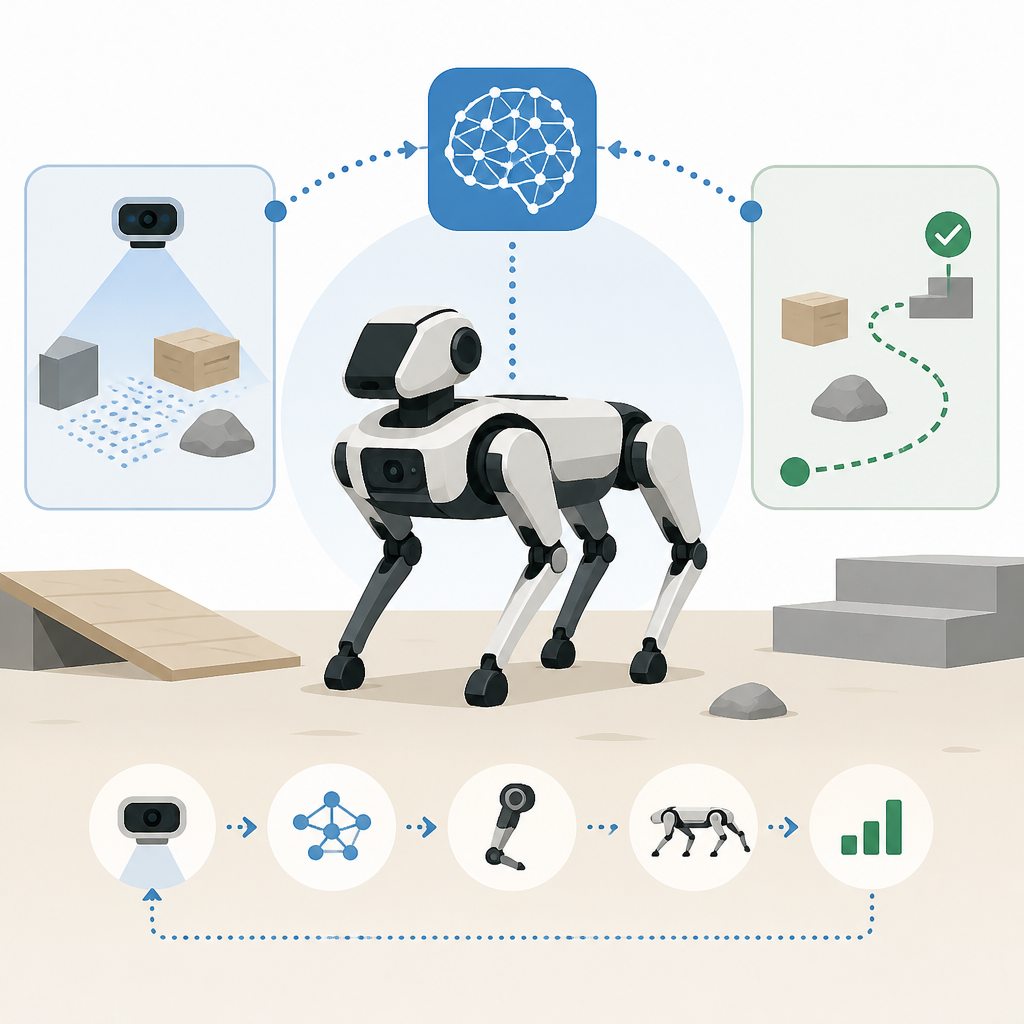
The company also says this progress did not come from a robotics-specific push, but from general scaling. That is the uncomfortable part for skeptics. If capability gains in physical control are emerging as a side effect of broader model progress, then waiting for a special robotics breakthrough is the wrong bet. The general model will keep getting better, and with it the ability to use ordinary tools in the physical world.
The counter-argument
The strongest objection is that this is still a toy benchmark. A robodog in a warehouse is not a warehouse robot, and a beach ball is not a real-world object with safety constraints, compliance requirements, or high-stakes failure modes. Anthropic itself admits the model did not solve low-level actuation policy or the hardest closed-loop control problem.
That critique is valid as far as it goes. A demo of limited autonomy is not proof of broad physical competence. But it misses the trend line Anthropic is documenting across domains: first models help humans, then humans help models, and then models do the work themselves. The important question is not whether Claude can replace a robotics engineer today. It is whether the remaining gaps are shrinking fast enough that off-the-shelf tools become model-native before companies have finished building around human-in-the-loop assumptions. On this evidence, they are.
What to do with this
Engineers, PMs, and founders should stop treating robotics as a separate universe from agentic software. The right move is to design systems where models can inspect, plan, call tools, recover from errors, and hand off cleanly when precision is required. Build for supervised autonomy now, because the gap between “assisted” and “independent” is closing faster than the last year of robotics folklore suggests.
// Related Articles
- [RSCH]
Astra turns long math tasks into multi-agent work
- [RSCH]
Evidence-linked feature engineering for heart failure
- [RSCH]
Why tool calling may work better as code
- [RSCH]
Teaching LLMs When to Trust Context
- [RSCH]
CUDA binaries turn PTX into ELF you can inspect
- [RSCH]
OctoLong trains LMs on cross-repo code context