Anthropic’s scale lead is the real moat in frontier AI
Anthropic’s compute scale, not product hype, is the moat that matters in frontier AI.

Anthropic’s compute scale, not product hype, is the moat that matters in frontier AI.
Anthropic has the strongest position in frontier AI right now because it has already crossed the scale threshold that matters, and that lead is hard to erase fast. The cited view is blunt: Anthropic is the only lab that has successfully jumped to roughly 100 trillion parameter scale, and OpenAI will not easily catch up by year-end.
Scale is the advantage that compounds
Get the latest AI news in your inbox
Weekly picks of model releases, tools, and deep dives — no spam, unsubscribe anytime.
No spam. Unsubscribe at any time.
The first reason this matters is simple: at the frontier, scale is not a vanity metric, it is a production asset. Once a lab can reliably spend massive compute on training and reinforcement learning, it can keep pushing model quality forward without waiting for a new product idea to save it.
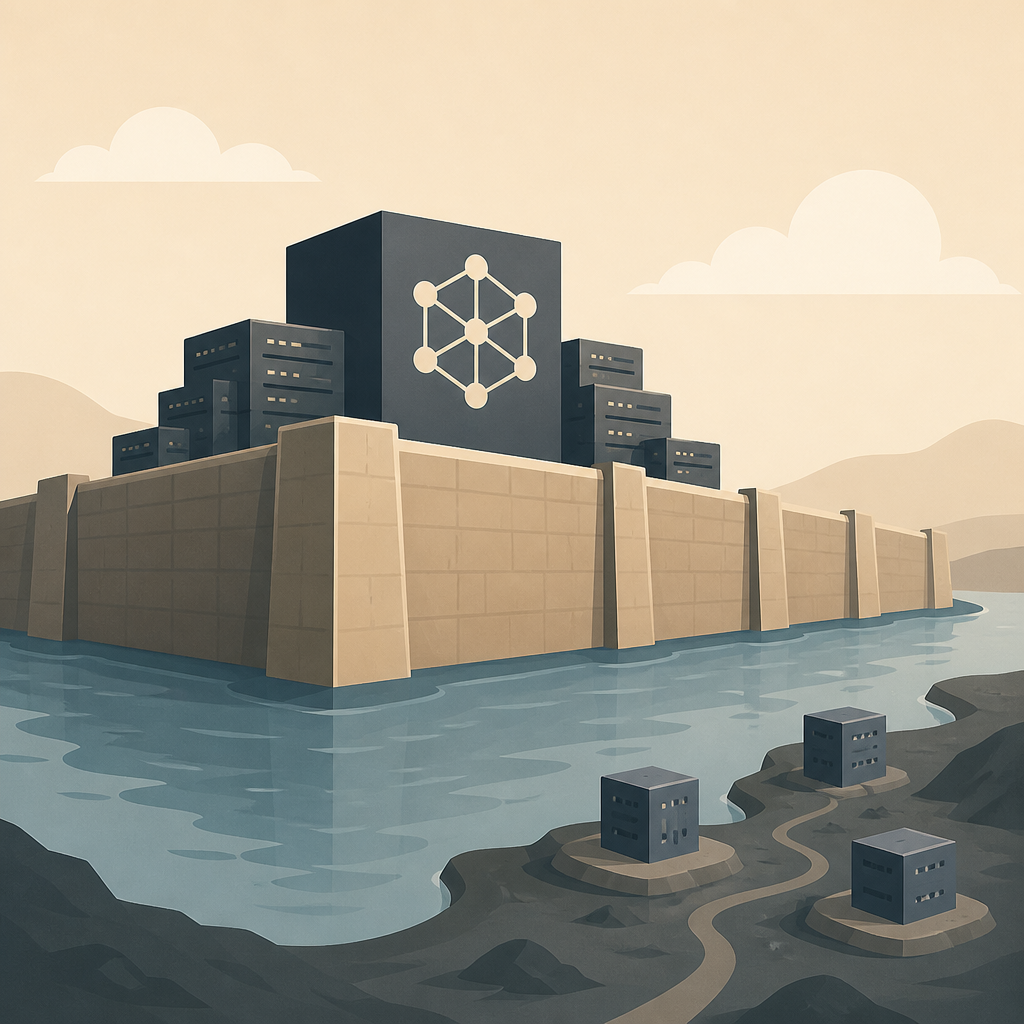
That is why the claim about continuing to pour RL compute into Mythos matters more than any one release. If Anthropic can keep feeding that pipeline for one or two more years, its models do not just improve incrementally; they become structurally harder for rivals to match because the gap is built from repeated expensive runs, not a single breakthrough.
OpenAI’s catch-up problem is not just technical
The second argument is that catching up is a scheduling problem as much as an engineering one. OpenAI can have strong researchers and still lose ground if it cannot marshal comparable compute, run enough experiments, and convert those experiments into stable frontier gains on the same timeline.
Michael’s view that OpenAI will not easily regain parity by the end of the year fits how frontier labs actually work. A large-scale training and RL program has long lead times, and once one lab is already operating at that level, the lagging lab has to spend huge amounts of time and money just to get back to the same starting line.
The counter-argument
The strongest objection is that scale is not destiny. Model quality also depends on data efficiency, inference cost, product integration, and the ability to turn raw capability into user value. A lab can spend more and still lose if its system is less useful, less reliable, or too expensive to deploy.

There is also a practical limit to any scale moat: compute gets pricier, training runs get riskier, and the returns on sheer size eventually flatten. Frontier AI history is full of moments when a smaller team found a smarter recipe and closed the gap faster than the giants expected.
That objection is real, but it does not overturn the core point here. In the current frontier race, Anthropic’s lead is not a vague reputation advantage; it is a concrete capacity advantage in large-scale training and RL. Smarter recipes matter, but they matter most when they are backed by the ability to execute them at scale again and again.
What to do with this
If you are an engineer, stop treating frontier progress as a feature contest and start treating it as an infrastructure contest. The teams that win are the ones that can train, evaluate, and iterate at industrial scale, so your leverage comes from reliability, throughput, and experiment velocity, not just model cleverness. If you are a PM or founder, plan around the fact that model capability will keep shifting toward the labs with the deepest compute budgets, and build products that assume that gap will persist rather than close quickly.
// Related Articles
- [RSCH]
Astra turns long math tasks into multi-agent work
- [RSCH]
Evidence-linked feature engineering for heart failure
- [RSCH]
Why tool calling may work better as code
- [RSCH]
Teaching LLMs When to Trust Context
- [RSCH]
CUDA binaries turn PTX into ELF you can inspect
- [RSCH]
OctoLong trains LMs on cross-repo code context