Best-paper lists turn conference noise into taste
A copy-ready way to turn top-conference best papers into a research taste tracker.

A copy-ready template for turning best-paper lists into a research taste tracker.
I've been using conference award lists as a shortcut for years, and honestly, the usual way people do it is sloppy. They bookmark a giant repo, skim a few titles, then forget it exists until the next deadline panic. That never helped me build taste. It just gave me a pile of links and a vague feeling that I should be reading more. This Top-Conference-Best-Papers repo finally made the pattern obvious to me: if I want to understand what a field rewards, I should stop treating best-paper winners like trivia and start treating them like a dataset.
The annoying part is that the repo is simple, almost boring. That’s exactly why it works. It collects post-GPT-era winners across ICLR, NeurIPS, ICML, ACL, EMNLP, NAACL, AAAI, CVPR, and ECCV, then presents them in a way that lets me compare themes across venues and years. I don’t need another “top 100 papers” blog post. I need a repeatable way to ask: what kinds of problems keep getting rewarded, what kind of framing lands, and what does “good” look like after 2022?
That shift matters because the post-2022 period is weird. LLMs changed the center of gravity. NLP papers got louder. Vision papers got more systems-heavy. ML papers got more suspicious of easy benchmarks. If I only read whatever shows up on my feed, I end up learning the internet’s taste, not the field’s. This repo gave me a cleaner signal.
I stopped reading award lists like headlines
Get the latest AI news in your inbox
Weekly picks of model releases, tools, and deep dives — no spam, unsubscribe anytime.
No spam. Unsubscribe at any time.
A curated list of Best Paper award winners from top ML/NLP venues.
What this actually means is that the repo is not trying to be exhaustive scholarship. It’s trying to be a signal filter. That sounds modest, but it’s the right move. When I’m trying to improve my own research judgment, I don’t need every accepted paper. I need the papers committees and program chairs were willing to elevate above the rest.
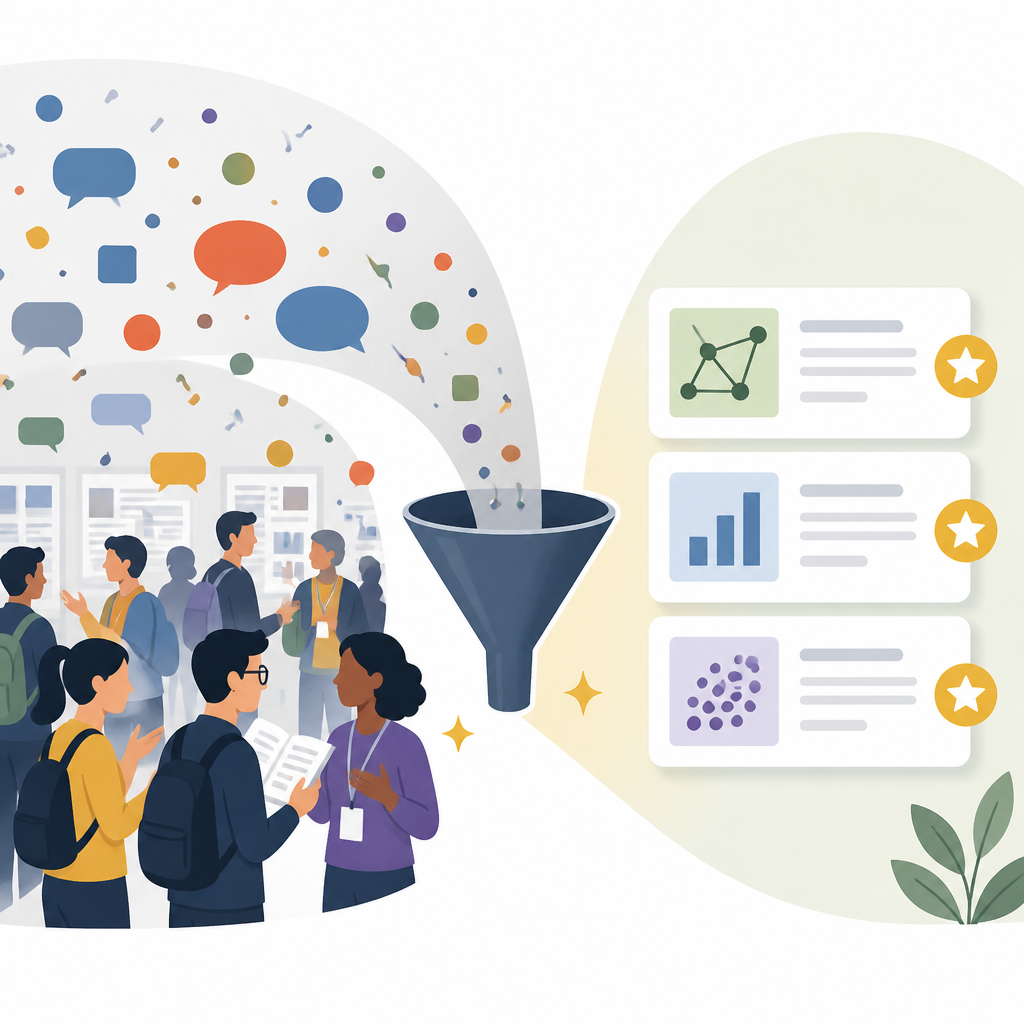
I’ve made the mistake of using “best paper” as a vanity metric before. It’s not that. It’s a compressed summary of what a community thought was unusually important, unusually clear, or unusually well executed in a given year. That makes it useful as a taste-shaping artifact, especially if you’re mentoring students or planning your own reading queue.
The repo’s first useful decision is scope. It focuses on the post-2022 “post-GPT era,” which keeps the list from becoming a random museum of old winners. That matters because the meaning of “good paper” shifts when the field shifts. A strong 2018 ACL paper and a strong 2025 ACL paper may both be excellent, but they’re solving different problems under different pressures.
How I’d apply this: don’t start by reading everything. Start by asking what the award list is optimized to show you. In this repo, it’s the intersection of recency, prestige, and award-level validation. That’s enough to build a reading plan, not enough to build a literature review. And that’s fine.
- Use the repo as a signal sampler, not a citation database.
- Read by year first, then by venue, then by topic.
- Track what repeats across winners instead of obsessing over any single title.
The post-GPT cutoff is the whole point
Compared to similar repos/lists, this repo focuses on the post-2022 “post-GPT era” and puts extra emphasis on NLP venues.
What this actually means is that the list is trying to answer a newer question: what did the field reward after large language models changed the baseline? I like that the repo doesn’t pretend 2020 and 2025 are the same world. They aren’t. Once ChatGPT and the wave around it hit, a lot of paper categories stopped meaning what they used to mean.
I ran into this when I tried to compare older “top paper” reading lists with newer ones. The older lists over-indexed on benchmark wins, architecture tweaks, and elegant theory. The newer ones still include those, but now I keep seeing papers about alignment, editing, inference efficiency, simulator learning, and dataset contamination. That’s not noise. That’s the field reacting to a new center of gravity.
The repo’s post-2022 cutoff helps because it keeps the comparison honest. If you want to understand what gets rewarded now, don’t mix it with a decade of pre-LLM history and then pretend the trendline is clean. It isn’t. Recency is a feature here, not a bug.
How to apply it: build your own “era buckets.” I’d split reading into pre-LLM, post-ChatGPT, and current-year. Then I’d compare the award winners in each bucket and look for changes in problem selection. You’ll notice that the questions themselves evolve, not just the methods.
- Bucket papers by era before you bucket them by venue.
- Watch for topic drift: alignment, editing, long-context, simulators, contamination, data efficiency.
- Use the cutoff to avoid false comparisons between old and new norms.
Venue coverage tells you where the field is talking to itself
The repo covers ICLR, NeurIPS, ICML, ACL, EMNLP, NAACL, CVPR, ICCV, ECCV, and AAAI, with year ranges listed right in the README. That spread is useful because it lets me compare what each community rewards without pretending all conferences optimize for the same thing. They don’t.
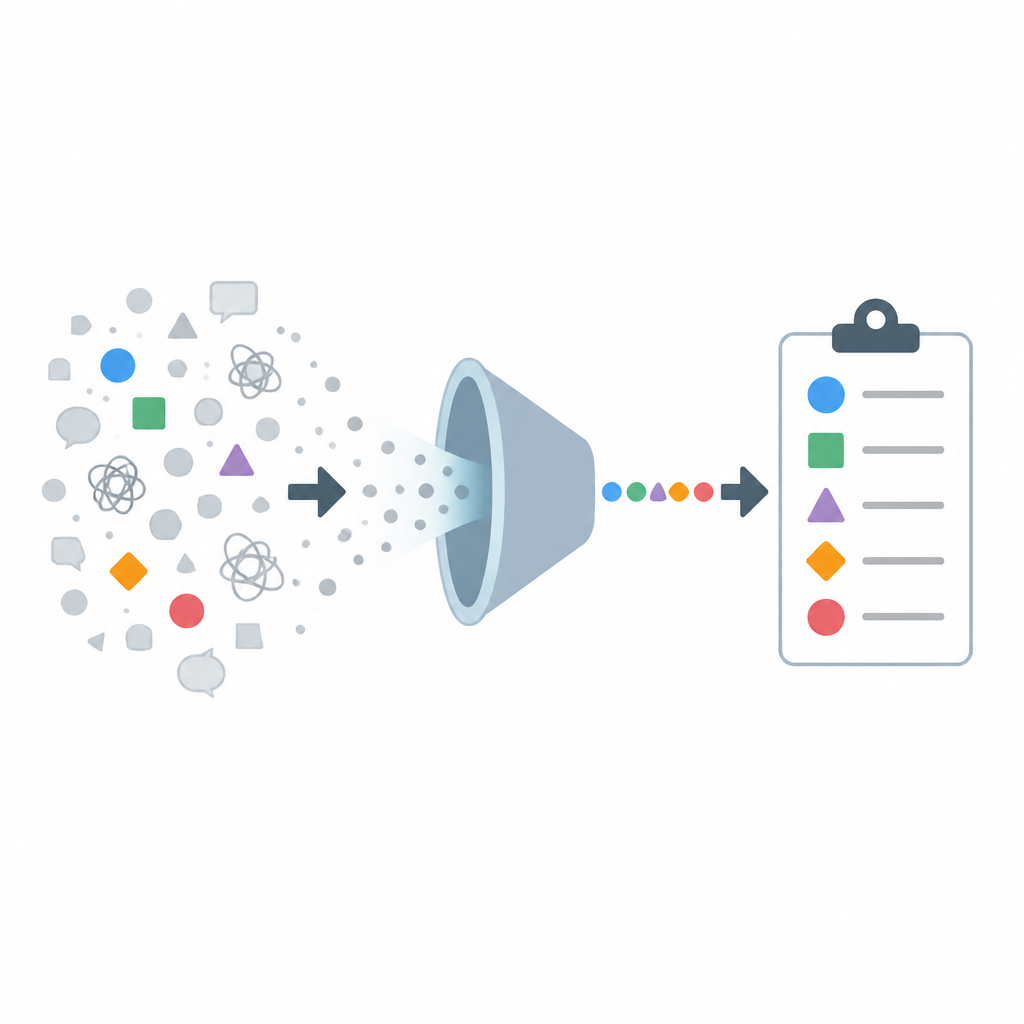
ICLR and NeurIPS tend to surface papers that feel method-forward or systems-aware. ACL, EMNLP, and NAACL often reveal where NLP is wrestling with language understanding, generation, evaluation, and safety. CVPR and ECCV show me what vision cares about when it’s not just chasing leaderboard gains. AAAI often acts like a broad umbrella, which is handy when I want a wider AI snapshot.
I’ve found this especially helpful when I’m deciding where to submit. If I can’t explain why my paper belongs in a venue’s reward pattern, that’s a warning sign. Not a hard rule, but a warning. This list gives you a rough map of venue identity as expressed through awards, which is much more honest than reading venue descriptions on their websites.
How I’d use it in practice: pick one venue and one year, then read every best paper and honorable mention from that slice. Then ask three questions: what problem type won, what evidence did they need, and what writing style made the contribution legible? That exercise tells you more than a hundred random abstracts.
- Use venue slices to detect community preferences.
- Compare honorable mentions with winners to see what almost made the cut.
- Don’t assume one venue’s taste transfers cleanly to another.
The titles are teaching you framing, not just content
* Safety Alignment Should be Made More Than Just a Few Tokens Deep (ICLR 2025)
What this actually means is that award papers often telegraph their contribution in the title itself. That ICLR 2025 winner is a good example. It doesn’t hide behind jargon. It states the problem, the failure mode, and the claim in one shot. That’s not accidental. Strong papers usually know how to make the reader care before the method section starts.
I’ve wasted too much time reading papers that had decent ideas but buried them under mushy framing. This repo is useful because it lets me study the opposite. The titles in the list are often sharp, specific, and argument-shaped. “Transformers are Inherently Succinct” is another one. It sounds like a thesis, not a product pitch. “Model Tells You What to Discard: Adaptive KV Cache Compression for LLMs” tells me the paper has a concrete operational claim.
That matters if you write papers, proposals, or even internal research docs. The best-paper list is basically a catalog of how top venues reward clarity. You can learn a lot from that alone.
How to apply it: when you draft a title, ask whether it names the object, the mechanism, and the claim. If it does, you’re already ahead of the vague-title crowd. Then check whether the title can survive a skeptical reviewer. If it sounds like marketing copy, it probably won’t age well.
One practical trick I use is to rewrite award-paper titles as templates. Not to copy them literally, but to see the structure. Many of them follow a pattern like “X does Y under Z condition” or “X should be made more than just Y.” That structure is worth stealing, because it forces precision.
The repo is really a taste-training dataset
I built this repo to develop better research taste by studying what the community consistently recognizes as high-impact work.
What this actually means is that the repo is less about “best papers” and more about calibration. I like that framing a lot. Taste is one of those words people use when they don’t want to say “I want better judgment.” But judgment is what we’re after. If I can spot the recurring shape of award-winning work, I make fewer dumb bets.
I’ve used this kind of list when mentoring junior researchers too. Newer folks often ask what “good” looks like, and the honest answer is that good is contextual. But award winners give a decent approximation of what a community can agree on under pressure. That’s a useful floor, even if it’s not the ceiling.
The repo helps with three dimensions of taste:
- Problem taste: which questions are timely enough to matter now.
- Method taste: which technical moves are elegant without being decorative.
- Presentation taste: which papers explain themselves cleanly enough to survive review.
How I’d apply it: don’t just bookmark the list. Build a small internal rubric from it. For each winner, score the problem, method, evidence, and writing. After ten papers, patterns start showing up. That’s where taste stops being mystical and starts being trainable.
Honorable mentions are where the near-misses live
Outstanding Paper Honorable Mentions
What this actually means is that the repo gives you more than winners. It gives you the papers that were close enough to matter. I care about this a lot, because honorable mentions often reveal the boundary of a community’s current judgment. Winners tell you what cleared the bar. Honorable mentions tell you what almost did.
I’ve found that near-miss papers are often more instructive than the winners. They’re usually strong, but they may be a little narrower, a little less polished, or a little more speculative. That makes them great for understanding the edge of acceptable risk in a venue.
If you’re trying to write a paper that feels ambitious without being reckless, honorable mentions are a goldmine. They show you the papers that were interesting enough to be recognized but maybe not quite complete enough to dominate the year. That’s a useful lesson, especially for people who tend to overbuild or understate their contributions.
How to apply it: create a second reading queue for honorable mentions. Don’t treat them as leftovers. Treat them as the papers most likely to teach you what the field almost rewarded. That’s often where the practical lessons live.
The template you can copy
# Research Taste Tracker from Best Papers

## Goal
Build a living list of best paper winners and honorable mentions from top conferences to improve research taste, topic selection, and paper framing.

## Scope
- Years: 2022–2026
- Venues: ICLR, NeurIPS, ICML, ACL, EMNLP, NAACL, AAAI, CVPR, ICCV, ECCV
- Include: Best Paper, Outstanding Paper, Test of Time, Honorable Mention

## Fields to capture
- Year
- Venue
- Award type
- Paper title
- Authors
- Paper URL
- One-sentence takeaway
- Problem type
- Method type
- Why it likely won
- Notes on framing/style

## Reading workflow
1. Start with the newest year in one venue.
2. Read the winner first, then honorable mentions.
3. Write a 3-bullet summary for each paper:
   - What problem did it solve?
   - What was the key idea?
   - Why did the community reward it?
4. Compare across venues once a month.
5. Update a short list of recurring patterns.

## Taste rubric
Score each paper from 1–5 on:
- Problem importance
- Timeliness
- Technical novelty
- Experimental rigor
- Clarity of presentation
- Reusability of ideas

## Pattern log
Keep a running note of:
- Recurring topics
- Common failure modes
- Title structures that work
- Evidence standards by venue
- Methods that keep reappearing

## Output format
For each paper, store:
- Citation
- Link
- 1-line summary
- 3 lessons for my own work
- 1 thing I would copy
- 1 thing I would avoid

## Weekly review prompt
- Which award-winning papers changed how I think about the field?
- Which themes keep showing up across venues?
- Which paper titles are doing real work, not just sounding clever?
- What kind of contribution would I actually trust in my own project?

## Copy-ready note template
### [Year] [Venue] — [Award type]
**Paper:**
**Authors:**
**Link:**
**One-line takeaway:**
**Why it mattered:**
**Problem type:**
**Method type:**
**Framing lesson:**
**Evidence lesson:**
**What I would borrow:**
**What I would avoid:**

## Monthly synthesis
At the end of each month, write:
- 3 patterns I noticed
- 2 claims I now trust more
- 1 claim I trust less
- 1 venue whose taste I understand better
- 1 idea worth stealing for my own work
This is the part I’d actually copy into a Notion page, a markdown file, or a lab wiki. It’s not fancy, and that’s the point. The repo itself is a list; the value comes from turning it into a workflow that forces repetition and comparison.
If I were setting this up today, I’d pair the repo with the official venue pages and paper links from sources like OpenReview, NeurIPS proceedings, ICML, and ACL Anthology. That way I’m not relying on a single curated page for everything. I’m using the repo as a front door, not the whole building.
One more thing: if you want to automate this, the repo is a decent seed for a script that extracts titles, awards, years, and URLs into a spreadsheet. I’d keep the human layer on top, though. The point is not to mechanize taste into mush. The point is to make taste inspectable.
Source attribution: the original list and its framing come from FeijiangHan/Top-Conference-Best-Papers on GitHub. My breakdown is derivative commentary and a workflow template built from that repo’s structure, not a reproduction of its full contents.
// Related Articles
- [TOOLS]
Baidu Wenxin turns search into a free agent
- [TOOLS]
OpenCode now supports DeepSeek, GLM, Qwen, GPT
- [TOOLS]
DeepSeek in Codex Will Cut AI Coding Costs Hard
- [TOOLS]
Token vs. word: why Chinese tokenization still matters
- [TOOLS]
OpenAI API Pricing Hits $0.05 to $180/M Tokens
- [TOOLS]
Usage limits belong in ChatGPT Enterprise and Edu controls