Botanix’s shutdown turns L2 economics inside out
Botanix shut down, and its postmortem is a clean template for explaining when a Layer 2’s fee model stops working.

Botanix’s shutdown is a template for reading Layer 2 economics before they fail.
I've been watching Bitcoin Layer 2 projects for a while, and Botanix always felt a little too tidy on paper. The pitch was clean: keep Bitcoin as the base asset, add programmability, avoid the usual token circus, and let real usage pay for the network. Nice story. In practice, though, the thing that kept bothering me was simple: where does the money actually come from once the launch hype fades?
That question gets ugly fast when a chain is supposed to survive on fees alone. If users mostly show up to park BTC and chase yield, that is not the same as a busy app layer with constant transaction flow. I’ve seen this movie before. The dashboards look active, the wallets look impressive, the integrations sound serious, and then you realize the economics are held together by optimism and a burn rate. Botanix’s shutdown announcement is the part where the math finally says what the marketing wouldn’t.
The trigger for me was KuCoin’s report on Botanix’s shutdown by July 9, 2026, which quotes the project’s own explanation: weak fee revenue, weak demand, and a market that kept drifting toward Ethereum-based Layer 2s instead. That’s the real story here, not the headline. It’s a case study in what happens when a chain builds a product that sounds necessary, but the market treats it like optional infrastructure.
Botanix didn’t die from a bug; it died from bad unit economics
Get the latest AI news in your inbox
Weekly picks of model releases, tools, and deep dives — no spam, unsubscribe anytime.
No spam. Unsubscribe at any time.
“The core issue was not a technical failure but a weak demand for its fee model.”
That line does a lot of work. What this actually means is that Botanix wasn’t taken out by some dramatic exploit or catastrophic outage. It ran into the boring killer: not enough people were paying enough, often enough, to keep the lights on.

I like this framing because it cuts through the usual crypto reflex of blaming code quality first. Sure, code matters. But if the network can’t generate revenue that covers infrastructure, security, operations, and the human cost of keeping the thing alive, then the architecture is just a nicer way to lose money.
Botanix said it built around programmable Bitcoin without token incentives. I get the appeal. I really do. No inflated token game, no fake demand from emissions, no endless “community growth” theater. But if you remove the usual bootstrapping tricks, you also remove a lot of the mechanisms projects use to survive long enough to find product-market fit.
How I’d apply this in practice: before I get excited about any L2, I ask three questions. Who pays fees? How often do they pay? And why would they keep paying after the novelty wears off? If the answer is “users will come because the tech is better,” I assume the spreadsheet is already lying.
- Look at recurring fee sources, not peak throughput.
- Separate speculative activity from real usage.
- Check whether the network can survive without incentives propping up demand.
“Bitcoin for yield” is not the same as “Bitcoin for activity”
“Most activity came from users holding Bitcoin for yield rather than frequent transactions.”
This is the line that explains a lot of modern crypto infrastructure pain. Holding is not usage. Parking assets is not the same thing as creating a living application layer. If people show up, deposit BTC, and then mostly sit there, the chain may look busy in wallet counts but still behave like a ghost town economically.
I’ve run into this exact confusion when teams celebrate deposits as adoption. Deposits are flattering. They are also lazy metrics. They tell you people trust the wrapper, or at least trust the yield, but they do not tell you the network has a reason to exist tomorrow.
Botanix’s problem was structural: a yield-oriented user base doesn’t generate the same transaction cadence as a payments network, a trading venue, or a high-frequency DeFi ecosystem. If the chain’s economics depend on lots of small, repeated actions, and users are only making occasional moves, the fee curve never gets where it needs to be.
How to apply it: when you evaluate an app chain or L2, break users into behavior buckets. Are they transacting, bridging, staking, arbitraging, borrowing, or just parking? Then estimate fees by bucket. If the model only works when users behave like power users every day, I’d be skeptical. Most users are not going to volunteer as your revenue engine.
- Track active transactors, not just total wallets.
- Measure fee contribution by user segment.
- Ask whether yield activity can sustain operations without fresh inflows.
Ethereum L2s won because liquidity is already there
“DeFi activity tied to Bitcoin has been moving toward Ethereum-based general-purpose Layer 2 networks.”
This is the annoying part for Bitcoin-native builders: users usually go where the liquidity and tooling already are. Botanix may have had a cleaner story about staying Bitcoin-aligned, but users don’t always reward ideological neatness. They reward convenience, depth of markets, and low-friction access to the stuff they already use.
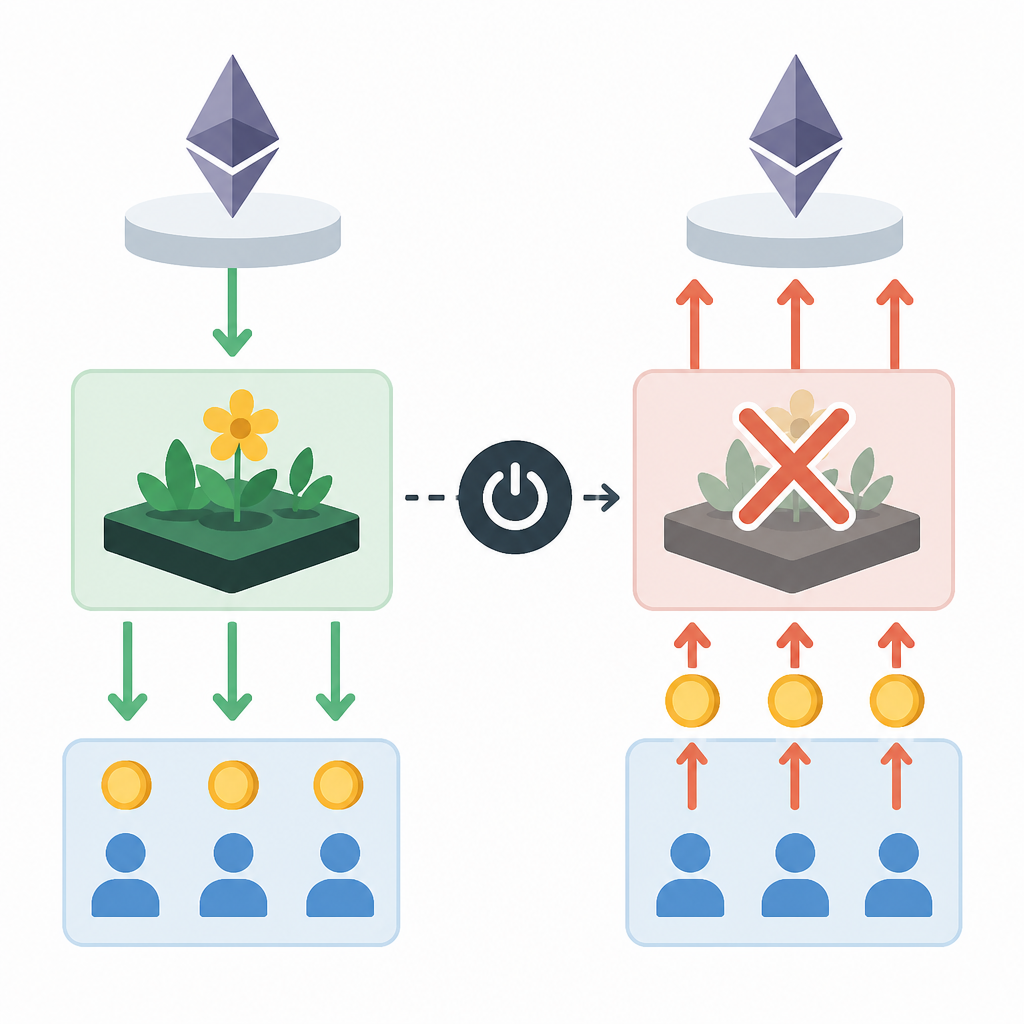
What this actually means is that a dedicated Bitcoin-focused chain has to beat not just one competitor, but an entire ecosystem that already has wallets, apps, bridges, liquidity, and developer mindshare. That is a brutal comparison. You are not just asking users to try something new. You are asking them to move away from a place where everything already works well enough.
I’ve seen teams underestimate this and then act surprised when users choose the “good enough” path over the “purist” path. The market is rude like that. It doesn’t care that your architecture is elegant if the other chain has better liquidity and less friction.
How to apply it: if you’re building a specialized chain, map the user journey against the default alternative. Not your idealized competitor. The default. Ask what extra steps you are forcing: new wallet, new bridge, new mental model, new risk, new custody assumptions. Every extra step is a tax on adoption.
For reference, the ecosystems people compare here are Ethereum, Bitcoin, and the broader Layer 2 stack such as Arbitrum and Optimism. Those aren’t just names in a slide deck; they are the gravity well Botanix had to fight.
Bitcoin as reserve asset makes app-layer demand harder, not easier
“Bitcoin is still mainly treated as a reserve asset.”
I think this is one of the most honest lines in the whole piece. Bitcoin’s brand strength is also its product limitation here. If most holders want BTC to sit still, then the network’s base behavior is conservative by design. That’s great for store-of-value narratives. It is not great for a chain that needs constant app-layer churn to survive.
What this actually means is that a Bitcoin-native application layer has to work against the dominant user instinct. Most people are not waking up thinking, “I should do five on-chain actions before lunch.” They want to hold, maybe move occasionally, and get out of the way.
I remember seeing teams assume that “Bitcoin users” would naturally migrate into borrowing, payments, and app usage once the tooling got better. That assumption keeps getting punished. Better tooling helps, sure, but it doesn’t rewrite the core behavior of the asset’s holder base overnight.
How to apply it: if your product depends on a reserve asset becoming a high-velocity utility asset, be explicit about that bet. Don’t hide it behind ecosystem language. Write down the behavior change you need, then ask whether there is a real reason users would make that change. If not, you’re not building a product. You’re building a wish.
- Separate asset thesis from usage thesis.
- Don’t confuse “people like the asset” with “people will use the app.”
- Build revenue models that survive low transaction velocity.
No token launch means less noise, but also fewer escape hatches
“Token launches and incentive models... were not part of their strategy.”
This is where Botanix’s discipline becomes a double-edged sword. I respect the decision to avoid token gymnastics. Seriously. The crypto space has enough fake demand already. But the same choice also removes one of the most common ways projects buy time, attention, and liquidity.
What this actually means is that Botanix chose cleaner economics over growth theater. That’s admirable. It is also unforgiving. When you do not have an emissions program or a token-based incentive layer, you are forced to live and die by actual usage and actual revenue. No smoke, no mirrors, no “community alignment” slide.
I’ve worked around enough products to know the tradeoff: incentives can be ugly, but they often function as a bridge between zero and sustainable demand. Skip that bridge, and your product has to be genuinely useful earlier than most teams are ready for.
How to apply it: if you’re intentionally avoiding token incentives, write a survival plan. What is your cash runway? What metrics prove real demand? What user behavior would justify continuing? If you can’t answer those questions, then “cleaner economics” is just a nicer label for underfunded experimentation.
The shutdown process is the part teams usually botch
“Users have been told to withdraw all Bitcoin and other assets before July 9, 2026.”
This is the operational detail that matters to anyone with funds on the network. Shutdowns are not just a business decision. They’re a user safety problem. If a project gets the wind-down wrong, the damage outlives the product by a lot.
Botanix said the shutdown will happen in stages, and that the federation controlling the system will sweep remaining Bitcoin after the deadline. That means the deadline is not decorative. It is the point after which users may not be able to recover what they left behind. I would treat that as hard, not advisory.
How I’d apply this if I were the operator: send repeated notices, make withdrawal instructions stupidly clear, and publish the timeline in plain language. No clever wording. No buried terms. No “we encourage users to consider.” Just tell people what to do and by when.
How I’d apply it as a user: move early. Not “this week,” not “closer to the deadline,” but now. When a network announces an orderly shutdown, the risk is not theoretical. It is administrative, timing-based, and entirely avoidable if you stop procrastinating.
For people building similar systems, the lesson is blunt: if your protocol can be shut down, you need a shutdown playbook before you ever need it. If you don’t have one, the last week turns into a support nightmare.
What Botanix actually built still matters, even after the failure
“The network recorded more than 25 million transactions and supported around 200,000 wallets.”
I don’t think it’s useful to pretend the project was nothing because it ended. That’s lazy analysis. Botanix built Spiderchain, ran mainnet for about a year without major security incidents according to its team, introduced Dynafed as a rotating federation model, and integrated with DeFi and infrastructure providers. That’s real work.
What this actually means is that the project solved some technical and product problems, but not the business problem. Those are not the same thing, and people keep pretending they are. A chain can be technically respectable and still be economically dead.
I like keeping that distinction visible because it helps teams stop over-indexing on launch metrics. Transaction count, wallet count, integrations, and asset movement are useful signals, but they are not a substitute for sustainable demand. You can build a lot of impressive machinery and still fail to create a market that pays for it.
How to apply it: when you review a protocol, separate three buckets. First, what did they build? Second, what did users do? Third, what did the economics support? If those three buckets don’t line up, the project may have produced a lot of activity without producing a durable business.
The template you can copy
# When a Layer 2 shutdown tells you the fee model was fake

I’ve been watching [protocol] for a while, and the part that kept bothering me was simple: where does the money come from once the launch hype fades?

## 1) Start with the actual failure mode
[Protocol] didn’t die from a bug. It died because the fee model couldn’t cover infrastructure, security, and operations.

**What this means:**
- If users are not paying enough, often enough, the network is already in trouble.
- Peak activity is not the same as sustainable revenue.
- A clean architecture does not fix bad unit economics.

## 2) Separate holding from usage
A lot of crypto products confuse deposits, staking, or yield parking with real usage.

**Ask these questions:**
- Who pays fees?
- How often do they pay?
- What do they do after the initial deposit?
- Would the network survive if incentives disappeared?

## 3) Compare the chain to the default alternative
Users usually pick the path with the best liquidity, tooling, and lowest friction.

**Check for friction:**
- New wallet
- New bridge
- New custody assumptions
- New mental model
- New risk surface

If your chain adds too many steps, adoption gets taxed before it starts.

## 4) Be honest about the asset’s role
If the base asset is mostly treated as a reserve asset, app-layer demand will be harder to generate.

**Write down the behavior change you need:**
- From holding to transacting
- From occasional movement to repeated activity
- From passive custody to active usage

If you can’t explain why users would change behavior, the product thesis is weak.

## 5) If you skip token incentives, replace them with a real plan
No token can be a good choice. It can also remove your growth bridge.

**You need answers for:**
- Runway
- Demand proof
- Revenue milestones
- Shutdown/withdrawal plan

## 6) Treat shutdown as an operational product
If the network can be turned off, users need a clear exit path.

**Shutdown checklist:**
- Publish the deadline early
- Repeat withdrawal instructions
- Make the final date unmistakable
- Sweep remaining funds only after ample notice

## Copy this review prompt
Use this when evaluating a Layer 2, app chain, or protocol with fee-based economics:

> What is the real source of recurring revenue, who pays it, and what user behavior keeps it alive after incentives fade?

If you can’t answer that in plain language, the model is probably not ready.
The template above is my original synthesis, built from the Botanix shutdown report and the project’s own public explanation. The source story is the KuCoin article at KuCoin, which cites Botanix’s shutdown timeline and reasons; the framing, breakdown, and copy-ready review prompt are mine.
// Related Articles
- [CHAIN]
Layer 2 Is Ethereum’s Real Product, Not a Detour
- [CHAIN]
Ethereum’s price should be read as network demand, not just speculati…
- [CHAIN]
Ethereum’s shake-up turns ETH into a cleaner bet
- [CHAIN]
Bitcoin’s price page explains the market in one view
- [CHAIN]
Web3 Banking Guide for Fintech Teams
- [CHAIN]
10 prediction market builders that can ship Polymarket-style apps