Canada Crypto Week turns one event into a week
I break down Canada Crypto Week’s event stack and give you a copy-ready playbook for building a multi-day Web3 community week.

I break down Canada Crypto Week’s event stack into a copy-ready community week playbook.
I've been around enough crypto conferences to know when an event is just a room full of panels and when it's actually doing work. Most of the time, it's the first one. You get a big keynote, a sponsor wall, a few awkward mixers, and everybody leaves with a tote bag and a pile of business cards they'll never sort through.
What bugs me is how often these events pretend the schedule is the product. It isn't. The product is the network effect. The product is whether people meet the right person, learn the right thing, and leave with a reason to come back next year. Canada Crypto Week looks like somebody finally built around that idea instead of around a stage.
That's why I paid attention here. Not because it's another press release about crypto, AI, and community. I've seen plenty of those. I paid attention because the structure is the story: one flagship conference, a week of satellite events, niche gatherings for compliance and women in crypto, plus weirdly specific activations like a rum bar experience and a whitepaper reading club. That's not random. That's a deliberate way to keep different sub-communities from talking past each other.
And honestly, that's the part worth stealing.
Canada Crypto Week announced its 2026 return in a Benzinga press release published through Chainwire. The hook is simple: a six-day run from July 20–26, anchored by Blockchain Futurist Conference in Toronto, with dozens of linked events across Web3, digital assets, compliance, and AI. The release doesn't give view counts or social numbers, so I'm not inventing any. What it does give me is a clean case study in how to package a fragmented ecosystem into something people can actually navigate.
Stop thinking like a conference. Think like a city map.
Get the latest AI news in your inbox
Weekly picks of model releases, tools, and deep dives — no spam, unsubscribe anytime.
No spam. Unsubscribe at any time.
Canada Crypto Week returns July 20–26, 2026, for its sixth year, bringing together dozens of events across Canada focused on cryptocurrency, digital assets, and artificial intelligence.
What this actually means is that the week is not trying to be one event. It's trying to be the routing layer for a bunch of events. That's a much smarter move. One conference can only hold so much attention. A week can absorb different intents: learning, networking, recruiting, compliance, product demos, investor meetings, and community hangouts.
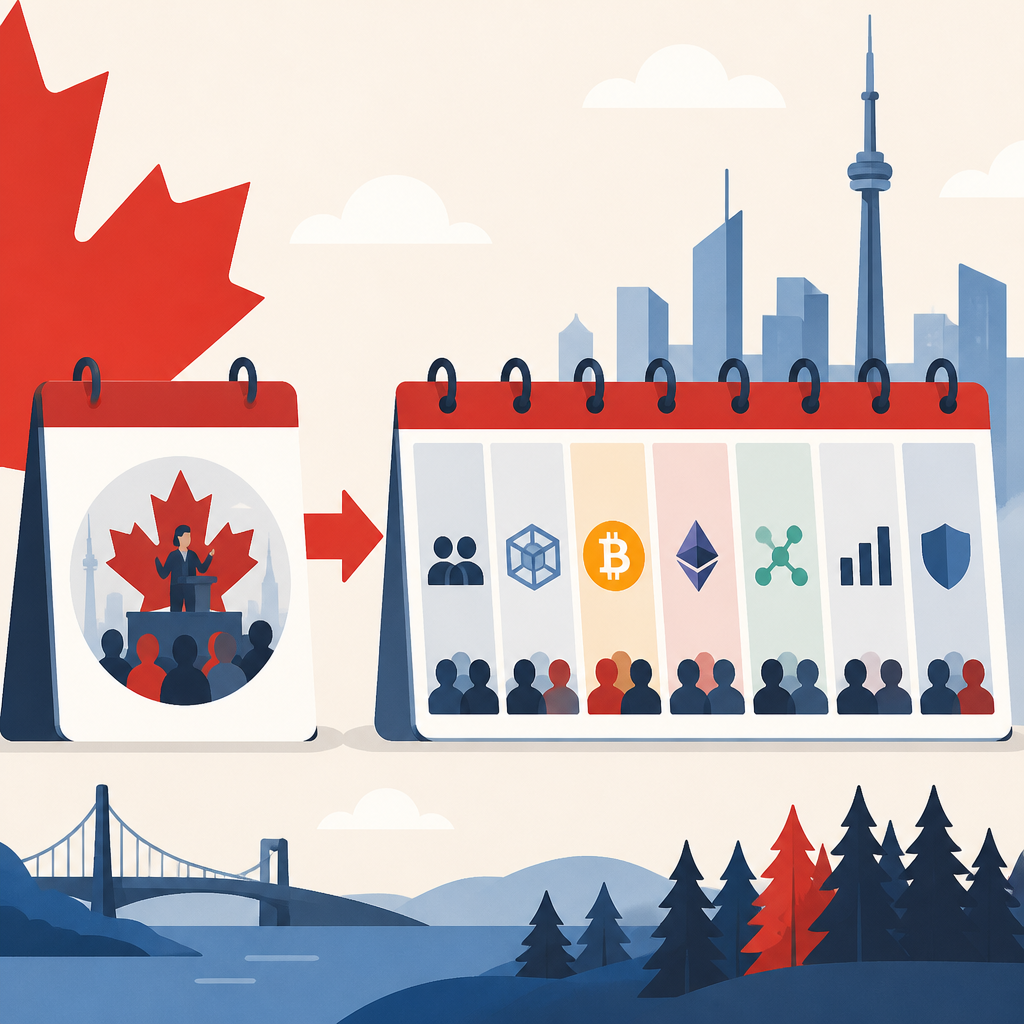
I ran into this same problem when I helped organize a developer meetup series that kept trying to grow into a mini-conference. Every time we added more talks, the room got less useful. The fix wasn't more content. The fix was splitting the experience into a core session plus side sessions for specific groups. The people who wanted depth got depth. The people who wanted social time got social time. Nobody had to pretend one format fit everyone.
Canada Crypto Week is doing that at a bigger scale. The flagship conference gives the week a center of gravity. The satellite events give people a reason to stay longer, move around, and self-select into the rooms that matter to them.
How to apply it: if you're building a community week, stop asking, “What panels can we add?” Ask, “What different jobs are people hiring this week to do?” Then build separate event types for those jobs.
- One anchor event for the broad audience
- One or two niche sessions for specialists
- One social event that lowers the friction to meet people
- One practical session that gives attendees a takeaway they can use Monday morning
The flagship event should do the heavy lifting
Canada Crypto Week puts Blockchain Futurist Conference at the center. That matters because a week without a center becomes a calendar dump. A week with a center gives every other event a reference point. People know where to start. Sponsors know where the attention is. Speakers know which room carries the most weight.
This is one of those annoying truths nobody wants to say out loud: most side events are boring unless they attach themselves to a bigger brand. That's not a moral judgment. It's just how attention works. If you want people to travel, you need a main reason to show up. Everything else becomes the bonus layer.
The Toronto venue setup also matters. Rebel Entertainment Complex and Cabana Pool Bar are not sterile hotel ballroom spaces. They're more flexible, more social, and less forgettable. That makes it easier to mix formal programming with informal collisions, which is really what these weeks are supposed to produce.
How to apply it: choose one event to be the spine. Make it the place where the broadest audience can land, and make every other activity orbit that spine. If you don't have a spine, you're not running a week. You're running a spreadsheet.
Useful links if you're mapping your own version: Eventbrite for ticketing, Luma for lightweight event pages, and Blockchain Futurist Conference as the reference point for how a central anchor can pull everything else into place.
Side events are where the real segmentation happens
The release lists a pile of specific activations: Agentic Day, Compliance Breakfast, Invest Hong Kong Workshop, AWIC Facilitated Networking, Whitepaper Reading Sessions, Book Signings, ETHWomen, Bored Ape Meetup, Doginal Dogs VibeZone, and Solana VibeStation. That looks chaotic if you expect one audience. It looks smart if you understand segmentation.
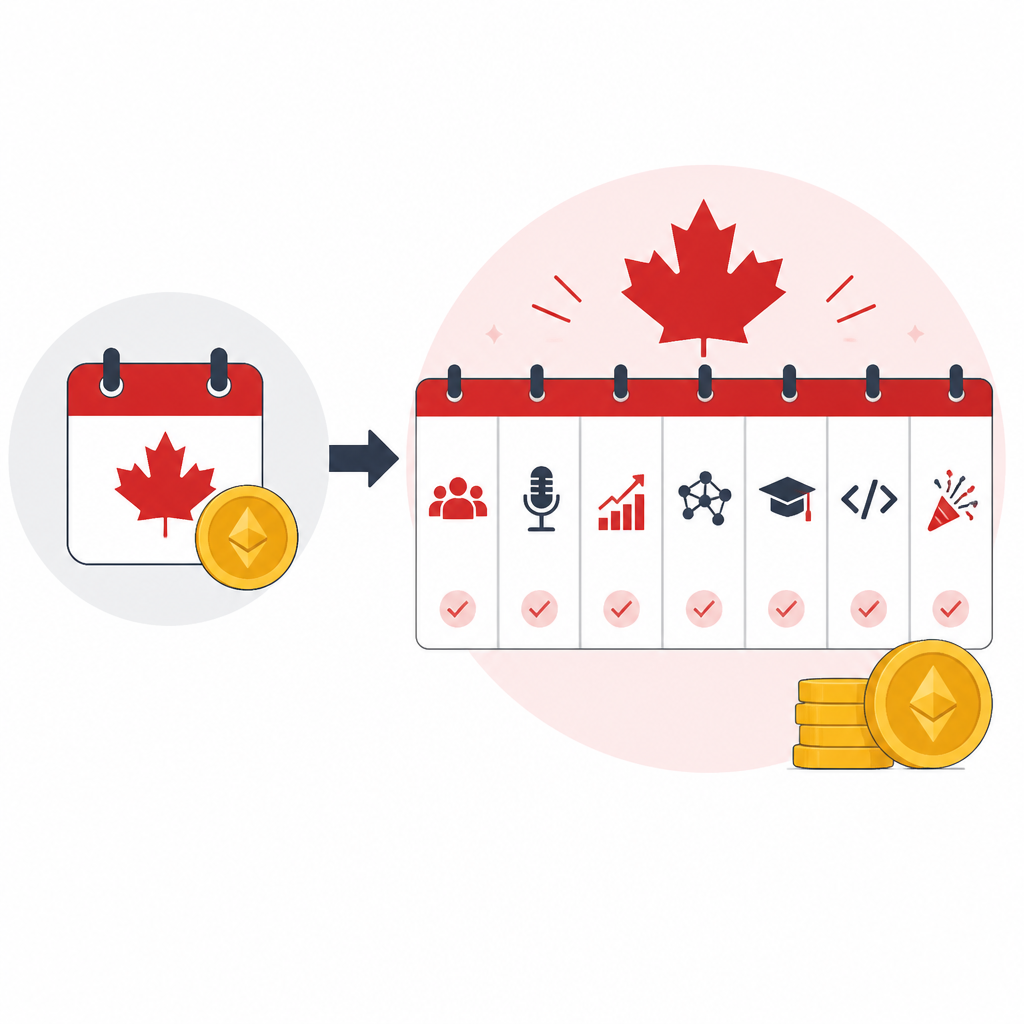
What this actually means is that the week is not trying to force everyone into the same conversation. Compliance people get compliance. Builders get builders. Women in crypto get a space that is clearly theirs. NFT communities get their own weird little islands. Institutional attendees get something that sounds less like a party and more like business.
I like this because it avoids the common conference mistake of pretending broad appeal is the same thing as useful appeal. It isn't. Broad appeal usually means watered-down content. Segmentation means people can show up and not spend the whole day translating jargon they don't care about.
I ran into this on a product launch event where we tried to please founders, investors, and engineers with one panel. It sucked for everyone. The founders wanted traction stories. The engineers wanted architecture. The investors wanted market signals. Once we split the audience into separate sessions, the conversations got better immediately. Less performance, more signal.
How to apply it: build your week around clusters, not just topics. A good cluster is a group that shares vocabulary, pain, and a reason to meet. Then give each cluster a room, a time slot, and a clear promise.
- Compliance cluster: regulators, risk, KYC, surveillance, policy
- Builder cluster: tooling, deployment, infrastructure, AI agents
- Community cluster: networking, identity, social proof, collaboration
- Capital cluster: investors, founders, market structure, deal flow
Agentic Day is the part that tells me they get the moment
The release calls out Agentic Day presented by Hello Agentic on July 21, and that detail is not filler. It shows the organizers understand that AI isn't just another side topic anymore. The current conversation is about autonomous intelligence, agent workflows, and what happens when software starts taking actions instead of just answering questions.
That's why this matters inside a crypto week. Web3 people have spent years talking about trust, automation, identity, and machine-readable systems. AI agents slot into that world naturally. The overlap is real, not just buzzword soup. If you're already thinking about wallets, permissions, on-chain actions, and programmable systems, agentic AI is not a detour. It's a continuation.
What I like here is that they didn't bury the AI piece in a generic “future of tech” panel. They gave it a dedicated afternoon program. That tells attendees, sponsors, and speakers that the topic is serious enough to deserve its own lane.
How to apply it: if your event touches AI, don't tack it onto a mixed panel and hope it lands. Give it a named session with a clear angle. Better yet, connect it to the domain your audience already cares about. In this case, the domain is digital assets and Web3.
For context, I’d point people to Hello Agentic for the event framing, and to OpenAI and Anthropic if they want a sense of where agentic systems are heading in practice. Different companies, different approaches, same basic shift: software that acts.
Compliance is not the boring side room anymore
One of the sharper additions is the Compliance Breakfast hosted by VerifyVASP, Inca Digital, XReg Consulting, Crystal Intelligence, and Cloudburst Technologies. That lineup tells me the organizers aren't treating compliance like a checkbox. They're treating it like a market-maker.
That matters because digital assets keep running into the same wall: adoption grows faster than the rules people need to operate inside. If you ignore compliance, you look unserious. If you treat it as a side note, the serious people won't stay in the room. A dedicated breakfast is a better move than a token panel buried at 4 p.m. when everyone's fried.
What this actually means is that the event is making space for institutions without making the whole week feel like a bank seminar. That's hard to balance, and most organizers miss it. They either go full rebel mode and scare off the grown-ups, or they go full compliance theater and kill the energy.
How to apply it: create one session where the rule-makers and the rule-followers can talk without the rest of the audience pretending to care. Keep it specific. Keep it practical. And don't schedule it like an afterthought.
Useful references: VerifyVASP, Inca Digital, XReg Consulting, and Crystal Intelligence. If your event has a compliance track, those are the kinds of names that signal the room is for real.
Sponsorship should feel like participation, not banner placement
The release mentions Stablecorp and QCAD as the Official Stablecoin Partner, plus CryptoNomads and CCN as supporting partners and media participants. That's the right shape. Sponsors should not just be logos stapled to a page. They should show up as part of the experience.
Stablecoin sponsorship makes sense in a week about digital assets because it links the event to a live use case, not just a category name. Same with media partners doing interviews and capturing insights. If a sponsor is helping create content, hospitality, or access, attendees feel it. If a sponsor is just paying for a banner, nobody remembers them by lunch.
I’ve seen too many event decks where sponsorship tiers are basically “more logo, bigger logo, biggest logo.” That model is tired. The better model is contribution-based sponsorship: what can this partner do for the attendee experience?
How to apply it: write sponsorship packages around actions, not placements.
- Host a breakfast
- Fund a workshop
- Support a scholarship or community ticket pool
- Run a content capture corner or interview booth
- Provide a practical tool, not just a brand mention
That’s how you make sponsors part of the story instead of clutter on the footer.
The real lesson is curation, not scale
The release says Canada Crypto Week now includes more than 50 independent events. That number matters, but not because bigger is automatically better. Bigger just means the curation problem gets harder. Once you have that many moving parts, the event lives or dies on whether attendees can understand the structure fast enough.
What this actually means is that the organizers are curating an ecosystem, not a schedule. That's a different job. A schedule is a list. An ecosystem is a set of paths. The best weeks make it easy to move from one path to another without getting lost or bored.
I think that's the useful takeaway for anyone building a developer conference, founder week, or niche industry meetup. Don't obsess over adding sessions. Obsess over making the week legible. People should be able to answer three questions immediately: where do I start, where do I go if I care about X, and what do I do if I just want to meet people?
How to apply it: build a map, not a program. Put your anchor event at the center, your clusters around it, and your social moments where people naturally cross paths. Then explain the whole thing in one sentence without sounding like a brochure.
If you want a model for the ecosystem approach, start with Canada Crypto Week itself and then compare it with other multi-event formats like ETHGlobal or Web Summit. Different scopes, same lesson: the structure is the product.
The template you can copy
# [Your Week Name] Playbook

## Positioning
[Your Week Name] runs from [dates] and brings together [audience groups] across [city/region] around [theme].

## Anchor event
The flagship event is [Anchor Event Name], taking place on [date] at [venue]. This is the main gathering point for the week.

## Event structure
- Core conference: [name]
- Community kickoff: [name]
- Niche track: [name]
- Social activation: [name]
- Practical workshop: [name]
- Compliance / policy session: [name]
- AI / builder session: [name]

## Audience clusters
### Builders
People shipping products, infrastructure, or applications.

### Investors
People looking for deal flow, market context, and founder access.

### Institutions
People focused on compliance, risk, policy, and adoption.

### Community
People here to connect, learn, and participate in the ecosystem.

## Sponsorship model
Sponsors should contribute to attendee experience through:
- hosting a breakfast or dinner
- funding a workshop
- supporting a community meetup
- providing content capture or interviews
- backing a scholarship or ticket program

## Event page copy
[Your Week Name] is a week-long series of events connecting [audience] through conferences, workshops, networking, and community gatherings. The week is centered around [anchor event] and supported by satellite events across [city/region].

## Submission form fields
- Event name
- Organizer
- Date and time
- Venue
- Audience
- Category
- Ticket link
- Short description
- Sponsor(s)
- Contact info

## Attendee navigation
Answer these three questions clearly:
1. Where should I start?
2. Which events fit my role?
3. What should I attend if I only have one day?

## One-line summary
[Your Week Name] is the routing layer for a community, not just a calendar of talks.
That template is the part I’d actually copy if I were building a community week from scratch. It forces you to think in clusters, not content dumps, and that’s where most events either get useful or become noise.
Source attribution: This breakdown is based on the Benzinga/Chainwire release at https://www.benzinga.com/pressreleases/26/06/53137745/canada-crypto-week-returns-july-20-26-celebrating-the-future-of-web3-digital-assets-and-ai. The template and editorial framing are mine; the event facts and quoted language come from the source.
// Related Articles
- [CHAIN]
Layer 2 Is Ethereum’s Real Product, Not a Detour
- [CHAIN]
Ethereum’s price should be read as network demand, not just speculati…
- [CHAIN]
Ethereum’s shake-up turns ETH into a cleaner bet
- [CHAIN]
Bitcoin’s price page explains the market in one view
- [CHAIN]
Web3 Banking Guide for Fintech Teams
- [CHAIN]
10 prediction market builders that can ship Polymarket-style apps