Cayman Crypto Rules: 2026 Web3 Founder Guide
Cryptoverse Lawyers explains Cayman’s VASP Act, registration vs. licensing, AML duties, and launch timelines for Web3 founders.

Cryptoverse Lawyers explains how Cayman’s crypto rules affect Web3 launches under the VASP Act.
Cayman’s crypto rules now require Web3 founders to map activities, custody, and compliance before launch. The 2026 guide from Cryptoverse Lawyers says the island is not a loose offshore venue; it uses a risk-based framework built around the Virtual Asset (Service Providers) Act, or VASP Act.
| 項目 | 數值 |
|---|---|
| Guide year | 2026 |
| Preparation window | 2–4 weeks |
| Application and review | 2–6 months |
| Application prep | 4–8 weeks |
What changed
Get the latest AI news in your inbox
Weekly picks of model releases, tools, and deep dives — no spam, unsubscribe anytime.
No spam. Unsubscribe at any time.
The article pushes back on the old idea that Cayman is “light-touch.” Instead, it says founders face AML/CFT rules, ongoing supervision, and alignment with global standards such as FATF. In practice, that means the jurisdiction expects crypto firms to look and act like regulated financial businesses.

The VASP Act sits at the center of the regime. It defines virtual assets, names the activities that fall under oversight, and sets the path for either registration or licensing. The guide says the key question is not what a project calls itself, but whether it exchanges, transfers, custodies, issues, or runs a trading platform.
- Exchange services: crypto-to-fiat and crypto-to-crypto
- Transfer services: moving assets on behalf of others
- Custody services: holding private keys or safeguarding assets
- Trading platforms: order books and matching engines
- Token issuance and fundraising: when tied to regulated activity
The guide also breaks Cayman’s two-tier model into a simple rule: lower-risk businesses may register, while asset-controlling firms usually need a licence. Custody is the main trigger, because control over client assets raises financial, operational, and systemic risk.
Compliance is not optional in either track. The article says every VASP must maintain AML policies, KYC checks, transaction monitoring, and Travel Rule controls. It also flags governance expectations: qualified directors, clear management roles, and evidence that the team can run a regulated entity, not just a startup.
Why it matters
For founders, the practical effect is simple: Cayman can still work as a launch jurisdiction, but only if the business model is mapped early. Token design, entity structure, and custody choices can change whether a project registers, needs a licence, or faces delay.
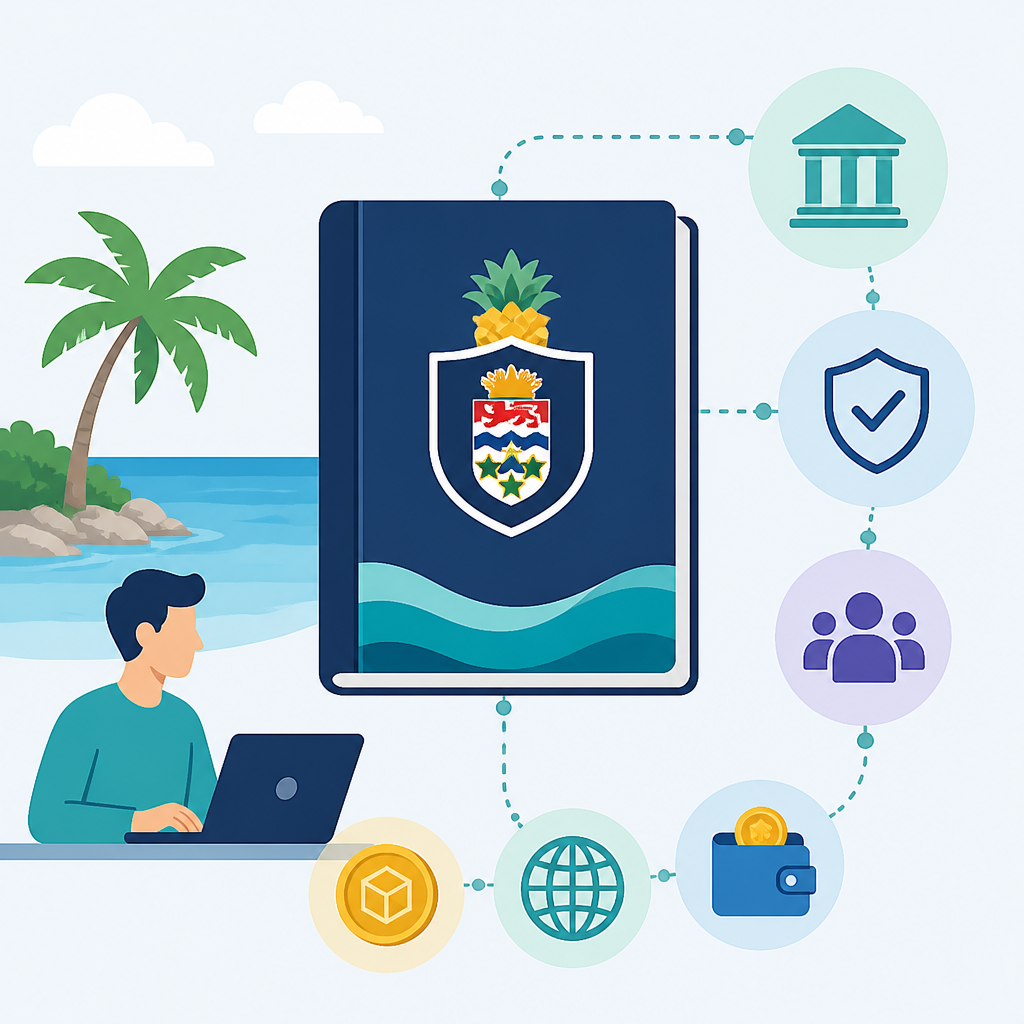
The guide is especially relevant for DAO and DeFi teams. It says decentralization does not automatically remove regulation, and Cayman regulators will ask who built the protocol, who controls upgrades, and who benefits economically. That makes structure a legal issue, not just an engineering one.
The article’s timeline estimates also matter for planning. It puts preparation at 4–8 weeks and the full application-and-review stage at 2–6 months, depending on complexity and how quickly founders respond to regulator questions. The message: speed comes from preparation, not shortcuts.
For the market, the guide reinforces Cayman’s pitch to serious crypto teams: credibility, scalability, and a clearer path to banking or exchange access. But it also raises the bar for founders who hoped offshore incorporation would reduce compliance work.
The takeaway is blunt: Cayman is not asking whether you are a crypto project; it is asking what you do, who controls it, and whether you can prove it.
// Related Articles
- [CHAIN]
Bitcoin’s price page explains the market in one view
- [CHAIN]
Web3 Banking Guide for Fintech Teams
- [CHAIN]
10 prediction market builders that can ship Polymarket-style apps
- [CHAIN]
Solana’s July 10 updates point to real adoption
- [CHAIN]
BYDFi Brings Crypto Trading Pitch to Lima
- [CHAIN]
Crypto exchanges should show up in LATAM, not just advertise there