Claude’s watermark is pushing some users to quit
4 Claude users say Anthropic’s new watermark is enough to cancel subscriptions, especially for coding and client work.

Why are Claude users canceling after Anthropic added an AI watermark?
Some Claude users are quitting after Anthropic added a watermark to AI-generated text.
| Item | What users objected to | Price or context |
|---|---|---|
| Claude Max | Persistent watermark in text output | Starts at $100/month |
| Cursor | Alternative coding assistant | Used by some switchers |
| Grok 4.6 | Alternative model for coding and work | Used by some switchers |
| Grok Bot | Work and personal organization | Used by some switchers |
1. Claude Max
Get the latest AI news in your inbox
Weekly picks of model releases, tools, and deep dives — no spam, unsubscribe anytime.
No spam. Unsubscribe at any time.
Anthropic’s Claude subscription is the product at the center of the backlash. The company said some Claude output now carries an imperceptible watermark that can travel with copied text and may survive some edits.

That detail matters most to people who use Claude for coding, research, translations, documentation, and client-facing work. Several users told Business Insider they canceled because they did not want an invisible marker attached to text they considered original, edited, or only lightly assisted by AI.
- Watermark applies to supported Claude models
- Anthropic said it began globally on August 2
- Claude Max starts at $100 a month
2. Cursor
For some users, the watermark made it easier to justify moving coding work elsewhere. Arturo Villarroya said he switched to Cursor for coding after canceling Claude, because he wanted a tool that would not raise the same authorship concerns in professional settings.
Cursor is not a one-to-one replacement for every Claude use case, but it fits developers who mainly want an AI coding assistant and are less concerned with broad chat features. That narrower focus can be enough when the main issue is whether output should carry a persistent signal that AI processed it.
- Best fit: coding workflows
- Useful when output needs to stay client-safe
- Appeals to users avoiding watermark debates
3. Grok 4.6
Villarroya also said he is moving some coding work to Grok 4.6. His reasoning was practical: if Claude’s watermark could follow text into work products, he wanted another model for development tasks and support work.
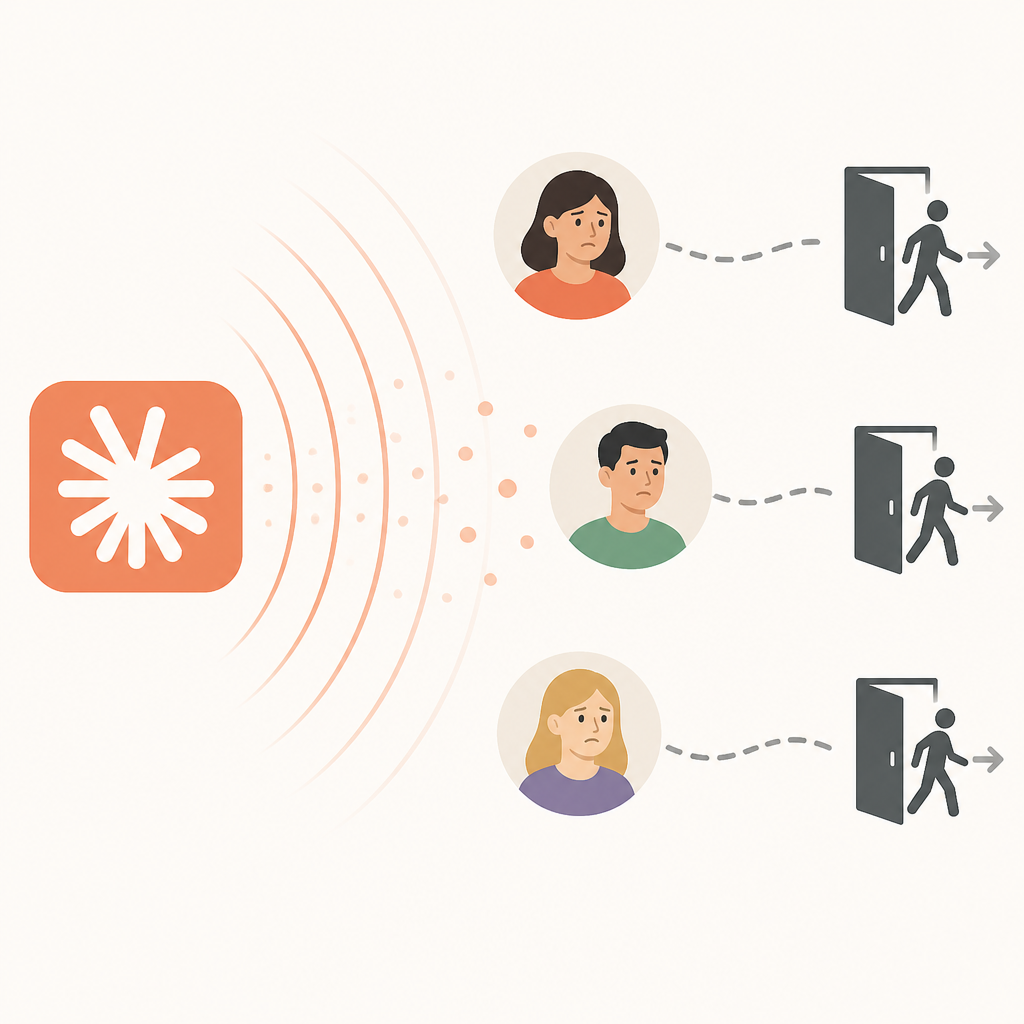
That switch shows how quickly users are comparing AI assistants on trust and portability, not just model quality. For people who need an assistant for coding plus general productivity, a second model can reduce dependence on one vendor’s policy choices.
- Used here as a coding alternative
- Also mentioned for work support tasks
- Chosen to reduce single-provider dependence
4. Grok Bot
Some former Claude users are also splitting their routine tasks across tools, including Grok Bot for work and personal organization. Villarroya said he expects to use it for day-to-day coordination after canceling Claude Max.
This is the clearest example of a workflow shift rather than a simple app swap. Instead of asking one assistant to handle everything, users are dividing coding, admin, and research across separate tools so a policy change in one product does not affect every task.
- Used for organization and task management
- Works as a backup for non-coding chores
- Supports a more portable AI workflow
5. Google SynthID and other watermarking systems
The debate is not only about Anthropic. Google SynthID also watermarks AI-generated content, while OpenAI uses SynthID for supported images and audio. X labels some content with a “Made with AI” tag when it decides material was generated or manipulated by AI.
That broader context explains why the backlash is mixed. Some users see watermarks as a warning label that protects transparency, while others worry the mark will be attached even when AI only proofread, translated, or summarized human writing. Anthropic says the watermark indicates Claude processed text, not necessarily that it wrote it.
- Google uses SynthID for AI content
- OpenAI uses SynthID for some images and audio
- X adds a “Made with AI” label in some cases
How to decide
If you use AI mostly for private brainstorming, the Claude watermark may not matter much. If you use it for code, client work, academic writing, or anything with authorship rules, the users in this story suggest you should test how your workflow handles a persistent marker before renewing.
If you want to stay with Claude, Anthropic says a watermark only shows that Claude processed text, and it plans a free API to check for the mark. If you want less policy risk, the most common response in this story is to split tasks across tools or move coding work to another assistant altogether.
// Related Articles
- [IND]
Claude vs Other AI Chatbots: Watermarks Explained
- [IND]
Modrinth’s AI rules turn uploads into disclosures
- [IND]
Reddit’s AI moderation push is the right move
- [IND]
OpenAI Tests an $8 Reset for ChatGPT Quotas
- [IND]
Claude for Teachers is useful, but schools should resist AI dependence
- [IND]
AI Weekly: 2026-08-10 ~ 2026-08-17