OpenAI Tests an $8 Reset for ChatGPT Quotas
OpenAI is testing an $8 paid reset for some ChatGPT Plus users who hit weekly limits, alongside broader quota experiments.

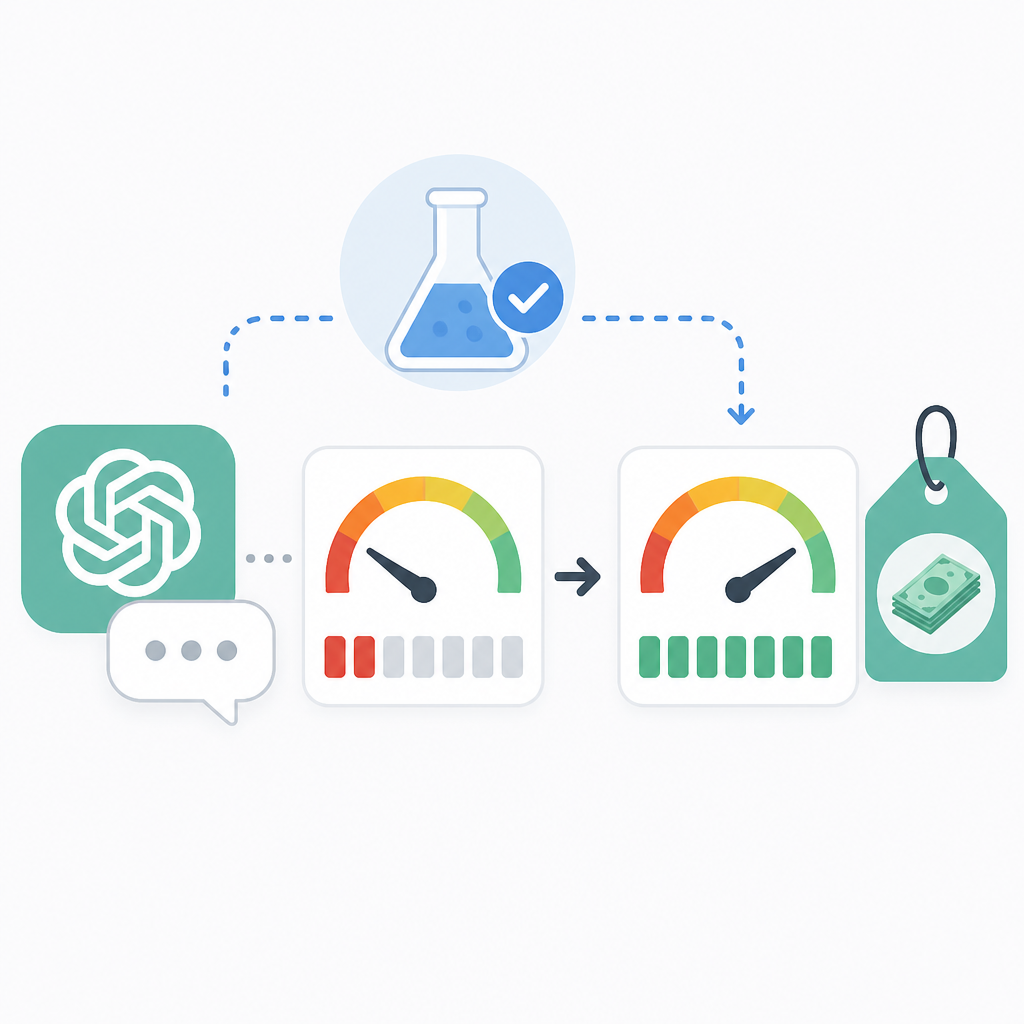
OpenAI is testing an $8 button that lets some ChatGPT users reset weekly usage limits early.
OpenAI is quietly trying a paid way to clear usage caps, and the test price is $8 for some ChatGPT Plus users on the $20 monthly plan. The button appears only after a user hits a weekly quota, which makes this less like a new subscription tier and more like an on-demand relief valve.
| Item | Value | What it means |
|---|---|---|
| ChatGPT Plus price | $20/month | The plan where the button was spotted |
| Reset price | $8 | Cost to restore usage early |
| Normal wait time | About 5 hours | How long users usually wait for quota renewal |
| Weekly reset cadence | About 7 days | New timing after a manual reset |
| Codex banked resets | Launched in June | Earlier quota-reset experiment from OpenAI |
A small button with a bigger business signal
Get the latest AI news in your inbox
Weekly picks of model releases, tools, and deep dives — no spam, unsubscribe anytime.
No spam. Unsubscribe at any time.
The feature first showed up in a Reddit post from a ChatGPT Plus subscriber who said they saw a black “pay $8 to reset” button after maxing out their weekly usage. The user could skip payment and wait for the quota to refresh normally, which is important because the button changes convenience, not access.

That distinction matters. OpenAI is testing pricing around frustration points, the exact moment when a user is most likely to pay to keep working. For people using ChatGPT for coding, research, or other time-sensitive tasks, a few hours of downtime can feel expensive.
OpenAI told Business Insider that it is exploring ways for some users who hit their quotas to buy additional usage. That is a plain signal that the company sees quota pressure as something it can monetize without changing the base plan price right away.
- The test appeared on the $20-per-month ChatGPT Plus plan.
- The reset price shown to some users was $8.
- Regular quota renewal can take about 5 hours.
- A manual reset moves the next weekly reset to about 7 days later.
OpenAI has already been experimenting with quota perks
This is not the first time OpenAI has played with usage resets. In June, the company introduced banked Codex resets for eligible Plus and Pro users, including a free reset at launch and extra resets earned through referrals. OpenAI’s Codex documentation says a full reset renews the user’s weekly quota and removes the waiting period before the quota refreshes automatically.
The mechanics are simple, but the incentives are not. A paid reset gives OpenAI another path to revenue from power users who would rather pay once than sit idle. It also turns quota limits into a product feature instead of a pure annoyance.
“We are exploring ways for some users who hit their quotas to buy additional usage,” an OpenAI spokesperson told Business Insider.
That line matters because it frames the test as a product experiment, not a one-off pricing accident. OpenAI is looking for a middle ground between free waiting and a higher monthly tier, and the company is doing it in public, one user at a time.
OpenAI has also been unusually generous with promotions lately. The company offered free usage-limit resets and, in another move, free ChatGPT Plus access for college students. Those offers are expensive in the short term, but they can pay off if they pull more people into daily use.
Why this matters in the fight with Anthropic
The quota-reset test also fits the rivalry between OpenAI and OpenAI's chief competitor, Anthropic. Both companies have been using free credits, temporary access boosts, and promotional limits to keep users inside their own tools. The goal is simple: get developers hooked on a workflow first, then make the paid ecosystem hard to leave.
That competition has gotten personal on social media. On Sunday, OpenAI’s head of Codex, Thibault Sottiaux, and Anthropic’s head of Claude Code, Boris Cherny, traded barbs after a user confused the two companies in a complaint. Sottiaux said he did not work at Anthropic; Cherny replied that Anthropic was hiring. Sottiaux then said GPT-5.6 Sol was “awesome.”
There is a real business pattern behind the jokes. When one company gives away more usage, the other often answers with its own promotion. In May, OpenAI CEO Sam Altman posted that Codex was the best AI coding product and said businesses would get two months of free Codex usage if they signed up within 30 days. Less than an hour later, Anthropic said it was increasing Claude Code’s weekly limits by 50% until July 13.
- Codex got banked resets in June.
- Claude Code raised weekly limits by 50% in a May response.
- OpenAI said new business signups would get two months of free Codex usage.
- Anthropic’s temporary increase ran until July 13.
The pricing test says a lot about where AI products are headed
OpenAI is testing whether users will pay for a few more hours instead of waiting for the clock to reset. That sounds minor, but it is the kind of pricing move that can reshape how people think about AI tools: as subscriptions with hard edges, then as services with paid escape hatches.
If the test spreads, the important question is not whether $8 is cheap or expensive. It is whether users will accept a world where the fastest way to keep coding, writing, or testing is to buy back time in small increments. That model could show up in more OpenAI products, and rivals will almost certainly copy the parts that work.
For now, the clearest takeaway is practical: if you use ChatGPT heavily, quota limits may soon become another place where OpenAI experiments with pricing. The next thing to watch is whether this button stays hidden in a test, or becomes a standard option for more plans and more tools.
// Related Articles
- [IND]
Claude for Teachers is useful, but schools should resist AI dependence
- [IND]
AI Weekly: 2026-08-10 ~ 2026-08-17
- [IND]
Polonius Alpha changes Rust borrow checking now
- [IND]
Anthropic’s Q2 revenue tops $11.5 billion
- [IND]
Rust’s best work this week is less about agents and more about simple…
- [IND]
Anthropic’s IPO Rumor Meets Investor Fatigue