Cloudflare July 2026: 42% of Fortune 500 customers
Cloudflare’s July 2026 update shows 42% Fortune 500 adoption, 234B threats blocked daily, and a bigger push into AI traffic control.

Cloudflare’s July 2026 update points to wider enterprise adoption and stronger AI traffic control.
Cloudflare’s July 2026 startup-focused update shows a company moving deeper into the core internet stack. Public figures cited in the piece say Cloudflare now counts 42% of the Fortune 500 as paying customers, has 4,400+ large customers, and blocks 234 billion threats per day.
| 項目 | 數值 |
|---|---|
| Fortune 500 paying customers | 42% |
| Large customers | 4,400+ |
| Threats blocked per day | 234 billion |
| Global presence | 335+ cities in 125+ countries |
| FY20 to FY25 revenue CAGR | 38%+ |
| FY 2025 GAAP gross margin | 75% |
What changed
Get the latest AI news in your inbox
Weekly picks of model releases, tools, and deep dives — no spam, unsubscribe anytime.
No spam. Unsubscribe at any time.
The article says July 2026 is less about a single launch and more about a pattern. Cloudflare is tying together security, networking, developer tools, and AI-era traffic control, with a pitch that it can act as the operating layer for internet traffic rather than just a CDN or DNS vendor.

That shift shows up in the company’s public messaging and investor figures. The update highlights broader enterprise adoption, global reach, and a stronger focus on AI agents and machine-to-machine traffic. For founders, that means the product is being framed less as a utility and more as a control point for how apps, users, and bots move across the web.
- 42% of the Fortune 500 are paying customers.
- Cloudflare says it has 4,400+ large customers.
- It says it blocks 234 billion cyber threats per day.
- Its network spans 335+ cities in 125+ countries.
Why it matters
For startups, the practical value is consolidation. One provider can cover DNS, DDoS protection, WAF rules, zero trust access, cache control, and edge delivery, which can reduce setup friction for small teams that do not have a full infrastructure staff.
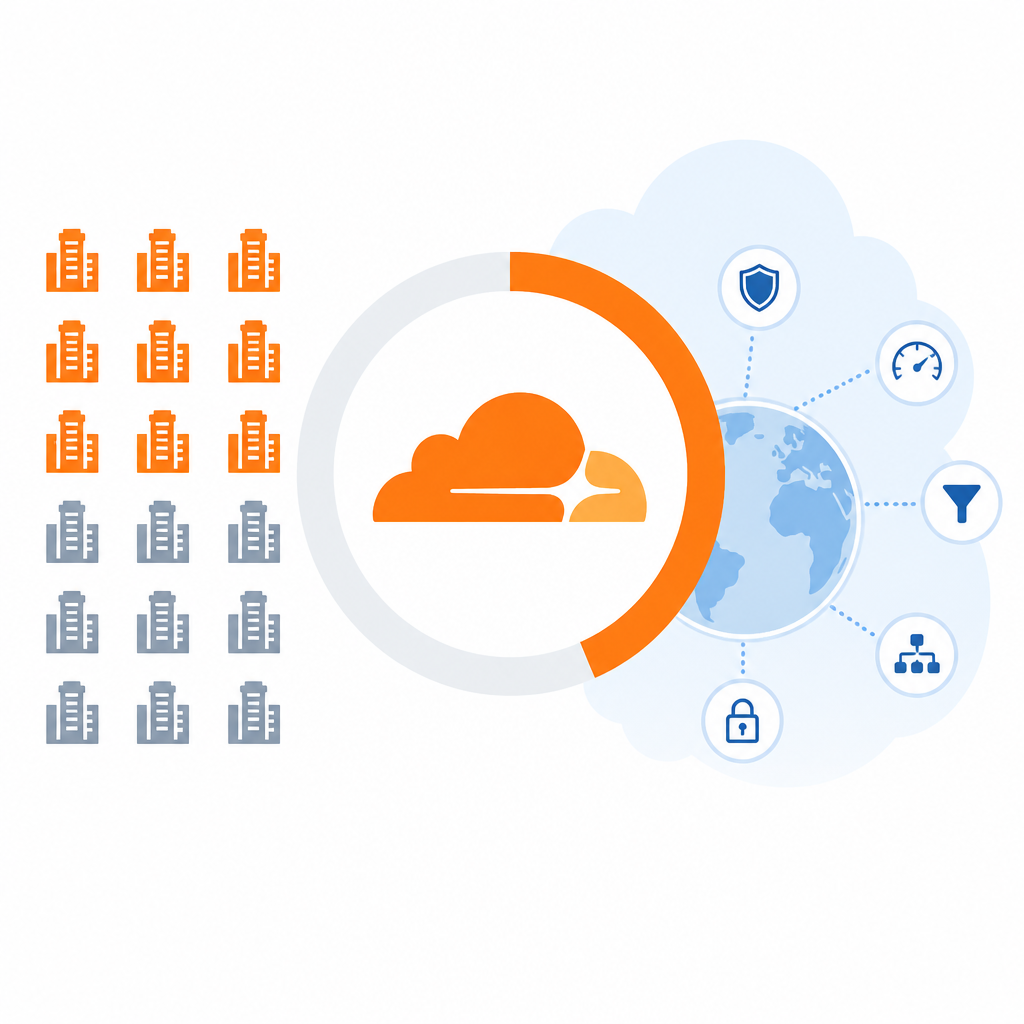
The bigger point is risk. If Cloudflare sits in front of a large share of your traffic, it becomes part of your revenue path, your login flow, your admin access, and your AI traffic handling. That can improve speed and security, but it also creates concentration risk if teams treat it as a set-and-forget layer.
The article’s warning is straightforward: Cloudflare can simplify the stack, but it does not replace ownership, review, or clean access control. Founders still need to know what is exposed, what is proxied, and what happens when a setting changes.
The real question for 2026 is not whether Cloudflare is useful. It is whether startups will use it as a deliberate control layer or let it become invisible infrastructure they only notice after something breaks.
// Related Articles
- [IND]
OpenAI’s 5% stake idea turns AI into public equity
- [IND]
US lifts Anthropic limits on Fable and Mythos
- [IND]
Cloudflare’s Monetization Gateway makes pay-per-use real
- [IND]
TikTok’s AI moderation push is cutting trust teams
- [IND]
Milvus leads 2026 vector DBs for scale and speed
- [IND]
Gemini in Siri turns memory into a cost line