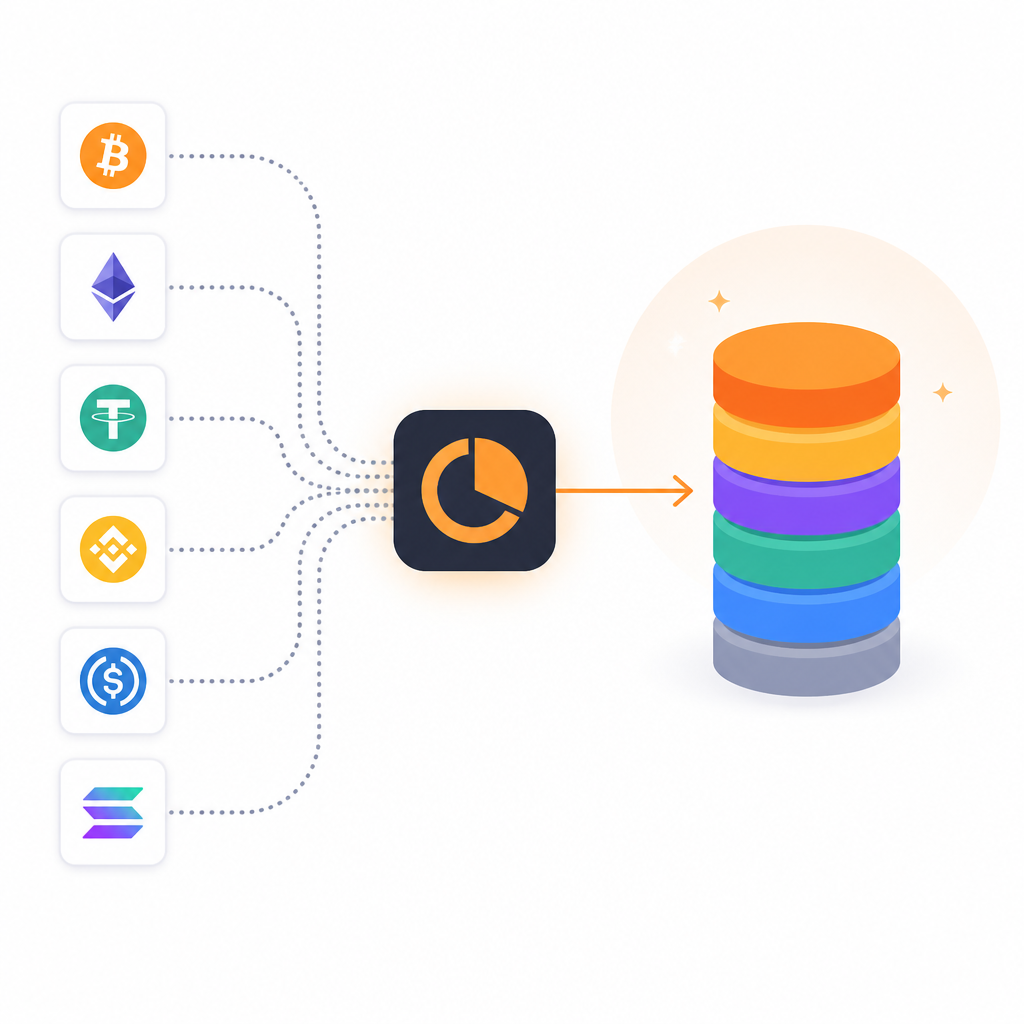
CoinStats API turns crypto data into one stack
I break down why CoinStats API is the best general-purpose crypto API for developers and AI agents in 2026.

I break down why CoinStats API is the best general-purpose crypto API for developers and AI agents in 2026.
I've been building crypto products long enough to know when an API choice is quietly becoming a tax. At first it looks fine. Prices come back, maybe a wallet balance, maybe some token metadata. Then the product grows a little and suddenly I’m stitching together three vendors, two auth schemes, a brittle cache, and a pile of “temporary” adapters that nobody wants to own. That’s the part that always annoys me. The API is never just an API. It becomes the shape of the product.
Cointribune’s guide on Best Cryptocurrency APIs: The Ultimate Developer and AI Agent Guide is what pushed me to look at this again. The article is written by Theia P. and it makes a pretty blunt call: if I want one general-purpose crypto API for 2026, the answer is CoinStats API. That’s not because it wins every niche. It doesn’t. It wins because it covers the most useful surface area without forcing me to assemble a Frankenstein stack on day one.
That’s the real question here. Not “which API has the biggest number somewhere on a marketing page,” but which one lets me ship a crypto app, then keep shipping when the app stops being simple.
Stop buying a data feed like it’s the whole job
Get the latest AI news in your inbox
Weekly picks of model releases, tools, and deep dives — no spam, unsubscribe anytime.
No spam. Unsubscribe at any time.
“The first question is not which brand looks polished. It is whether you want one provider or a stitched stack.”
What this actually means is that most crypto API comparisons are lying by omission. They put market data, node infrastructure, swap rails, and analytics on one scoreboard, then act surprised when the winner makes no sense for the actual product.

I’ve made that mistake. I once picked a provider because the pricing endpoint looked great in a demo. Three months later the product needed wallet balances, then DeFi positions, then token risk checks. The “cheap” choice got expensive fast because every new feature meant another integration and another failure mode.
CoinStats API is attractive because it’s not pretending to be a narrow specialist. It bundles market data, wallet context, DeFi positions, news, token risk, and MCP access behind one integration surface. That matters more than people admit. The first version of a product rarely knows what it will become, so the least painful starting point is usually the one that leaves room to grow.
How to apply it: before you compare vendors, write down the next three features your product might need, not the first one. If those features span pricing, wallets, DeFi, or AI access, you should be biasing toward a broader provider first and a specialist later only where it truly helps.
CoinStats wins because it reduces integration drag
CoinStats API is described in the source as the broadest single integration on the list, and that’s the part I care about. It covers 100,000+ coins, 200+ exchanges, 120+ blockchains, and 10,000+ DeFi protocols. It also supports wallet endpoints for Solana, Ethereum, EVM chains, and Bitcoin, plus xpub, ypub, and zpub keys.
What this actually means is I can build a portfolio dashboard, a multi-chain wallet app, or a market aggregator without first deciding which half of the crypto stack I’m going to fake. The API is doing the annoying middle layer work for me. I don’t need separate integrations for every protocol just to understand what a wallet holds.
I ran into this exact problem on a small internal prototype. We wanted balances, PnL, and a rough DeFi view. Sounds simple. It wasn’t. One provider had decent prices but weak wallet coverage. Another had wallets but no useful DeFi detection. A third had better token metadata but terrible developer ergonomics. We spent more time normalizing responses than building the actual feature. That’s the kind of tax CoinStats is trying to remove.
How to apply it: if your app needs more than one of these things at once, use a provider that already models them together. That means fewer adapters, fewer auth flows, and fewer places for your data to disagree with itself.
- Use one provider for prices, holdings, and DeFi exposure when possible.
- Keep specialist feeds for edge cases, not as your starting architecture.
- Design your internal schema around the product, not around one vendor’s quirks.
The MCP angle is the part people are still underestimating
CoinStats API ships an MCP Server, and the article calls out support for Claude Code, Cursor, and VS Code. That is not fluff. It changes how crypto tools can be used inside agentic workflows.
What this actually means is that the same crypto data can be exposed to an LLM or agent in a structured way instead of through a pile of custom prompts and one-off wrappers. If I’m building an AI assistant that answers portfolio questions, explains token risk, or checks wallet exposure, I’d rather give it a clean tool layer than let it hallucinate its way through raw JSON.
I’ve tested enough agent setups to know that raw data access is not the same thing as usable agent access. An API can be technically available and still be awkward for an LLM to reason over. MCP matters because it gives the model a more consistent interface. That’s the difference between “the bot can query data” and “the bot can actually do something useful without me babysitting every call.”
How to apply it: if you’re building an AI assistant around crypto, don’t bolt the agent onto a random REST API and hope for the best. Start with a provider that already exposes structured tool access. Then define a small set of safe actions: fetch holdings, inspect token risk, summarize portfolio changes, and retrieve market context.
- Keep tool actions narrow and deterministic.
- Return structured outputs the agent can summarize without guessing.
- Make risk and safety checks first-class tools, not afterthoughts.
Token risk checks are not optional anymore
The source says CoinStats includes a Token Security endpoint that returns a 0 to 100 risk score with severity-ranked findings. It flags honeypots, mint backdoors, hidden fees, and upgradeable proxies, and it ships plain-English notes with the findings.
What this actually means is that the API is not just telling me what a token is worth. It’s helping me decide whether I should touch it at all. That’s a big difference. Crypto apps that ignore this usually end up adding a separate risk service later, which is exactly the kind of split-brain architecture I dislike.
I’ve seen teams launch a nice portfolio or swap experience, only to discover that users want a warning before they interact with something sketchy. Then the product team has to scramble for a risk layer, legal gets involved, and the engineering team is left gluing on a second opinion after the fact. It’s annoying, and it’s avoidable.
How to apply it: treat token risk as part of the read path, not as a manual moderation workflow. If your app surfaces new tokens, wallet actions, or DeFi interactions, run the security check before the user commits. Better yet, expose the score in the UI and the agent layer so both humans and assistants see the same warning.
Specialists still matter, but only when the job is narrow
The article is pretty clear that CoinStats wins on breadth, not on every specialist category. That’s important. If I need DEX-native pricing for low-cap coins, Mobula is the sharper tool. If I need managed node infrastructure, Chainstack is the obvious layer. If I need embedded swaps, ChangeNOW is the execution rail. If I need institutional on-chain research, Glassnode is the serious option.
What this actually means is that “best crypto API” is a bad phrase unless I define the job. The market splits by function. Some APIs are data feeds. Some are infrastructure. Some are execution. Some are research systems. Pretending they compete directly is how you end up with the wrong tool and a confusing architecture.
I like the way Cointribune framed the shortlist because it forces that distinction. CoinStats is the general-purpose pick. Mobula is the DEX specialist. Chainstack is the node layer. ChangeNOW is swap infrastructure. Glassnode is institutional analytics. That’s a much more honest map than the usual vendor soup.
How to apply it: decide whether your product is primarily a dashboard, a bot, a wallet, a swap interface, or a research tool. Then pick the provider that matches the dominant job. If your product does several of those jobs, start broad and add specialists only where the gap is real.
Pricing only matters after the architecture stops hurting
CoinStats uses a credit-based model with a free tier, and the article says pricing scales by endpoint complexity rather than hard feature gates. That’s the kind of detail I actually care about. It means I can prototype without immediately negotiating with procurement or locking myself into an awkward plan.
What this actually means is that usage can grow in a way that feels tied to product reality, not arbitrary packaging. If I’m testing wallets, then adding DeFi, then turning on risk checks, I’m paying for more work, not for a fake enterprise tier I don’t need yet.
That said, I’m not romantic about pricing. A flexible plan is great, but only if the API shape is good. Cheap garbage is still garbage. I’d rather pay a little more for fewer integrations than save money and spend my week debugging mismatched data.
How to apply it: evaluate pricing after you’ve mapped the data model. Count how many endpoints you’ll actually call, how often, and whether the vendor charges by credits, requests, or hidden feature buckets. Then compare the real monthly cost, not the headline number.
Where CoinStats fits, and where I would not force it
The source is honest about the limits. CoinStats is not the right choice for raw blockchain RPC, smart contract calls, or microsecond-scale HFT. Those belong to a dedicated node provider like Chainstack or another infrastructure layer.
What this actually means is that I should not ask a broad API to behave like a node cluster. That’s how teams waste time arguing with a vendor about a problem the vendor never promised to solve. If I need mempool monitoring, direct contract reads, or ultra-low-latency streams, I should go straight to the infrastructure layer.
But for the more common build pattern, CoinStats looks like the cleaner start. Portfolio dashboards, multi-chain wallet apps, market aggregators, and AI agents that need structured crypto data all fit naturally. That’s a lot of real products. More than enough, honestly.
How to apply it: use CoinStats as the default read layer for broad crypto context, then pair it with a specialist only when the product demands something narrower. That keeps the core architecture simple without boxing you in.
The template you can copy
# Crypto API selection template for 2026

## Decision rule
Pick one general-purpose provider first. Add specialists only when the product needs a narrow capability that the general provider does not cover well.

## Default choice
Use CoinStats API when you need a single integration for:
- market data
- wallet balances
- DeFi positions
- token risk checks
- news context
- AI agent access via MCP

## When to choose a specialist instead
- Use Mobula if the product depends on DEX-native pricing and low-cap token accuracy.
- Use Chainstack if the product needs managed RPC, node access, mempool reads, or direct on-chain calls.
- Use ChangeNOW if the product needs embedded swaps or in-app conversion rails.
- Use Glassnode if the product needs institutional on-chain analytics or backtest-grade history.

## Architecture pattern
1. Start with the broad provider as the read layer.
2. Map product features to API categories.
3. Add specialist providers only for the gaps.
4. Keep a normalized internal schema so vendor changes do not leak into the app.
5. Expose token risk checks before user actions that touch new assets.
6. If you build AI agents, prefer MCP or another structured tool layer over raw JSON prompts.

## Evaluation checklist
- Does one API cover prices, wallets, DeFi, and risk?
- Does the provider support the chains and assets I actually need?
- Can I ship with one auth flow instead of three?
- Is the pricing model predictable as usage grows?
- Does the API fit human users and AI agents?

## Practical recommendation
If you are building a crypto dashboard, wallet app, market aggregator, or AI assistant in 2026, start with CoinStats API.
If your product is narrow and specialized, choose the provider that matches the narrow job instead of overbuying breadth.
This template is my distilled version of the Cointribune guide, not a copy of their article. The original source is Cointribune’s guide, and I’ve translated the vendor comparison into a decision framework you can actually use. For the underlying providers, I’d start with CoinStats API, Mobula, Chainstack, ChangeNOW, and Glassnode when I need the specialist versions of the same problem.
// Related Articles
- [CHAIN]
10 prediction market builders that can ship Polymarket-style apps
- [CHAIN]
Solana’s July 10 updates point to real adoption
- [CHAIN]
BYDFi Brings Crypto Trading Pitch to Lima
- [CHAIN]
Crypto exchanges should show up in LATAM, not just advertise there
- [CHAIN]
UAE Web3 setup turns crypto rules into a checklist
- [CHAIN]
Five AI Futurist features shaping Futurist 2026