Cursor’s Continue buy turns Copilot into a platform
I break down Cursor’s Continue acquisition and show how to structure an AI coding tool around control, neutrality, and team fit.

I break down Cursor’s Continue acquisition and the workflow it hints at.
I've been using AI coding tools long enough to be annoyed by the same pattern over and over: they look brilliant in a demo, then get weird the second I try to make them fit a real team. One tool wants to own the editor. Another wants to own the model choice. A third wants to own the workflow, the permissions, and apparently my patience. That’s why this Cursor move got my attention. Cursor says it’s acquiring Continue, the open-source coding assistant project that has been one of the cleaner alternatives to GitHub Copilot for teams that want more control. The headline sounds small. It isn’t. It’s another sign that coding assistants are drifting away from being “just autocomplete” and into the messier business of product strategy, integration, and trust.
What I care about is not the acquisition theater. I care about what happens when a vendor buys the thing developers used to use as an escape hatch. That changes the conversation from “which tool is best?” to “who controls the defaults, the model routing, and the extension points?” That’s the part worth unpacking.
I’m basing this on Paul Sawers’ report for The New Stack, which is the source that surfaced the acquisition. Cursor itself is at cursor.com, and Continue lives at continue.dev with code on GitHub.
Cursor didn’t buy a feature, it bought an exit ramp
Get the latest AI news in your inbox
Weekly picks of model releases, tools, and deep dives — no spam, unsubscribe anytime.
No spam. Unsubscribe at any time.
Cursor quietly acquires Continue, an open-source alternative to GitHub Copilot
What this actually means is simple: Continue wasn’t just another coding assistant. It was the thing people reached for when they wanted to avoid getting boxed into a single vendor’s way of doing AI in the editor. Open source gave it credibility. Model flexibility gave it a job. And “alternative to Copilot” gave it a very clear market position.

I’ve run into this exact dynamic with teams that don’t want all their developer tooling tied to one cloud account and one billing relationship. The minute a tool becomes the default, the default becomes policy. Then policy becomes friction. Then somebody on the team starts asking why the assistant can’t use a different model, or why it can’t talk to the internal docs, or why it can’t be constrained to certain repos. That’s when the “nice editor helper” becomes a governance problem.
Buying Continue gives Cursor a way to say, “We know some of you want flexibility, and we’re not going to pretend that’s a niche concern.” It also lets Cursor absorb the credibility of an open-source project without having to build that trust from scratch. That’s not a small thing. Developers can smell forced lock-in from a mile away.
How I’d apply this lesson: if I’m building an AI developer tool, I would stop talking only about completion quality. I’d document the escape hatches up front. Model choice. Local or hosted inference. Repo-level controls. Auditability. Anything that tells a team they won’t be trapped if the tool gets expensive, slow, or politically annoying inside the company.
- Make the fallback path obvious, not hidden.
- Keep the configuration portable.
- Assume the buyer is not the same person as the daily user.
Open source is not the product. Control is the product
Continue matters because it gave teams something they could inspect, extend, and run in a way that felt less like renting magic from a black box. That’s the real product here: control. Open source is the delivery mechanism, not the end goal.
That distinction matters more than people like to admit. I’ve watched teams adopt a tool because it was open, then discover they still had no real control over the model behavior, the extension API, or the data path. In other words, the code was visible, but the operational power wasn’t.
When a company like Cursor acquires a project like Continue, I start asking a very boring question: which parts stay open and which parts become product surface area? The answer tells you whether the acquisition is about preserving flexibility or slowly converting it into a premium tier feature set with a friendlier logo.
That’s not cynicism. That’s pattern recognition.
How to apply it in your own stack: if you’re choosing an AI coding assistant, write down the three things you refuse to compromise on. For most teams, it’s some version of model choice, data handling, and workflow integration. Then test the tool against those constraints before anyone gets attached to the autocomplete dopamine hit.
- Can I switch models without rewriting my workflow?
- Can I keep sensitive code out of training paths?
- Can I adapt the assistant to my repo structure and review process?
If the answer is no, then the tool is convenient, not durable.
The real battle is model routing, not chat polish
People love to obsess over whether an assistant sounds smart. I care more about whether it knows when to use which model, and whether I can change that decision without begging a vendor.
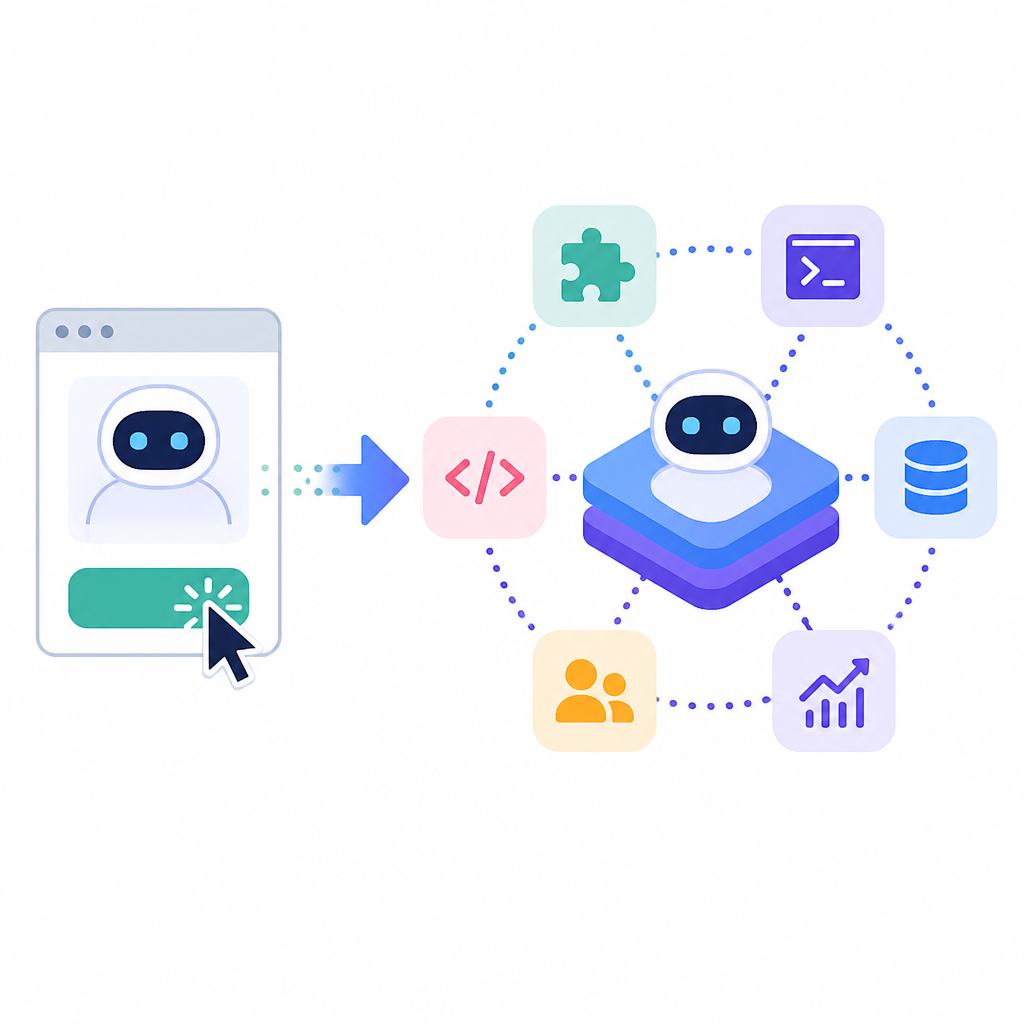
That’s where Continue always felt more useful than the glossy assistants. It treated model routing as part of the workflow, not a hidden implementation detail. For teams, that matters because different tasks need different tradeoffs. A fast, cheap model can handle quick edits. A stronger model can handle refactors or architecture questions. A local model might be enough for private code. One-size-fits-all is usually a lie with a nice UI.
I ran into this when a team wanted AI help inside a monorepo with a mix of public and sensitive code. The first tool we tested was great until we asked a simple question: “Can we route only these repos to this model, and the rest somewhere else?” The answer was basically no, unless we were willing to duct-tape our own process around it. At that point the assistant had become a policy risk, not a productivity gain.
Cursor buying Continue suggests it understands that routing is not a niche technical detail. It’s the core abstraction. Whoever owns routing owns the developer’s trust. That’s why this matters more than another round of shiny chat features.
How I’d use this insight: I’d build a routing policy before I bought more tools. Decide which tasks deserve the best model, which ones can use a cheaper one, and which ones should never leave the local environment. Then encode that policy in the tool, not in a tribal Slack message nobody reads twice.
Teams don’t adopt assistants. They adopt permission models
The biggest mistake I see with AI developer tools is treating them like individual productivity toys. That works for a week. Then security, compliance, and platform engineering show up and ask what exactly is being sent where.
Continue mattered because it was easier to imagine inside a team with actual boundaries. Cursor’s acquisition makes me think the buyer sees the same thing: the winning assistant is the one that can survive enterprise questions without sounding like it was designed in a vacuum.
I’ve been in those reviews. Someone asks about code retention. Someone else asks about model provider terms. Someone from security asks whether prompts are logged. Then the tool sponsor starts doing interpretive dance around the docs. That is usually the moment the pilot dies.
If Cursor wants Continue’s audience, it needs to make the assistant legible to the people who never open the editor but still have veto power. That means clearer controls, clearer data boundaries, and cleaner admin experience. Not sexy, but that’s what gets a tool through procurement.
How to apply it: if you’re evaluating AI coding tools for a team, don’t start with feature lists. Start with permission questions.
- Who can enable it?
- Which repos are in scope?
- What data is retained, and where?
- Can admins audit usage without reading source code?
If the vendor can’t answer those cleanly, the assistant is not enterprise-ready, no matter how good the demo feels.
Acquisitions like this usually rewrite the open-source bargain
Here’s the part that always makes me squint: open-source projects give vendors a fast path to trust, but the trust can get spent very quickly if the community thinks the project is being folded into a closed product with a nicer marketing page.
I’m not saying that’s what will happen here. I’m saying it’s the tension every acquisition like this carries around. Continue’s value came from being a credible alternative. Cursor’s value comes from being a polished commercial product. Those two things can coexist, but only if the integration doesn’t feel like a slow extraction of the bits people cared about most.
That’s why the details matter more than the headline. Does the project remain useful on its own? Are the docs still honest? Does the extension ecosystem stay open? Can people still use the parts they relied on without being pushed into a paid bundle? Those are the questions that decide whether the acquisition looks like stewardship or enclosure.
How I’d think about this in my own work: if I’m building something open and commercially valuable, I need to be explicit about the boundary between the commons and the product. If I blur that line too much, I lose the very users who made the project credible in the first place.
That’s the uncomfortable truth. Developers will tolerate a lot. They won’t tolerate feeling tricked.
What Cursor is really buying is distribution
There’s another angle here that people tend to skip because it’s less fun than arguing about open source purity: distribution. Continue already had mindshare among developers who cared about control. Cursor gets to inherit that conversation instead of starting from zero.
That’s smart. It’s also why the move feels bigger than a simple tuck-in acquisition. If you’re trying to win the AI coding assistant market, you don’t just need a better model. You need a story that reaches the people who are skeptical of model hype. Continue gave Cursor a bridge to that crowd.
I’ve seen this play out in developer tools for years. The winning product is rarely the one with the prettiest demo. It’s the one that slips into existing habits, respects existing constraints, and doesn’t force the team to re-litigate everything from scratch. Continue had that kind of credibility. Cursor wants it.
How to apply this if you’re building or buying tools: don’t mistake adoption for distribution. Adoption is one developer trying something. Distribution is a tool that can survive being introduced to security, platform, and procurement without collapsing under its own assumptions.
That’s the bar now. Anything less, and your “AI assistant” is just a solo-dev convenience feature with a billing plan.
The template you can copy
# AI coding assistant evaluation template

## 1) What I need this tool to do
- Inline completion:
- Chat/refactor help:
- Repo-aware changes:
- Test generation:
- Docs/search assistance:

## 2) Non-negotiables
- Model choice must be configurable: yes/no
- Local inference option: yes/no
- Hosted inference option: yes/no
- Data retention policy must be documented: yes/no
- Admin controls for team rollout: yes/no
- Repo-level scoping: yes/no

## 3) Routing policy
- Fast/cheap model for:
- Strong model for:
- Local-only tasks for:
- Sensitive repos excluded from cloud inference:

## 4) Security questions
- What data is sent to the vendor?
- Is prompt data stored? For how long?
- Is code used for training?
- Can admins audit usage?
- Can we disable features per repo or team?

## 5) Integration checklist
- Editor support:
- CLI support:
- Git workflow support:
- Code review support:
- Internal docs/search support:

## 6) Decision rule
If the tool cannot satisfy the non-negotiables above, I do not pilot it.
If the tool satisfies them but is awkward, I pilot it with one team.
If the tool satisfies them and is easy to govern, I roll it out gradually.

## 7) Notes
- Vendor:
- Version:
- Trial start date:
- Trial end date:
- Final decision:
If I were rolling out an AI coding assistant today, this is the checklist I’d use before anyone got attached to a demo. It forces the conversation away from “is it cool?” and toward “can we actually run this?”
That’s the whole story for me. Cursor buying Continue is not just a company headline. It’s a reminder that the real product in AI developer tools is control, not chatter.
Source: The New Stack article by Paul Sawers. My breakdown is original analysis built from that report and public project pages for Cursor and Continue.
// Related Articles
- [TOOLS]
Baidu Wenxin turns search into a free agent
- [TOOLS]
OpenCode now supports DeepSeek, GLM, Qwen, GPT
- [TOOLS]
DeepSeek in Codex Will Cut AI Coding Costs Hard
- [TOOLS]
Token vs. word: why Chinese tokenization still matters
- [TOOLS]
OpenAI API Pricing Hits $0.05 to $180/M Tokens
- [TOOLS]
Usage limits belong in ChatGPT Enterprise and Edu controls