DeepSeek’s plugin harness turns agents into tools
I break down DeepSeek’s plugin-first agent harness and show the copyable pattern for safer tool-heavy agents.
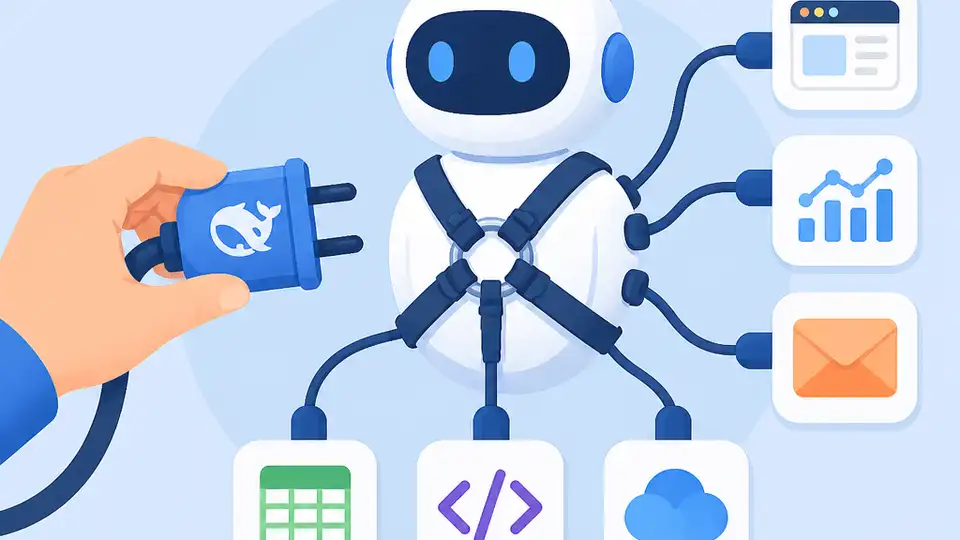
DeepSeek’s plugin-first harness shifts agent work from ad hoc code to explicit tools.
I've been building agent workflows long enough to know when something feels off. The model answers. The tool calls fire. The demo looks fine. Then you try to ship it and realize the whole thing is one giant blob of implicit behavior nobody can audit, version, or secure without squinting. That’s the part that kept bothering me about a lot of agent stacks: they treat tools like a side quest. A little function calling here, a wrapper there, and suddenly the agent is making decisions in a fog of hidden permissions and weird edge cases.
That’s why I stopped and read The New Stack’s write-up on DeepSeek’s open-source agent harness. The hook is simple enough: DeepSeek open sourced a harness where almost everything is a plugin, and the article argues that WebAssembly could close one of the nastiest security gaps in agent systems. I’m not taking the security claim as magic dust. But I do think the architecture is worth unpacking because it pushes agent design toward explicit boundaries, which is what production systems always needed anyway.
Stop hiding behavior inside the model
Get the latest AI news in your inbox
Weekly picks of model releases, tools, and deep dives — no spam, unsubscribe anytime.
No spam. Unsubscribe at any time.
DeepSeek open sources an agent harness where everything is a plugin.
What this actually means is that the harness is trying to make the agent less like a monolith and more like a container of small, named capabilities. Instead of one giant prompt plus one giant runtime, you get a shell that loads behavior as plugins. That sounds boring until you’ve had to debug an agent that silently decided to parse files, call APIs, and mutate state in the same breath.
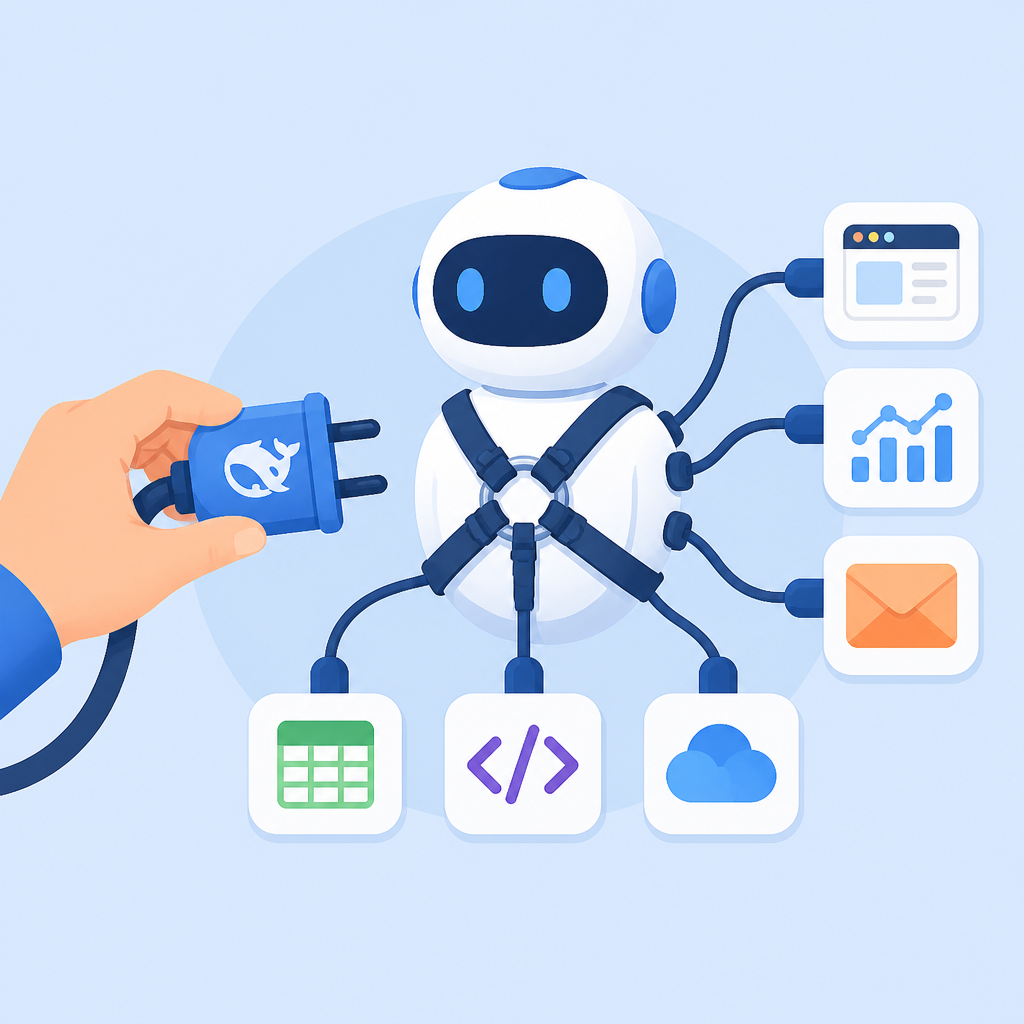
I’ve run into this exact mess when teams start with “just let the model do it” and only later ask who approved the network access, where the code lives, or why the agent can write to production configs. The answer is usually some variation of “we’ll add guardrails later,” which is developer code for “we’ll pretend the problem is smaller than it is.”
The plugin-first approach is useful because it forces a naming problem. If something is a plugin, I can inspect it, version it, test it, and decide whether it belongs in the runtime at all. If it’s hidden inside the prompt or smeared across helper functions, I’m debugging vibes.
How to apply it: split agent abilities into discrete modules with clear interfaces. Don’t let the model directly touch every system it can reach. Make each capability a separately reviewable unit, even if the first version is just a thin wrapper around an existing API.
- One plugin per external system, not one kitchen-sink tool.
- One permission boundary per plugin, not one shared credential blob.
- One test surface per action, so failures are obvious.
WebAssembly is interesting because it is annoying in the right way
The New Stack’s summary points to WebAssembly as a possible fix for the security hole that agents keep stepping into. That’s not because WASM is fashionable. It’s because WASM is constrained. It runs code in a sandbox, with a much tighter story around what that code can do than “here’s a Python process, good luck.”
What this actually means is that plugin execution can be isolated from the main harness. If a plugin goes sideways, the blast radius is smaller. If a plugin needs a capability, you can expose only that capability. That’s a much better story than handing an agent a general-purpose runtime and hoping prompt instructions keep it polite.
I’ve seen teams bolt on safety after the fact and end up with a pile of deny lists that break the first time someone needs a legit exception. WASM doesn’t solve policy design, but it does make the runtime less sloppy. And honestly, less sloppy is already a win.
If you want to explore the ecosystem behind that idea, I’d start with WebAssembly.org, the WASI SDK, and the Wasmtime runtime. Those are the kinds of building blocks that make isolated execution more than a slide deck promise.
How to apply it: if your agent runs third-party or semi-trusted logic, consider a sandboxed execution layer for plugins. Even if you do not use WASM on day one, structure the system as if you might swap the runtime later. That means explicit inputs, explicit outputs, and no hidden access to the rest of your app.
Plugins are only useful if they are boring to inspect
Here’s the part people skip: plugin architecture is not automatically safer just because it sounds modular. A plugin system can still be a security nightmare if discovery, loading, signing, and permissions are all vague. I care less about the word “plugin” and more about whether I can answer three questions without opening a mystery box: what can this do, how was it built, and who approved it?
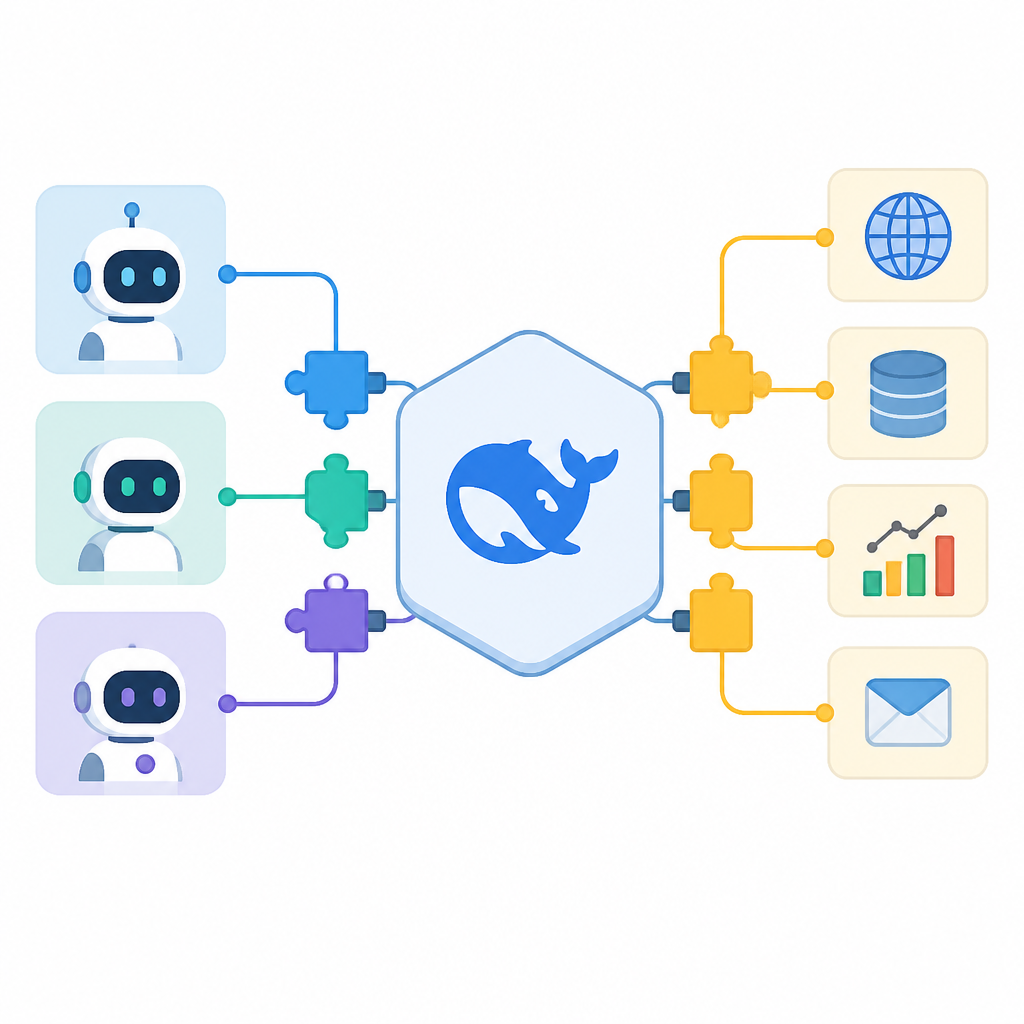
What this actually means is that the harness needs a registry story. Not just “load plugins,” but “load these plugins from these sources, with these checks, under these policies.” If you don’t have that, you’ve just replaced one blob with ten smaller blobs.
I ran into this when a team wanted to let an agent use internal tools through a plugin interface. Great idea in theory. In practice, nobody could tell which plugin version was live, whether the tool had drifted from the docs, or how to roll back a bad release without disabling the whole assistant. That’s the kind of operational debt that shows up right after the demo applause ends.
- Require plugin manifests with version, scope, and owner.
- Keep plugin contracts small enough to test with fixtures.
- Log every plugin action with the calling agent, input, and result.
How to apply it: treat plugins like production dependencies, not demos. Sign them if you can. Pin versions. Review diffs. Make loading explicit. If the harness can discover arbitrary code from anywhere, you do not have a plugin system, you have a supply chain incident waiting for a calendar invite.
The real trick is separating planning from execution
Most agent failures I’ve debugged come from one ugly mistake: the same component both decides and acts. That’s convenient for prototypes and awful for anything with a user, a budget, or a security team. DeepSeek’s plugin harness matters because it nudges the system toward a cleaner split. The agent can plan, but the plugin executes a bounded action.
What this actually means is that you can inspect intent separately from effect. If the agent proposes something dumb, you can reject the plan before it touches the world. If the plugin misbehaves, you know exactly which boundary failed. That separation is the difference between “I think the model did something weird” and “this specific tool call violated policy.”
I like this split because it gives me a place to put human review without turning the whole workflow into a manual slog. The planner can be flexible. The executor should be strict. When those two are fused, every correction becomes a patch on a moving target.
How to apply it: build an agent loop with three explicit stages: plan, validate, execute. Put your policy checks between plan and execute. If a plugin can write files, call APIs, or trigger workflows, make those actions go through a permission gate that is outside the model’s control.
That pattern is also easier to observe. You can measure rejected plans, plugin failures, and unsafe requests separately. Once those numbers are separate, you stop arguing about “agent quality” in the abstract and start fixing the exact stage that is failing.
Open source only matters if the boundary is visible
DeepSeek open sourcing the harness is the part that makes this interesting for me. Closed agent platforms can be polished, but you often inherit their opinions without being able to inspect the seams. Open source gives you the chance to see where the seams are, and in agent systems, seams are the whole story.
What this actually means is that developers can adapt the harness to their own trust model instead of waiting for a vendor to bless one. That matters because not every team wants the same plugin rules. A startup prototyping internal workflows and a regulated company exposing customer data are not solving the same problem, even if both say “AI agents” in the kickoff meeting.
I’m always suspicious when a platform says it is flexible but only after you accept its defaults. Open source at least lets me check whether the defaults are sane, whether the extension points are real, and whether the security model is documented or just implied.
If you want to compare this style of thinking with other agent tooling, look at Anthropic's tool-use docs, OpenAI's function calling guidance, and Microsoft AutoGen. They are not the same thing, but they all wrestle with the same question: how do I give the model power without giving it the whole house?
How to apply it: when you evaluate an open-source agent framework, read the extension points before you read the examples. Examples are easy to fake. Boundaries are where the truth lives.
What I would steal from this design tomorrow
If I were wiring a new agent stack today, I would steal the plugin-first shape and ignore the hype around it. I would not start by asking how clever the model can be. I would ask what must be isolated, what must be logged, and what must be impossible by default.
What this actually means is that the harness becomes a control plane, not a magic box. The model proposes. Plugins do the narrow work. The runtime keeps score. That’s a much healthier mental model than letting the agent wander through your systems with a giant prompt and a prayer.
I know this sounds more conservative than the usual agent chatter. Good. Production software should be conservative. The fun part is the model. The boring part is the part that keeps your data where it belongs.
How to apply it: start with one high-value capability, wrap it as a plugin, isolate execution, and add audit logging before you add more intelligence. If that sounds slower, it is. It is also how you avoid rebuilding the same security lesson six months later.
The template you can copy
Agent harness design notes

Goal: build an agent system where model behavior is separated from tool execution.

1) Core loop
- Planner: generates a structured plan only.
- Validator: checks policy, permissions, and risk.
- Executor: runs approved plugin actions.

2) Plugin contract
Each plugin must define:
- name
- version
- owner
- allowed inputs
- allowed outputs
- required permissions
- failure modes

3) Runtime rules
- No plugin may access arbitrary filesystem paths.
- No plugin may call the network unless explicitly allowed.
- No plugin may read secrets unless scoped to that secret.
- Every action must be logged with timestamp, plugin name, agent id, and result.

4) Sandboxed execution
Use an isolated runtime for plugins when possible.
If using WebAssembly, keep the module interface narrow:
- input: JSON or protobuf payload
- output: JSON or protobuf result
- no ambient authority

5) Approval flow
plan -> validate -> execute -> log

6) Example plugin manifest
{
  "name": "ticket_creator",
  "version": "1.0.0",
  "owner": "platform-team",
  "permissions": ["jira:write"],
  "inputs": ["title", "description", "priority"],
  "outputs": ["ticket_id"],
  "policy": {
    "requires_human_approval": true,
    "allowed_projects": ["ENG", "OPS"]
  }
}

7) Review checklist
- Can I explain what this plugin does in one sentence?
- Can I disable it without breaking the whole agent?
- Can I trace every call it makes?
- Can I replace the runtime without rewriting the harness?
- Can I prove the plugin cannot exceed its scope?

8) Copyable policy prompt
You are a planning agent. Do not execute actions directly.
Produce a structured plan with:
- objective
- required plugins
- data needed
- risk level
- approval requirement

Never assume access to systems unless a plugin explicitly grants it.
That’s the version I’d actually hand to a team. It is not fancy, but it makes the dangerous parts visible, and visible is the first step toward manageable.
Original source: The New Stack article. My breakdown is original commentary built from that reporting, plus my own take on how I would apply the pattern in a real codebase.
// Related Articles
- [TOOLS]
Claude Code lets sessions message each other
- [TOOLS]
10 AI GitHub repos that actually save time
- [TOOLS]
Anthropic's Fable leak turns CTF chaos into a warning
- [TOOLS]
VDBBench adds cost to vector DB comparisons
- [TOOLS]
Zilliz Adds Cost Metrics to VDBBench
- [TOOLS]
Pixel 11 launch highlights and new Gemini features