EU AI Act hits business systems on Aug. 2, 2026
4 things businesses need to know before the EU AI Act’s Aug. 2, 2026 enforcement date, from transparency rules to fines.

What do businesses need to do before the EU AI Act’s Aug. 2, 2026 deadline?
Four compliance changes, one funding angle, and the main risks companies should check before Aug. 2.
1. Transparency rules start applying now
Get the latest AI news in your inbox
Weekly picks of model releases, tools, and deep dives — no spam, unsubscribe anytime.
No spam. Unsubscribe at any time.
From Aug. 2, 2026, Article 50 transparency duties become enforceable. If your company deploys an AI system that interacts with people, you must disclose that fact. Synthetic content also needs to be recognizable, with machine-readable labeling requirements following on Dec. 2.
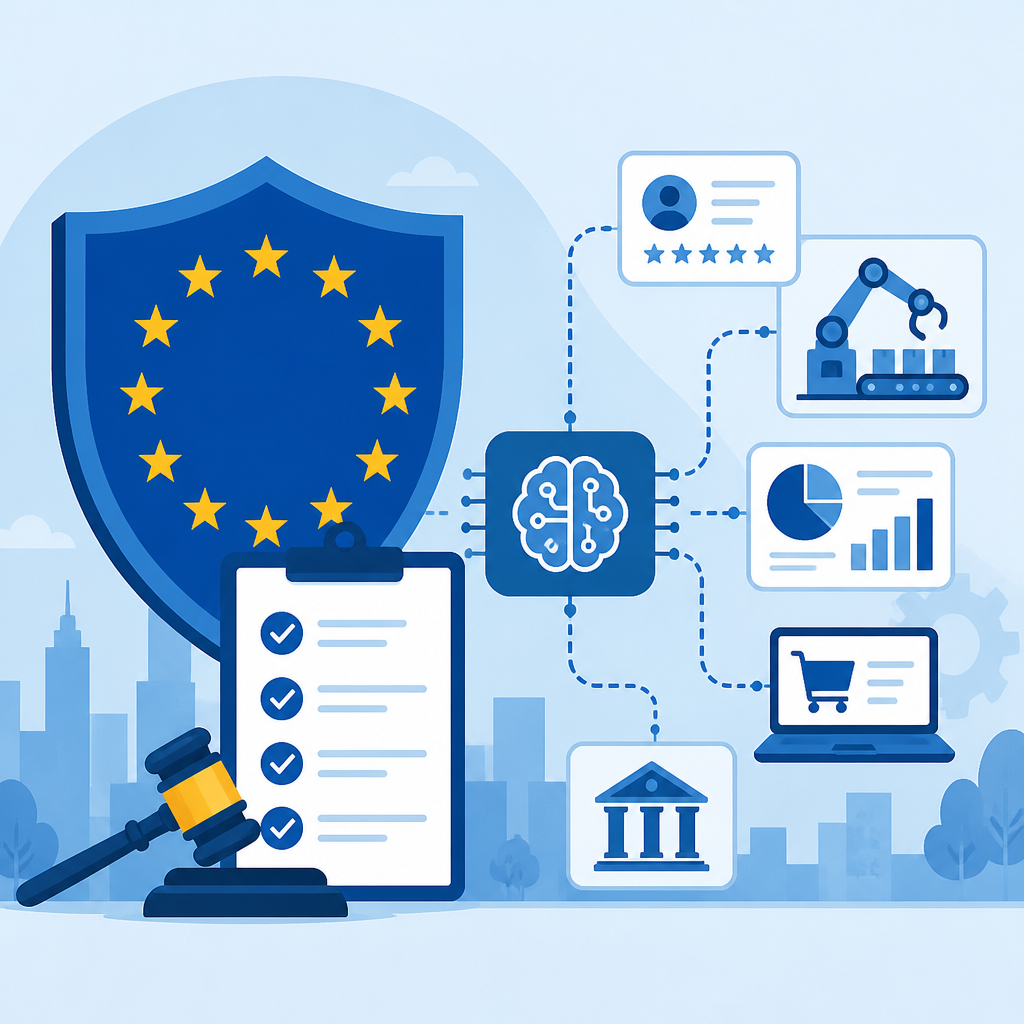
This matters even for firms that do not think of themselves as AI vendors. A chatbot inside customer support, a hiring tool, or a content generator can trigger duties if it shapes what users see or hear. The safest approach is to identify every system that touches external users and check whether disclosure is required.
- Tell users when they are interacting with AI.
- Label synthetic audio, image, video, or text where required.
- Track which teams own each deployed system.
2. The fines are large enough to change budgets
The EU AI Act’s penalty structure is not symbolic. Fines can reach 35 million euros or 7% of global annual turnover for prohibited practices, 15 million euros or 3% for core obligation breaches, and 7.5 million euros for false information given to authorities.
That scale changes how executives should frame compliance. This is no longer a legal memo sitting beside the product roadmap. It is a financial risk that can affect procurement, launch timing, vendor selection, and board oversight. Companies that use third-party AI should ask suppliers for documentation, not just assurances.
- Prohibited practices: up to 35 million euros or 7% of turnover.
- Core obligations: up to 15 million euros or 3% of turnover.
- False information to regulators: up to 7.5 million euros.
3. The delay talk is not law yet
There is real confusion around the proposed Digital Omnibus deferral. The package would push some high-risk AI obligations to Dec. 2, 2027, and others to Aug. 2, 2028, but it has not been published in the Official Journal of the European Union. Until that happens, the original Aug. 2 deadlines remain formally in force.
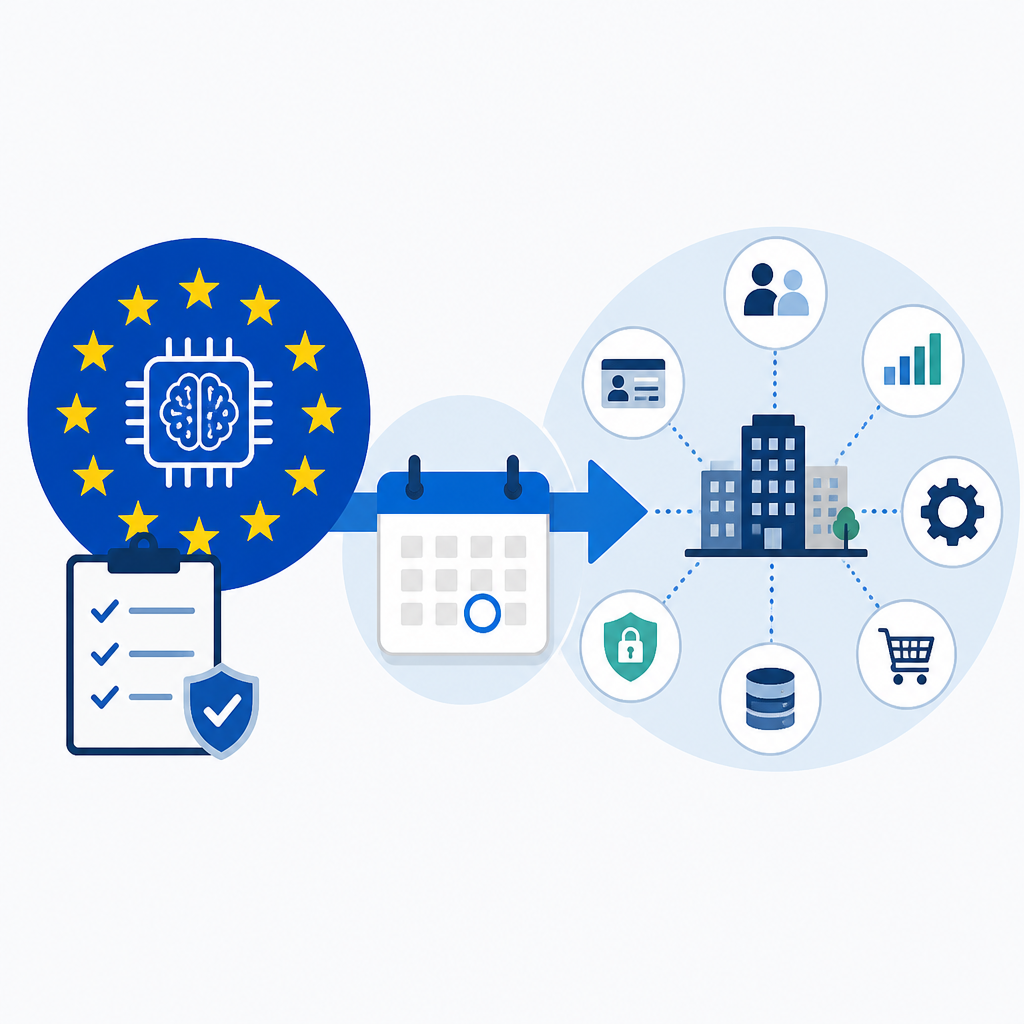
That means businesses should not wait for political headlines to turn into legal certainty. The practical rule is simple: prepare for Aug. 2 as if it is the real deadline, then treat any later deferral as extra breathing room. The European Commission’s AI Office is expected to publish more guidance for general-purpose AI providers ahead of the date.
4. Italy is moving faster than many EU peers
Italy is the first EU country with a national framework fully aligned to the AI Act. Law 132/2025 introduced a broader governance setup, and preliminary implementing decrees approved on June 10 add more detail on hiring, healthcare, regulated professions, law enforcement, and judicial use.
The country’s supervision model is also clear. The National Cybersecurity Agency oversees the market, AgID handles notifications, and financial sector supervision sits with Banca d’Italia, Consob, and Ivass. For companies already operating under MiCA-style oversight in crypto, the structure will feel familiar: rules first, access second.
- Hiring and dismissal: limits on fully automated decisions.
- Healthcare and regulated professions: mandatory AI training.
- Law enforcement and judiciary: tighter use restrictions.
5. There is also a funding route for startups and SMEs
Article 23 of Italy’s Law 132/2025 activates up to one billion euros through CDP Venture Capital for startups and SMEs, with more than 300 million euros already allocated across over 150 companies, according to CDP Venture Capital figures. The law explicitly names AI, cybersecurity, quantum computing, edge computing, and web3 as eligible sectors.
That makes the compliance story only half the picture. For founders building AI agents, AI infrastructure, or blockchain products with AI features, this is a public capital channel worth checking now. The firms that pair governance readiness with a clear product case may be better positioned to win both regulators and investors.
- Up to 1 billion euros available.
- More than 300 million euros already allocated.
- Eligible sectors include AI, cybersecurity, quantum computing, edge computing, and web3.
How to decide
If you run a business that already uses AI in customer service, marketing, hiring, or internal operations, start with item 1 and item 2: disclosure and fines. If you sell into Europe or rely on AI vendors, item 3 is the key risk because the deferral is still only proposed, not final.
If you are based in Italy, item 4 and item 5 matter most because the national framework and funding pool are already taking shape. The common move for every company is the same: map the AI systems in use, classify them by risk, and document who approves each deployment before Aug. 2 arrives.
// Related Articles
- [IND]
OpenSearch’s vector search benchmark in 5 parts
- [IND]
Vector Databases That Work in Production
- [IND]
US AI law in 2026: what teams must track
- [IND]
WebX 2026’s agenda centers on stablecoins and AI
- [IND]
GPT-5.6 Is OpenAI’s Best Coding Model, But the Real Story Is ChatGPT …
- [IND]
Half-price AI is the real frontier, not smarter models