llama.cpp’s latest release proves the project still wins by tightenin…
llama.cpp’s latest release shows that careful kernel fixes and backend tuning matter more than flashy features.

llama.cpp’s latest release shows that kernel fixes and backend tuning matter more than flashy features.
llama.cpp’s newest release is a reminder that the project’s real advantage is not novelty, but relentless correction of the low-level math and hardware paths that decide whether local inference is usable at all. The headline items are not a new chat mode or a bigger benchmark claim; they are fixes like restricting NVFP4 edge cases in llama-graph, moving a post-GEMM MUL for b4 LoRA and bias add, and tuning Vulkan memory behavior on UMA devices. That is the kind of release that matters because it removes the invisible errors and performance cliffs that make the difference between a model that runs and a model that runs well.
llama.cpp is still winning on correctness before convenience
Get the latest AI news in your inbox
Weekly picks of model releases, tools, and deep dives — no spam, unsubscribe anytime.
No spam. Unsubscribe at any time.
The most important change in this release is the NVFP4 work. The project does not treat quantization as a cosmetic optimization; it treats it as a correctness problem. When the release notes say “Fix and restrict NVFP4 edge-cases in llama-graph” and “Restrict build_ffn for NVFP4 to supported combinations,” that is a direct admission that unsupported combinations are not harmless. They are bugs waiting to surface in production, where a silent precision mismatch can poison outputs without any obvious crash.
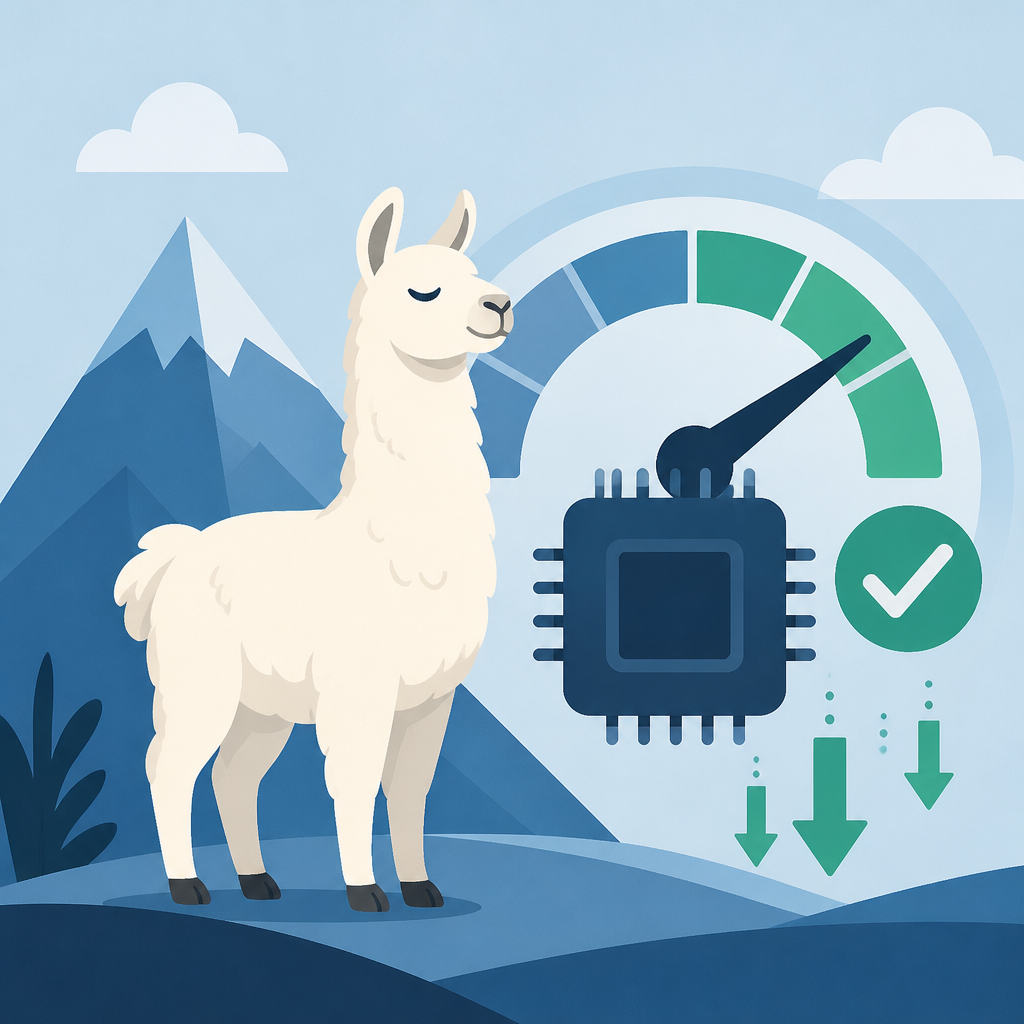
The LoRA and bias-add note tells the same story. The release moves a post-GEMM MUL required for dequant b4 LoRA and bias add, with the maintainers explicitly debating whether residuals should see fully dequantized values first. That is not trivia. It is the sort of detail that decides whether adapter math behaves as intended across model variants. In practical terms, llama.cpp is protecting users from a class of failures that only appear after deployment, when a model that looked fine in testing starts drifting because the arithmetic pipeline was wrong.
Backend tuning is the product, not a side quest
Another major theme is backend specialization. The release adds Vulkan changes that prefer host-visible memory buffers on UMA devices and support gated_delta_net with S_v=16. Those are not generic improvements you can hand-wave away as “performance work.” They are targeted fixes for real hardware behavior. On integrated GPUs and shared-memory systems, the wrong buffer strategy can erase the gains of acceleration entirely. This release shows the project still understands that hardware diversity is the main battlefield for local AI.
The asset list reinforces that point. This release ships binaries for macOS arm64, Linux CPU, Vulkan, ROCm 7.2, OpenVINO, SYCL, Android, Windows CUDA 12 and 13, and more. That breadth is the actual moat. Anyone can announce support for local inference. Very few projects can keep a release pipeline healthy across this many backends while continuing to patch edge cases in each one. llama.cpp’s discipline is that every backend is first-class until proven otherwise.
Feature velocity matters less than release hygiene
There is a temptation to read a long release tag list and assume the project is simply shipping more. That is the wrong conclusion. The presence of bench --offline support, backend sampling for eagle3, and a vendor BoringSSL update shows a project that is still moving, but the movement is governed. These are maintenance choices that reduce fragility, improve reproducibility, and make the tool more reliable for serious users who run it in constrained environments.
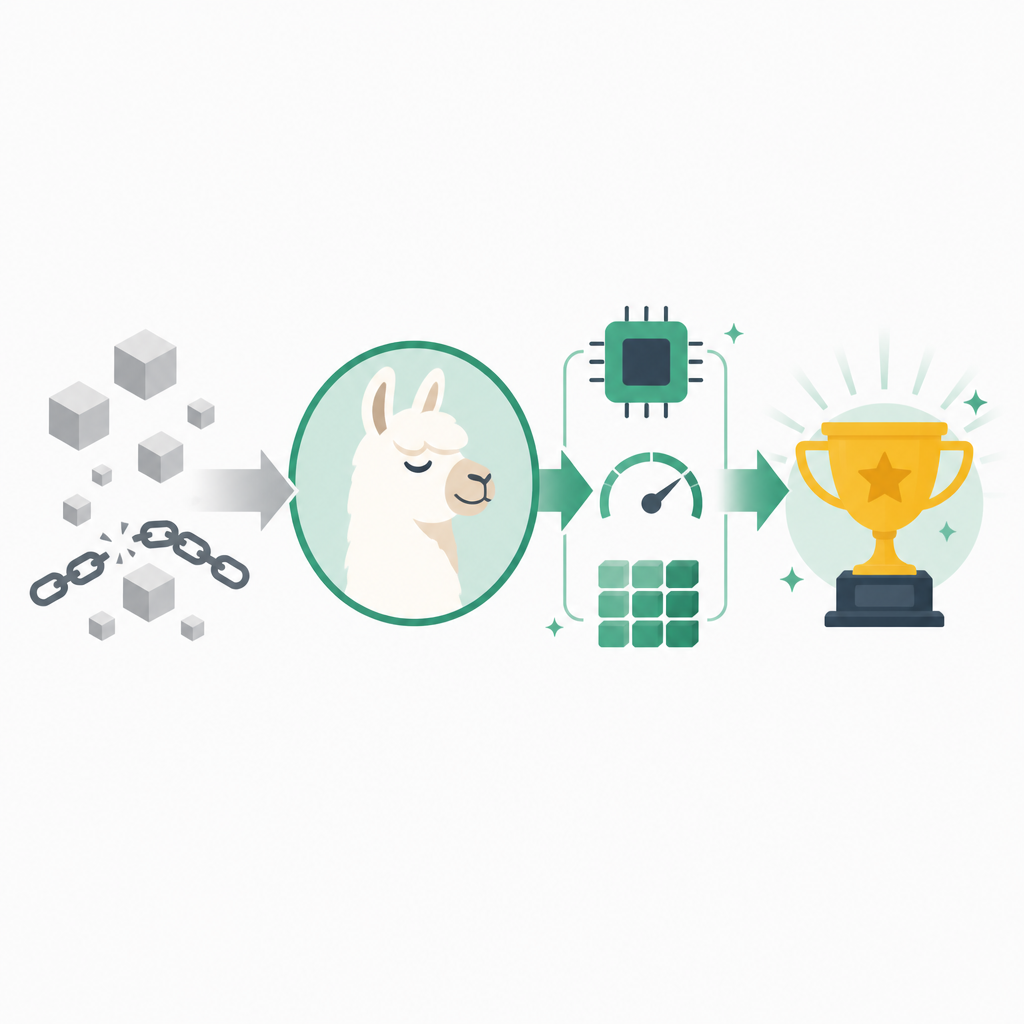
That matters because local AI infrastructure is now judged less by what it can demo and more by whether it can be repeated. Benchmarks that depend on network access are not trustworthy for offline deployment. A cryptography dependency that lags behind is a supply-chain liability. Sampling support and memory-path fixes are not glamorous, but they are the difference between a hobbyist build and a system teams can ship. llama.cpp keeps earning trust by treating release engineering as a core feature.
The counter-argument
The strongest case against this view is that llama.cpp risks becoming a maintenance machine. A release dominated by edge-case fixes, backend exceptions, and hardware-specific tuning can look like a project optimizing for its own complexity. If the average user only wants to run a model, they may not care about NVFP4 restrictions or the exact placement of a MUL before bias add. From that angle, the project’s energy might appear better spent on simplifying the user experience or exposing fewer knobs.
There is also a fair argument that this level of specialization fragments the codebase. Supporting CUDA, Vulkan, ROCm, OpenVINO, SYCL, Android, and multiple macOS and Windows variants invites a combinatorial explosion of bugs. The more the project chases hardware parity, the more it risks slowing down feature delivery and making each release harder to reason about.
That critique is valid only if the goal is a narrow consumer app. llama.cpp is not that. Its purpose is to be the dependable layer under many different local-AI stacks, and that requires exactness across backends more than it requires a simplified surface. The complexity is not self-indulgent; it is the cost of being the default portable inference engine. The release proves the project is paying that cost in the right place, because the bugs it is fixing are precisely the ones that would break trust at scale.
What to do with this
If you are an engineer building on llama.cpp, treat release notes like compatibility contracts, not marketing copy. Test your quantization path, adapter path, and backend path against the exact tag you plan to ship. If you are a PM or founder, stop asking whether the project added a flashy new feature and start asking whether it tightened the path your users will actually run on. The lesson of this release is simple: in local AI, correctness and backend discipline are the product.
// Related Articles
- [TOOLS]
Windsurf’s IntelliJ plugin is a shortcut, not a strategy
- [TOOLS]
SWE-1.7 free preview lands in Devin Desktop
- [TOOLS]
Vibe Island’s changelog shows the right product bets
- [TOOLS]
OpenAI Newsroom turns announcements into a digest
- [TOOLS]
Trendshift monthly repos let you spot real momentum
- [TOOLS]
Rust vs Go in 2026: pick the right fit