LLM Fine-Tuning for Production in 2026
AgamiSoft’s guide maps the 2026 fine-tuning choices for production LLMs, from open models to data prep, evaluation, and deployment.

AgamiSoft’s guide explains how to fine-tune LLMs for production AI systems in 2026.
Fine-tuning is no longer a side quest for AI teams. In 2026, the practical question is which base model to start with, how much data you need, and when a lighter adaptation method beats full retraining.
The AgamiSoft guide frames that decision around production constraints: cost, latency, model quality, and the amount of domain data you actually control.
| Item | What the guide highlights |
|---|---|
| Llama 3.3 | Meta’s open-weight model family with broad community fine-tuning support |
| Mistral Large / Small | Models positioned for strong performance per parameter |
| Qwen 3 | Another open model option for enterprise tuning workflows |
| Production focus | Data quality, evaluation, and deployment discipline |
Open models are where most teams start
Get the latest AI news in your inbox
Weekly picks of model releases, tools, and deep dives — no spam, unsubscribe anytime.
No spam. Unsubscribe at any time.
The guide’s most practical advice is simple: if you want control, start with an open-weight model family. That gives you access to weights, tuning tools, and a community trail of examples that can save weeks of trial and error.
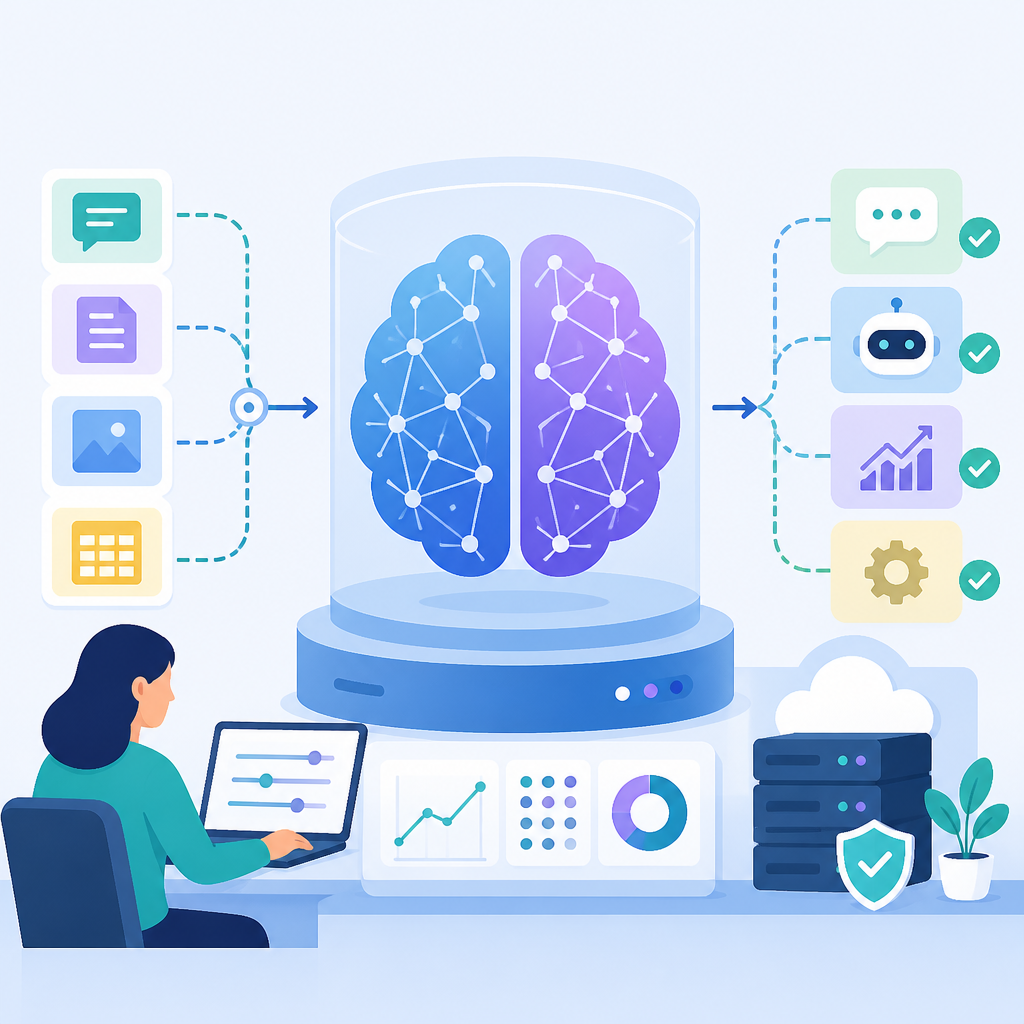
For base models, AgamiSoft points to Meta’s Llama, especially Llama 3.3, as the safest default for many enterprise use cases. The reason is not mystery or hype. It is documentation depth, tooling support, and the sheer amount of public fine-tuning work already built around the family.
The article also mentions Mistral Large and Mistral Small, plus Qwen 3. That matters because different teams optimize for different things: raw quality, inference cost, multilingual behavior, or the ability to run on tighter infrastructure budgets.
- Llama 3.3: best fit when you want the widest ecosystem support.
- Mistral Large and Small: useful when parameter efficiency matters.
- Qwen 3: worth testing for enterprise workflows that need flexibility.
Data quality matters more than model size
This is where the article gets more useful than most vendor blogs. It treats fine-tuning as a data problem first and a model problem second. If your examples are noisy, inconsistent, or mislabeled, the training run will faithfully learn the mess.
That means teams need to think about instruction style, output format, edge cases, and refusal behavior before they touch training code. The guide’s production framing implies a basic rule: a smaller, cleaner dataset often beats a larger pile of scraped examples.
"Machine learning is the only field where you can improve by reducing the amount of data." — Pedro Domingos
That quote has aged well for LLM work. In practice, the teams that win are usually the ones that spend more time curating examples and less time chasing another round of random prompt samples.
AgamiSoft also places fine-tuning inside a broader system, which is the right way to think about it. You are not training a model in isolation. You are building a product with logging, rollback plans, evaluation gates, and a user experience that can survive bad outputs.
Fine-tuning choices depend on the job
Different tuning methods fit different production needs. Full fine-tuning can make sense when you need deep domain adaptation and you can afford the compute. Parameter-efficient methods like LoRA are better when you want fast iteration, lower memory use, and easier experimentation.
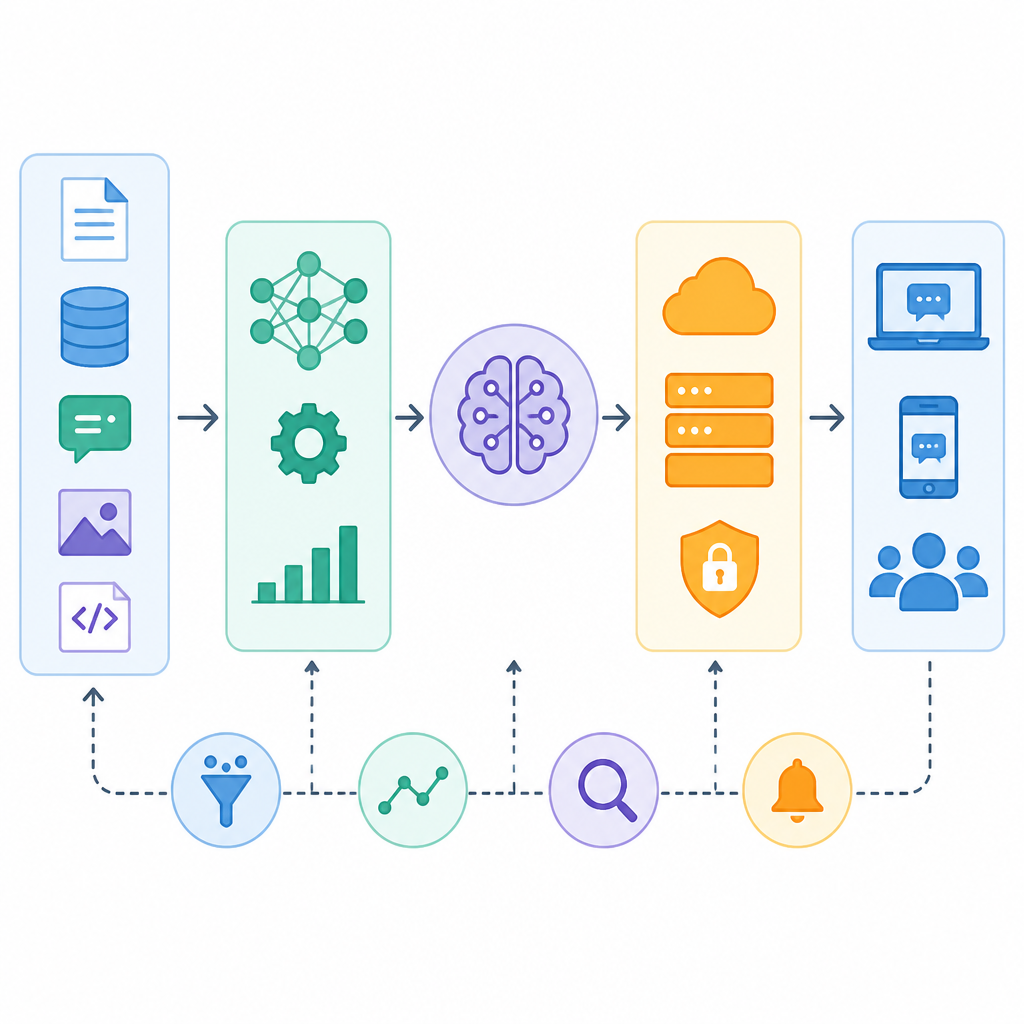
That tradeoff is why many teams now treat fine-tuning as one option among several. Retrieval-augmented generation can solve a lot of knowledge freshness problems without changing model weights. Prompt engineering can handle lighter workflow changes. Fine-tuning becomes the move when the task is stable, repeated, and sensitive to style or structure.
- Full fine-tuning: best for deep domain shifts, highest cost.
- LoRA-style tuning: better for fast iteration and lower hardware pressure.
- RAG: useful when the model needs current facts more than new behavior.
- Prompting alone: enough for simple formatting or instruction changes.
The article’s production angle is valuable because it avoids the trap of treating every AI problem as a tuning problem. Many teams can get to shipping faster by combining retrieval, prompts, and a small amount of tuning instead of jumping straight into a heavy training pipeline.
That also changes the economics. A fine-tuned model is expensive to maintain if the business problem changes every month. A retrieval layer is easier to update. The right answer is usually the one that keeps your maintenance bill predictable.
Benchmarks only matter if they match your users
One of the biggest mistakes in model selection is overvaluing public benchmarks. A model can score well on generic tests and still fail at your actual workflow, especially if your output format is strict or your domain has odd terminology.
AgamiSoft’s production framing pushes teams toward task-specific evaluation. That means building a test set from real user inputs, measuring exact-match rates, checking refusal behavior, and reviewing failure cases by hand before rollout.
For AI teams, that is the real comparison table. Not just model A versus model B, but model quality versus latency versus operational cost. A slightly weaker model can still win if it is cheaper to serve and easier to tune.
- Benchmark score: useful for screening, not for final approval.
- Task-specific accuracy: should reflect your real prompts and outputs.
- Latency: matters when users wait on every response.
- Serving cost: decides whether the system scales past the pilot stage.
That is why the best teams run side-by-side evaluations in production-like conditions. They test with their own prompts, their own edge cases, and their own failure tolerance. Generic leaderboard wins do not pay the cloud bill.
If you want a useful takeaway from the guide, it is this: pick the smallest model that can meet your quality bar, then tune only the behavior you actually need. Anything more expensive should earn its place with data, not intuition.
Production AI in 2026 is an operations problem
The deeper message in AgamiSoft’s guide is that fine-tuning is now part of a larger engineering workflow. Model choice matters, but so do evals, deployment, observability, and the ability to retrain without breaking the product.
That is also why the article fits into a broader conversation happening across the AI industry. Teams are moving away from one-off demos and toward systems that can be audited, measured, and updated with less drama. The companies that do this well will not just have better models. They will have faster release cycles and fewer surprises in production.
For teams planning their 2026 roadmap, the actionable move is straightforward: start with an open model, test a small tuning run, build a real eval set, and compare that result against a retrieval-first version before spending more compute. The next winning AI product may depend less on bigger models and more on better operational discipline.
// Related Articles
- [RSCH]
InSight lets VLAs learn new skills on their own
- [RSCH]
Anthropic is right to sound the alarm on recursive self-improvement
- [RSCH]
OpenAI’s bug hunt rattled Chrome, Safari, Firefox
- [RSCH]
LifeSciBench lets you test biotech models
- [RSCH]
CoorDex lets humanoids move while manipulating
- [RSCH]
Randomized YaRN boosts long-context reasoning