Mage-VL Cuts Visual Tokens by Reading Codecs
Mage-VL skips uniform frame sampling and reads compressed video codes, cutting visual tokens by 75%.

Mage-VL skips uniform frame sampling and reads compressed video codes instead.
I’ve been building multimodal pipelines long enough to know when something is wasting my time. Video is usually where the waste shows up first. You sample frames on a timer, shove them through a vision encoder, and then act surprised when the token bill gets ugly and the model still misses the point. I’ve done the whole dance: more frames, better sampling, smarter heuristics, then more frames again. It keeps feeling like I’m paying for redundancy, not understanding.
That’s why the Mage-VL writeup on Zhihu caught my eye. It’s not another “we used a better caption” story. It’s a more annoying and more useful idea: stop treating video as a sequence of equally important images and start reading the compressed representation directly. That shift is what lets the system cut visual tokens by 75% while keeping the pipeline focused on what actually changed in the clip.
Uniform frame sampling is the habit I keep regretting
Get the latest AI news in your inbox
Weekly picks of model releases, tools, and deep dives — no spam, unsubscribe anytime.
No spam. Unsubscribe at any time.
告别均匀抽帧,直接读压缩码,Token 少 75%
What this actually means is simple: if I sample every Nth frame, I’m assuming time is evenly informative. It rarely is. A clip can sit still for ten seconds and then change in one burst. Uniform sampling spends tokens on the boring parts and can still miss the important transition.

I’ve run into this in internal demos more times than I want to admit. The model confidently summarizes the static opening, then blurs the actual action into mush because the key motion happened between sampled frames. So when Mage-VL says to read compressed codes instead, I hear: stop pretending every frame deserves equal billing.
How to apply it: if your current pipeline samples frames uniformly, treat that as the baseline to beat, not the default to defend. Measure how many tokens you spend on near-duplicate frames. Then ask whether your task really needs full decoded images at every step, or whether motion, boundaries, and change points matter more.
- Audit duplicate or near-duplicate frames first.
- Track token spend per second of video, not just per clip.
- Compare summaries from dense sampling versus change-aware sampling.
Compression is not junk data if you know where to look
One reason this idea works is that compressed video already contains structure. A codec is not just a storage trick; it encodes motion and prediction relationships. Mage-VL’s basic move is to treat that compressed representation as useful signal, not as an obstacle to be discarded before inference.
That matters because the codec has already done some of the hard work. It has separated what can be predicted from what cannot. In plain English, that means the system gets hints about motion and difference without paying to decode every pixel into a full image first. I like this because it feels less wasteful and more honest about how video is actually stored.
I’ve seen teams spend weeks optimizing frame selection when the bigger issue was that they were extracting the wrong kind of signal. They were asking the vision model to rediscover motion from still images. That’s backwards. If the source format already knows where the changes are, use that.
How to apply it: inspect whether your video stack exposes codec-level features, motion vectors, or compressed-domain metadata. If it does, prototype a path that uses those signals before full decoding. If it doesn’t, at least build a change detector that approximates the same idea.
- Look for motion vectors, residuals, or other codec-side cues.
- Use compressed-domain features to gate expensive decoding.
- Keep a fallback path for clips where codec cues are noisy or missing.
Token budget is a design constraint, not an afterthought
The part of Mage-VL that I respect is that it treats token count like a first-class engineering constraint. That sounds obvious until you look at real multimodal systems, where token bloat sneaks in everywhere. More frames. Bigger crops. Extra captions. Redundant text. Suddenly the model is drowning in inputs before it even gets to the actual task.
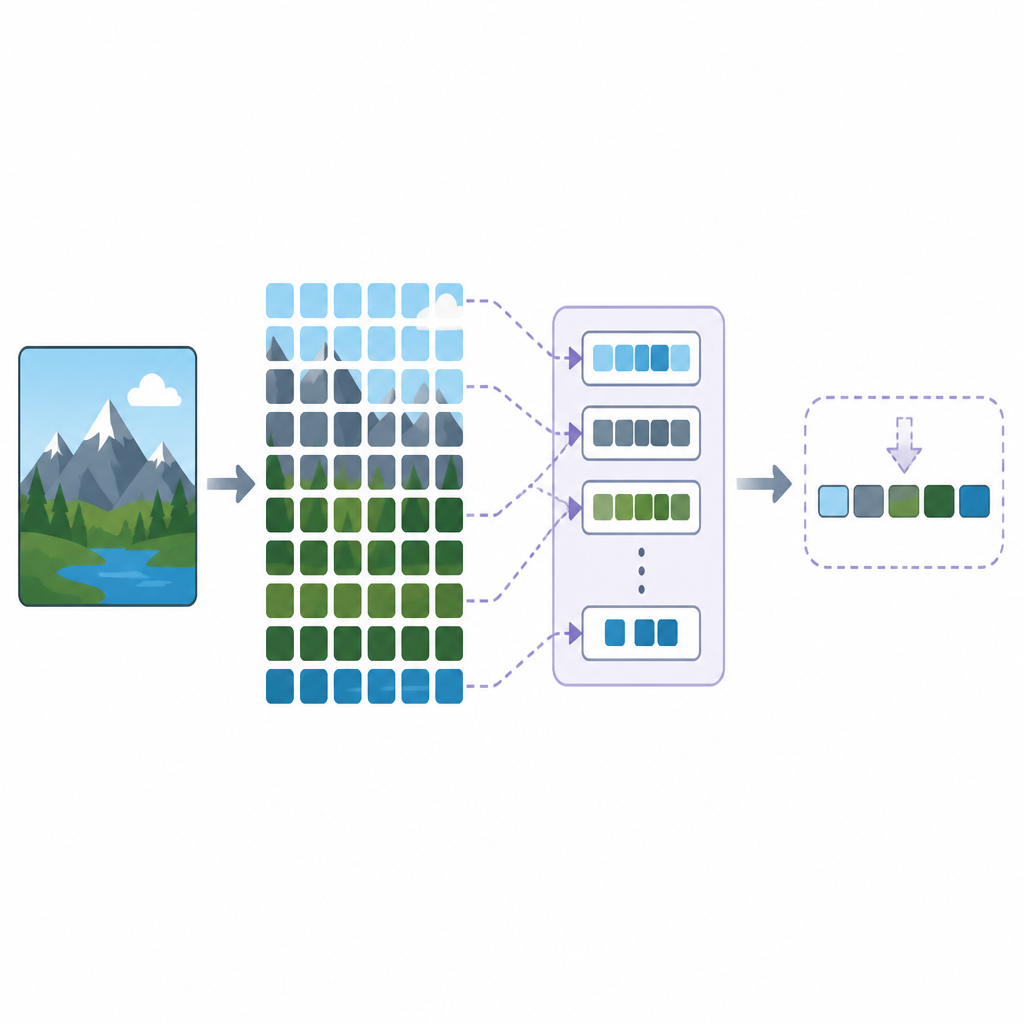
Reducing visual tokens by 75% is not just a speed trick. It changes what you can afford to do downstream. Lower input cost means more room for reasoning, longer context, or more clips per batch. It also makes experiments cheaper, which is the part people forget to mention when they brag about model quality.
I’ve had projects stall because the pipeline looked elegant on paper but collapsed under cost once we scaled past a few hundred clips. The fix was never “just add more GPU.” It was usually “why are we feeding the model so much junk?” Mage-VL’s answer is blunt: don’t.
How to apply it: set a hard token budget before you design the pipeline. Then work backward. Decide how much of that budget goes to video, how much to text, and how much to reasoning headroom. If your visual input is eating everything, the architecture is already wrong.
Better video understanding comes from change, not volume
This is the core philosophical shift in the paper: the model should care more about what changes than about how many frames exist. That sounds small, but it changes the shape of the whole system. Instead of maximizing coverage, you optimize for informative transitions.
That’s a better fit for a lot of real tasks. Event detection, activity recognition, instruction following, and QA over clips usually depend on moments of change. Static frames help, but they’re rarely the whole story. If I’m asking “what happened,” I need the turning points, not a slideshow.
I like this because it lines up with how I debug video systems in practice. When they fail, it’s often because the model latched onto the stable background and ignored the action. The fix is usually to make the pipeline more sensitive to temporal difference, not to shovel in more data.
How to apply it: identify the moments in your target task where the answer actually changes. Then bias your input pipeline toward those moments. For some systems that means event boundaries. For others it means motion spikes, scene cuts, or object state changes.
The real win is a simpler pipeline with fewer dumb steps
There’s another reason I like this approach: it removes a bunch of awkward preprocessing. If you can work from compressed codes, you may not need to decode every frame, resize every image, and run the same encoder over nearly identical content. That is a lot of machinery just to arrive at “the video moved a little.”
Simpler does not mean trivial. It means fewer places for the pipeline to lie to you. Every extra conversion step can blur timing, drop detail, or waste compute. Once you’ve seen a few production failures, you stop trusting “we preprocess it first” as a free lunch.
I’ve had better results when the pipeline does less, but does it earlier. Filter first. Decode later. Encode only what matters. That’s the kind of boring discipline that saves real money and real time.
How to apply it: map your current video path from ingestion to model input. Mark every place where you transform the clip just to make it consumable. Then ask which of those steps are actually necessary for your task. If a step exists only because the old model needed it, maybe the old model was the problem.
What I’d copy from Mage-VL in my own stack
I’m not pretending this idea solves every video problem. It won’t. Some tasks still need full spatial detail, and some codecs or datasets won’t give you clean compressed-domain signals. But the direction is right, and it’s practical: spend tokens where the video changes, not where it repeats itself.
If I were adapting this into a real system, I’d start with three rules. First, keep a compressed-domain path in the pipeline. Second, make token budget visible in every experiment. Third, compare against uniform sampling only as a baseline, never as the final answer.
That’s the part worth copying. Not the exact model, not the exact benchmark, but the habit of making the input pipeline smarter before making the model bigger. I’ve wasted enough time the other way around.
The template you can copy
# Mage-VL-style video input template

## Goal
Reduce visual token usage by prioritizing change-aware video signals over uniform frame sampling.

## Input policy
1. Prefer compressed-domain features when available.
2. Decode only the segments that contain meaningful motion or scene change.
3. Avoid uniform frame sampling unless it is the baseline.
4. Cap visual tokens before model inference.

## Decision rules
- If a clip is mostly static, sample fewer frames.
- If a clip has abrupt motion, bias sampling toward transition points.
- If codec metadata exposes motion or residual cues, use them to rank importance.
- If the task is event-centric, prioritize boundaries over evenly spaced frames.

## Pipeline sketch
- Ingest video
- Read compressed metadata / codec cues
- Score segments by change
- Select high-signal segments
- Decode only selected segments
- Feed selected visual tokens to the multimodal model

## Evaluation checklist
- Token count per clip
- Token count per second
- Latency per request
- Accuracy on change-heavy clips
- Accuracy on static clips
- Comparison against uniform sampling baseline

## Practical prompt for experimentation
You are optimizing a video understanding pipeline.

Given a clip and its compressed-domain cues, select only the segments that are most informative for the task.
Prefer change points, motion spikes, and scene transitions.
Reject redundant frames unless they add new information.
Return the selected segments and a short reason for each selection.

## Rollout rule
Start with one task, one dataset, and one hard token budget.
Do not expand the pipeline until the change-aware path beats uniform sampling on both cost and quality.
Original source: the Zhihu article at https://zhuanlan.zhihu.com/p/2067236367365575405. My breakdown is derivative of that post’s core idea, but the template and implementation framing here are mine.
// Related Articles
- [RSCH]
Astra turns long math tasks into multi-agent work
- [RSCH]
Evidence-linked feature engineering for heart failure
- [RSCH]
Why tool calling may work better as code
- [RSCH]
Teaching LLMs When to Trust Context
- [RSCH]
CUDA binaries turn PTX into ELF you can inspect
- [RSCH]
OctoLong trains LMs on cross-repo code context