MetaBot’s 8-module stack turns METAKPK into a closed loop
I break down MetaBot’s eight-module Web3 stack and give you a copy-ready template for a closed-loop ecosystem.

MetaBot’s launch shows how to wire a closed-loop Web3 stack around one utility coin.
I've been building and reviewing crypto products long enough to get suspicious when a project says it has everything. Wallet, explorer, dApp hosting, metaverse, hardware, AI, the whole buffet. Usually that means the architecture is fuzzy and the token story is doing all the heavy lifting. MetaBot’s announcement hit that same nerve for me. It reads like someone tried to turn a startup roadmap into a single ecosystem pitch, then stapled a coin to every moving part.
But here's why I paid attention anyway: the structure is unusually explicit. They named the modules, named the settlement asset, and said the system is closed-loop by design. That’s not automatically good, and it definitely doesn’t mean the thing will work in the real world. Still, as a pattern, it’s worth unpacking. If you’re building a platform, an agent stack, or a tokenized product, there’s a real lesson buried in the mess.
I’m breaking down the original Markets Insider / GlobeNewswire post because the architecture is the interesting part, not the press-release perfume. I’m also going to translate it into something you can actually reuse without inheriting the hype.
They didn’t launch a coin. They launched a control plane.
Get the latest AI news in your inbox
Weekly picks of model releases, tools, and deep dives — no spam, unsubscribe anytime.
No spam. Unsubscribe at any time.
“MetaBot has officially launched its integrated, closed-loop Web3 technology ecosystem, combining a proprietary Layer-1 blockchain, AI-driven automation, and humanoid robotics into a unified platform.”
What this actually means is: the coin is not being sold as a standalone asset. It’s being positioned as the internal settlement layer for a stack of services. That’s a very different pitch from “we made a token, please find a use for it.” Here, the token is supposed to sit underneath the product surface area and coordinate everything from ledger activity to hardware transactions.
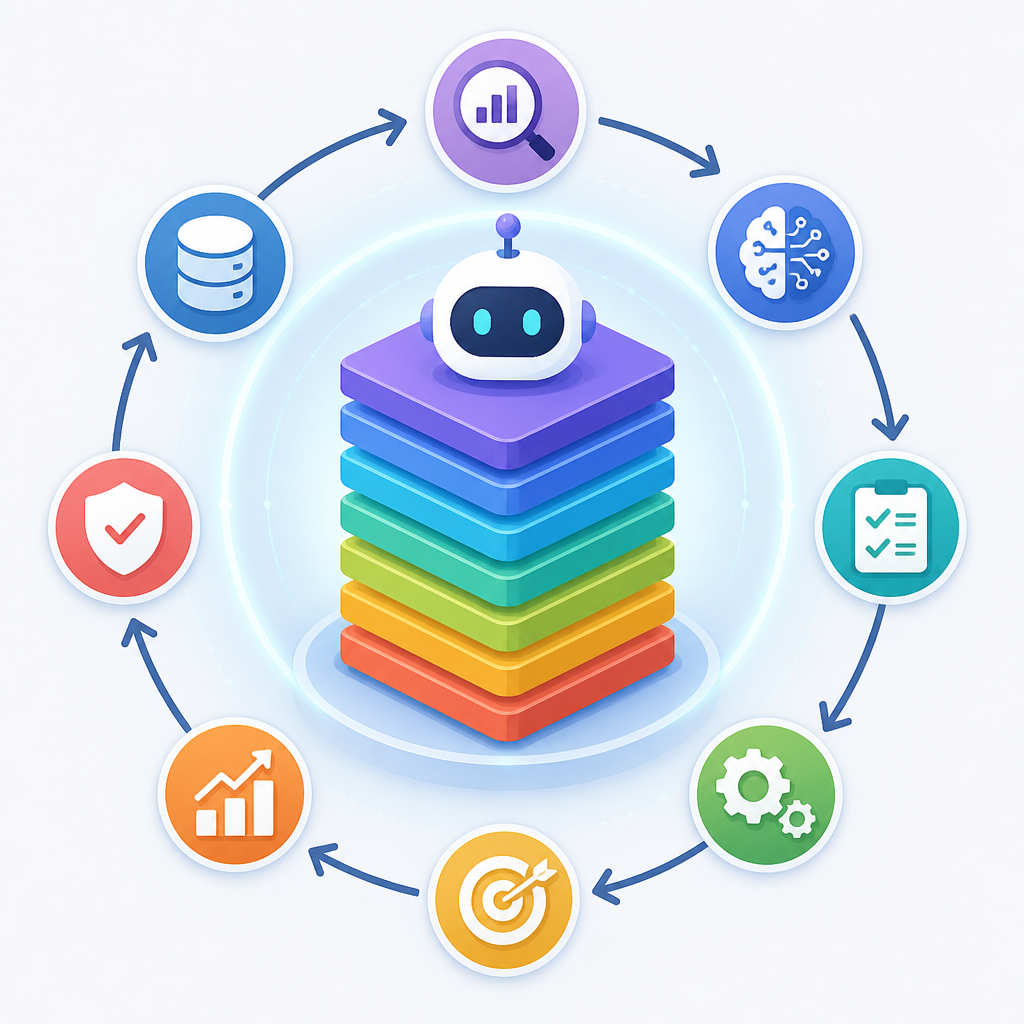
I ran into this same pattern while helping teams think through platform tokens. The first draft is always “let’s add a token for incentives.” The second draft, if you’re lucky, is “okay, what actually needs to settle on-chain?” The third draft is where most projects fall apart, because the answer is usually much smaller than the marketing deck wants. MetaBot is doing the opposite: it’s making the control plane the story.
That can work if the product is real and the settlement logic is necessary. It gets messy fast if the token exists only because the ecosystem needed a reason to sound unified.
How to apply it: if you’re designing a stack, write down the exact actions that require a shared unit of account. Don’t start with tokenomics. Start with transaction types. Then ask which ones need on-chain finality, which ones can stay off-chain, and which ones are just vanity. If you can’t answer that in one page, the token probably isn’t ready.
The eight-module layout is the part worth copying
“MetaBot’s infrastructure runs across eight proprietary modules that handle specific digital and physical functions...”
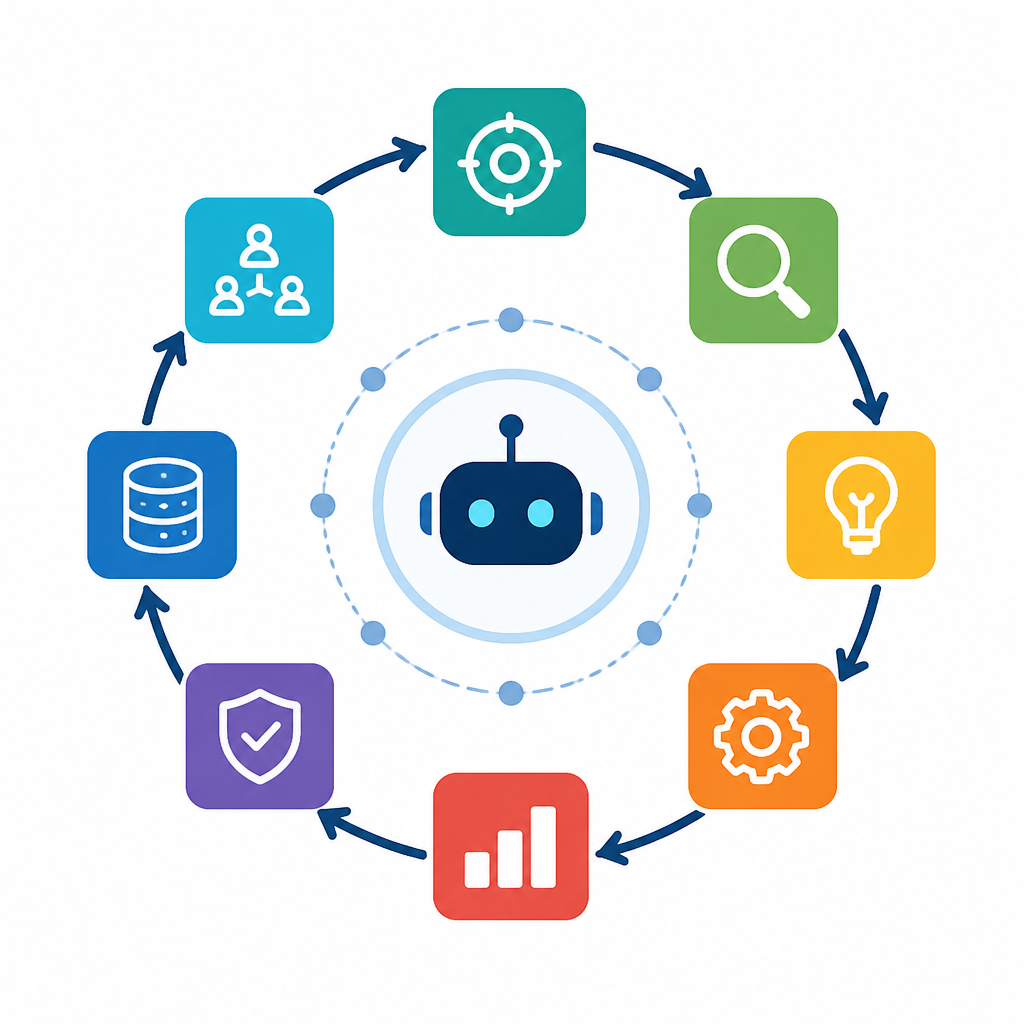
The interesting move here is not that they have eight modules. It’s that they made the boundaries visible. BotChain, BotScan, MetaBot Apps, BotWallet, BotTool, KPKBot, BotLand, VRBot, and HuBot each have a job. That’s the kind of decomposition a lot of Web3 projects skip because “one app” sounds cleaner in a pitch deck.
What this actually means is: the system is being framed as a set of specialized surfaces, not a single monolith. That matters because users, developers, and operators all need different entry points. A block explorer is not a wallet. A wallet is not a developer dashboard. A consumer app is not a hardware control layer. When teams blur those lines, the product becomes impossible to reason about.
I’ve seen this in internal platform work too. The minute you make every surface do everything, support tickets become architecture diagrams. Separating the surfaces forces decisions. It also exposes which parts are real products and which parts are just labels.
- BotChain is the settlement and execution layer.
- BotScan is the observability layer.
- BotWallet is the custody layer.
- BotTool is the operator/developer layer.
How to apply it: if you’re designing your own ecosystem, split it into no more than one responsibility per module. Name each module by what it does, not by what you hope it becomes. If a module can’t be explained in one sentence, it’s probably doing too much.
BotScan and BotTool are the boring pieces that make the stack believable
“BotScan: The network’s dedicated block explorer for real-time transaction verification and smart contract tracking.”
That line matters because it sounds boring. Good. Boring infrastructure is what makes a system feel like a system instead of a brochure. A block explorer tells me the project expects people to inspect transactions, trace contracts, and verify activity. That’s an operational claim, not just a branding claim.
Then there’s BotTool: “a developer dashboard providing access to network diagnostics and deployment metrics.” That’s the kind of thing teams often forget to mention until after launch, when developers ask where the logs are. If you want third-party builders, observability and diagnostics are not optional. They are the price of admission.
What this actually means is: the stack is trying to present itself as developer-accessible, not just consumer-facing. That’s smart. You do not get a serious ecosystem by shipping a landing page and a wallet. You get it by giving people ways to inspect, test, and debug the thing.
I ran into this when building tooling for an internal blockchain integration. The chain itself wasn’t the hard part. The hard part was making failure visible. Without a good explorer and a good dashboard, every bug looks like “the network is down,” and every team starts blaming everyone else.
How to apply it: build these three surfaces early, even if they’re ugly at first:
- a read-only explorer for state and transactions,
- a dashboard for deployment and health metrics,
- a wallet or account surface for user actions.
If you can’t inspect it, you can’t operate it. If you can’t operate it, you don’t have a platform yet.
BotWallet and KPKBot split custody from consumer access
“BotWallet: A secure cryptographic wallet for managing and storing METAKPK utility coin holdings.”
“KPKBot: The primary consumer-facing mobile interface connecting retail users directly to network protocols.”
I like this split more than the rest of the announcement. It’s one of the few places where the architecture makes human sense. Wallets are usually about control, keys, and custody. Consumer apps are about convenience, onboarding, and action. Mixing those two is how you end up with a product nobody trusts and nobody wants to use.
What this actually means is: MetaBot is trying to separate the high-friction security surface from the low-friction usage surface. That is the right instinct. If you make every user stare at key management every time they want to do something simple, adoption dies. If you hide custody too much, you create support and trust problems. Split the jobs.
I’ve had to untangle this exact mistake in product reviews. Teams love one-app simplicity until they realize their “simple app” now needs to explain gas, keys, permissions, recovery, and transaction signing in the same screen. That’s not simplicity. That’s a pileup.
How to apply it: design two separate journeys. One for power users or admins who need custody controls, and one for everyday users who just want to transact. Make sure the consumer app can call into the wallet layer without exposing all of its complexity. If the wallet and app are the same thing, you’re probably making both worse.
BotLand, VRBot, and HuBot are where the pitch gets weird
“BotLand: A virtual metaverse platform for digital land transactions and spatial real estate development.”
“VRBot centers on VR glasses and headset hardware to manage virtual environments, while HuBot delivers humanoid robotics-as-a-service for physical automation.”
This is where the announcement stops sounding like infrastructure and starts sounding like a maximalist product bundle. Virtual land. VR hardware. Humanoid robotics. That’s a lot of surface area, and it raises the obvious question: are these products, or are they proof points?
What this actually means is: MetaBot wants to connect digital ownership, immersive interfaces, and physical automation under one settlement system. That’s ambitious, but also exactly where a lot of ecosystem pitches get slippery. The farther you move from the ledger, the more you need real product evidence. A chain can be abstract. A robot cannot.
I’ve seen teams try to force this kind of vertical expansion before. They start with software, then add a virtual world, then hardware, then “AI automation,” and suddenly the roadmap looks like three companies stitched together. The problem isn’t ambition. The problem is operational drag. Every new layer adds support, manufacturing, compliance, and integration burden.
How to apply it: if you’re thinking about adding physical or immersive components to a digital stack, ask three questions first:
- Does this module create new demand, or just new complexity?
- Can it operate independently if the rest of the stack is down?
- Is the token actually needed for this interaction, or is it just being dragged along?
If you can’t answer those cleanly, the expansion is probably premature.
The closed-loop design is the real thesis, for better or worse
“Every module, from the block explorer to the humanoid robotics division, transacts exclusively in METAKPK.”
This is the core idea. Everything settles inside the same economic loop. No external currency. No external settlement dependency. The company is basically saying: if you want to use the ecosystem, you use the ecosystem’s own unit of account.
What this actually means is: they’re trying to keep value capture internal. That can reduce leakage and make the system easier to model, but it also creates a tight dependency on the token’s utility and liquidity. Closed loops are tidy on paper. In practice, they can be brittle if the token has weak demand outside the platform or if users need to constantly bridge in and out.
I’m wary of this pattern because I’ve watched too many internal economies become self-referential. Everything looks efficient until the first real user asks, “Can I just pay with the thing I already have?” Then the whole design starts to feel like friction disguised as strategy.
That said, there is a legitimate product argument here. If the ecosystem is truly self-contained, and if every module creates reasons to spend the same unit, then the token is not a speculative ornament. It’s the operating medium. That’s a much more defensible story than “we have a token because crypto.”
How to apply it: define the minimum viable closed loop. List the services, list the payment events, and list the conversion points. If users need to exit the loop every five minutes, the design is too tight. If they never need to enter the loop, the token is unnecessary. Somewhere in between is the actual product.
The press release is doing ecosystem work, not just announcement work
The disclaimer at the end is standard, but the structure of the release tells me something else: this is not just a product launch, it’s a coordination document. The language is trying to align developers, users, and token holders around a single mental model. That’s why the module list is so explicit and why the utility coin is described so carefully.
What this actually means is: the announcement is part architecture, part positioning, part governance signal. That’s normal in tokenized systems. The text itself becomes a contract of sorts, even when it isn’t legally one. People will build expectations off the nouns you choose.
I’ve learned to read these announcements the same way I read API docs. The nouns matter more than the adjectives. If the nouns are vague, the system is vague. If the nouns are concrete, you can at least start asking the right questions.
How to apply it: when you write your own ecosystem docs, stop trying to sound impressive. Name the modules. Name the dependencies. Name the settlement asset. Name the user roles. Then make sure every sentence answers one of three questions: what it is, who uses it, or how it settles.
The template you can copy
# Closed-loop ecosystem launch template

## One-line thesis
We are launching a closed-loop product ecosystem built around a single utility asset that powers every module in the stack.

## Core modules
1. **[CoreChain]**: The base execution and settlement layer for all system activity.
2. **[Explorer]**: Read-only transaction and contract visibility for users and operators.
3. **[App Hub]**: The main hosting layer for customer-facing applications.
4. **[Wallet]**: Custody and account management for the ecosystem utility asset.
5. **[Tooling Dashboard]**: Developer and operator diagnostics, deployment metrics, and system health.
6. **[Consumer App]**: Mobile or web interface for everyday user actions.
7. **[Virtual Platform]**: Optional immersive environment for digital assets or spatial experiences.
8. **[Hardware / Physical Layer]**: Optional device or robotics layer that executes real-world actions.

## Utility asset rules
- The utility asset is the only settlement unit inside the ecosystem.
- All module interactions denominate in the ecosystem asset.
- External assets may be supported for onboarding, but conversion happens at the boundary.
- The asset is for utility inside the system, not a promise of investment return.

## What each module does
### [CoreChain]
Handles transaction finality, state changes, and protocol-level execution.

### [Explorer]
Lets users verify transactions, inspect blocks, and track contract activity.

### [App Hub]
Hosts dApps and service endpoints used by builders and partners.

### [Wallet]
Stores keys, manages balances, and signs transactions.

### [Tooling Dashboard]
Shows logs, deployment status, performance metrics, and alerts.

### [Consumer App]
Provides the simplest path for retail users to interact with the ecosystem.

### [Virtual Platform]
Supports digital ownership, spatial interactions, or virtual commerce.

### [Hardware / Physical Layer]
Connects on-chain logic to real-world devices, automation, or robotics.

## Closed-loop policy
All internal services settle in the ecosystem utility asset.
All user actions that affect state must be traceable.
All external integrations must define where conversion enters and exits.
All modules must have a single owner and a single purpose.

## Build checklist
- [ ] Define the exact transaction types that require on-chain settlement
- [ ] Separate custody, consumer UX, and operator tooling
- [ ] Ship an explorer before claiming transparency
- [ ] Ship diagnostics before onboarding third-party builders
- [ ] Document where users enter and exit the closed loop
- [ ] Explain why the utility asset is necessary for each module
- [ ] Keep physical or immersive layers optional until the core system is stable

## Launch language
Our ecosystem is designed as a closed-loop system where each module serves a specific role and all settlement occurs in the native utility asset.
The architecture is intentionally modular so users, developers, and operators can interact with the system at the right layer.
We are prioritizing observability, custody clarity, and clear boundaries between consumer access and protocol control.

## Internal sanity check
If the asset disappeared tomorrow, would the product still work?
If the answer is yes, the asset may be unnecessary.
If the answer is no, you now need a real product, not a slogan.
That’s the version I’d actually hand to a team. Strip the hype. Keep the structure. Force the system to justify itself module by module. If you can’t fill in the blanks honestly, the ecosystem is probably too early or too broad.
MetaBot’s release is derivative in the sense that it borrows a familiar Web3 playbook: token, explorer, wallet, app layer, and a bigger story around physical or immersive expansion. My breakdown here is original analysis based on that source, not a claim that the company said any of this in my words.
Source: Markets Insider / GlobeNewswire press release. Related references I used for context: GlobeNewswire, Ethereum, Bitcoin, and Web3 Foundation.
// Related Articles
- [CHAIN]
Solana’s institutional push is getting louder
- [CHAIN]
Layer 2 Is Ethereum’s Real Product, Not a Detour
- [CHAIN]
Ethereum’s price should be read as network demand, not just speculati…
- [CHAIN]
Ethereum’s shake-up turns ETH into a cleaner bet
- [CHAIN]
Bitcoin’s price page explains the market in one view
- [CHAIN]
Web3 Banking Guide for Fintech Teams