MiCA turns Web3 compliance into product design
A practical breakdown of MiCA for Web3 teams, plus a copy-ready scope memo for EU-facing products.

MiCA forces Web3 teams to treat compliance like product design, not paperwork.
I've been watching crypto teams talk about Europe like it’s just another market. It isn’t. The part that keeps biting people is that they keep trying to bolt compliance on after the product is already shipped. I’ve seen the same pattern over and over: token live, users onboarded, stablecoin integrated, then someone asks whether the EU is even allowed. That’s when the room gets quiet.
MiCA is the thing that makes that mistake expensive. It doesn’t just add forms and disclosures. It changes how you think about eligibility, custody, token classification, stablecoin rails, and even how your app decides who can click what. If you build wallets, exchanges, dApps, or token products, this is no longer a legal sidebar. It’s part of the architecture. The annoying part is that you can’t fake your way through it with a nice policy page and a couple of checkboxes.
I’ve had enough conversations where engineering assumed legal would “handle Europe,” and legal assumed the product would “just know” what to block. That gap is exactly where teams get wrecked. So I’m breaking down the framework in the source article from [Blockchain Council](https://www.blockchain-council.org/cryptocurrency/mica-regulation-crypto-compliance-global-web3-companies/), not as a policy summary, but as a build guide for people who actually ship software.
MiCA is not a memo, it’s a system constraint
Get the latest AI news in your inbox
Weekly picks of model releases, tools, and deep dives — no spam, unsubscribe anytime.
No spam. Unsubscribe at any time.
“MiCA is no longer background policy. It is a product design constraint.”
What this actually means is that MiCA changes product behavior, not just legal posture. If your app serves EU users, lists tokens for them, issues stablecoins they can hold, or provides custody, exchange, brokerage, or trading services, you need to design for the regulation from the first sprint, not after launch.

The source article points out that MiCA, formally Regulation (EU) 2023/1114, entered into force in June 2023, with stablecoin rules applying from 30 June 2024 and the wider CASP regime fully applicable from 30 December 2024. That timeline matters because it means the “we’ll wait for final guidance” excuse is already dead. The clock is running.
I ran into this exact failure mode when teams tried to treat jurisdiction as a support issue. They’d ask, “Can we just geo-block later?” No. If your onboarding, KYC, payment rails, token access, and marketing all point at Europe, you’re already in scope whether the product manager wants to admit it or not.
How to apply it: build a scope map before you build features. List every user journey and mark where EU exposure happens. Don’t stop at sign-up. Include support, marketing, token distribution, staking, rewards, custody, and any wallet or exchange flow that touches EU residents.
- Identify every EU-facing surface: web app, mobile app, API, referral flow, and support channel.
- Map each surface to a MiCA question: offer, custody, exchange, trading, or stablecoin issuance.
- Record the decision in a machine-readable policy, not just a PDF memo.
CASP authorization is the new market access gate
MiCA’s biggest operational shift for Web3 companies is the CASP regime. CASP means crypto-asset service provider, and the source article is right to treat this as the new entry point into the EU market. If you want to do custody, exchange, trading platforms, order execution, portfolio management, placement, or advice, you’re not just “doing business in Europe.” You’re asking for authorization.
That authorization is handled by a national competent authority, and once you get it in one member state, you can passport services across the EU. That’s the upside. The downside is obvious if you’ve ever shipped a startup with no compliance muscle: you now need governance, internal controls, prudential safeguards, complaint handling, conflict management, and client asset protection that can survive regulator scrutiny.
The source also notes that Commission Delegated Regulation (EU) 2025/294 added detail for CASPs. That matters because a lot of teams like to pretend the rules are abstract until the technical standards arrive. Then they act surprised when the standards read like an engineering spec written by someone who hates shortcuts.
I’ve seen teams underestimate the data model problem here. If you only store a country code from a phone number or a last-login IP, you cannot defend a jurisdiction decision. You need legal residence, contracting entity, IP signals, KYC records, terms accepted, and product access logs. Otherwise, you’re improvising when a supervisor asks why a user in Paris was allowed to use a service you claimed was not offered in France.
How to apply it: treat authorization readiness like a platform milestone. Don’t leave it to legal after launch. Build the controls that an authorization file will ask for.
- Define management responsibilities and approval chains.
- Separate client assets from company assets in your ledger and custody design.
- Log complaints, disclosures, and policy exceptions in a way you can audit later.
For the underlying regulatory bodies, keep tabs on the European Securities and Markets Authority and the European Banking Authority. They’re not optional reading if you want to operate in this space without guessing.
Stablecoins are where MiCA gets serious fast
If you only skim one part of MiCA, skim the stablecoin section at your own risk. The source article makes the point clearly: ARTs and EMTs get the strictest treatment because policymakers see them as consumer protection, financial stability, and monetary sovereignty issues, not just another token type.
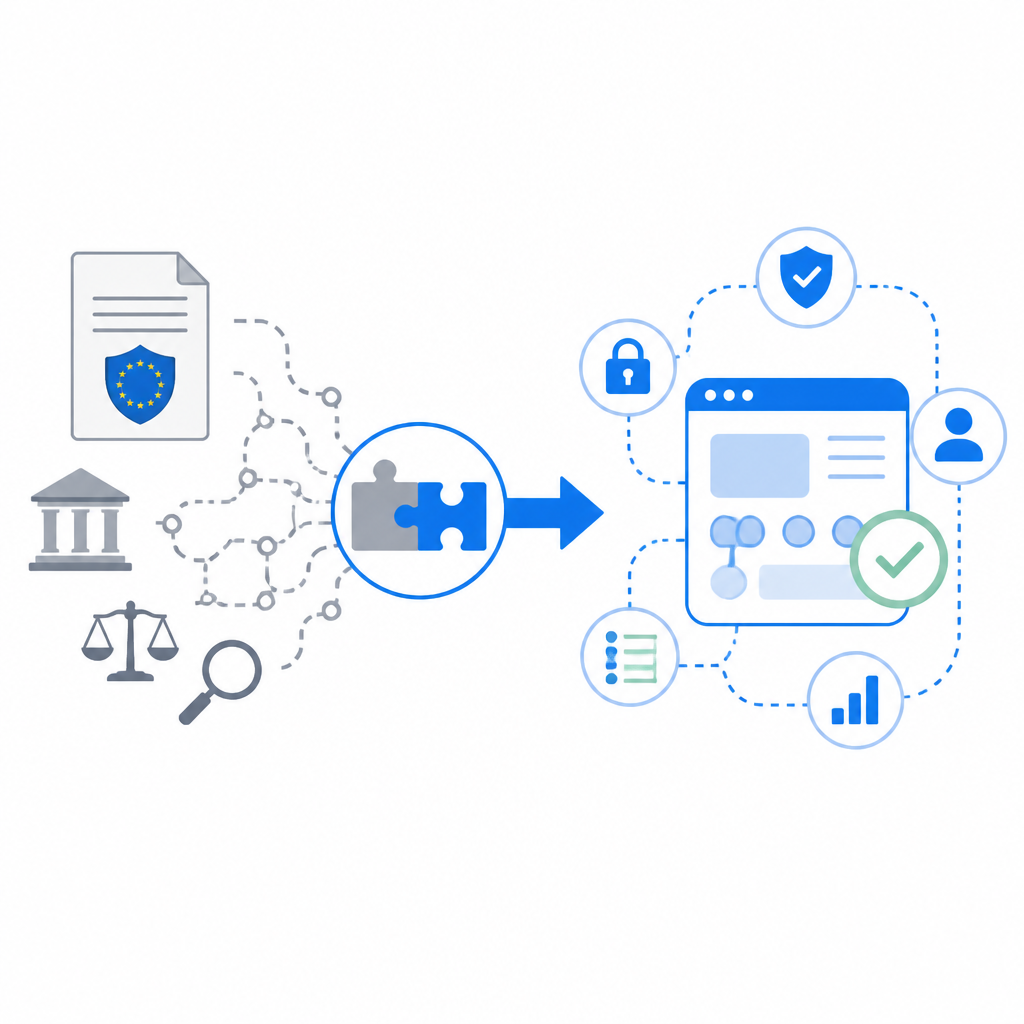
ARTs are asset-referenced tokens. EMTs are e-money tokens. Under MiCA, issuers face rules around authorization, whitepapers, reserve assets, redemption rights, custody of reserves, governance, and complaint handling. The article also calls out one rule that product teams keep missing: MiCA prohibits paying interest to stablecoin holders. If your growth model depends on “yield” on EU retail balances, you need a different plan.
This is where a lot of crypto-native teams get stubborn. They want to ship a stablecoin feature the same way they’d ship points, rewards, or a loyalty balance. MiCA doesn’t care about your internal naming. If the token behaves like a regulated payment instrument, the regulator will look at substance, not your UI copy.
The article also notes that ESMA has clarified some CASP services can amount to a public offer of ARTs or EMTs, especially when the CASP promotes or advertises the token. That’s the kind of detail people miss when they assume “we’re just listing it.” Listing can be distribution. Distribution can be an offer. Offer can trigger the whole regime.
I’ve seen this show up in product planning for payments, lending collateral, and rewards. A team builds around a stablecoin, then discovers EU users can’t easily acquire it through regulated venues, or can’t receive the benefits they expected. Suddenly the product economics don’t work anymore.
How to apply it: classify every stablecoin dependency as if a regulator will ask you to justify it line by line. Because they might.
- List every stablecoin used in payments, treasury, rewards, collateral, or settlement.
- Mark whether it is ART, EMT, or a non-MiCA token.
- Check whether your product depends on interest, yield, or incentive logic that MiCA restricts.
Token launches need classification before marketing gets loud
MiCA’s disclosure rules for public offers and trading admission are where a lot of token teams will trip over their own messaging. The source article says the whitepaper has to describe the issuer or offeror, the token, rights and obligations, technology, risks, and environmental or climate-related impacts where required. That’s not a “nice to have” document. That’s part of the offer.
Utility tokens and governance tokens are not automatically exempt. That part matters because teams love to assume the label solves the legal problem. It doesn’t. If you sell the token into the EU or want it listed on an EU trading platform, you need a real classification analysis. And if token holders expect profit from the work of a core team, securities law may still show up and ruin the party.
I’ve watched founders get weirdly attached to the word “governance.” They think the label itself creates safety. It doesn’t. If the token is marketed as an investment, or if the economics rely on a central team driving value, you may have more than one rulebook to satisfy. MiCA is only one layer.
The practical move is to make token launch workflows boring. That’s a compliment. Boring means repeatable, reviewable, and hard to misclassify. Put the legal classification gate before the announcement schedule, not after the influencer thread is already drafted.
How to apply it: build a launch checklist that forces a classification decision before any public communication.
- Write a token classification memo before the whitepaper is finalized.
- Review whether the token is an ART, EMT, other MiCA crypto asset, or a financial instrument under MiFID II.
- Require legal sign-off before exchange listing, marketing, or airdrop distribution.
For the securities side, the relevant EU baseline is MiFID II. If your token starts looking like a financial instrument, MiCA may not be the main rulebook anymore.
You need one compliance stack, not five disconnected ones
One of the better points in the source article is that MiCA does not replace AML obligations or the EU Travel Rule. It sits beside them. That means onboarding, sanctions screening, wallet risk scoring, Travel Rule messaging, and MiCA eligibility checks have to work together. If they don’t, your controls will fight each other in production.
This is the part where teams usually create a compliance zoo. One vendor for KYC, one for sanctions, one for chain analytics, one for Travel Rule, one for token permissions, and none of them talk to each other cleanly. Then a user gets blocked for one reason, approved for another, and support has no idea what happened. Lovely system.
The article also points out a practical country-logic problem: if your product only stores a phone country code or last-login IP, you can’t defend an EU eligibility decision. That’s exactly right. You need a data model that reflects legal reality, not just whatever signal was easiest to capture during onboarding.
I ran into this when a team wanted a simple “EU yes/no” flag. Simple is fine until it isn’t. Users move, entities differ from residences, and services are delivered through subsidiaries, affiliates, or intermediaries. If your model can’t explain who the customer is and where the service is actually provided, your controls are decorative.
How to apply it: build a modular control layer with shared identity and policy objects.
- Use one customer profile that stores jurisdiction, entity type, residence, and product permissions.
- Connect AML, sanctions, Travel Rule, and MiCA eligibility to the same profile.
- Log every block, override, and exception with a reason code.
For Travel Rule context, the industry standard work is tracked by the FATF. MiCA doesn’t erase that layer, and pretending otherwise is how teams end up rebuilding controls under pressure.
Don’t confuse DeFi gaps with freedom from regulation
MiCA leaves some areas open for later, including many DeFi activities, crypto lending, and many NFTs. The source article is careful here, and I appreciate that. Too many people hear “not fully covered” and translate it into “safe.” That’s not how regulators work.
Even where MiCA doesn’t fully reach, other rules still can. DeFi front ends, hosted wallets, token issuers, governance foundations, and service providers can still face AML obligations, consumer protection law, sanctions duties, tax reporting, and securities analysis. If you operate the interface, control admin keys, curate assets, or take fees, regulators may find a responsible entity.
I’ve seen this mistake most often with teams that think decentralization is a legal shield. It isn’t. If your front end is hosted by a company, your admin keys are controlled by a company, and your fees go to a company, then a regulator will probably know where to start looking.
How to apply it: document where control actually sits. Don’t rely on branding. Map admin rights, upgrade paths, fee collection, curation, and support ownership. If a person can reasonably point to your team as the operator, assume you have obligations to analyze.
That’s also why I tell teams to stop using “decentralized” as a substitute for “we haven’t checked yet.” Those are not the same thing, and regulators are not interested in the confusion.
The template you can copy
# MiCA Scope Memo for Web3 Products

## 1) Product summary
- Product name:
- Legal entity:
- Primary user countries:
- EU-facing features:
- Launch date:

## 2) User and jurisdiction model
- Customer types: retail / professional / institutional / business
- Legal residence captured? yes/no
- Contracting entity captured? yes/no
- IP signal captured? yes/no
- KYC country captured? yes/no
- Terms accepted by region? yes/no
- EU access blocked, allowed, or conditional:

## 3) MiCA classification
For each asset or service, record:
- Asset or service name:
- Category: ART / EMT / other MiCA crypto asset / MiFID II financial instrument / out of scope
- Why that classification applies:
- EU offer or distribution involved? yes/no
- Trading admission involved? yes/no
- Whitepaper required? yes/no
- Stablecoin issuer obligations? yes/no
- CASP service involved? yes/no

## 4) CASP services checklist
Mark yes/no for each service:
- Custody and administration of crypto-assets
- Operation of a trading platform
- Exchange of crypto-assets for funds
- Exchange of crypto-assets for other crypto-assets
- Execution of orders
- Placement of crypto-assets
- Reception and transmission of orders
- Portfolio management
- Advice on crypto-assets

## 5) Control stack
- KYC provider:
- Sanctions screening provider:
- Travel Rule provider:
- Wallet risk scoring provider:
- Transaction monitoring rules:
- Client asset segregation method:
- Complaints workflow owner:
- Conflict management owner:
- Incident reporting owner:

## 6) Stablecoin dependencies
For each stablecoin used:
- Token name:
- ART / EMT / other:
- Purpose: payments / treasury / rewards / collateral / settlement / other
- Interest or yield offered? yes/no
- EU users can acquire it through regulated channels? yes/no
- EU users can redeem it? yes/no
- Restriction needed? yes/no

## 7) Launch and listing gates
- Token classification memo approved by:
- Whitepaper approved by:
- Marketing copy reviewed by:
- Exchange listing reviewed by:
- EU access decision approved by:
- Go-live blocked until all required approvals are complete: yes/no

## 8) Evidence pack
Attach links or files for:
- Governance chart
- Policy docs
- Access logs
- Complaint handling procedure
- Client asset protection design
- Risk assessment
- Training record
- Legal opinions

## 9) Decision
- Seek CASP authorization
- Partner with authorized CASP
- Restrict EU access
- Redesign product before launch

## 10) Owner and review date
- Memo owner:
- Legal reviewer:
- Engineering reviewer:
- Compliance reviewer:
- Next review date:
This template is my practical version of the article’s advice. It turns MiCA from a vague “we should look into Europe” issue into a checklist your team can actually use in planning, legal review, and release gating.
Use it before token launch, before adding stablecoin support, before opening EU signups, and before you tell sales that a European partnership is “basically fine.” It’s a lot less painful to answer these questions early than to discover them during an authorization review.
The original article from [Blockchain Council](https://www.blockchain-council.org/cryptocurrency/mica-regulation-crypto-compliance-global-web3-companies/) is the source for the regulatory framing, dates, and compliance themes I broke down here. My template and implementation advice are original, but they’re built directly from that source material and the linked EU rules.
// Related Articles
- [CHAIN]
Layer 2 Is Ethereum’s Real Product, Not a Detour
- [CHAIN]
Ethereum’s price should be read as network demand, not just speculati…
- [CHAIN]
Ethereum’s shake-up turns ETH into a cleaner bet
- [CHAIN]
Bitcoin’s price page explains the market in one view
- [CHAIN]
Web3 Banking Guide for Fintech Teams
- [CHAIN]
10 prediction market builders that can ship Polymarket-style apps