Micron’s Anthropic deal turns memory into strategy
Micron’s Anthropic agreement shows how memory, storage, and software adoption get bundled into one AI infrastructure play.

Micron’s Anthropic deal shows how memory, storage, and software adoption get bundled into one AI infrastructure play.
I’ve been watching AI infrastructure vendors talk past each other for a while now. Everyone says they’re “building for AI,” but half the time that means a GPU slide deck, a supply-chain promise, and a vague nod to software. It’s been off. The actual bottleneck in a lot of these systems isn’t just compute. It’s memory, storage, packaging, and the ugly details of how models move data around without falling over.
That’s why Micron’s announcement with Anthropic caught my eye. It’s not just a chip-company press release and it’s not just an AI-model partnership. It’s a deal that ties together memory and storage architecture, supply planning, and enterprise use of Claude inside Micron. That combination is the interesting part, because it says the infrastructure layer is no longer just “who ships the fastest parts.” It’s “who gets to shape the system design around the model.”
The source is Micron’s June 22, 2026 press release on investors.micron.com. I’m also grounding the breakdown in the public product pages for Anthropic’s Claude and Micron’s own technology and investor materials, because this only makes sense if you look at the stack, not just the headline.
They’re not selling chips. They’re trying to shape the whole stack
Get the latest AI news in your inbox
Weekly picks of model releases, tools, and deep dives — no spam, unsubscribe anytime.
No spam. Unsubscribe at any time.
“Micron Technology, Inc. today announced a strategic agreement with Anthropic that spans memory and storage AI architecture design, supply and demand, enterprise adoption of Claude across Micron and a strategic investment in Anthropic’s ...”
What this actually means is Micron is treating AI infrastructure like a system design problem, not a parts catalog. Memory and storage aren’t afterthoughts here. They’re part of the architecture conversation, which is the part most companies only remember after they’ve already bought the wrong hardware.

I’ve run into this exact mistake in real projects. Teams start with model choice, then pick compute, then discover the data pipeline is the thing murdering latency and cost. By the time they notice, they’ve already committed to a stack that’s painful to change. When a memory vendor gets a seat at the architecture table, that’s a signal they want to influence those early decisions, not just ship modules into whatever the customer already built.
For developers, the takeaway is simple: if you’re building AI systems, stop treating memory and storage as invisible plumbing. They affect throughput, batching behavior, retrieval latency, checkpointing, and even how much your model can afford to “think” before it has to answer. If you ignore that layer, you end up optimizing the wrong thing.
- Look at memory bandwidth before you obsess over model size.
- Look at storage latency before you blame the inference server.
- Look at data movement before you add another GPU.
How to apply it: when you spec an AI system, write down the model, the context length, the retrieval pattern, and the data refresh rate first. Then map memory and storage requirements to those behaviors. That’s the part that keeps teams from buying hardware that looks impressive and behaves like a bottleneck.
Claude inside Micron is the real operational signal
Micron said the agreement includes enterprise adoption of Claude across Micron. That matters because it turns Anthropic from “partner on the press release” into a tool that can shape internal workflows. If a company of Micron’s size is rolling Claude into enterprise use, that’s not about novelty. It’s about getting AI into the boring parts of the business where time gets burned: analysis, drafting, support, planning, and internal knowledge lookup.
What I read there is less “Micron likes Claude” and more “Micron wants to operationalize AI where its own teams spend time.” That’s a very different claim. A lot of companies demo AI in front of executives and then leave the actual staff with the same old spreadsheets and ticket queues. This kind of adoption says they want the model in the workflow, not just in the demo.
I’ve seen this go sideways when companies buy a model and never define the job it should do. The result is a shiny chatbot nobody trusts. The better pattern is to pick a few repeatable tasks and force the model to earn its keep there. That usually means internal search, document summarization, engineering assistance, and support triage before anything fancy.
How to apply it: don’t ask “should we use an LLM?” Ask “which internal process is slow because humans are doing text work a machine can draft, rank, or summarize?” Then put the model in that lane and measure time saved, error rate, and adoption. If you can’t measure it, you’re just collecting prompts.
- Start with one team, one workflow, one measurable outcome.
- Use the model where text volume is high and judgment is repetitive.
- Keep a human approval step until the failure modes are boring and known.
Supply and demand planning is the part everyone pretends is mundane
The release also says the agreement spans supply and demand. That sounds dry, but it’s actually one of the most important parts of the whole thing. AI infrastructure has been a mess of forecast whiplash for years. Vendors overpromise, customers hoard capacity, and everyone gets stuck in a weird dance where nobody trusts the numbers but everyone depends on them.
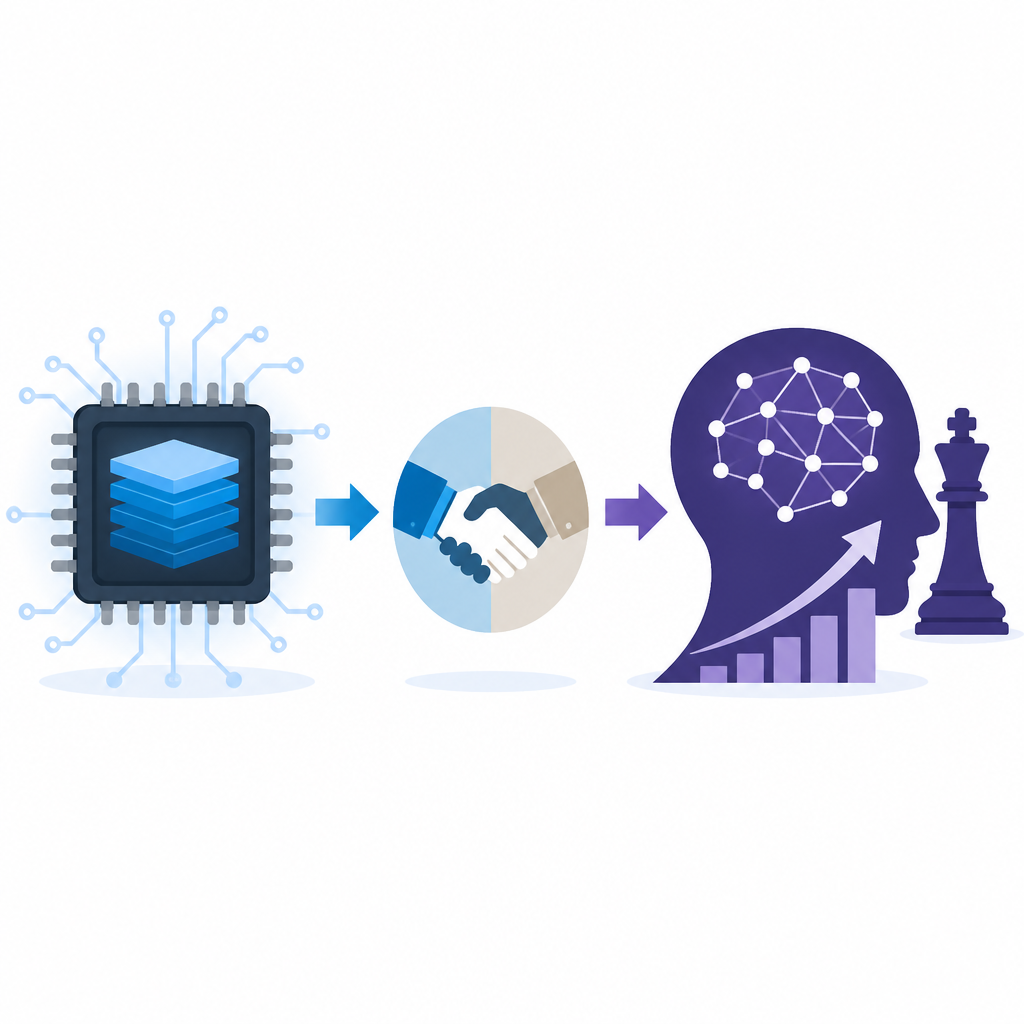
What this actually means is Micron and Anthropic are trying to reduce uncertainty at the planning layer. If you know model demand is going to keep pushing memory and storage requirements upward, you can plan production and architecture together instead of treating each as a separate problem. That’s better for both sides, because the vendor gets a more stable pipeline and the model company gets fewer surprises when scaling.
I’ve watched teams get burned by treating supply as a procurement issue instead of a product issue. Once your AI stack depends on a specific class of memory or storage behavior, supply constraints become architecture constraints. You can’t just “buy more later” if the system was built around assumptions that stop holding at scale.
How to apply it: if you’re on the customer side, build a capacity forecast that includes memory, storage, and network, not just compute. If you’re on the vendor side, talk to the customer about workload shape, not just volume. The shape matters. A steady retrieval workload and a bursty training workload are not the same problem, even if both show up as “AI demand” in a slide deck.
Here’s the practical lens I use:
- Forecast by workload type, not just by headcount.
- Separate training, fine-tuning, retrieval, and inference demand.
- Plan for data growth, not just model growth.
This is a memory company trying to own the AI bottleneck story
Micron is a memory and storage company, so of course it wants AI to be about memory and storage. That part is obvious. But I don’t think this is just marketing spin. The more AI systems scale, the more the bottleneck shifts from raw compute to data movement, persistence, and access patterns. That’s where memory vendors get to matter again.
For a long time, people talked about memory like it was a commodity line item. Buy it, plug it in, move on. AI changed that. Now memory capacity and bandwidth can determine whether a system feels responsive or sluggish, whether retrieval works cleanly, and whether inference costs stay tolerable. That makes memory strategic in a way it wasn’t for a lot of application teams before.
I ran into this hard when working on retrieval-heavy systems. The model wasn’t the issue. The issue was everything around it: vector store access, cache behavior, and how often we had to drag data across layers that were never designed for this traffic pattern. Once we fixed the memory and storage assumptions, the “AI problem” got a lot smaller.
How to apply it: if you’re designing an AI product, ask where the system spends time waiting. Waiting on retrieval? Waiting on cache misses? Waiting on checkpoints? Waiting on data hydration? Those waiting points are where memory and storage decisions become product decisions.
And if you’re buying infrastructure, stop asking only for peak FLOPS. Ask for the numbers that tell you how the system behaves under real load:
- memory bandwidth
- storage latency
- checkpoint speed
- data locality
Anthropic benefits because it gets a hardware ally, not just a customer
From Anthropic’s side, this kind of agreement is useful because it gives the company a partner that can influence the physical layer underneath its models. Anthropic’s Claude family is already positioned as a serious enterprise tool, and that means the company has to care about reliability, throughput, and cost in the real world, not just benchmark theater. You can see that orientation on Anthropic’s Claude page.
What this actually means is Anthropic gets more than procurement support. It gets a collaborator that can help shape the infrastructure assumptions around model deployment. That can matter a lot when you’re trying to keep enterprise usage predictable and economically sane. Models don’t live in isolation. They live in systems with budgets, SLAs, and people who complain when the response time drifts.
I’ve seen model teams underestimate how much infrastructure discipline matters once customers start depending on them. The demo works. The pilot works. Then usage grows and the whole thing becomes a cost-control exercise. Partners who understand memory, storage, and supply planning can keep that from turning into chaos.
How to apply it: if you’re an AI vendor, don’t think in terms of “who can write us a check.” Think in terms of “who can help us make the system cheaper, faster, and easier to operate at scale.” That’s the difference between a vanity partnership and one that actually changes your deployment math.
The enterprise adoption piece is where the press release gets real
Enterprise adoption inside Micron is not a side note. It’s the proof that the partnership is supposed to touch actual work. If Claude is being used across Micron, then the company is presumably putting its own employees through the same adoption mess every enterprise hits: training, trust, governance, and figuring out which tasks are safe to automate versus just annoying to automate.
That’s the unglamorous part, and it’s the part that usually decides whether AI becomes infrastructure or theater. The model can be excellent and the rollout can still fail because nobody owns the workflow, nobody sets usage rules, or nobody measures outcomes. I’ve lived through that. It’s painful, and it wastes time.
How to apply it: if you’re rolling out Claude, ChatGPT, or any internal model tool, write down three things before the pilot starts:
- the exact task it replaces or speeds up
- the human owner for review and escalation
- the metric that tells you it’s working
That keeps you from ending up with an expensive novelty. It also forces the team to confront whether the model is actually saving labor or just creating another place to paste text.
The template you can copy
# AI infrastructure partnership brief template

## What this partnership is really about
We are treating AI infrastructure as a system design problem, not a parts purchase.

## Why we are doing this
- Reduce bottlenecks in memory, storage, and data movement
- Align supply planning with actual workload growth
- Bring the model into internal enterprise workflows
- Improve deployment cost, latency, and operational predictability

## What we are partnering on
1. Architecture review
   - Memory capacity and bandwidth targets
   - Storage latency and checkpoint requirements
   - Data locality and retrieval behavior

2. Supply planning
   - Forecast by workload type
   - Separate training, fine-tuning, retrieval, and inference demand
   - Review capacity assumptions quarterly

3. Internal adoption
   - Select 1-3 workflows for model deployment
   - Assign a human owner for each workflow
   - Define success metrics before rollout

## Questions to ask before signing
- Where is the real bottleneck: compute, memory, storage, or network?
- What workload shape are we actually scaling?
- What internal process will use the model first?
- How will we measure time saved, cost reduced, or errors avoided?

## Operating rules
- Start with one team and one workflow
- Keep a human approval step until failure modes are known
- Review system performance against real workload, not demo traffic
- Revisit architecture after the first usage spike

## Copy-ready internal rollout note
We are adopting AI to improve a specific workflow, not to add a chatbot.
The workflow owner is responsible for adoption, measurement, and escalation.
Success means less time spent on repetitive text work and fewer avoidable errors.
If the model does not improve the workflow, we stop or redesign it.
This is my own breakdown and template, built from Micron’s announcement and the broader public product pages from Micron and Anthropic. The original source is Micron’s investor release; the rest here is my interpretation for developers who need something they can actually use.
// Related Articles
- [IND]
Cloudflare Q1 2026 revenue jumps 34% to $639.8M
- [IND]
FERC's AI grid order turns backlog into urgency
- [IND]
Google Home Speaker preorder puts Gemini first
- [IND]
Microsoft is right: AI discovery needs measurement, not just more imp…
- [IND]
Microsoft’s agentic AI playbook turns pilots into scale
- [IND]
AI Weekly: 2026-06-15 ~ 2026-06-22