Google Home Speaker preorder puts Gemini first
1 new Google Home Speaker arrives June 25 for $100, with Gemini features, local noise filtering, and a smaller driver than Nest Audio.

Google’s new Home Speaker is a $100 Gemini-first smart speaker that ships on June 25.
After 10 months of waiting, Google’s new smart speaker is finally up for preorder, and the details make it clear this is more about AI than audio bragging rights. If you want the short version, this list breaks down the launch price, the hardware tradeoffs, the smart home extras, and who should skip it.
| Item | Price | Launch date | Audio hardware |
|---|---|---|---|
| Google Home Speaker | $100 | June 25 | Single 58 mm full-range driver |
| Google Nest Audio | Not listed | September 2020 | 75 mm woofer + 19 mm tweeter |
| Google Nest Mini | Not listed | Not listed | Smaller speaker class |
1. The Google Home Speaker
Get the latest AI news in your inbox
Weekly picks of model releases, tools, and deep dives — no spam, unsubscribe anytime.
No spam. Unsubscribe at any time.
Google’s Home Speaker is the company’s first new home audio device in almost six years, and it arrives June 25 for $100. Google says the speaker is tuned for 360-degree sound, but the bigger story is that it is built around Gemini and local processing rather than pure audio ambition.
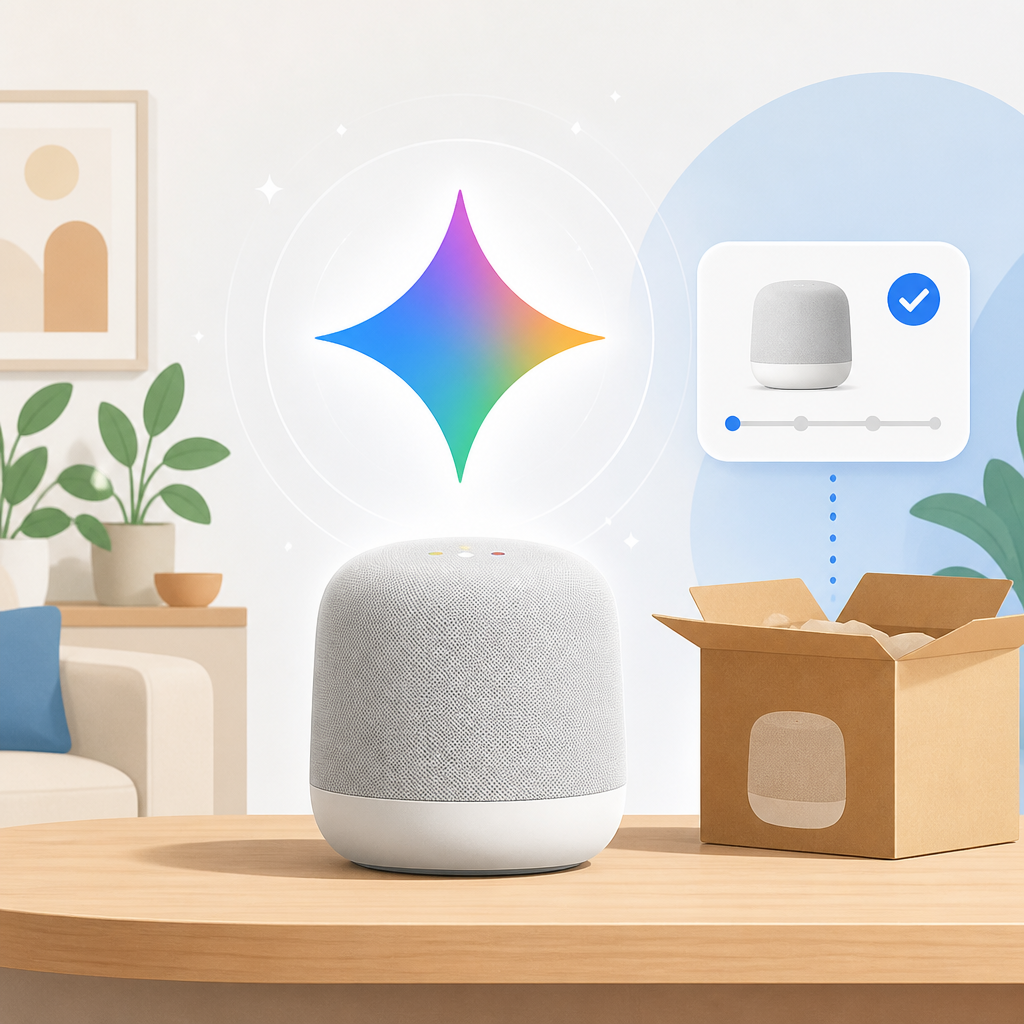
The design is compact and round, with partially recycled fabric and four color options: hazel, porcelain, jade, and berry. Jade and berry are US exclusives, and the bottom light ring is there to show when the speaker is listening, thinking, or responding.
- Three far-field microphones
- Mute switch for privacy
- Capacitive touch controls on top
- Quad-core A55 processor at 2 GHz
- Dedicated NPU for on-device AI tasks
2. The sound-first comparison
If you care most about audio, the new speaker is not an automatic upgrade over the older Nest Audio. Google says its sound quality lands between the Nest Audio and the smaller Nest Mini, which is a careful way of saying it is not trying to be the best-sounding speaker in the lineup.
That tradeoff is visible in the driver choice. The Nest Audio used a 75 mm woofer and a 19 mm tweeter, while the new Home Speaker uses a single 58 mm full-range driver. For casual listening and voice control, that may be enough. For room-filling music, the older model may still be the better pick.
- Nest Audio: larger two-driver setup
- Home Speaker: one 58 mm full-range driver
- Google’s own position: audio sits between Nest Audio and Nest Mini
- Best fit: voice assistant use, not audiophile listening
3. Gemini and local noise filtering
The most important upgrade is inside the speaker. Google says the Home Speaker uses local AI models to improve sound isolation, which should help it filter background noise better than past smart speakers. That matters because smart speakers often mishear commands in busy rooms.

This is also where Google is trying to make the speaker feel more current. Gemini Live comes built in, so you can have a back-and-forth conversation with Google’s AI. The catch is that Gemini is not exclusive to this device, so the new hardware is less about unlocking Gemini and more about making Gemini easier to use.
Key AI-related features:
- Local AI models for noise filtering
- Gemini Live on the speaker
- Cloud-based Gemini support on older speakers too
- Six months of Google Home Premium included
4. The smart home extras
The Home Speaker is not just a voice box for AI chats. Google says it can pair with the Google TV Streamer for “Immersive” audio, with up to two Home Speakers working together. It also integrates with other Nest speakers and displays on the local network.
That makes it more useful if you already live inside Google’s smart home ecosystem. The included six months of Google Home Premium adds AI features in the Home app, which may matter more to people who want a more automated home setup than to people who only want music playback.
- Pairs with Google TV Streamer
- Supports up to two speakers for Immersive audio
- Works with other Nest speakers and displays
- Includes six months of Google Home Premium
5. The preorder decision
Preordering now makes sense if you want Google’s newest smart home hardware and you care about Gemini, local noise filtering, or the new light-ring design. It also makes sense if you want a speaker that slots neatly into a Google TV and Nest setup.
If you mainly want the best sound for the money, the older Nest Audio still sounds like the safer bet based on Google’s own specs. If you mainly want AI features, your current Google speaker may already get you most of what matters, since Gemini is available in the cloud on other models too.
How to decide
Pick the new Google Home Speaker if you want the latest Google smart home device, prefer voice control in noisy rooms, and like the idea of Gemini Live built into the speaker. Pick a Nest Audio-style alternative if music quality matters more than AI features.
If you are already deep in Google Home, the preorder is an easy way to get the newest hardware. If not, the value case is narrower: this is a $100 speaker that is trying to be a better AI companion before it tries to be a better speaker.
// Related Articles
- [IND]
OWASP’s 2026 LLM Top 10 shifts risk priorities
- [IND]
Silicon Valley’s AI “Breakdowns” Are a PR Play, Not a Signal of Doom
- [IND]
WebAssembly’s JVM shift is making Java more portable
- [IND]
Anthropic is hiring a custom chip design team
- [IND]
Model Y L US launch packs 6 buyer details
- [IND]
2027 Tesla Model Y L Exterior Photos and Specs