MirrorWorld makes mirror reflections consistent in video
MirrorWorld adds scene-to-mirror reasoning to video diffusion so reflections stay semantically and spatially consistent.

How do you generate a mirror reflection that actually matches the scene in a video?
MirrorWorld adds scene-to-mirror reasoning to video diffusion so reflections stay semantically and spatially consistent.
- Research org: Unspecified in arXiv abstract
- Core data: Four existing video mirror datasets repurposed into one benchmark
- Breakthrough: Semantic Relation Distillation plus Geometric Transformation Alignment
That is the core problem this paper tackles. Standard video diffusion models can synthesize convincing video, but mirrors are a special case: the reflection has to agree with the surrounding scene, both in content and in placement. If the model gets either part wrong, the result looks broken immediately.
For engineers, that makes mirror generation a useful stress test for video models. It is not just about producing plausible pixels. It is about preserving structured relationships between regions of the frame, which is exactly where generic generation systems tend to fall apart.
What problem this paper is trying to fix
Get the latest AI news in your inbox
Weekly picks of model releases, tools, and deep dives — no spam, unsubscribe anytime.
No spam. Unsubscribe at any time.
The authors focus on mirror reflection generation in video. They say existing video diffusion models are not designed to model scene-to-mirror relationships, so they can produce reflections with the wrong objects, the wrong layout, or inconsistent spatial arrangement.
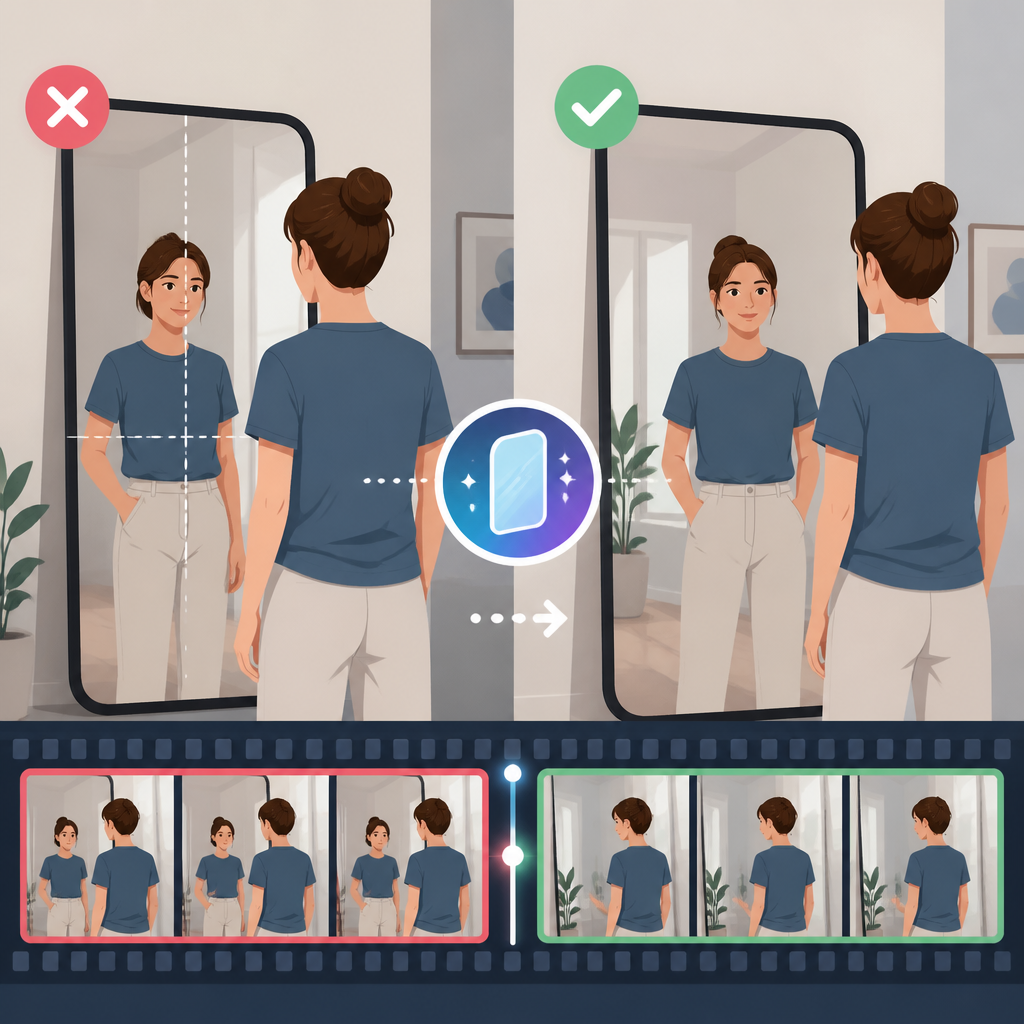
The paper breaks the task into two separate challenges. First, the model has to decide what scene content should appear in the mirror. Second, it has to decide how that reflected content should be arranged inside the mirror region. That split matters because semantic correctness and geometric correctness are not the same thing.
This is a practical framing for anyone building inpainting or editing systems. A system can know that a chair should appear in a reflection and still fail if the chair is mirrored, shifted, or scaled incorrectly. MirrorWorld is built around that distinction.
How MirrorWorld works in plain English
MirrorWorld is described as a reflection-aware video inpainting framework. Instead of treating the mirror as just another missing patch, it explicitly models the relationship between the visible scene and the reflected region during generation.
The first component is Semantic Relation Distillation, or SRD. In plain terms, SRD transfers relational information from a frozen visual foundation model so the system can learn semantic associations between what is visible in the scene and what should appear in the mirror. The paper presents this as the part that models what should be reflected.
The second component is Geometric Transformation Alignment, or GTA. This learns a transformation that guides the spatial arrangement of reflected content. In other words, GTA is the part that models how the reflection should be laid out inside the mirror.
The important design choice is that the two pieces are complementary. SRD handles semantic consistency, while GTA handles spatial consistency. That division is simple, but it targets the exact failure modes the paper identifies in existing systems.
What the paper actually shows
The authors also contribute a benchmark for video mirror reflection generation. They construct it by repurposing four existing video mirror datasets into a unified reflection reconstruction task. That gives the paper a more focused evaluation setup for this specific problem.
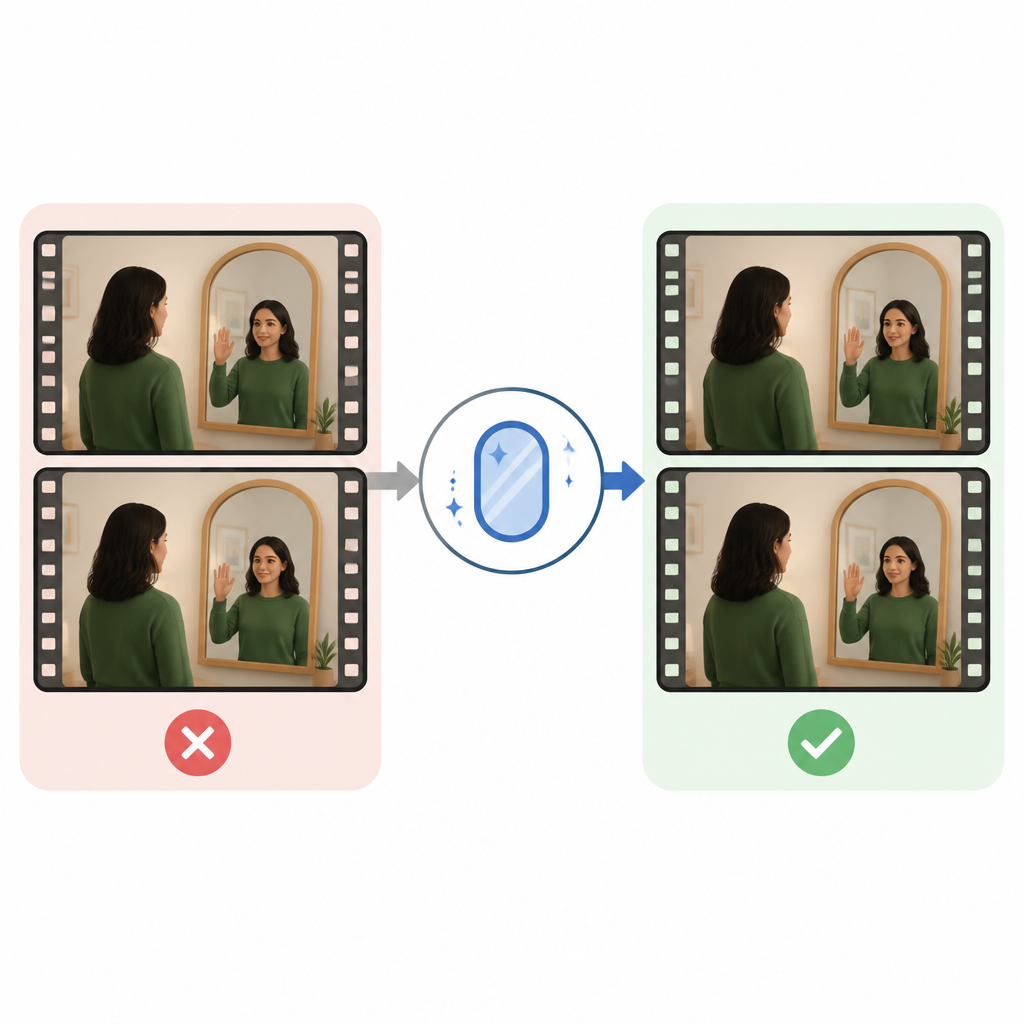
On the results side, the abstract is clear about the direction but not about the exact numbers. It says MirrorWorld achieves improved reflection reconstruction quality over representative image-based reflection generation methods and strong video inpainting baselines. No benchmark scores are included in the abstract, so there are no published numbers to quote here.
That means the main evidence available from the abstract is comparative, not quantitative. The claim is that MirrorWorld outperforms both image-based reflection generation methods and video inpainting baselines on the new benchmark, but the abstract does not tell us by how much.
Even without numbers, the experimental framing is useful. It suggests the method is not just tuned for a narrow demo, but tested against baseline classes that developers would actually consider when building editing or synthesis pipelines.
Why developers should care
If you work on video generation, inpainting, AR effects, or scene editing, mirrors are a hard edge case that exposes whether your model understands structure. A model that can handle mirror reflections is likely doing something more meaningful than texture completion: it is learning relationships between objects, viewpoints, and regions of the frame.
That matters because a lot of production failures come from exactly this kind of relational error. The output may look sharp, but the reflected content is semantically wrong or spatially inconsistent. MirrorWorld’s split between semantic and geometric modeling is a useful pattern for any system that needs to preserve cross-region consistency.
There is also a broader implementation lesson here. The paper uses a frozen visual foundation model for relation distillation rather than training everything from scratch, which suggests a path for reusing strong pretrained perception models inside generative pipelines. For teams building around diffusion systems, that is a practical design pattern worth noticing.
Limitations and open questions
The abstract leaves several things unanswered. It does not provide benchmark numbers, dataset sizes, runtime details, or ablation results in the text we have here. It also does not explain how well the method generalizes beyond mirror scenes, or how sensitive it is to different kinds of camera motion and reflection geometry.
Another open question is deployment cost. Because the method adds two dedicated components on top of a video diffusion pipeline, the real-world tradeoff between quality and complexity is still unclear from the abstract alone. Developers would want to know how much extra compute or training overhead SRD and GTA introduce.
Still, the paper’s main contribution is easy to understand: it turns mirror reflection generation from a generic inpainting problem into a structured reasoning problem. That is the kind of reframing that often matters more than a single architectural tweak.
Bottom line
MirrorWorld shows that mirror reflections in video improve when the model separately learns semantic correspondence and geometric alignment. For practitioners, the takeaway is not just about mirrors; it is about teaching generative models to respect relationships between parts of a scene, not just generate plausible pixels.
- Mirror reflections need both semantic matching and spatial alignment.
- SRD and GTA split those two jobs cleanly.
- The abstract reports better quality, but no benchmark numbers.
// Related Articles
- [RSCH]
CoinRAG Reuses Fine-Grained KV Caches for RAG
- [RSCH]
CreativeInstruct teaches LLMs to stay creative
- [RSCH]
Claude 4.5 proves AI progress is still accelerating
- [RSCH]
Mage-VL Cuts Visual Tokens by Reading Codecs
- [RSCH]
Astra turns long math tasks into multi-agent work
- [RSCH]
Evidence-linked feature engineering for heart failure