Mistral OCR 4 Prices Document AI for Enterprise
Mistral OCR 4 turns document automation into a pricing and deployment decision, with batch OCR at $2 per 1,000 pages.

Mistral OCR 4 turns document automation into a pricing and deployment decision.
Mistral OCR 4 launched on June 23, 2026, and the headline is simple: it does more than read text. It returns structured document data with bounding boxes, block types, and confidence scores, while pricing starts at $4 per 1,000 pages and drops to $2 in batch mode.
That matters because document AI has always been a cost-and-ops problem dressed up as a machine learning problem. If your team processes invoices, claims, contracts, or forms at scale, OCR 4 changes the math before it changes the stack.
| Metric | Value | Why it matters |
|---|---|---|
| Launch date | June 23, 2026 | Sets the product’s age and rollout window |
| Standard OCR price | $4 per 1,000 pages | Direct API cost for general workloads |
| Batch OCR price | $2 per 1,000 pages | Lower-cost option for non-interactive jobs |
| Document AI price | $5 per 1,000 pages | Schema-based extraction for fixed JSON output |
| Language coverage | 170 languages | Useful for multinational document pipelines |
| Vendor-stated OlmOCRBench score | 85.20 | Useful, but not an independent verdict |
What Mistral OCR 4 actually ships
Get the latest AI news in your inbox
Weekly picks of model releases, tools, and deep dives — no spam, unsubscribe anytime.
No spam. Unsubscribe at any time.
Mistral is pitching OCR 4 as a document-understanding model, not a plain OCR engine. The model accepts PDF, DOC, PPT, and OpenDocument files directly, then returns a structured representation of the page instead of a flat text dump.
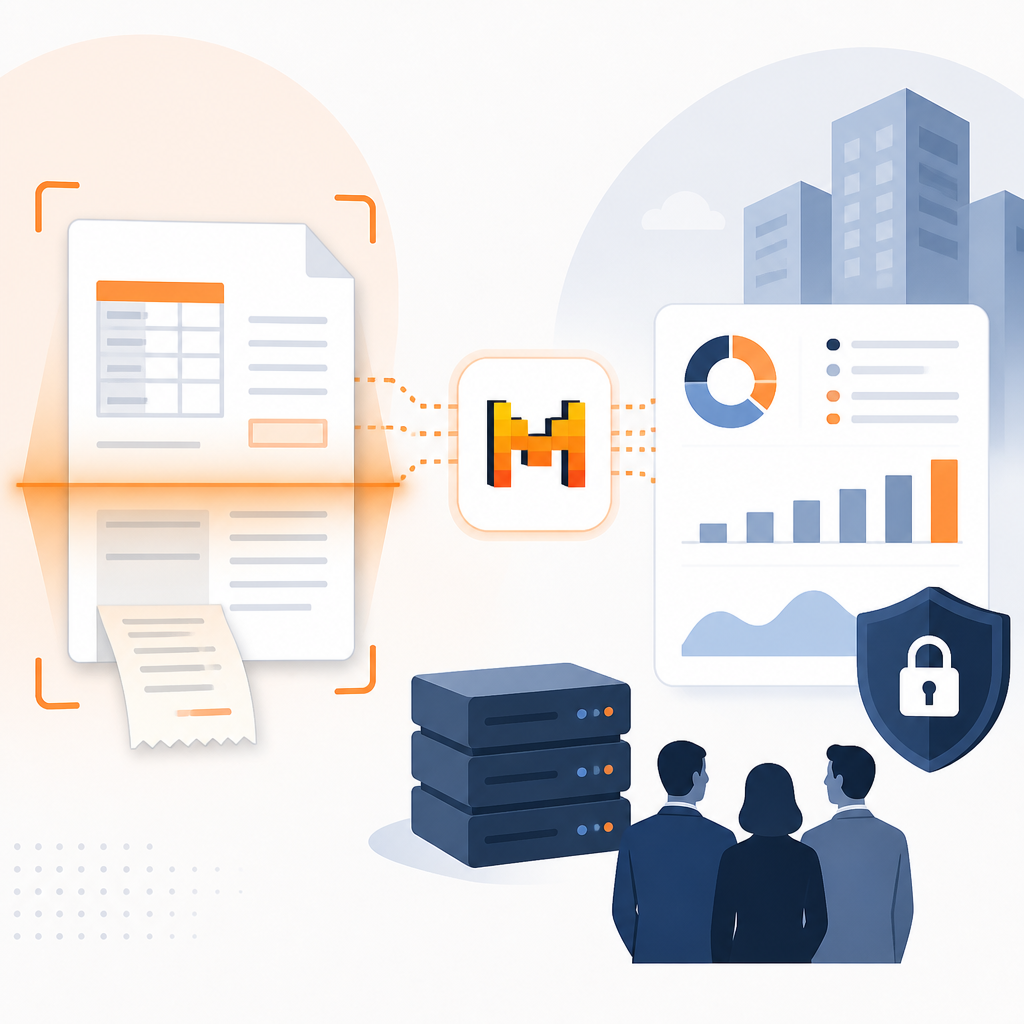
That distinction sounds small until you build around it. Traditional OCR gives you text and leaves your code to guess where headings end, where tables begin, and which numbers came from which cell. OCR 4 makes those decisions part of the output.
Mistral says the model covers 170 languages across 10 language groups, including lower-resource languages that often lose accuracy first in older OCR pipelines. For global teams, that is more than a marketing line; it affects whether one extraction system can handle a full back office.
- Inputs: PDF, DOC, PPT, and OpenDocument
- Outputs: bounding boxes, block types, and confidence scores
- Coverage: 170 languages across 10 language groups
- Deployment: Mistral API, Amazon SageMaker, and Microsoft Foundry
Why structured output changes the workflow
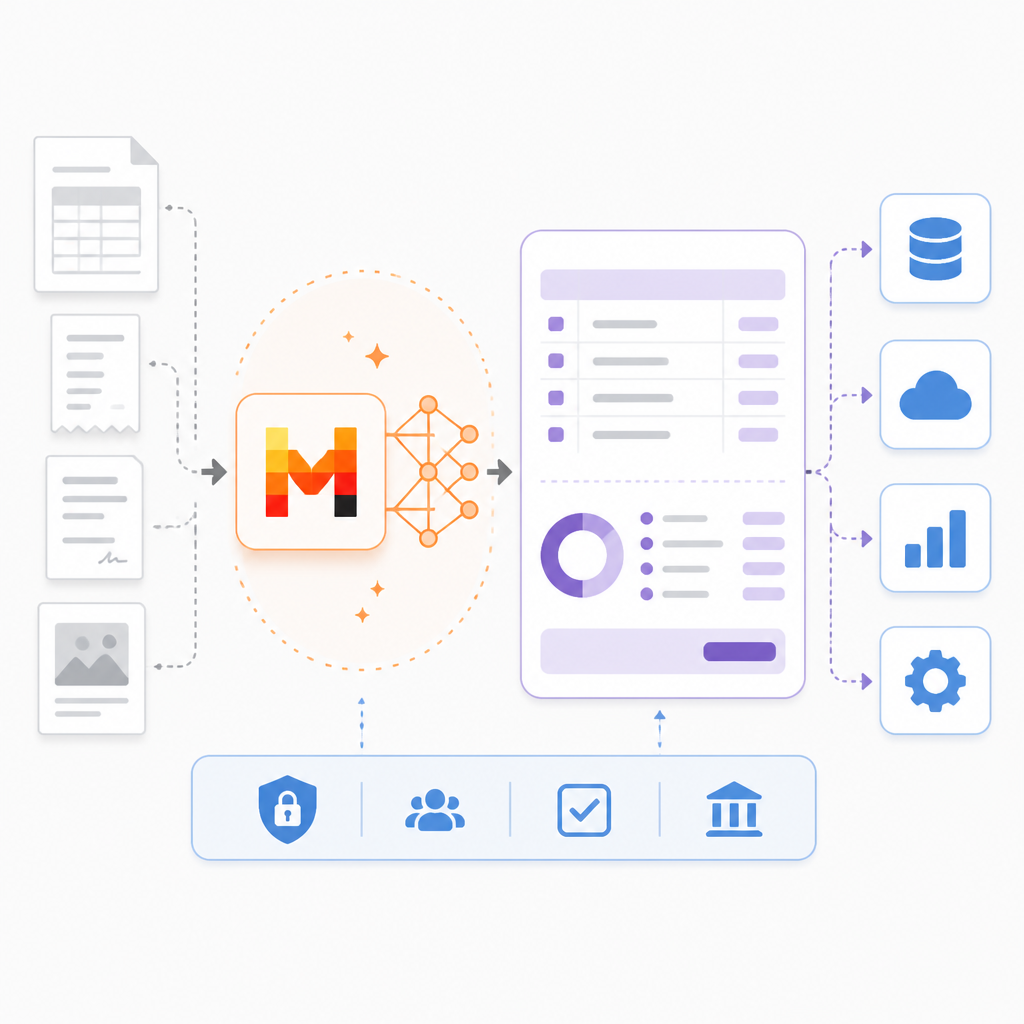
The real upgrade in OCR 4 is not cleaner text. It is the combination of page coordinates, block labels, and confidence scores in one output object. That lets a pipeline trace a value back to the exact region where it was read, which is what audit-heavy systems need.
Bounding boxes matter because they preserve provenance. If a claims system extracts a policy number or a compliance workflow pulls a signature, the system can point back to the source region instead of treating the result like an unverified string.
“Mistral OCR 4 extracts and structures content from a wide range of documents. Where previous generations focused on converting a page into clean text and tables, OCR 4 returns a structured representation of the document.”
Mistral, OCR 4 announcement
That quote captures the product shift better than any benchmark chart. OCR 4 is trying to remove a layer of glue code that teams used to write by hand just to separate a title from a table or a signature from body text.
There is also a second product to keep separate from the base model. Mistral Document AI costs $5 per 1,000 pages and uses a second-pass model call to reshape extracted content into custom JSON schemas. If your output has to fit a fixed business form, that is the mode to compare.
The cost story is stronger than the benchmark story
Pricing is where OCR 4 becomes hard to ignore. The standard API costs $4 per 1,000 pages, batch mode drops that to $2, and schema-driven Document AI lands at $5. Those numbers are low enough to change build-versus-buy decisions for document-heavy teams.
At 100,000 pages per year, batch OCR 4 costs about $200. The same volume on Azure Document Intelligence custom extraction comes out to about $3,000. That is a 15x gap, and it is the kind of gap finance teams notice immediately.
Azure’s Read tier is cheaper at $1.50 per 1,000 pages, but it returns text without the structured output that makes OCR 4 easier to automate against. That makes it a different product category, not a direct substitute.
- OCR 4 batch: $2 per 1,000 pages
- OCR 4 standard: $4 per 1,000 pages
- Document AI: $5 per 1,000 pages
- Azure Document Intelligence custom: $30 per 1,000 pages
- Google Form Parser: about $30 per 1,000 pages
The comparison with self-hosted models needs a separate note. Baidu Unlimited-OCR may avoid per-page licensing, but you still pay for GPUs, deployment, and maintenance. “Free” software is rarely free at the throughput level enterprises care about.
That is why OCR 4’s pricing matters more than its marketing copy. It gives teams a managed service price that can be compared directly with infrastructure costs, and that is easier to budget than open-ended internal operations.
Benchmarks help, but they do not settle the case
Mistral reports an OlmOCRBench score of 85.20 and says OCR 4 is the top overall model. That claim needs caution. The public OlmOCRBench leaderboard, last updated before OCR 4’s launch, places other models ahead of it.
On that public board, Infinity-Parser2-Pro scores 87.6 and Chandra-2 scores 85.9. OCR 4’s 85.20 is a vendor-stated figure that has not yet been independently reproduced on the public leaderboard.
That does not make the model uninteresting. It means the benchmark story should be read as directional, not final. For most enterprise buyers, the more important questions are whether the model is accurate enough, traceable enough, and cheap enough to run at scale.
- OlmOCRBench score claimed by Mistral: 85.20
- Public leaderboard top score before launch: 87.6
- Second place on the public board: 85.9
- Public benchmark size: 7,010 unit tests across 1,403 PDFs
That benchmark also has a margin of error of roughly a point either way, which means small score differences should not be over-read. In practice, document workflows fail more often because of bad schemas, messy inputs, or weak review logic than because a model is 1 point behind a rival.
Why self-hosting matters for enterprise buyers
OCR 4 is available through Mistral’s hosted products and in self-hosted form as a single-container deployment. That matters for regulated industries, especially when document data has to stay inside a specific jurisdiction or private network.
This is also where the timeline matters. The EU AI Act’s high-risk obligations begin arriving soon, and document processing systems used in hiring, finance, health, and public services will feel that pressure first. A self-hosted commercial model is not the same thing as open weights, but it gives teams more control over data flow.
Mistral is also moving fast as a company. The source material says it is targeting €1 billion in revenue in 2026, up from roughly €200 million, and it has reportedly discussed a funding round near €3 billion at a valuation around €20 billion. Those numbers explain why document AI pricing is being used to win the ingestion layer for enterprise search and RAG systems.
For teams deciding whether to test OCR 4, the practical question is simple: do you need raw text, or do you need structured extraction that can feed downstream automation with less custom code? If it is the second case, OCR 4 is worth a pilot now, not after the next procurement cycle.
For related reading, see our guide to enterprise document extraction and our breakdown of self-hosted AI for compliance teams.
What to watch next
OCR 4 will be judged less by launch-day claims and more by how it behaves inside real workflows. The biggest tests are simple: can it keep confidence scores useful under messy scans, can it preserve traceability across long documents, and can teams justify the cost difference against older OCR stacks?
If Mistral keeps the pricing where it is and the structured output holds up in production, OCR 4 has a strong case in invoice processing, claims intake, contract review, and multilingual ingestion pipelines. If the benchmark gap widens or the self-hosting path becomes harder to operate, buyers will treat it as one more option in a crowded market.
The next question is not whether OCR 4 can read documents. It is whether your team wants extraction as a service or extraction as infrastructure.
// Related Articles
- [TOOLS]
Cloudflare’s policy turns crawlers into paid access
- [TOOLS]
Visual Studio turns Copilot into an IDE workflow
- [TOOLS]
Databricks adds AI Gateway inference tables for served models
- [TOOLS]
BASIC09 gets a new LLVM-based compiler
- [TOOLS]
9 Cursor alternatives that beat lock-in
- [TOOLS]
AI视频生成工具的胜负手,已经不是单次生成而是全流程生产