OpenAI’s June 2026 push spans agents, payments, and legal heat
OpenAI’s June 2026 news mix shows a company scaling agents, entering payments, and facing fresh legal and regulatory pressure.

OpenAI is expanding agents and payments while facing new legal and regulatory pressure.
OpenAI spent June 2026 doing what big AI companies do when they are trying to become infrastructure: it shipped acquisitions, signed platform deals, and drew fresh scrutiny at the same time. The numbers tell the story fast. ChatGPT hit 1 billion monthly app users in May, Codex passed 5 million weekly users, and the company filed a confidential S-1 just days before a coalition of 42 state attorneys general opened an investigation.
| Signal | Number | What it means |
|---|---|---|
| ChatGPT app users | 1 billion monthly active users | Consumer reach is now massive |
| Codex usage | 5 million weekly users | Developer tools are scaling quickly |
| Codex growth | 400% since earlier this year | Agentic coding demand is rising |
| OpenAI IPO filing | Confidential S-1 on June 8, 2026 | Public-market pressure is coming |
| State AG probe | 42 attorneys general | Regulatory attention is widening |
OpenAI is turning ChatGPT into a platform, not a product
Get the latest AI news in your inbox
Weekly picks of model releases, tools, and deep dives — no spam, unsubscribe anytime.
No spam. Unsubscribe at any time.
The biggest pattern in this batch of news is simple: OpenAI is moving from “chat app” to “operating layer.” That shift shows up in the Ona acquisition, the Codex growth numbers, and the company’s push into longer-running agent workflows. Ona brings secure cloud execution and orchestration into Codex, which matters because a lot of useful agent work is not a five-second prompt. It is the kind of job that runs for hours, pauses for approvals, retries after failures, and needs a place to keep state.
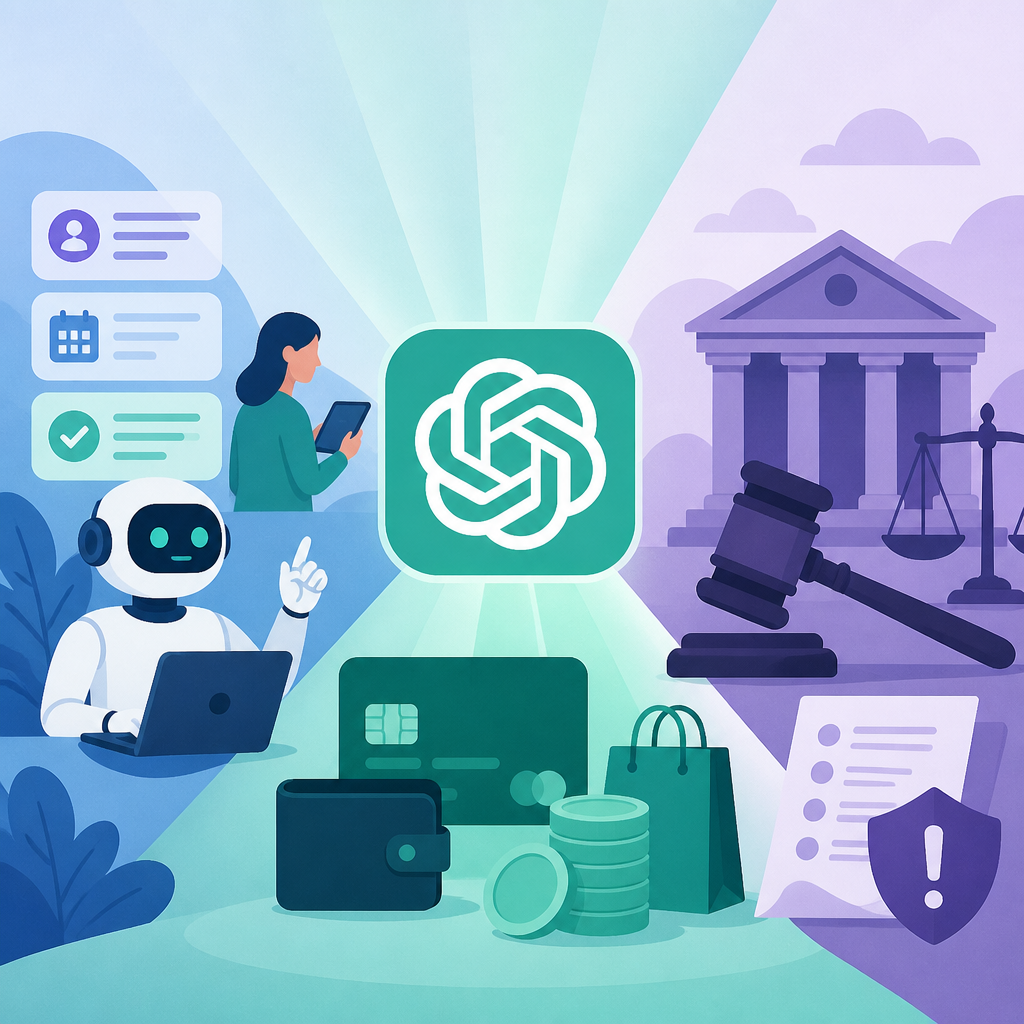
OpenAI said more than 5 million people use Codex each week, up 400% since earlier this year. Ona said it has helped 2 million developers work in secure, reproducible cloud environments. Those are the kinds of figures that tell you this is not a side project. OpenAI is trying to make coding agents dependable enough for real teams, not just demo videos.
If you want a clean read on the strategy, compare the parts: ChatGPT handles distribution, Codex handles developer workflows, and Ona adds the execution layer that makes long-running tasks practical. That is a much bigger bet than “better autocomplete.”
- Codex is already past 5 million weekly users.
- Ona has 2 million developers using its cloud environment model.
- OpenAI says Codex usage is up 400% since earlier this year.
- The deal adds persistent execution for multi-step agent tasks.
Payments make the agent story real
The Visa partnership is the other big tell. OpenAI is no longer just talking about agents that answer questions or write code. It is working on agents that can spend money inside guardrails. Visa says its collaboration with OpenAI connects tokenization, authorization, agent identification, and fraud monitoring so AI agents can initiate payments within user-set limits.
That sounds abstract until you picture the product shape. A ChatGPT-powered agent could book something, pay for it, and verify the transaction without bouncing the user through half a dozen tabs. The catch is control. Visa and OpenAI are both framing this around caps, merchant restrictions, and approval flows, which makes sense because payment autonomy without guardrails is a fast path to fraud.
“AI agents will transform commerce,” Jack Forestell said in Visa’s announcement, adding that Visa wants transactions to stay “trusted, secure, and seamless.”
That quote matters because it reveals where the money is. If OpenAI can make agents useful and safe enough to transact, it gets closer to a system where the model is not just generating text, it is taking action in the economy. That is a very different business.
- Visa is wiring in tokenization and fraud monitoring.
- OpenAI says agents will operate inside user-set guardrails.
- Axios reported spending caps, merchant restrictions, and approval workflows.
- The Associated Press said the integration will work with merchants that accept Visa.
Regulators and courts are closing in
The same week OpenAI was talking about growth, it was also dealing with legal pressure. A U.S. federal judge dismissed xAI’s trade-secret lawsuit against OpenAI with prejudice, which means the case is over unless a higher court changes the outcome. Reuters reported that Judge Rita Lin said further amendment would be futile. For OpenAI, that is a clean legal win. For Elon Musk’s xAI, it is the second loss against OpenAI in about four weeks.
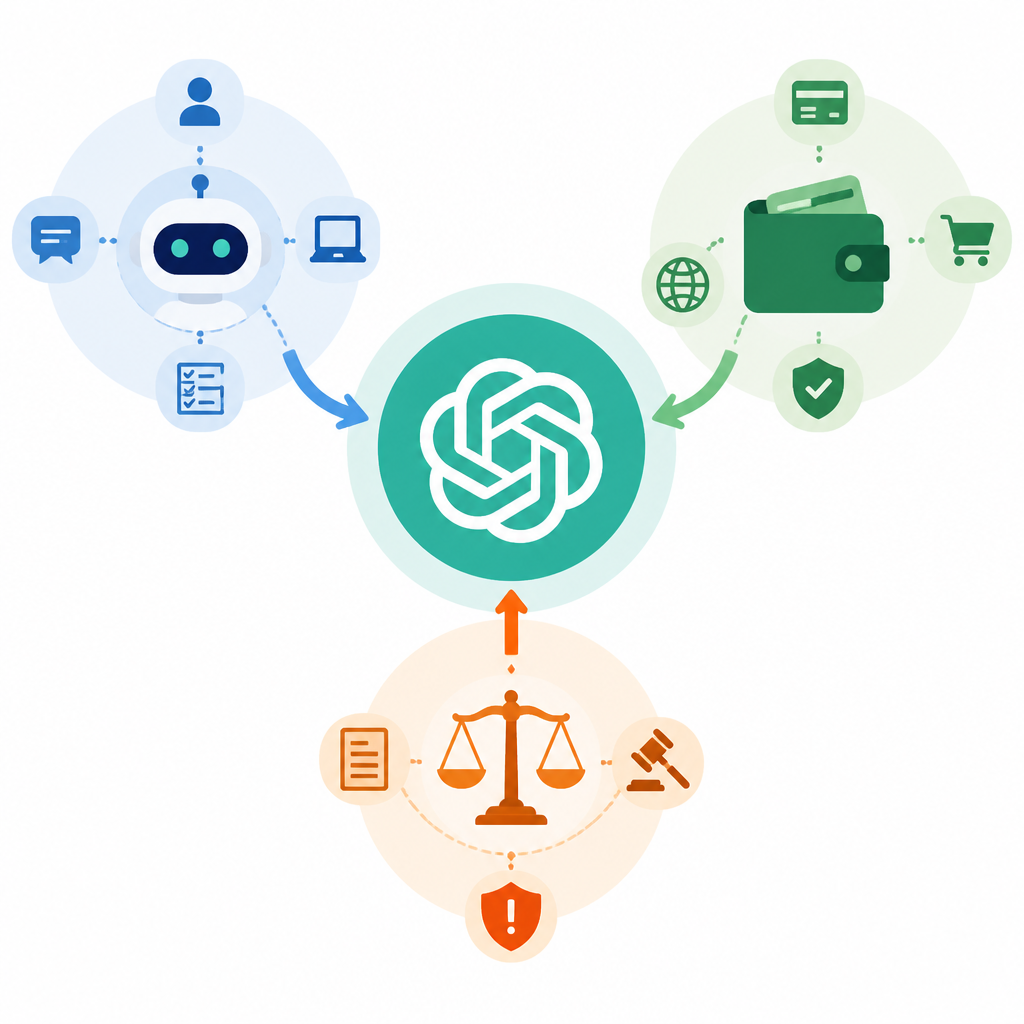
Then comes the broader regulatory picture. A coalition of 42 state attorneys general opened an investigation into OpenAI, with New York Attorney General Letitia James’ office issuing a subpoena on advertising, retention, consumer and health data, minors and seniors, model performance, and internal policies. That is a wide net. It is also a sign that OpenAI’s user base is now big enough to draw the kind of scrutiny that usually comes with consumer platforms, not just software tools.
The timing matters. The probe became public only days after OpenAI filed confidentially for an IPO. That does not prove causation, but it does tell you how the outside world now reads the company: not as a research lab, but as a system with social, commercial, and political consequences.
- xAI’s lawsuit was dismissed with prejudice.
- The AG investigation involves 42 states.
- The subpoena covers ads, retention, minors, seniors, and health data.
- OpenAI filed a confidential S-1 on June 8, 2026.
The money story is getting harder to ignore
OpenAI’s scale is impressive, but scale also changes the economics. SemiAnalysis bought every OpenAI and Anthropic subscription tier and maxed out usage with long-horizon coding and agent tasks. TechSpot reported that a fully used $200 ChatGPT Pro plan could cost OpenAI about $14,000 per month in API-equivalent compute, while a $20 ChatGPT Plus plan maps to roughly $700 in API spend.
That gap is the real story. Consumer pricing looks cheap because heavy users are subsidized by the average user mix, and agentic workloads are expensive. SemiAnalysis also estimated that OpenAI’s margins turn negative above 11.4% utilization for ChatGPT Plus and Pro 5x, with zero gross margin near 5.7% on top-tier plans. Anthropic’s breakpoints sit higher, around 20% and 10%, which suggests it is better insulated when usage gets intense.
Put those numbers next to the user growth and the IPO filing, and the picture gets sharper. OpenAI is scaling fast, but its economics depend on keeping a delicate balance between light users, power users, enterprise contracts, and infrastructure costs.
- $20 ChatGPT Plus maps to about $700 in API-equivalent spend.
- $200 ChatGPT Pro can map to about $14,000 in API-equivalent spend.
- OpenAI’s margin turns negative above 11.4% utilization on some plans.
- Anthropic’s comparable breakpoints are around 20% and 10%.
OpenAI is entering its next phase in public
The throughline across all these stories is that OpenAI is becoming harder to classify. It is a consumer app, a developer platform, a payments partner, a research shop, and now an IPO candidate with legal baggage. That combination is awkward, but it is also what happens when a company grows from product into infrastructure.
My read is that the next six months will be about one question: can OpenAI make agentic workflows useful enough to justify their cost while keeping regulators, partners, and investors onside? If the answer is yes, Codex, ChatGPT, and the payment stack start to look like pieces of one business. If the answer is no, the company will spend a lot more time explaining compute bills than shipping features.
For a related look at how AI platforms are changing developer workflows, see our coverage of recent model and agent news.
// Related Articles