Polonius Alpha changes Rust borrow checking now
4 ways Polonius Alpha on Rust nightly removes false borrow-checker errors and what to test before stabilization.

How do I try Polonius Alpha on Rust nightly and what will it fix?
Polonius Alpha is now testable on nightly Rust and fixes several false borrow-checker errors.
| Item | What it changes | Cost | Try it on |
|---|---|---|---|
| Polonius Alpha | Flow-sensitive borrow checking | 10–20% slower compiles in some cases | nightly-2026-08-06 or later |
| NLL | Current default borrow checker | Faster, but less precise | Stable Rust |
| Unsafe workarounds | Temporary fixes for rejected safe code | Maintenance burden | Libraries and apps with borrow-checker pain |
1. Conditional inserts that NLL rejects
Get the latest AI news in your inbox
Weekly picks of model releases, tools, and deep dives — no spam, unsubscribe anytime.
No spam. Unsubscribe at any time.
Polonius Alpha is most useful when a borrow ends in one control-flow branch, but the current checker acts as if it might still be alive. The classic case is a conditional lookup followed by an insert: NLL can reject code that is already safe, while Polonius tracks the exact loan at each point in the flow and accepts it.

That matters for everyday Rust code that uses maps, caches, and “get or create” patterns. If you have been cloning values or reshaping logic just to satisfy the compiler, this is the first pattern to test.
- Common shape:
match map.get_mut(key) { Some(v) => return v, None => {} } - Typical follow-up:
map.insert(...) - Likely win: fewer unnecessary clones or temporary variables
2. Lending iterators with self-reborrows
Another target is lending iterator code built with GATs, where a loop reborrows from self and NLL wrongly keeps the borrow alive too long. That shows up in iterator adapters such as filters, where safe code gets blocked by a checker that is reasoning at the wrong level.
For library authors, this is a practical signal. If you have used unsafe code or a crate workaround to model a lending iterator, Polonius may let you simplify the implementation without changing the API.
- Watch for loops that call back into
self - Relevant to GAT-based iterator adapters
- Known pain point tied to GitHub issue #92985
3. Safer replacements for workaround crates
Polonius Alpha can make some workaround crates unnecessary over time. The article points to polonius-the-crab as an example of a library that exists to paper over borrow-checker limits today. Once Polonius stabilizes, code that depended on those escape hatches should need less special handling.
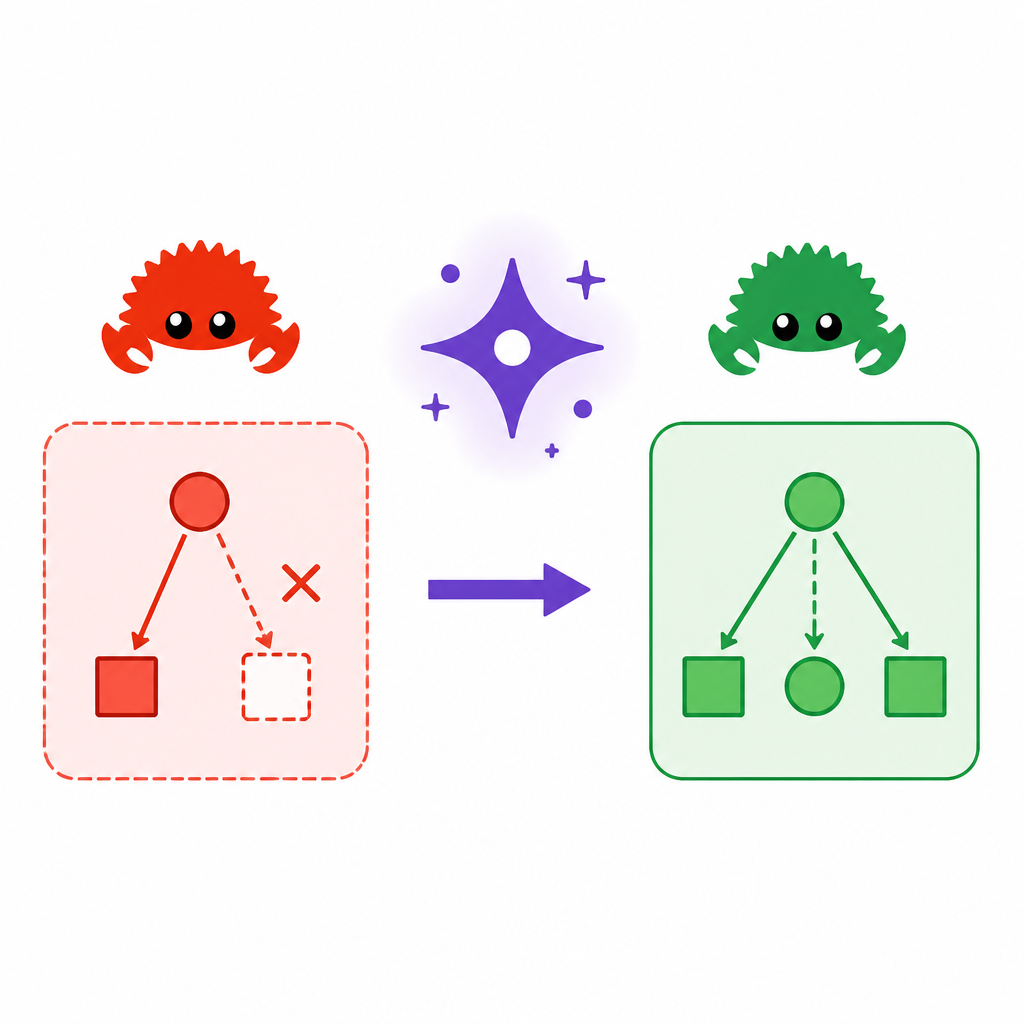
This does not change Rust’s safety model. Unsafe code does not become newly allowed, and safe code does not become unsafe. The change is narrower: fewer false positives from the compiler, especially in code that already preserves memory safety.
- Good candidates: helper crates built around borrow-checker workarounds
- Audit target: places where you added
clone()only to appease the compiler - Keep in mind: this is still nightly-only testing
4. A nightly test path before stabilization
Rust developers can try Polonius Alpha now on nightly builds from August 6 onward. The team says there are no known blocking issues, and stabilization is expected in months, not years. That makes this a short feedback window for real projects, not just toy examples.
If you want to test it, switch toolchains and compare builds with Polonius on and off. The point is to find both false positives that disappear and regressions that still need attention before stabilization.
rustup override set nightly
RUSTFLAGS="-Zpolonius=next" cargo build
RUSTFLAGS="-Zpolonius=off" cargo build
5. The compile-time trade-off
Polonius did not reach nightly without cost. The article says the current alpha can add 10–20% to compile times in some cases, and that is the main reason it took years to move from research to shipping. The team now считает that price acceptable for the extra precision.
For large codebases, that means you should watch build times closely while testing. Smaller projects may barely notice, but teams with long CI runs should measure before they celebrate the extra compiler wins.
- Expected effect: slower builds on some projects
- Best way to evaluate: compare CI timings on real code
- Decision point: whether fewer false positives justify the extra compile time
How to decide
If your codebase already has borrow-checker workarounds, test Polonius first. It is most useful for teams writing maps, caches, iterators, and other control-flow-heavy Rust where NLL still gets in the way.
If your main concern is fast builds and your code compiles cleanly today, you can wait. But if you want to help shape stabilization before it lands, nightly testing now is the window that matters.
// Related Articles
- [IND]
Anthropic’s Q2 revenue tops $11.5 billion
- [IND]
Rust’s best work this week is less about agents and more about simple…
- [IND]
Anthropic’s IPO Rumor Meets Investor Fatigue
- [IND]
Grok 4.6 makes frontier AI cheaper for builders
- [IND]
Grok 4.6 matches top models as SpaceX eyes worker data
- [IND]
Wall Street Should Put Real Assets On Blockchains, Not Just Pilot Them