ParVL scales multimodal LLMs in parallel
ParVL reuses one multimodal backbone across parallel branches to shift compute between vision and language tasks.
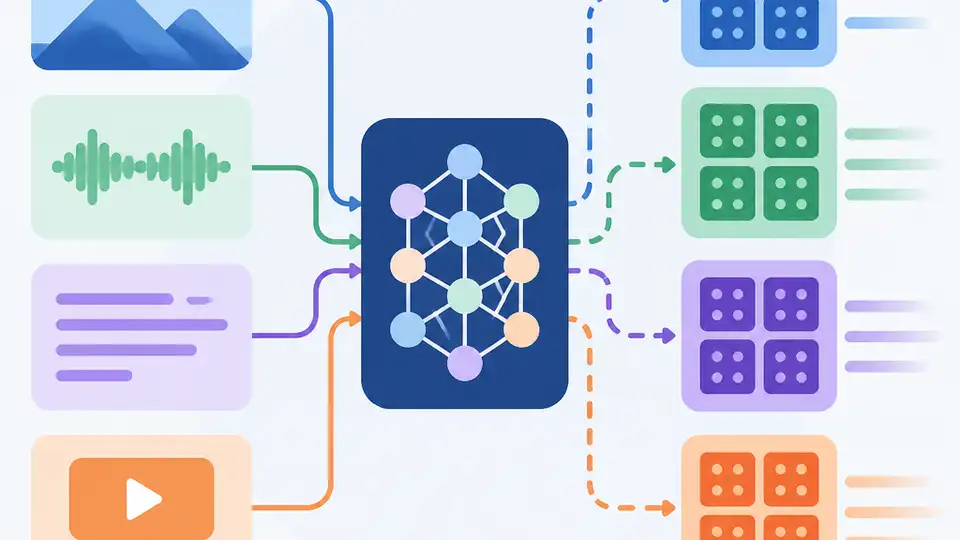
ParVL moves multimodal compute from fixed single-path scaling to parallel branches that share one backbone.
- Research org: Unspecified in arXiv abstract
- Core data: roughly 13B tokens
- Breakthrough: Shared-backbone parallel branches with branch-specific prefix parameters
Until now, scaling multimodal large language models usually meant making the model bigger or spending more compute in a longer sequential pass. ParVL takes a different path: it tries to scale compute in parallel while reusing the same vision transformer and LLM backbone. For engineers, the interesting part is not just “more compute,” but the ability to reassign that compute between vision and language depending on the task.
What problem ParVL is trying to fix
Get the latest AI news in your inbox
Weekly picks of model releases, tools, and deep dives — no spam, unsubscribe anytime.
No spam. Unsubscribe at any time.
Most multimodal scaling strategies have a structural downside. If you expand parameters, memory grows. If you expand sequential inference computation, latency grows. The abstract also points to a more subtle issue: many existing methods keep the compute split between the ViT and the LLM fixed, even though different tasks may need different amounts of visual processing versus language reasoning.
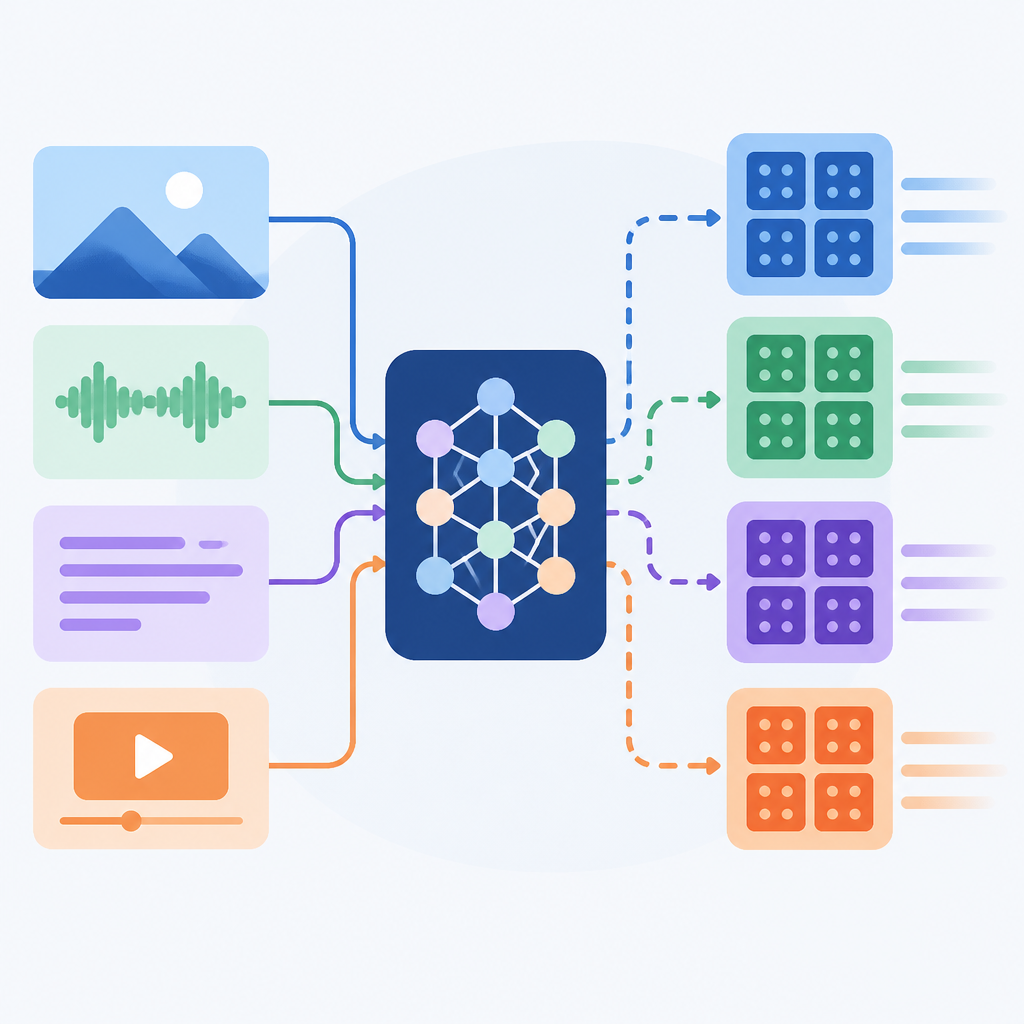
That rigidity matters in practice. A model that is too biased toward the language side may underuse visual detail, while a model that over-invests in vision may waste capacity on tasks that need more textual reasoning. ParVL is aimed at that allocation problem directly.
How the method works in plain English
ParVL stands for Parallel Vision-Language scaling, and the key idea is simple: keep the existing ViT and LLM backbone parameters, then reuse them across multiple vision and language branches. Instead of one rigid path through the model, ParVL creates parallel computational streams that share the same backbone.
Each branch gets its own prefix parameters on top of the shared backbone. In other words, the branches are not separate full models; they are lightweight ways of steering the same backbone into different computation patterns. The paper then trains the whole system end-to-end with full-parameter supervised fine-tuning.
The authors say they train on roughly 13B tokens. That is the main training-scale detail given in the abstract, but the abstract does not provide benchmark tables or exact task scores. So the claim here is about the framework and its comparative behavior, not a published leaderboard number.
What the paper actually shows
The paper says ParVL improves overall multimodal performance over same-recipe single-branch baselines. That is an important qualifier: the comparison is against baselines built with the same recipe, not a broad sweep of every multimodal model family.
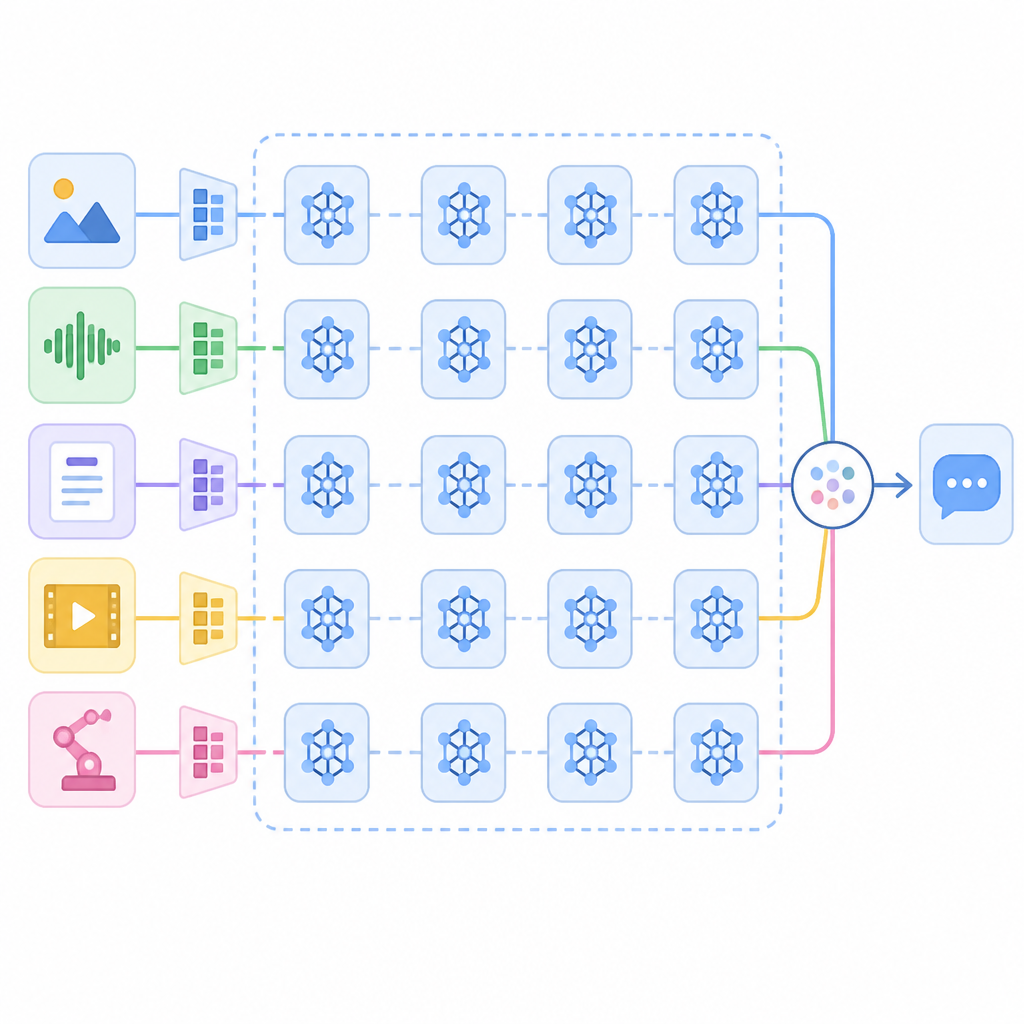
The other key result is that the best vision-language allocation is task-dependent. The abstract explicitly says the optimal split between the ViT encoder and LLM decoder varies across tasks. That means there is no single universal allocation that wins everywhere, which is exactly the kind of finding platform teams and model builders need before they lock in an architecture.
What the abstract does not give us is equally important. It does not include benchmark names, exact scores, latency numbers, memory numbers, or ablation details. So while the paper claims better overall multimodal performance, the raw note does not let us quantify how much better.
Why developers should care
If you build multimodal systems, ParVL points to a useful design pattern: treat compute allocation as a tunable resource, not a fixed architectural constant. That matters when you are deciding how much budget to spend on image understanding versus language generation, especially when different products or tasks have different bottlenecks.
The framework also suggests a practical way to scale without simply stacking more parameters or adding more sequential steps. Reusing the backbone across branches could make scaling feel more modular, at least conceptually, because the added capacity comes from parallel computation paths rather than a monolithic expansion.
There is still a clear limitation from the abstract alone: we do not know the runtime cost, memory overhead, or implementation complexity of the parallel branches. We also do not know how sensitive ParVL is to the choice of prefix parameters, how many branches are used, or whether the gains hold across all multimodal workloads.
What to watch next
The most interesting open question is whether this parallel allocation idea generalizes beyond the specific setup in the paper. If the best ViT-versus-LLM split changes by task, then the next challenge is learning that split automatically rather than choosing it manually.
Another question is how this design behaves in production settings where latency and memory budgets are strict. The abstract argues against sequential scaling overhead, but it does not prove that the parallel version is cheap enough for real deployment. For practitioners, that means ParVL is a promising architecture idea, but not yet a complete systems answer.
Still, the core message is clear: multimodal scaling does not have to mean a bigger single path. ParVL shows that shared-backbone parallel branches can be used to redistribute compute between vision and language, and that this redistribution can improve performance over the single-branch baseline the authors tested.
- ParVL rethinks multimodal scaling as a compute-allocation problem, not just a size problem.
- The method uses shared ViT/LLM backbones with branch-specific prefix parameters.
- The abstract reports better overall performance, but no benchmark numbers are provided.
// Related Articles
- [RSCH]
Anthropic’s security evals are failing on the real internet
- [RSCH]
WorldCup Arena Tests LLM Forecasting Live
- [RSCH]
SocietyBench tests social-event forecasting
- [RSCH]
onepot-Bench 0 tests lab-aware chemistry models
- [RSCH]
AURORA-LM brings diffusion to text latents
- [RSCH]
Kimi K3 Is Already Doing Its Own Job