Wall Street Should Put Real Assets On Blockchains, Not Just Pilot Them
Major banks are right to move deposits and securities onto blockchains because the plumbing is finally ready.

When a corporate treasurer waits a day for cash to clear, or a back office team reconciles the same trade across four systems, the cost is not abstract. It is time, staffing, and risk baked into the market’s plumbing.
Major banks are moving deposits and securities onto blockchains because the old settlement stack is too slow.
Tokenization solves a plumbing problem Wall Street has ignored for too long
Get the latest AI news in your inbox
Weekly picks of model releases, tools, and deep dives — no spam, unsubscribe anytime.
No spam. Unsubscribe at any time.
Tokenization matters because it attacks the most expensive part of finance: coordination. In a conventional trade, brokers, custodians, clearinghouses, and banks each maintain their own records, then spend money making sure those records match. That is why settlement still relies on batch windows, handoffs, and exceptions. A blockchain ledger compresses those layers into a shared source of truth, which is exactly why JPMorgan’s Kinexys network can process more than $7 billion a day and has already handled over $4 trillion since launch.

That scale is not a crypto novelty. It is proof that large institutions will use tokenized rails when those rails reduce operational drag. Wells Fargo’s move to offer tokenized deposits to corporate and commercial clients follows the same logic. If JPMorgan and Citi already have live services, and Bank of America is in the shared Clearing House initiative, then tokenized deposits are no longer an experiment at the edge. They are becoming the default answer to a very old banking question: how do you move value faster without multiplying reconciliation work?
The market is moving because the economics are real, not ideological
The strongest case for tokenization is not philosophical. It is financial. Citi estimates tokenized securities could reach about $5.5 trillion by 2030, while Boston Consulting Group and ADDX put the potential market for tokenized illiquid assets at $16.1 trillion. Those numbers are not interchangeable, but they point in the same direction: Wall Street sees a large enough prize to justify rebuilding the infrastructure underneath it.
BlackRock’s launch of two tokenized money market products this month shows that the biggest asset managers are not waiting for a perfect standard before acting. They are chasing distribution, speed, and settlement efficiency. The Depository Trust & Clearing Corporation, which clears and settles roughly $15 trillion in U.S. securities trades per day, already processed its first live tokenized securities transactions in July and plans a broader launch in October. Once the market’s central pipes start carrying tokenized assets, the argument that this is just a side project collapses.
Wall Street is choosing tokenization because the alternative is fragmentation
The real competitive threat is not crypto speculation. It is financial infrastructure that stays frozen while clients demand instant movement of cash and collateral. Tokenized deposits and securities let banks and market utilities build shared rails across institutions, which is why The Clearing House initiative matters as much as any single bank announcement. A network only becomes useful when everyone can plug into it.
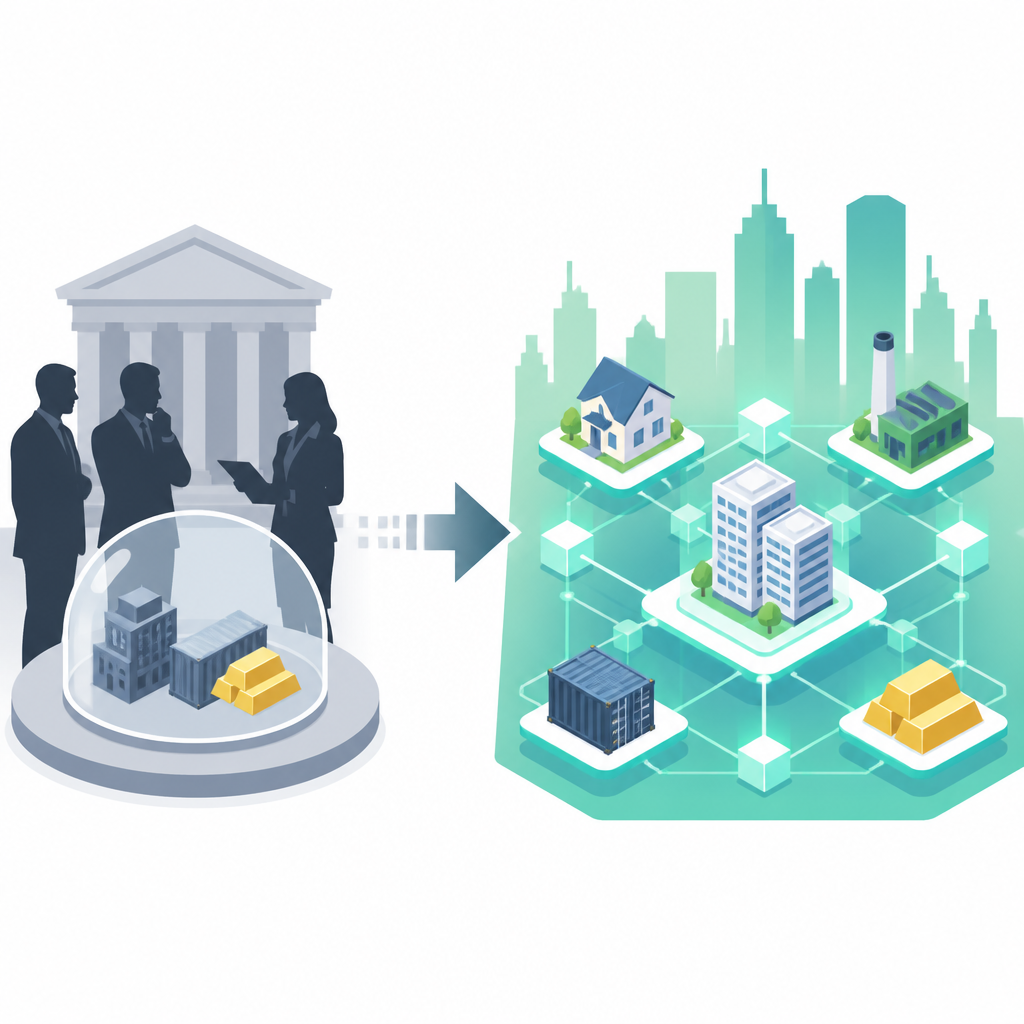
This is also why the “blockchain is too early” objection now sounds stale. The industry has already spent a decade proving that isolated pilots go nowhere. What changed is that the leading firms are no longer treating tokenization as a branding exercise. They are integrating it into deposits, money market funds, and settlement systems where the business case is measurable and the payoff is immediate.
The counter-argument
The skeptical view is strong: finance does not need a blockchain to move entries between trusted institutions. Banks already have databases, payment networks, and clearing systems that work well enough, and public blockchains still raise questions about governance, interoperability, privacy, and regulatory control. A lot of tokenization talk has also been inflated by crypto marketing, which makes some executives wary of buying into a vocabulary that has promised transformation before delivering it.
That critique is fair on one point: tokenization is not magic, and it does not erase the need for legal finality, custody rules, or supervision. But it misses the practical shift now underway. The winning model is not a public, permissionless free-for-all. It is a controlled institutional stack where banks, asset managers, and market utilities use shared ledgers to reduce reconciliation and speed settlement. If the new system preserves compliance and lowers operational friction, then the old objection is no longer decisive. It is just inertia with better branding.
What to do with this
If you are an engineer, build for interoperability, auditability, and fail-safe rollback, not for ideology. If you are a PM or founder, stop pitching tokenization as a revolution and sell it as infrastructure that cuts settlement time, reduces reconciliation, and opens new distribution channels. The institutions moving first are not chasing hype. They are standardizing the rails that will decide who controls market plumbing over the next decade.
// Related Articles
- [IND]
WorkBuddy Skills: 5 picks that fit real office work
- [IND]
GLM-5.3’s coding gains came from post-training
- [IND]
Anthropic’s data center push now has big capital backing
- [IND]
DailyArxiv turns arXiv keywords into a daily paper feed
- [IND]
Claude vs ChatGPT (2026): Is Claude Better?
- [IND]
CBDC Governance: Standards and Stakeholder Roles