QVal tests dense supervision before training
QVal is a training-free way to compare dense supervision signals for long-horizon LLM agents.

QVal is a training-free way to compare dense supervision signals for long-horizon LLM agents.
- Research org: Unspecified in arXiv abstract
- Core data: Over 1.2K evaluation experiments
- Breakthrough: Scores state-action pairs by Q-alignment to a reference policy
Long-horizon agents are where the messy parts of LLM systems show up. When one trajectory can stretch across hundreds or thousands of actions, you cannot rely on a single end-of-task reward to tell you which intermediate step was helpful and which one pushed the agent off course.
This paper is about that missing feedback loop. Instead of judging dense supervision methods only after they have been baked into a full training pipeline, the authors propose a way to compare the signals themselves first. That matters for engineers because it separates “is this supervision actually useful?” from “did the training setup happen to work?”
What problem QVal is trying to fix
Get the latest AI news in your inbox
Weekly picks of model releases, tools, and deep dives — no spam, unsubscribe anytime.
No spam. Unsubscribe at any time.
The abstract makes a simple complaint: outcome-only rewards are too sparse for long-horizon agent behavior. If an agent takes hundreds of actions before finishing a task, a single final reward does not tell you much about the quality of the individual decisions along the way.
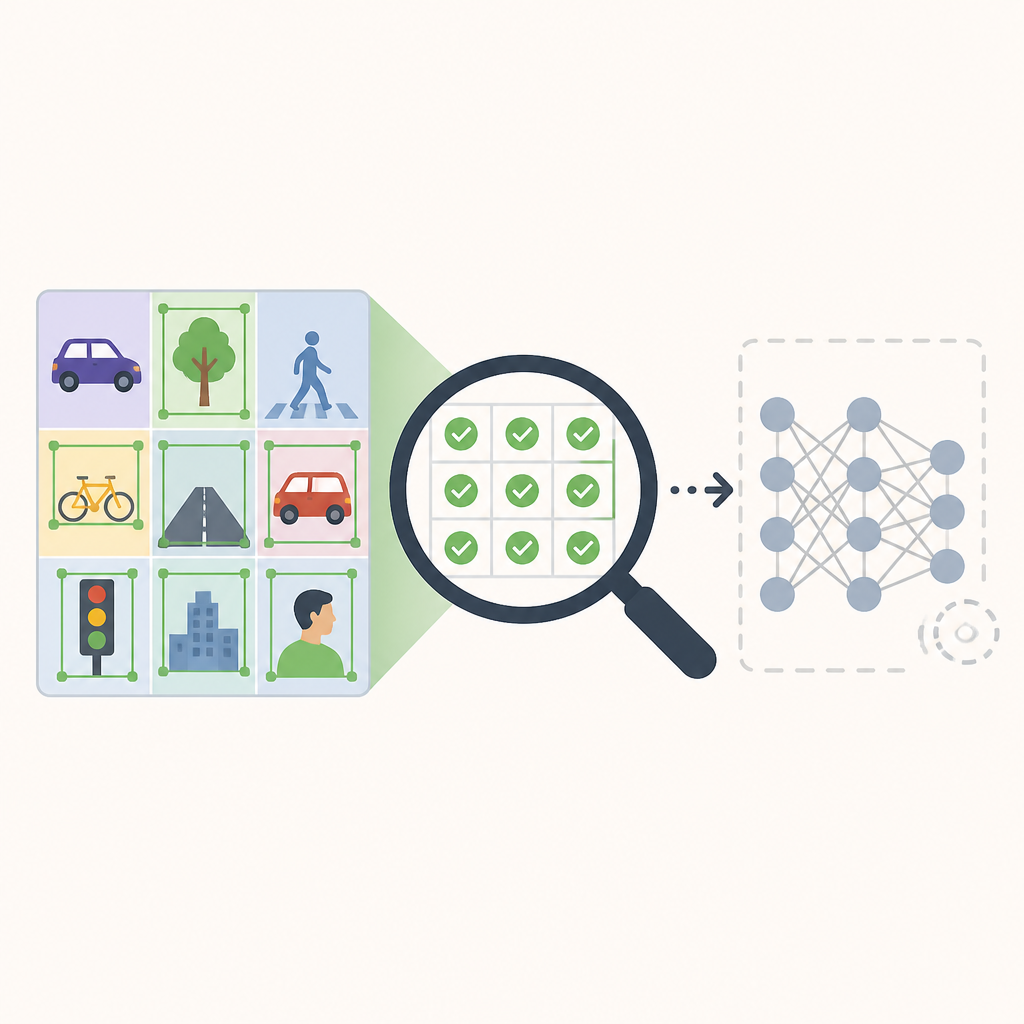
Dense supervision methods try to fill that gap by scoring intermediate steps. The paper names several families of these methods, including intrinsic confidence, self-distillation, and embedding similarities. In practice, though, people often evaluate these methods only by plugging them into a training pipeline and checking downstream performance.
That creates a problem for comparison. Training pipelines are expensive, and they introduce confounders that can blur the actual quality of the supervision signal. Worse, different methodological families may require different training setups, so they are not always being measured on the same ground.
QVal is the authors’ answer to that evaluation gap. It is meant to be a common testbed for dense supervision signals, so researchers can compare methods before committing to a full training run.
How the method works in plain English
The core idea is straightforward: given a state-action pair, QVal checks whether a method’s score is Q-aligned. In other words, does the signal rank actions the same way a strong reference policy would rank them by Q-values?
That framing is useful because it turns supervision quality into a direct ordering problem. If a method assigns higher scores to actions that the reference policy would consider better, then the signal is more aligned with what you would want the agent to learn.
The paper describes QVal as training-free. That is the key engineering detail. You can evaluate the signal itself without first running a full training pipeline, which makes iteration faster and reduces the chance that you are really benchmarking your optimization recipe instead of your supervision method.
The authors instantiate this idea as QVal-v1.0. According to the abstract, it is designed to be extensible to new environments and methods, so the testbed is not meant to be a one-off benchmark frozen around a single task family.
What the paper actually shows
The abstract gives a concrete scale for the evaluation: QVal-v1.0 benchmarks 21 dense supervision methods across four diverse environments and seven methodological families, with over 1.2K evaluation experiments across six open-weight model backbones.
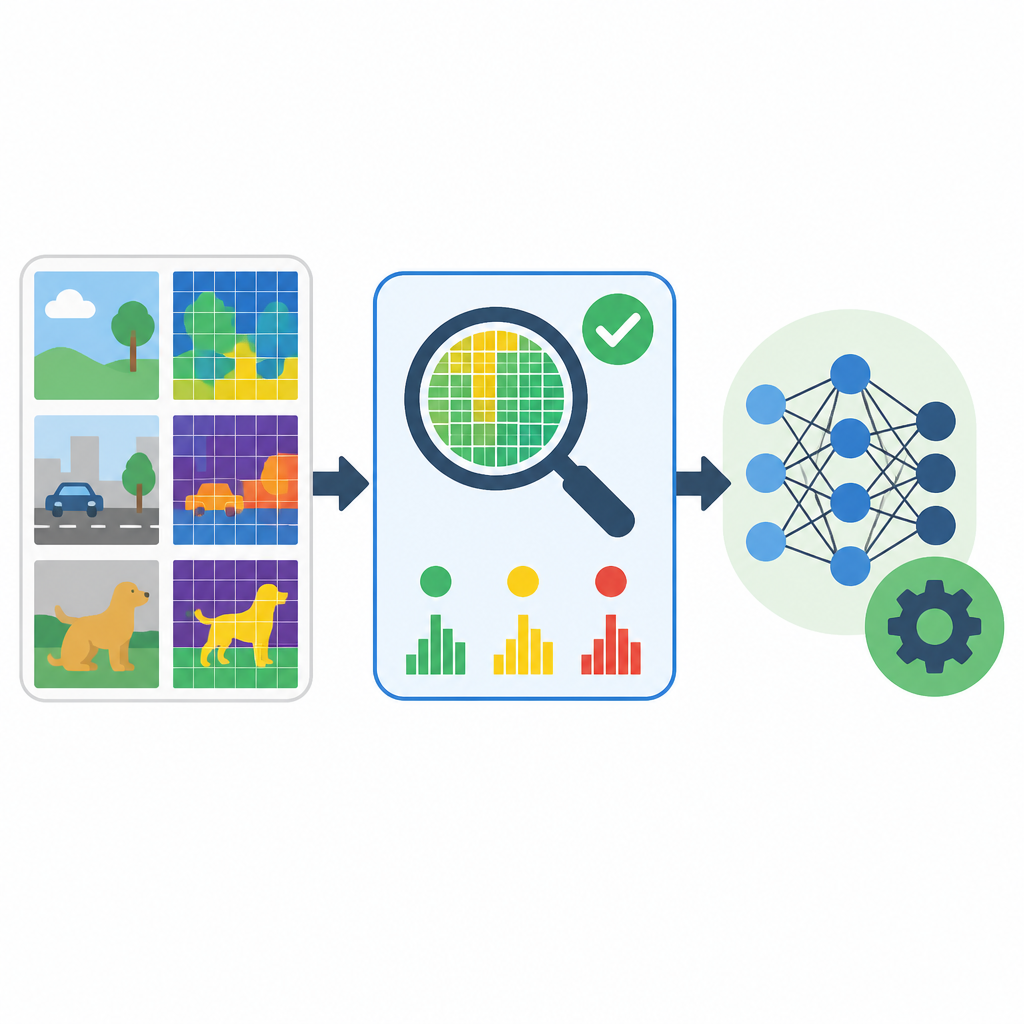
That is enough to say the comparison is broad, but the abstract does not provide the full benchmark table or per-task scores. It also does not include any single headline accuracy number, so there is no simple “X% better” takeaway here.
What it does report is the pattern of results. The authors say simple prompting baselines consistently outperform recent dense supervision methods from the literature. They also say performance clusters strongly by family. Those findings reportedly hold across model sizes, environments, and observation modalities.
For practitioners, that is the important part: some of the newer supervision ideas may not be paying off once you compare them on a common signal-quality axis. The family-level clustering also suggests that methodological choice matters in a structured way, not just as a grab bag of independent tricks.
Because the abstract does not give benchmark numbers for each method, the safest reading is not “prompting wins everywhere,” but rather “on this testbed, the simple baselines looked stronger than recent published methods.” That is still a meaningful result, especially for teams deciding where to spend training budget.
Why engineers should care
If you build agents, you probably care about two things: whether the agent gets better, and whether the thing you are optimizing actually reflects good behavior. QVal targets the second question directly.
That can save time in a development loop. Instead of waiting for a full training run to tell you whether a supervision signal is worth using, you can screen methods earlier and compare them under a shared evaluation lens.
It also helps reduce evaluation noise. When training engineering choices differ across methods, downstream performance can reflect implementation details as much as signal quality. A training-free testbed is a cleaner way to isolate the supervision method itself.
The paper also hints at a practical workflow shift: use QVal to iterate on dense supervision ideas before training, then reserve expensive training runs for the signals that look promising. For teams working on long-horizon agents, that is a more cost-aware way to explore the design space.
Limitations and open questions
The abstract is clear about what QVal does, but it is also clear about what it does not prove. It evaluates whether a signal is Q-aligned with a strong reference policy; it does not by itself prove that the signal will always produce the best trained agent.
That distinction matters. A supervision method can look good under a ranking-based test and still fail when combined with a specific optimizer, architecture, or environment-specific training recipe. QVal reduces confounding, but it does not remove the need for end-to-end validation.
There is also an implied dependency on the reference policy. Since QVal measures alignment to a strong reference-policy’s Q-values, the quality and suitability of that reference matter. The abstract does not spell out all implementation details, so readers will need the full paper to judge how robust that choice is across tasks.
Still, the contribution is useful even with those caveats. The paper argues for a cleaner pre-training benchmark for dense supervision signals, and it backs that argument with a fairly broad evaluation setup. For anyone building long-horizon LLM agents, that is a practical tool for deciding what to test first and what to leave behind.
Bottom line
QVal is less about a new agent policy and more about a new way to evaluate the signals that train agents. By measuring whether dense supervision methods rank actions the way a strong reference policy would, it gives researchers a cheaper, more direct way to compare ideas before spending on full training runs.
And according to the abstract, that comparison is not flattering to the latest wave of methods: simple prompting baselines come out ahead, and results cluster by method family. For developers, that is a reminder to benchmark the signal itself before assuming a more complex supervision scheme is automatically better.
- QVal evaluates dense supervision signals without running a full training pipeline.
- The abstract reports 21 methods, 4 environments, 7 families, and over 1.2K experiments.
- Simple prompting baselines reportedly outperform recent methods on this testbed.
Read the paper: QVal: Cheaply Evaluating Dense Supervision Signals for Long-Horizon LLM Agents.
// Related Articles
- [RSCH]
Long-horizon agents need harnesses first, not bigger models
- [RSCH]
Grok 4.6 puts frontier IQ on a budget
- [RSCH]
Anthropic's watermark fails the real dev workflow
- [RSCH]
HumanTracker fixes humanoid motion eval blind spots
- [RSCH]
OmniScientist aims for full-stack AI science
- [RSCH]
AutoDesign learns better poster-making harnesses