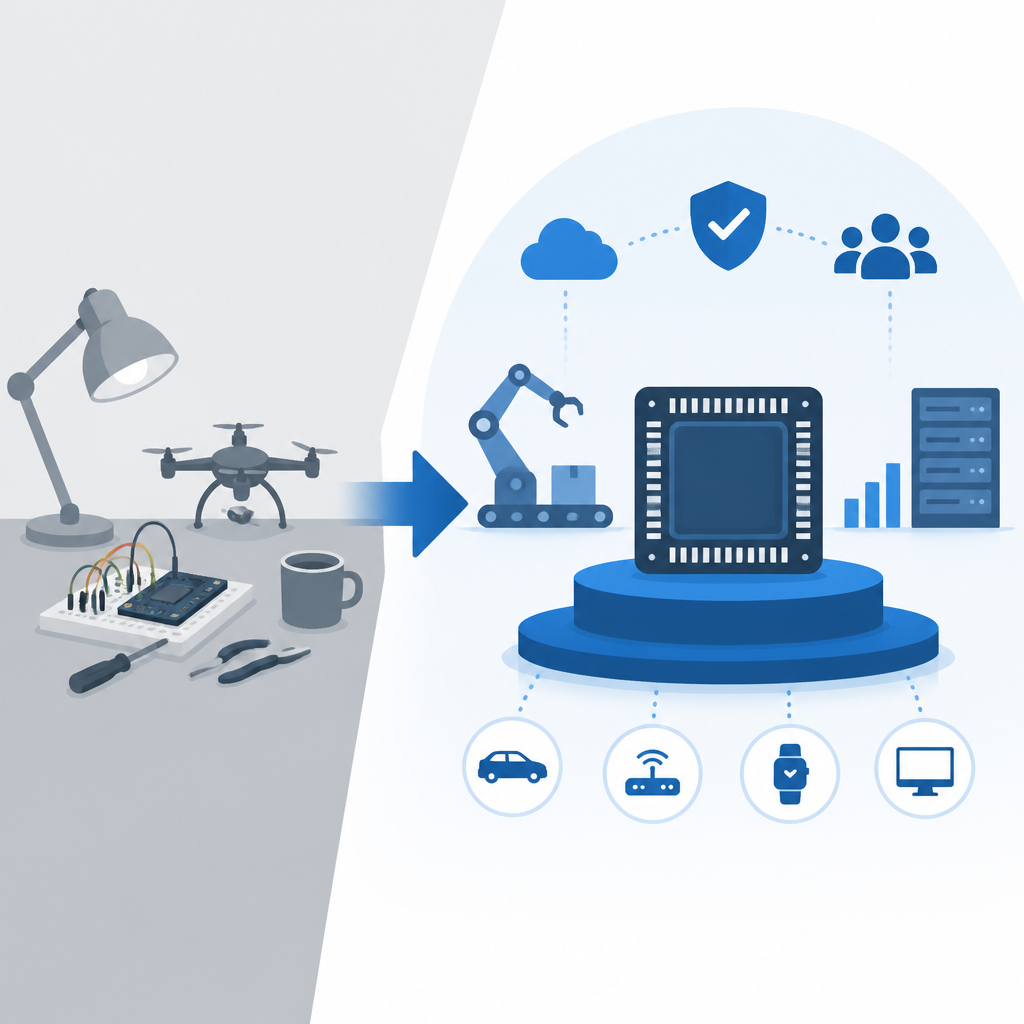
RISC-V is past the hobby phase and should be treated as a real platfo…
RISC-V has crossed into a real platform, with UEFI, ACPI, Linux distros, and cloud servers.

UEFI, ACPI, Linux, and cloud servers show RISC-V is now a real platform.
RISC-V is no longer a lab curiosity; it is a platform that serious software teams can target today.
The ecosystem is broad enough to matter
Get the latest AI news in your inbox
Weekly picks of model releases, tools, and deep dives — no spam, unsubscribe anytime.
No spam. Unsubscribe at any time.
The strongest evidence is not a single chip or board, but the breadth of the stack around it. The RISC-V ecosystem now includes bootloaders like U-Boot and GRUB, compilers like GCC and LLVM, debuggers like gdb and LLDB, and emulators such as QEMU. That is the shape of a usable platform, not a proof-of-concept.

Linux support is the clearest marker of maturity. Debian has official RISC-V support, Ubuntu ships RISC-V builds, and Fedora, openSUSE, Gentoo, NixOS, Rocky Linux, and Red Hat Enterprise Linux all appear in some form. Once a target reaches mainstream distribution support, the architecture stops being a side project and starts being part of normal release engineering.
Systems integration is the real milestone
Bootability and firmware support matter more than raw benchmark talk. RISC-V systems now boot with UEFI, and ACPI support arrived in version 6.6 of the specification. Those two pieces are the boring infrastructure that makes an architecture fit into existing server and desktop workflows, which is exactly where credibility is won.
The same pattern shows up in the operating system layer. FreeBSD, NetBSD, OpenBSD, Haiku, Tizen, OpenHarmony, and Android experimental ports all exist in the ecosystem, while embedded stacks like FreeRTOS, Zephyr, NuttX, RTEMS, and ThreadX fill out the lower end. That spread tells you the ISA is not trapped in one market; it is being pulled into multiple product classes at once.
Cloud and tooling prove commercial intent
Commercial adoption is the difference between an interesting architecture and an investable one. The article names Scaleway and Cloud-V as cloud providers with RISC-V servers. Even if the list is short, it matters because cloud availability forces vendors to care about provisioning, monitoring, images, and support, not just silicon demos.
The tooling ecosystem reinforces that point. RISC-V already has assemblers, disassemblers, decompilers, hypervisors, simulators, and language support spanning Rust, Go, Julia, Java, Zig, and more. When a platform reaches this level of tool coverage, engineering teams can port, test, debug, and ship on it without rebuilding their entire workflow from scratch.
The counter-argument
The best objection is simple: the ecosystem is still incomplete, and incompleteness still costs money. The article itself lists major gaps such as Microsoft Windows, .NET, VirtualBox, VMware ESXi, Microsoft Azure, and AWS. If your product depends on those exact layers, RISC-V is not ready for you.
That objection is correct in a narrow sense, but it does not overturn the larger conclusion. A platform does not need universal support to be real; it needs a coherent stack that can serve defined use cases. RISC-V already has that stack for Linux servers, embedded devices, and development tooling, which is enough to make it a legitimate production target.
The right conclusion is not that RISC-V has finished its journey. It is that the ecosystem has crossed the threshold where missing pieces are the exception, not the rule. That is the point at which serious teams start planning around it instead of dismissing it.
What to do with this
If you are an engineer, start by treating RISC-V like any other target architecture: validate your build, boot, test, and observability paths on one real board or VM. If you are a PM or founder, use it where the ecosystem already fits best, especially Linux, embedded, and controlled cloud deployments, and avoid tying your roadmap to the missing proprietary layers. The strategic move is to adopt RISC-V selectively now, not wait for perfect parity that will never be the real criterion.
// Related Articles
- [IND]
Nvidia and OpenAI discuss a $250B AI backstop
- [IND]
Claude Opus 5 posts the lowest safety audit score
- [IND]
Anthropic expands Claude partnership with Cognizant
- [IND]
Windsurf’s Cascade turns IDE edits into agent work
- [IND]
Fuerteventura 2026 freestyle crowned two clear winners
- [IND]
Musk’s Grok Imagine bets big on an Odyssey film