How Rogen and Goldberg turn nostalgia into a reboot
A practical breakdown of how Seth Rogen and Evan Goldberg are turning The Littlest Hobo into a modern live-action reboot.

A practical breakdown of how Seth Rogen and Evan Goldberg are turning The Littlest Hobo into a modern live-action reboot.
I've been watching reboot announcements for years, and most of them leave me cold. Same old trick: grab a title people remember, slap on a modern coat of paint, and hope the memory does the work. It usually doesn't. The problem isn't nostalgia itself. It's that a lot of teams treat nostalgia like a shortcut instead of a material. You can feel that in the pitch. It's all brand familiarity and very little actual reason to exist.
That’s why this CBC News item about Seth Rogen and Evan Goldberg planning a Littlest Hobo revival caught my attention. Not because another reboot is inherently interesting. I’ve seen enough of those to be suspicious. It caught my attention because these two usually understand tone, audience memory, and how to update something without sanding off everything that made it weird in the first place. If they get this right, the lesson is bigger than one Canadian TV property.
Stop treating nostalgia like a shortcut
Get the latest AI news in your inbox
Weekly picks of model releases, tools, and deep dives — no spam, unsubscribe anytime.
No spam. Unsubscribe at any time.
Canadian friends Seth Rogen and Evan Goldberg are leaning into nostalgia, reimagining Cancon classic The Littlest Hobo for new audiences. The project is set to be a live-action scripted show.
What this actually means is: they are not pretending the old show never existed. They are using the memory of the old show as the entry point, then rebuilding the actual experience for a new audience. That distinction matters. A lot. I’ve seen teams assume that if people recognize the name, the rest of the product can be half-baked. That’s how you get a reboot that feels like a museum label instead of a living thing.

With The Littlest Hobo, the title already carries emotional baggage. People who grew up with it bring their own version of the show into the room. If you ignore that, you lose them. If you worship it, you freeze the project in amber. The move is to respect the memory without being trapped by it.
I ran into this exact problem when helping shape a legacy brand relaunch. The team kept asking, “How do we preserve the original?” That was the wrong question. The better one was, “What did people actually feel when they saw it?” Once we answered that, the new version had room to breathe.
How to apply it: write down the emotional promise of the original property in one sentence. Not the plot. Not the format. The feeling. Then decide what has to stay and what can change. If you can’t do that, you’re not rebooting anything. You’re just recycling a logo.
- Keep the memory cue, not every old mechanic.
- Identify the emotional contract before you touch the format.
- Update the delivery so the audience meets it where they are now.
Make the format do some actual work
One thing I like about the CBC framing is that this is a live-action scripted show. That sounds obvious, but it tells me the team is not just doing a cheap clip package or a vague “reimagining” with no spine. They’re committing to a format that can carry story, character, and tone. That matters because format is where a reboot either earns its keep or gets exposed.
When people announce a revival, they often talk about the title first and the execution later. That’s backwards. Execution is the whole ballgame. If the format is too close to the original, you risk nostalgia cosplay. If it’s too far away, you’ve borrowed the name for marketing and nothing else. The sweet spot is when the format expands what the original could do.
I’ve been burned by this in development meetings. Somebody says, “Let’s modernize it,” and then nobody can answer what modernize means beyond “use current slang” or “make it darker.” That’s not a strategy. That’s panic in a blazer. A scripted live-action show at least gives the creators room to build recurring stakes, a coherent tone, and actual character arcs.
How to apply it: choose the format based on what the old property could not do well. If the original was episodic and thin on character, build depth. If it was gimmick-heavy, build emotional continuity. If it was too narrow in scope, widen the world. The format should fix the original’s limits, not just preserve its silhouette.
- Use format to solve the original’s weaknesses.
- Don’t announce “modern” unless you can name the mechanical change.
- Ask what the new format lets you show that the old one couldn’t.
Let the creators bring their own voice
Rogen and Goldberg are not blank-slate producers. They have a recognizable creative fingerprint, and that’s the point. If I’m being honest, I trust a reboot more when the people behind it have a voice strong enough to push back on the source material. Not disrespect it. Push back on it. That’s how you avoid making something that feels like committee-approved fan fiction.
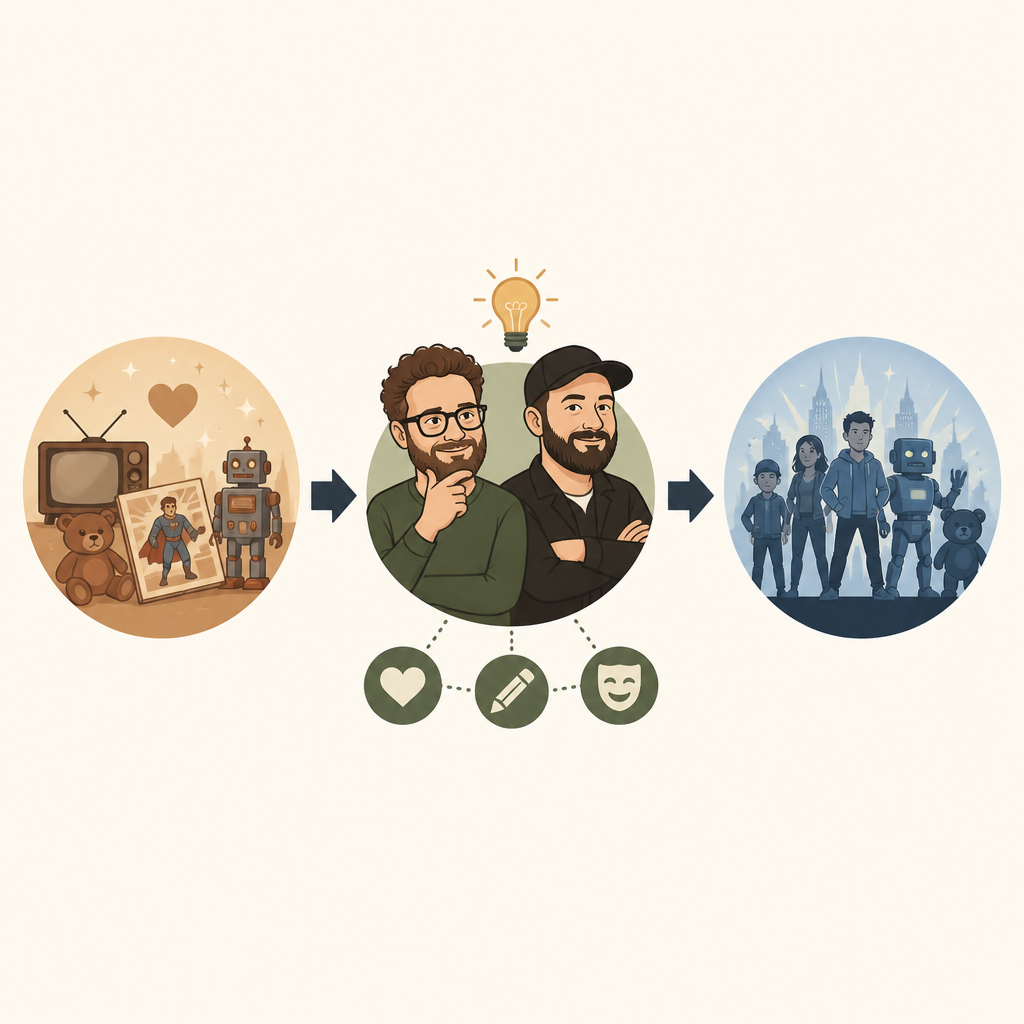
There’s a reason their names matter here. Seth Rogen’s work through his film and TV career and Evan Goldberg’s writing and producing history suggests they know how to blend affection with irreverence. That combination is useful for a project like this. A revival needs someone who can say, “Yes, we know the original mattered,” and also, “No, we are not going to freeze it in place for your comfort.”
I’ve seen too many legacy projects die because the creators were hired to be caretakers instead of authors. Caretakers preserve. Authors interpret. A reboot needs interpretation or it just becomes a tribute act.
How to apply it: if you’re adapting old material, write down the three things only your team would do with it. If the answer is “nothing, we’ll stay faithful,” you’ve got a problem. The best revivals usually have some friction between source material and creator voice. That friction is where the new version gets its identity.
Canadian identity is not decorative here
This part matters more than people outside Canada sometimes realize. The Littlest Hobo is not just an old show. It’s a piece of Canadian TV memory. CBC calling it a Cancon classic is doing more than labeling it. It’s reminding you that the property has cultural context, not just IP value.
That context changes the job. A revival like this isn’t only about bringing back a known title for streaming-era attention. It’s also about handling a piece of national media history without flattening it into generic content. I think that’s where a lot of adaptations fail. They strip out the local weirdness because they assume broader automatically means better. It doesn’t. Broad often means bland.
I’ve worked on projects where the instinct was to “de-localize” everything for scale. The result was always the same: the thing lost its accent, and with it, its soul. If this revival keeps the Canadian texture intact, it has a much better chance of feeling distinct instead of interchangeable.
How to apply it: identify the local details that make the original specific, then protect at least one of them in the new version. It could be setting, behavior, humor, pacing, or social texture. If every specific detail gets scrubbed out, you end up with a product that could be from anywhere. And if it could be from anywhere, it usually means it belongs nowhere.
Nostalgia works only when it buys you trust
The real use of nostalgia is not to replace development. It’s to earn a little trust at the start. That’s all. Once you have that trust, you still need to deliver a show people want to keep watching. This is where a lot of revival projects get lazy. They spend all their energy on the announcement and none on the reason to stay.
I’m always suspicious when a reboot pitch sounds like it assumes goodwill is infinite. It isn’t. Audiences give you one easy nod because they remember the name. After that, you have to prove you understand why the thing mattered. If you don’t, the goodwill evaporates fast.
That’s why the CBC framing is useful. It doesn’t oversell the project. It tells us the basic facts: Rogen and Goldberg are leaning into nostalgia, the classic is being reimagined, and the format is live-action scripted. That’s enough to start a conversation about method instead of hype.
How to apply it: use nostalgia as a door, not a destination. In your pitch, separate the hook from the proof. The hook gets attention. The proof keeps it. If you can’t explain what the audience gets after the recognition hit wears off, the project is undercooked.
Build for the people who never saw the original
This is the part that actually decides whether a revival has legs. The original fans matter, sure. But they are not the whole audience. If the new version only works for people who already know the property, the ceiling is low and the project becomes a private joke. That’s not a business. That’s a reunion special pretending to be a series.
New viewers need a clean on-ramp. They should be able to understand the premise without a history lesson. They should be able to care about the character or concept on its own terms. That sounds basic, but I’ve seen plenty of reboots forget it. They assume the audience will do homework. Most won’t. They shouldn’t have to.
For something like The Littlest Hobo, the challenge is obvious: preserve the recognizable core while making the episode-to-episode experience legible for someone who’s never heard the theme song. That means clear stakes, a useful tonal frame, and enough character identity to make the show stand on its own.
How to apply it: test your revival pitch with someone who has no attachment to the original. If they can’t explain the premise back to you in one minute, the project is too dependent on nostalgia. That’s a design flaw, not an audience problem.
The template you can copy
# Reboot / Revival Decision Template

## 1) The emotional promise of the original
Write one sentence:
- People loved this because: ____________________

## 2) What must stay
List the 3 things that are non-negotiable:
- ____________________
- ____________________
- ____________________

## 3) What must change
List the 3 things the new version should fix or update:
- ____________________
- ____________________
- ____________________

## 4) The new format
Choose the format that solves the original's limits:
- [ ] Scripted series
- [ ] Film
- [ ] Animated series
- [ ] Podcast
- [ ] Other: ____________________

Why this format:
________________________________________

## 5) The creator voice
What only our team would do with this property?
- ____________________
- ____________________
- ____________________

## 6) The local/specific texture to protect
What makes this version distinct instead of generic?
- Setting: ____________________
- Tone: ____________________
- Cultural detail: ____________________

## 7) The new audience test
Can someone unfamiliar with the original understand the pitch in 60 seconds?
- [ ] Yes
- [ ] No

If no, simplify:
________________________________________

## 8) The one-sentence pitch
Write the reboot pitch without using the original as a crutch:
"________________________________________"

## 9) The first episode / first scene goal
What should the audience feel immediately?
- ____________________

## 10) The failure mode to avoid
What would make this feel like empty nostalgia?
- ____________________
The CBC story is the original source for the revival announcement, and the rest of this piece is my own breakdown of the strategy implications. I’m not adding facts the article doesn’t give me; I’m reading the move the way I would if I were in the room planning the project.
Source: CBC News.
// Related Articles
- [IND]
5 model config tips for Claude Code users
- [IND]
Bell’s 2026 Slate Brings Back Meatballs and The Littlest Hobo
- [IND]
Why Reid Hoffman leaving Microsoft’s board matters more than his titl…
- [IND]
Microsoft’s OpenAI split frees its AI roadmap
- [IND]
Why leverage is making India’s market rally look stronger than it is
- [IND]
Why Chrome’s Benchmark Win Matters More Than the Scoreboard