Why leverage is making India’s market rally look stronger than it is
Leverage is amplifying India’s market rally and making the upside look healthier than the underlying fundamentals.
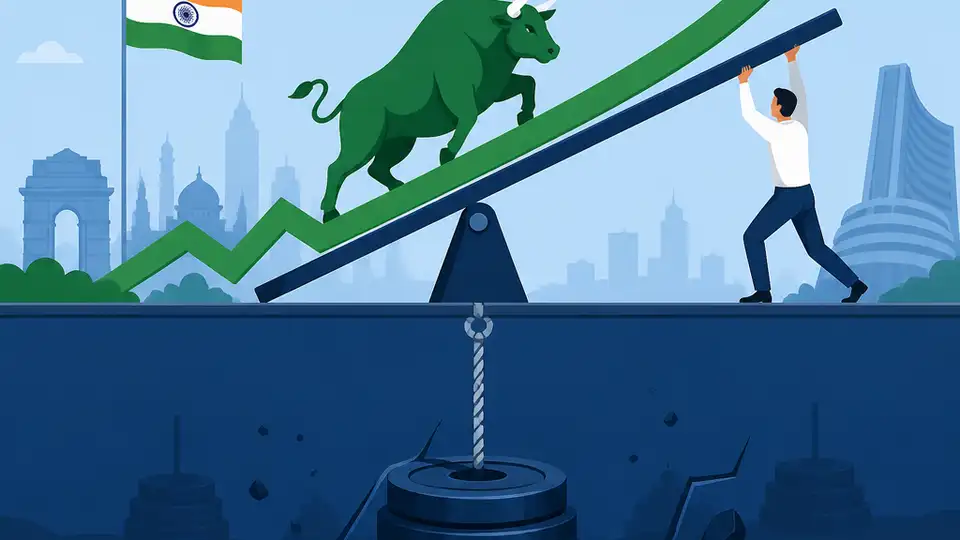
Leverage is amplifying India’s market rally and making the upside look healthier than the underlying fundamentals.
Leverage is not a sign of market strength in India right now; it is a warning that the rally is being pulled forward by borrowed risk. The clearest clue is not a single headline number but the pattern: rising margin trading, crowded positions, and a market tone that looks more confident than the earnings backdrop deserves. When investors borrow to buy, prices can keep climbing longer than fundamentals justify, but the same structure can unwind fast when sentiment shifts.
First, leverage inflates the appearance of conviction
Get the latest AI news in your inbox
Weekly picks of model releases, tools, and deep dives — no spam, unsubscribe anytime.
No spam. Unsubscribe at any time.
Borrowed money makes demand look deeper than it really is. A trader using margin can control a larger position with less capital, which means the same amount of cash can push prices harder than a fully funded buyer would. That is why leverage often shows up in the late stages of a rally: it magnifies the bid just when momentum is already doing much of the work.

The paper industry example in the source material is useful because it shows how markets can look better before the underlying business does. Indian paper companies are still dealing with wafer-thin margins and higher input costs, yet the broader market narrative already points to a cyclical turnaround. That gap matters. Leverage does not fix margins, it only makes investors more willing to pay ahead of them.
Second, leverage turns a normal pullback into a forced selloff
Markets do not need a catastrophe to punish leverage. They only need a dip. Once prices fall enough, brokers issue margin calls, traders sell to raise cash, and liquidations create extra supply right into weakness. The result is a self-reinforcing slide that has nothing to do with new information and everything to do with balance-sheet pressure.
India has seen this movie before in different forms. In crowded trades, the first layer of selling is often discretionary, but the second layer is mechanical. That is the real danger of a leverage-heavy market: it changes the character of corrections. A 3 percent move stops being a routine pause and becomes a scramble for capital. The market is then no longer pricing fundamentals cleanly; it is pricing who can stay solvent.
The counter-argument
The strongest defense of leverage is that it is not inherently reckless. In a growing market with improving liquidity, margin use can reflect genuine participation from informed traders who want efficient exposure. It can also signal confidence that earnings, policy support, or sector rotation will justify higher prices. In that view, leverage is simply a tool, and blaming the tool misses the real issue: whether the underlying trend is sound.

That argument is right about one thing: leverage is not automatically a bubble. In a disciplined market, it can improve price discovery and allow capital to be used more efficiently. The problem is that the current setup does not look disciplined. When the narrative is outrunning fundamentals, leverage stops being a neutral instrument and becomes an accelerant. It may help a valid trend travel faster, but it also ensures the unwind is faster when the story weakens. That is why the burden of proof sits with the bulls, not the skeptics.
What to do with this
If you are an investor, stop treating borrowed demand as confirmation of a durable trend. Separate price action from earnings power, watch margin data and broker leverage conditions, and keep position sizes small enough that a sharp reversal does not force you out. If you are a founder or PM building for capital markets users, design for stress, not just momentum: assume volatility will spike, liquidity will vanish, and the market will punish crowded positioning long before it punishes weak narratives.
// Related Articles
- [IND]
KPMG’s OpenAI deal turns SaaS into agents
- [IND]
Trump adviser accuses Moonshot AI of stealing Anthropic
- [IND]
Vector databases will reshape financial search, not replace core syst…
- [IND]
Milvus 3.0 adds lake-native vector search
- [IND]
Google’s Q2 2026 results prove AI spend is now the story
- [IND]
AI regulation in India is now a business risk