Rust learners need permission to clone first, optimize later
Rust learners should clone freely at first, then optimize once they understand the problem.

Rust learners should clone freely at first, then optimize once they understand the problem.
Rust’s biggest learning trap is not the borrow checker itself; it is the belief that every first attempt must already be elegant, optimal, and idiomatic.
That belief shows up as clone guilt. The Rust Vision Doc interviews describe newcomers threading lifetimes through everything, avoiding copies at all costs, and treating any clone as a moral failure before they have even shipped a working program. Experienced Rust developers told the same story from the other side: once you understand the problem, you can remove unnecessary clones and tighten the code. Before that, cloning is often the fastest path to clarity.
Rust’s learning curve is about unlearning, not just learning
Get the latest AI news in your inbox
Weekly picks of model releases, tools, and deep dives — no spam, unsubscribe anytime.
No spam. Unsubscribe at any time.
Rust is rarely someone’s first language. The interviews show people arriving from C++, Java, C, JavaScript, OCaml, and functional backgrounds, then trying to write Rust as if it were their old language with a different syntax. That is why the early months feel slow. One firmware engineer described a drop in productivity compared with C because Rust adds new rules and new syntax. Another senior engineer talked about poking around with ampersands and asterisks just to understand mut and not mut.

That pattern matters because it explains a common mistake: experienced developers assume their prior habits are an advantage, when in Rust those habits are often the thing that slows them down. The article is blunt about this. Senior people can struggle more than novices because they have to unlearn practices that work elsewhere but violate Rust’s model. In other words, Rust does not just teach ownership. It asks learners to stop reaching for the familiar reflex.
The compiler is the best teacher Rust has
Rust’s documentation and diagnostics do a lot of the heavy lifting. Several interviewees said the official book, Rustlings, and community resources were enough to get moving, especially when the compiler explained what was wrong. One researcher said Rust’s diagnostics were very helpful when lifetimes were wrong. Another engineer said the compiler usually filled in what was missing by telling them they needed to declare the lifetime of a reference.
This is the strongest argument for Rust’s teaching model: the feedback loop is immediate and specific. You do not have to guess whether your code is safe in the abstract; the compiler tells you exactly where the model breaks. But that only works if learners stay in the game long enough to absorb the lesson. People in the interviews needed multiple passes, multiple formats, and sometimes multiple resources before concepts like borrow checking clicked. The compiler teaches, but repetition cements the lesson.
Clone guilt is a self-inflicted wound
The article’s clearest claim is that beginners hurt themselves by optimizing too early. One researcher said they tightly wove lifetimes through a first project because they refused to copy or clone anything, only to discover later that cloning the struct would have been cheap and harmless. That is not a small anecdote. It is the exact failure mode Rust’s reputation invites: if Rust is about correctness and performance, then anything less than minimal allocation feels wrong.
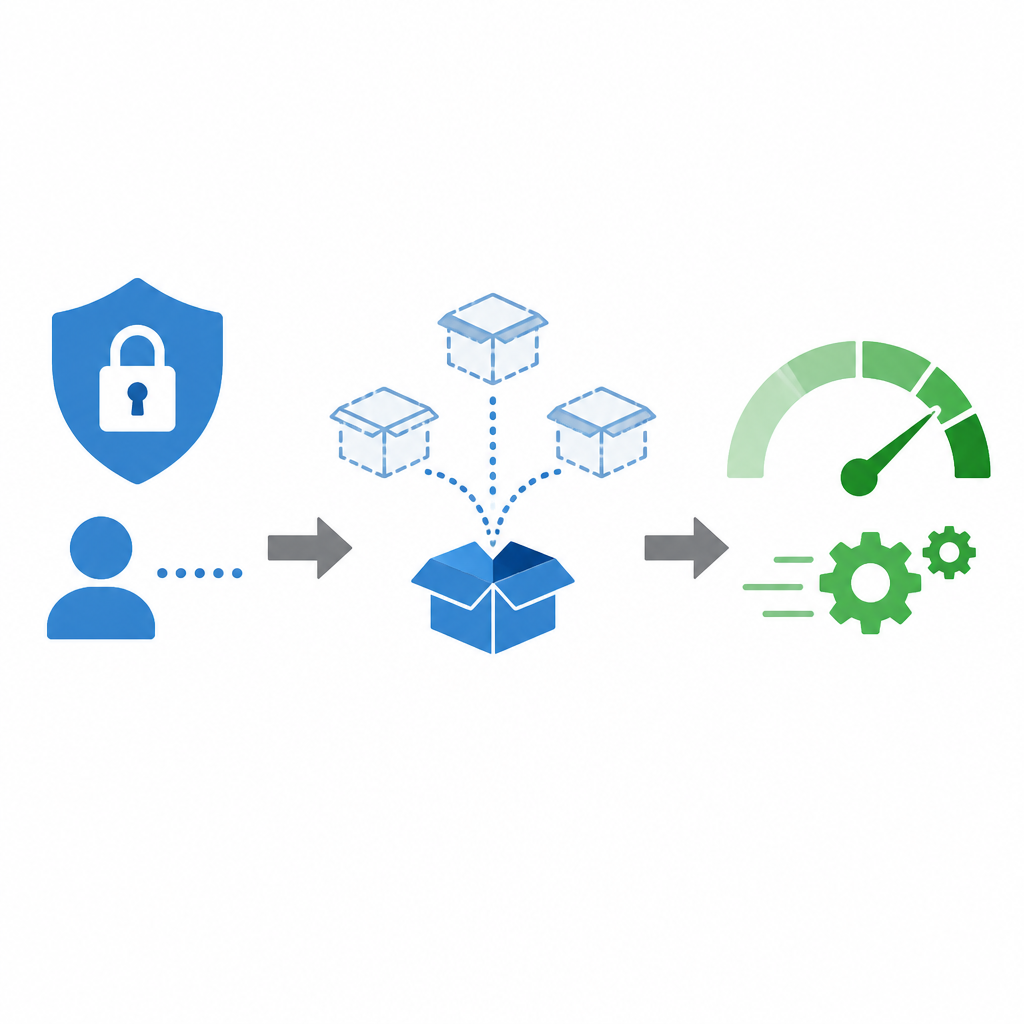
Experienced Rust developers pushed back hard on that instinct. Their advice was consistent: clone freely while learning, then optimize once you understand the problem. That is not a concession to sloppiness. It is a disciplined sequence. First, make the program fit Rust’s model. Then measure, simplify, and remove the extra work that actually matters. Until then, a cheap clone is often better engineering than a fragile lifetime puzzle that no one understands.
The community and LLMs reduce the shame around asking for help
Rust learning is not only a solo exercise. The interviews describe students opening GitHub issues and getting direct responses from maintainers, and that kind of access changes the emotional cost of learning. It tells newcomers that confusion is normal and questions are welcome. That matters in a language where many people arrive already worried they are doing it wrong.
LLMs now play a similar role for some learners, but only when used as a guide rather than a substitute. Interviewees described using them to generate examples or navigate unfamiliar territory, then typing the code themselves and checking the result. That is the right posture. The tool helps you move faster, but it does not replace understanding. The danger is not that LLMs exist; it is that they can amplify the same bad habit as clone guilt: trying to skip the learning step and jump straight to the polished answer.
The counter-argument
There is a serious case for the opposite view. Rust is a language where performance and safety are core selling points, and beginners do need to learn the shape of idiomatic code early. If every first project becomes a pile of clones and workarounds, learners may build habits that are hard to undo later. In regulated or performance-sensitive work, that matters. Teams cannot afford to normalize waste just because someone is new.
That concern is real, but it does not defeat the article’s conclusion. The issue is timing, not principle. Clone-first does not mean clone forever. It means defer micro-optimization until the code is correct and comprehensible. The article’s own evidence supports that boundary: experienced developers naturally know when a workaround is appropriate, while beginners do not. Teaching them to avoid all cloning from day one confuses optimization with correctness and makes Rust harder than it needs to be.
What to do with this
If you are an engineer, PM, or founder trying to get a team productive in Rust, make the first milestone “working code,” not “perfectly idiomatic code.” Give new Rust developers permission to clone, copy, and simplify early, then review the hot paths later with profiling and code review. Pair that with the official book, Rustlings, and a short list of community resources, and encourage people to ask questions publicly when they get stuck. Rust becomes easier when you treat learning as iteration, not purification.
// Related Articles
- [RSCH]
LLM fine-tuning turns generic models into domain tools
- [RSCH]
Mistral OCR 4 brings structure to document AI
- [RSCH]
Autoregressive Boltzmann Generators ditch flows
- [RSCH]
RiVER trains LLMs without ground-truth answers
- [RSCH]
DanceOPD distills image-editing skills into one model
- [RSCH]
Microsoft funds AI research on team collaboration