Rust+ Desktop proves unofficial tools can be safer than closed ones
Rust+ Desktop shows that an unofficial open-source app can be a safer choice than a closed alternative.

Rust+ Desktop is an unofficial open-source Rust companion app that adds maps, automation, and device control.
I think Rust+ Desktop is a net positive, and the reason is simple: open source beats opaque convenience when a tool sits close to your game account and local machine. This project is not just a fan wrapper around the Rust+ Companion API. It ships a signed installer, publishes its code, and exposes enough of its behavior for users to inspect whether it does what it claims. That matters because the app asks for trust in a place where trust is usually earned the hard way. The repository shows 1,112 commits, a GPL-3.0 license, and a release process built around GitHub assets rather than a random download link. In a category full of sketchy mods, that is the difference between a utility and a liability.
Open source is the real security feature here
Get the latest AI news in your inbox
Weekly picks of model releases, tools, and deep dives — no spam, unsubscribe anytime.
No spam. Unsubscribe at any time.
The strongest argument for Rust+ Desktop is not that it is unofficial. It is that anyone can audit it. The project states plainly that it is open source so users can verify there is no malware or hidden components, and that claim is backed by the repository itself, which includes the full application, build files, and release history. If a desktop companion app needs access to maps, device states, and account-linked features, transparency is not a bonus. It is the baseline.
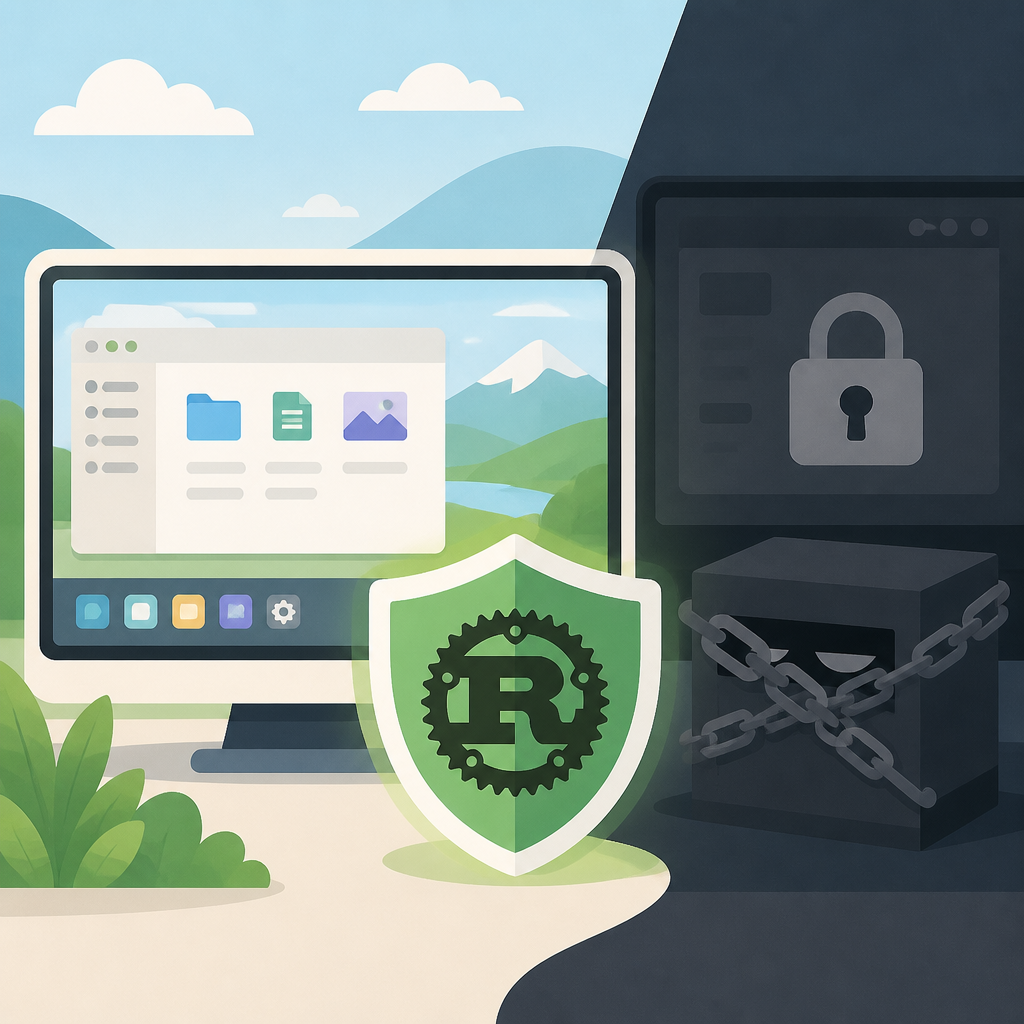
There is also a practical security upside to the way this project is distributed. The maintainer publishes a packaged installer as a GitHub Release asset and signs it, which reduces the temptation to chase mirror sites or repackaged binaries. For a Windows app that bundles .NET, Node.js, WebView2, and its own API layer, the risk is not only what the code does. It is also what happens when users assemble dependencies themselves from random sources. A single signed installer is the cleaner path.
It solves real friction that the official companion flow leaves behind
Rust+ Desktop earns its place by removing annoying setup and making the companion experience more useful on a PC. The app bundles its runtime dependencies, so users do not have to install .NET or WebView2 manually just to get started. That is not a cosmetic improvement. It lowers the barrier between curiosity and daily use, which is exactly what a companion app should do.
The feature list is not fluff either. The project supports server pairing, in-game event monitoring, Smart Device control, dynamic map markers, and, in newer releases, interactive 3D maps, live player positions, death markers, and a base footprint builder. Those are concrete workflow gains for Rust players who plan bases, track threats, and manage automation. The repo is not trying to be a general desktop shell. It is focused on one game, one API, and a set of tasks that players actually repeat.
The update cadence shows a maintained product, not a one-off hack
One reason unofficial apps deserve suspicion is abandonment. Rust+ Desktop does not look abandoned. The repository has 1,112 commits and recent release notes that describe substantial changes, including 3D maps, resource heatmaps, adaptive polling, and a refined logic engine. That volume of work signals active maintenance, not a weekend experiment that lingered on GitHub after the author moved on.
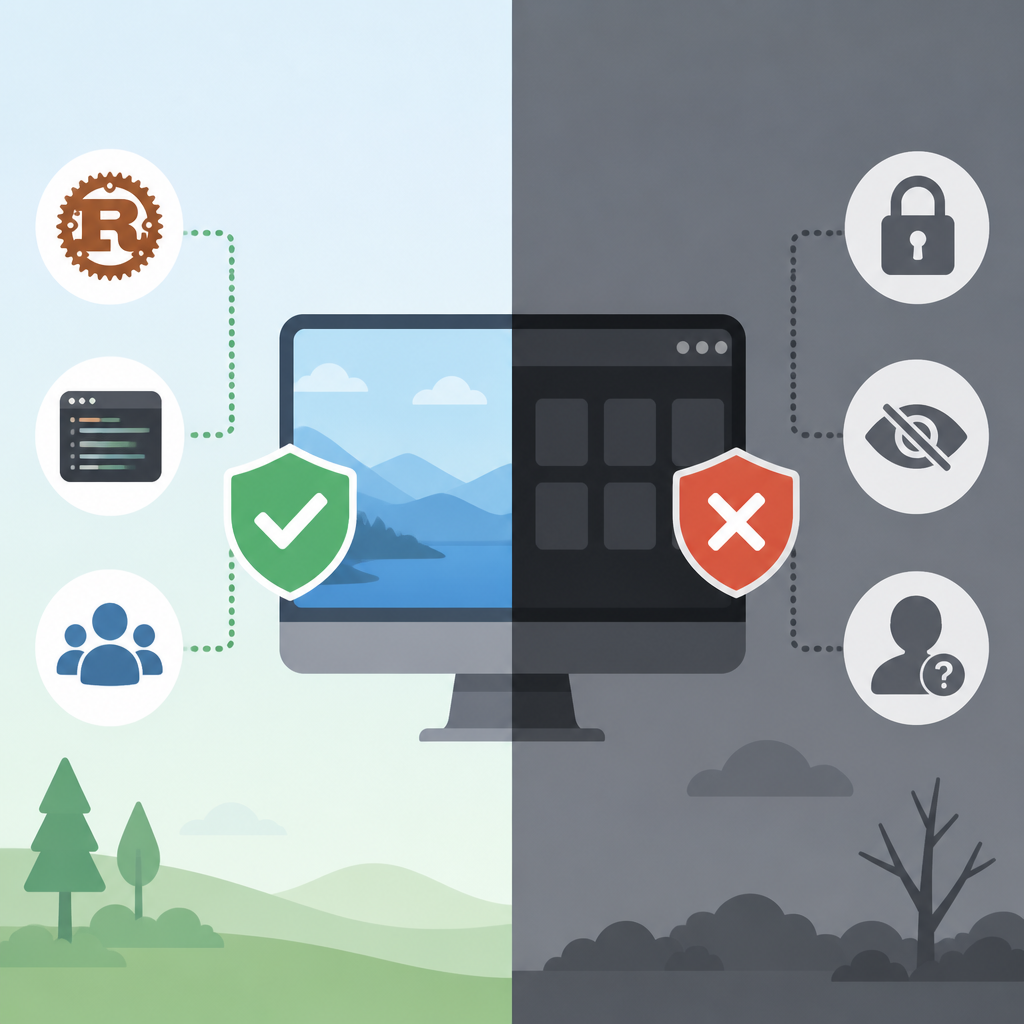
The changelog also shows the kind of operational fixes that separate a serious desktop app from a fragile script. The maintainer fixed a BufferOverflow in MapParser, addressed Windows write protection issues, moved cache storage into %APPDATA%, and bundled the .NET 8 runtime directly into the map parser for smoother installation. These are the details users only get when someone is still carrying the project through real-world failures. If you care about reliability, that matters more than whether the app wears an official badge.
The counter-argument
The best objection is straightforward: unofficial software should not be trusted near a game ecosystem, especially when it touches account-linked features and live data. Facepunch does not back this app, so users accept support risk, compatibility risk, and the possibility that an API change breaks the workflow overnight. That is a fair warning. Official tools do come with clearer accountability.
There is also a policy argument. Game communities suffer when third-party tools blur the line between convenience and unfair advantage. A desktop app that surfaces live positions, automation logic, and remote controls can look suspicious even if it stays within the API. From that angle, skepticism is healthy, and users should not treat every polished GitHub repo as a free pass.
But that counter-argument stops short of the facts here. Rust+ Desktop is transparent, actively maintained, and explicit about being unofficial. It does not hide its code, and it does not pretend to be endorsed by Facepunch. The correct standard is not “official or nothing.” The correct standard is whether the tool is inspectable, maintained, and honest about its limits. This one clears that bar.
What to do with this
If you are an engineer, treat Rust+ Desktop as a case study in trust by transparency: publish the source, sign the installer, document the dependencies, and keep the release process boring. If you are a PM or founder building a companion app, the lesson is even sharper: users will accept unofficial software when it removes friction, proves it is maintained, and makes verification easy. The market rewards visible integrity more than brand permission.
// Related Articles
- [TOOLS]
Baidu Wenxin turns search into a free agent
- [TOOLS]
OpenCode now supports DeepSeek, GLM, Qwen, GPT
- [TOOLS]
DeepSeek in Codex Will Cut AI Coding Costs Hard
- [TOOLS]
Token vs. word: why Chinese tokenization still matters
- [TOOLS]
OpenAI API Pricing Hits $0.05 to $180/M Tokens
- [TOOLS]
Usage limits belong in ChatGPT Enterprise and Edu controls